
Game review
Parry Survivor Review
5.8 / 10
- Developer
- Seal
- Publisher
- Seal
- Released
- 14 September 2026
- Platforms
- ["Windows"]
- Genre
- Action
An Anime Heroine, a Deflect Button, and an Endless Tide of "Kuns"
Parry Survivor does not bury its concept. You are an anime heroine dropped into the "Kun-Domain," a surreal arena that never stops spawning a single, instantly recognizable enemy type the game itself calls "Kuns." Your job is not to out-damage them but to out-time them: hold a guard, read the wind-up, and land a Sekiro-style deflect at the exact right instant. Land enough deflects and a Kun's posture shatters, triggering a slow-motion execution with a swinging camera and a flashy finishing animation. Miss the timing and you eat the hit instead.
Between waves you spend the currency dropped by fallen Kuns at a small in-run shop, buying permanent damage boosts or swapping in new weapons that change your moveset and the rhythm of your parries. There's no map to explore and no story cutscenes beyond the initial premise — this is a single arena, a single core loop, and a difficulty curve that climbs for as long as you can survive it. It's a tight, almost single-purpose design, built entirely around whether the parry itself feels good to execute over and over.
A Small, Unanimously Positive Launch Built on a Recognizable Joke
At review time Parry Survivor sat at 62 user reviews, every single one positive — a 100% "Very Positive" rating, though the sample is small enough that it should be read as an enthusiastic niche reception rather than a broad consensus. Every review in the pool is written in Chinese, and nearly all of them reference the game's central joke directly: this is the latest in a string of similarly-themed parody games from the same solo developer, and the overwhelming majority of reviewers arrived already familiar with the previous entries and the meme the "Kuns" are built around. That context matters for reading the review pool honestly — this launched into a built-in, meme-literate audience rather than a cold market, and the enthusiasm reflects that as much as it reflects the mechanics underneath.
Strip the in-joke away, though, and what reviewers are actually praising is more concrete than "it's funny." Several call out the parry timing specifically, describing the deflect window as generous enough to be accessible without feeling trivial, and more than one reviewer explicitly compares the feel favorably to the FromSoftware game it's riffing on. That's a real compliment for a solo-developed budget title, not just a meme-adjacent aside.
The Parry Loop Actually Works, and the Presentation Sells It
Where Parry Survivor earns its Very Positive reception is the moment-to-moment combat. Reviewers repeatedly single out the deflect-into-execution loop as the game's best asset: the guard-break slow-motion sequences, dynamic camera swings, and finishing-move variety give even a repetitive enemy type a sense of spectacle each time you land one. Several reviewers with playtimes well past three hours describe chaining deflects across a full wave as the most satisfying stretch of the game, and multiple reviews note that new weapon unlocks meaningfully change how a run plays rather than just inflating a damage number.
The comedic anime presentation is also doing real work here, not just decoration. Reviewers highlight the roster of playable heroines, the character designs, and the game's willingness to lean fully into its own absurd premise rather than undercut it — several specifically ask for more unlockable characters and outfits, which is usually a sign that a cosmetic system is landing with its audience rather than feeling like padding. For a low-priced solo project, the presentation-to-budget ratio reviewers describe is genuinely strong.
Thin Content, a Front-Loaded Difficulty Curve, and a Camera That Won't Cooperate
The criticism, even inside an otherwise glowing review pool, clusters tightly and consistently. The most common complaint is that there simply isn't much game here beyond the core loop: reviewers describe too few distinct arenas, too little enemy variety beyond palette-swapped Kuns, and a run structure that starts brutally difficult before currency upgrades flatten it into something closer to trivial. More than one reviewer frames this bluntly — the shop-bought upgrades solve the challenge faster than new content replaces it, and a handful describe later runs as a chore to sit through rather than a fresh test.
The second recurring complaint is mechanical rather than structural: enemy target-lock is weak and inconsistent, frequently snapping to whichever Kun is directly in front of you rather than the one actually attacking, and the camera can't be manually adjusted mid-combo, which several reviewers say costs them clean parries against enemies approaching from an angle. The slow-motion execution sequences that sell the spectacle also draw specific pushback from a subset of reviewers, who find them triggering too often and dragging out otherwise fast combat. One of the more detailed critical reviews in the pool — still a thumbs-up overall — calls out the lack of camera control during hits and the frequency of the slow-motion cuts as the two things most in need of a patch, alongside a request for a proper tutorial explaining the control scheme before dropping players into a wave. A smaller number of reviews mention outright bugs without specifics.
Verdict
Parry Survivor is a small, cheap, single-idea game that mostly nails the one idea it's built around: a Sekiro-style deflect loop dressed up in a comedic anime skin, executed with real spectacle for a solo-developed title. It earned a genuinely enthusiastic, if narrow, launch reception from an audience that came in already knowing the joke. But the underlying game runs thin fast — one arena, one enemy silhouette repeated with cosmetic variation, a difficulty curve that collapses once the shop is unlocked, and a lock-on and camera system that fight the exact parry precision the game is asking you to master. If the premise and the price point appeal to you, the core combat is worth the few hours it has to offer. If you're looking for lasting depth behind the joke, there isn't much waiting for you once the novelty wears off.
Screenshots
-
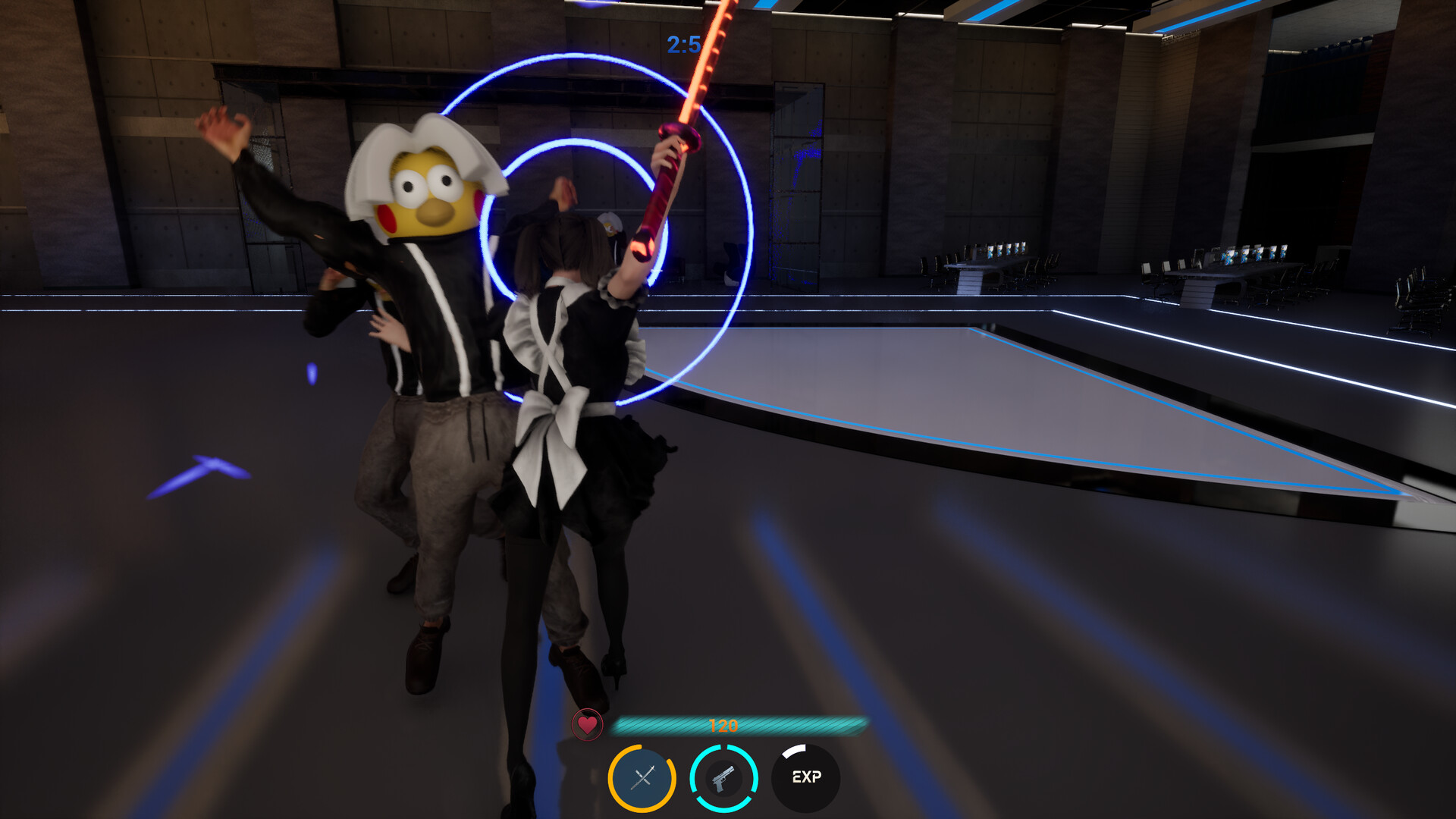
The blue ring signals an incoming attack — the core loop is timing a deflect against it before the swing lands.Image: Seal via Steam -
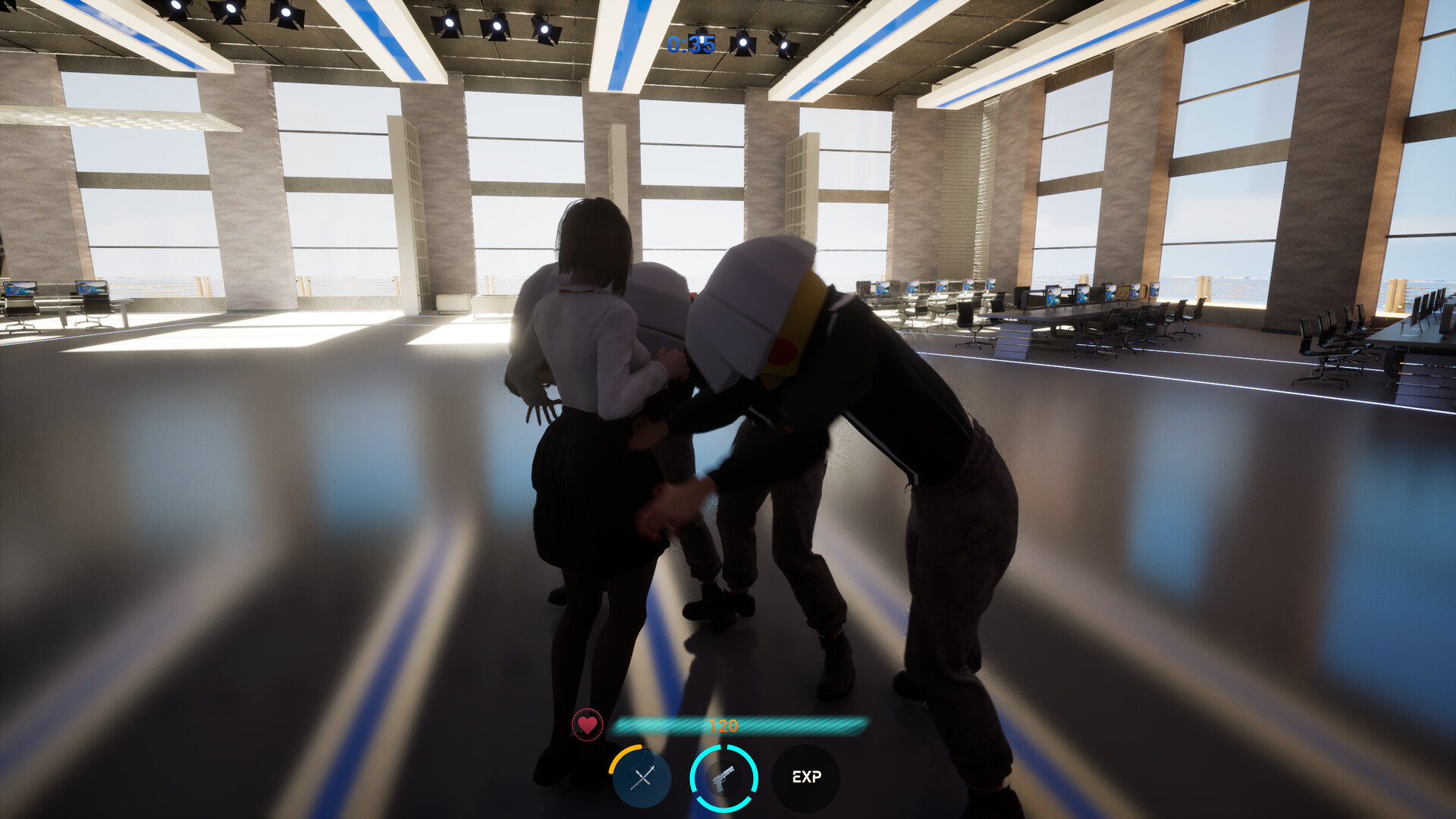
Arenas lean on bright, glassy office interiors rather than varied locations, one of the repetition complaints in the review pool.Image: Seal via Steam -
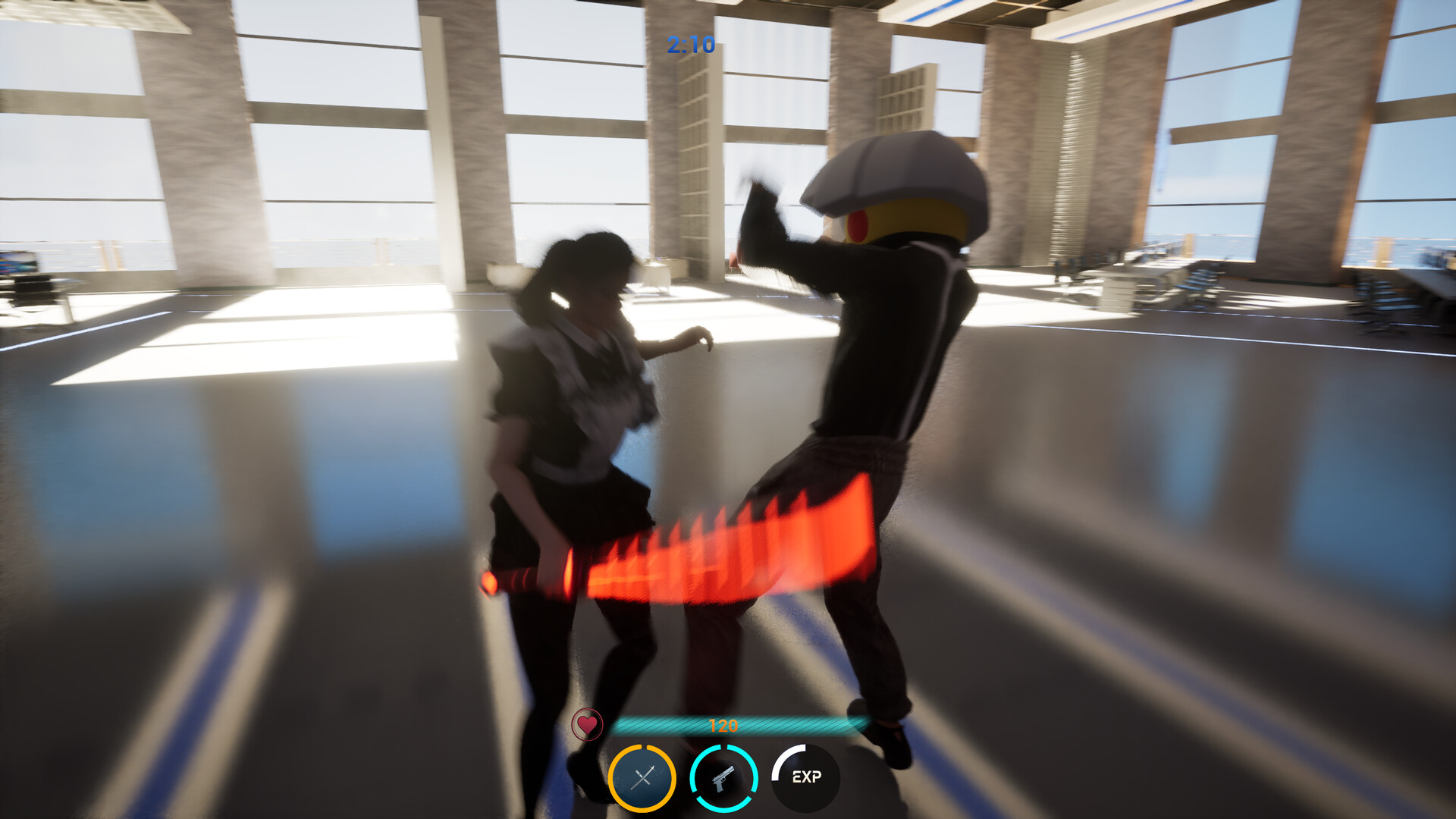
A landed deflect opens the door to a flashy, motion-blurred execution strike.Image: Seal via Steam