Game review
PARKSIDE: DECAYED SOUL MANIPULATION
7.5 / 10
- Developer
- Banana Hardsoft
- Publisher
- Banana Hardsoft
- Released
- 30 July 2026
- Platforms
- Windows
- Genre
- Immersive Sim / FPS
- Monetisation
- One-time purchase, no in-app purchases, no DLC. Listed at NZ$21.99 with a 10% launch discount bringing it to NZ$19.79 — checked 3 August 2026.
- Players
- Single-player only
The short version
PARKSIDE is the real thing — a systems-driven immersive sim where keypads, cameras, turrets and robots can each be hacked, bypassed, avoided or destroyed, and where the level usually has three answers you didn't think of. It runs on almost anything, costs twenty dollars, and arrives finished rather than in Early Access. The catch is the save system: saving requires consumable items, and running out means replaying the level. That is a deliberate choice the developer has defended, and it will decide whether this is your favourite discovery of the month or a refund.
Biggest strengths
- Genuine systemic freedom — hack, bypass, sneak past or destroy keypads, cameras, turrets and robots, with physics-based interaction throughout
- Levels hide secrets, alternate objectives and unexpected routes, and reward exploration in the way the genre's best examples do
- Runs beautifully on very modest hardware — the store page recommends integrated graphics, and players confirm it
Biggest weaknesses
- Saving depends on consumable items; run out and you restart the level, which a large share of critical reviews describe as fighting the game's own exploratory design
- Consequences and action outcomes are often unclear, which undercuts decisions in a game built around them
- Inventory handling is finicky, with no dedicated holster and awkward item selection
Who it's for: Immersive sim players who miss the genre's uncompromising end — the Deus Ex, E.Y.E. and Cruelty Squad lineage — and who read "limited saves" as tension rather than punishment. Not for players who quicksave by reflex, and not for anyone who needs a game to explain its consequences up front.
Our recommendation: Buy it if the phrase "immersive sim with consumable saves" makes you lean forward rather than wince; at twenty dollars with this much systemic depth it's an easy recommendation for that audience. Everyone else should watch the patch notes — the developer is fixing things at remarkable speed, and an optional save mode is the single change that would open this up to a much larger audience.
7.5 / 10
The most-upvoted negative review of PARKSIDE isn't about bugs, balance or content. It's about saving the game. Saves are consumable items; run out, and finishing the level is the only way to keep your progress. The reviewer argues this fights the game's own design — an exploration-led immersive sim that punishes you for exploring badly by making you do the whole level again.
The most-upvoted positive reviews are, broadly, from people who worked that out and decided they liked it.
That's the decision in front of you, and everything else here is easier to summarise.
An immersive sim that means it
Alexander Petrovich is an unemployed hacker, kidnapped by a secret society and wired into a remote combat platform to run illicit missions in a 2038 California that four years of quiet meddling have left cold, policed and miserable. It's a good setup, and the game built on it is unmistakably in the Deus Ex tradition — the comparison shows up in roughly a third of the reviews, alongside E.Y.E.: Divine Cybermancy and Cruelty Squad, which tells you the specific corner of the genre this occupies.
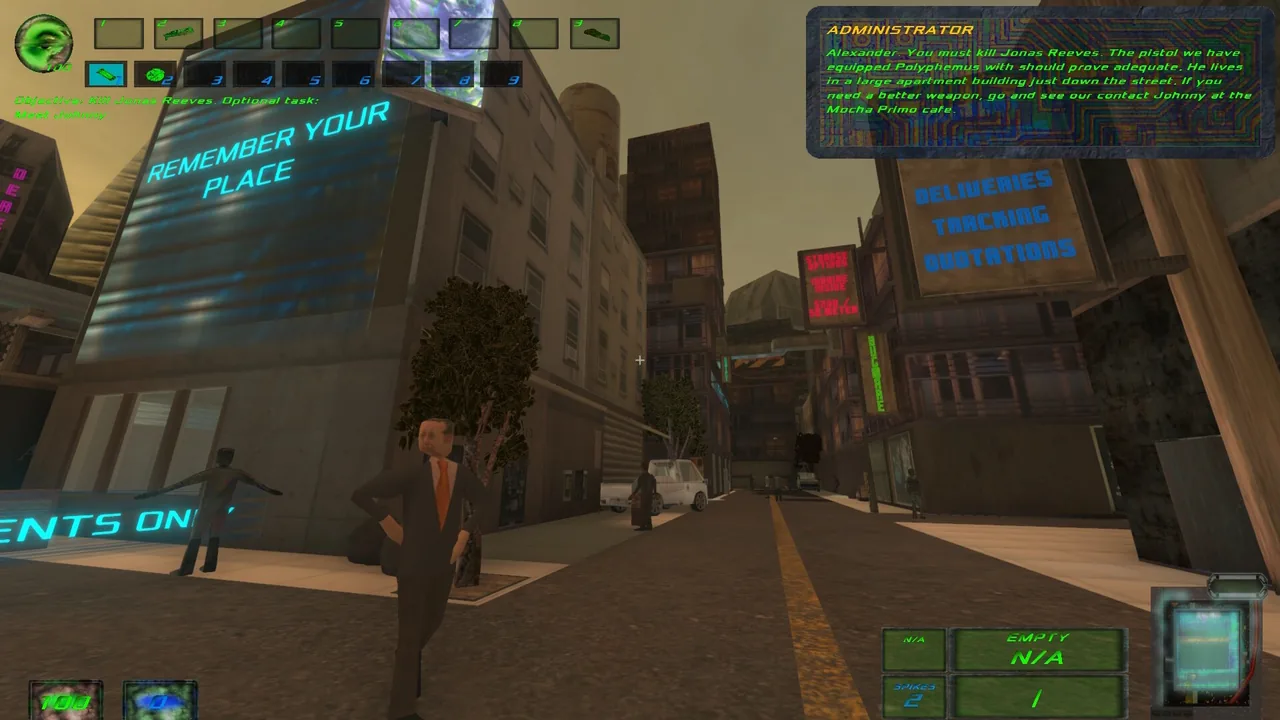
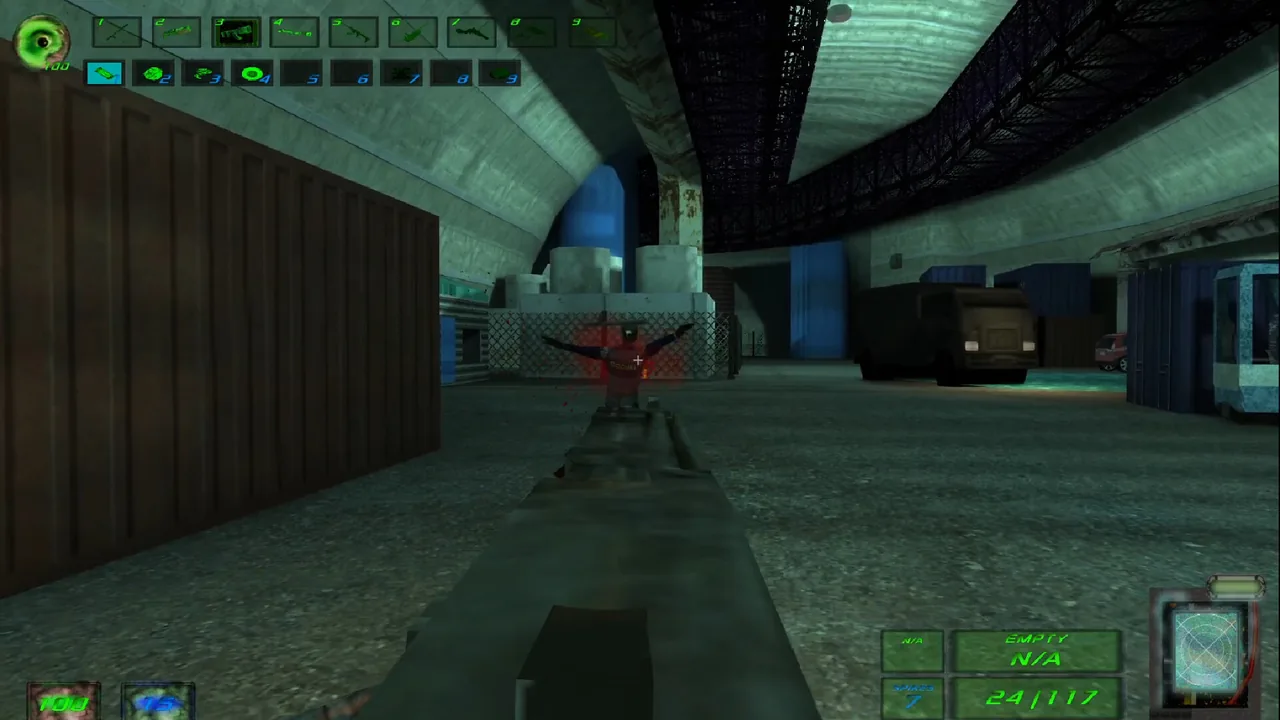
The systems are the point. Keypads, security cameras, turrets and robots can each be hacked, bypassed, avoided or simply shot apart, and the interaction model is physics-based enough that solutions the designer didn't plan for keep working. Reviewers with a dozen hours or more talk about actual agency — the sense that a level has several answers and the game doesn't mind which one you find. That's rarer than it should be, and it's what people mean when they say the genre has been underserved.
Two structural points deserve credit. It shipped as a full release rather than Early Access, which one reviewer notes with visible relief in a market where systems-heavy indies almost always arrive unfinished. And it runs on nearly anything — the store page recommends integrated graphics, and players confirm strong performance on weak hardware, which for a game with this much simulation running is genuinely impressive engineering.
The saves
So: saving costs a consumable. Find them, hoard them, spend them well, or replay from the level's start.
It isn't an accident, and the developer has been clear it's intentional. In a game where an alarm, a bad hack or a misjudged fight can cascade, limited saves are the mechanism that gives choices weight — the same argument roguelites make, applied to a linear immersive sim. Played that way, it works: tension is real, planning matters, and a clean run through a level feels earned.
Played the other way — by someone who quicksaves before every door, as most immersive sim players have done for twenty-five years — it's maddening. The critical reviews aren't confused about the intent; they're arguing it's the wrong call for a game whose other systems reward poking at everything. One of the most thoughtful posts on the page proposes a compromise the developer could adopt: leave the consumable system as default, add an optional free-save mode for people who want it. That seems right, and it costs the design nothing.
The related complaint is clarity. Several players with double-digit hours report not being able to tell what their actions did — which consequence followed which choice — and in a game selling freedom and consequence, that ambiguity does more damage than the saves.
Jank, and a developer outrunning it
This is a small studio's game and it shows: movement quirks, finicky inventory selection, no dedicated holster button, edge cases that behave oddly. Whether that reads as texture or as annoyance is a matter of taste, and the audience this game is courting mostly files it under texture.
What's not a matter of taste is the response speed. Jumping was visibly broken at launch — players described being unable to clear objects a few centimetres high — and it was fixed within about two days, with at least two reviewers editing their posts to say so, one flipping from negative to positive specifically to credit the turnaround. That is a developer taking launch week seriously.
Where players are stopping
The achievement data is sobering and worth knowing before you buy. Half of all players have earned the first story achievement. Then it drops fast: 22%, 20%, 14% — and the achievement for completing Act 1 sits at 12%.
Some of that is a four-day-old game with players still working through it. But the shape suggests the difficulty and the save system together are a real filter, and that most people who buy this will see the opening rather than the whole thing.
Verdict
PARKSIDE is the kind of game the immersive sim revival was supposed to produce: dense, systemic, cheap, uncompromising, made by people who clearly love the form. At twenty dollars it's a lot of game, and if the save-consumable design appeals rather than repels, it's an easy 8.
Seven and a half, because a design decision that's defensible in principle is currently costing the game a chunk of the audience that would otherwise adore it, and because clarity of consequence — the thing the whole premise rests on — isn't there yet. Both are fixable, and the developer is fixing things at a rate that makes it worth checking back in a month.
Players who prefer a world that holds onto their progress without asking them to spend an item for the privilege may also enjoy Wanderer.
Pros and cons
Pros
- Genuine systemic freedom — hack, bypass, sneak past or destroy keypads, cameras, turrets and robots, with physics-based interaction throughout
- Levels hide secrets, alternate objectives and unexpected routes, and reward exploration in the way the genre's best examples do
- Runs beautifully on very modest hardware — the store page recommends integrated graphics, and players confirm it
- Excellent value: a dense, systems-heavy single-player game at around twenty dollars, released complete rather than as Early Access
- The developer is patching at extraordinary speed and reversing player complaints in days — the broken jumping that dominated launch-day reviews was fixed within about 48 hours
Cons
- Saving depends on consumable items; run out and you restart the level, which a large share of critical reviews describe as fighting the game's own exploratory design
- Consequences and action outcomes are often unclear, which undercuts decisions in a game built around them
- Inventory handling is finicky, with no dedicated holster and awkward item selection
- The jank is real — visible in movement, interaction and edge-case behaviour — and it's charm only if you're inclined to find it charming
- Very few players are getting far: only about 12% have finished Act 1
Screenshots
-
PARKSIDE: DECAYED SOUL MANIPULATIONImage: Banana Hardsoft via Steam -
PARKSIDE: DECAYED SOUL MANIPULATIONImage: Banana Hardsoft via Steam -
PARKSIDE: DECAYED SOUL MANIPULATIONImage: Banana Hardsoft via Steam -
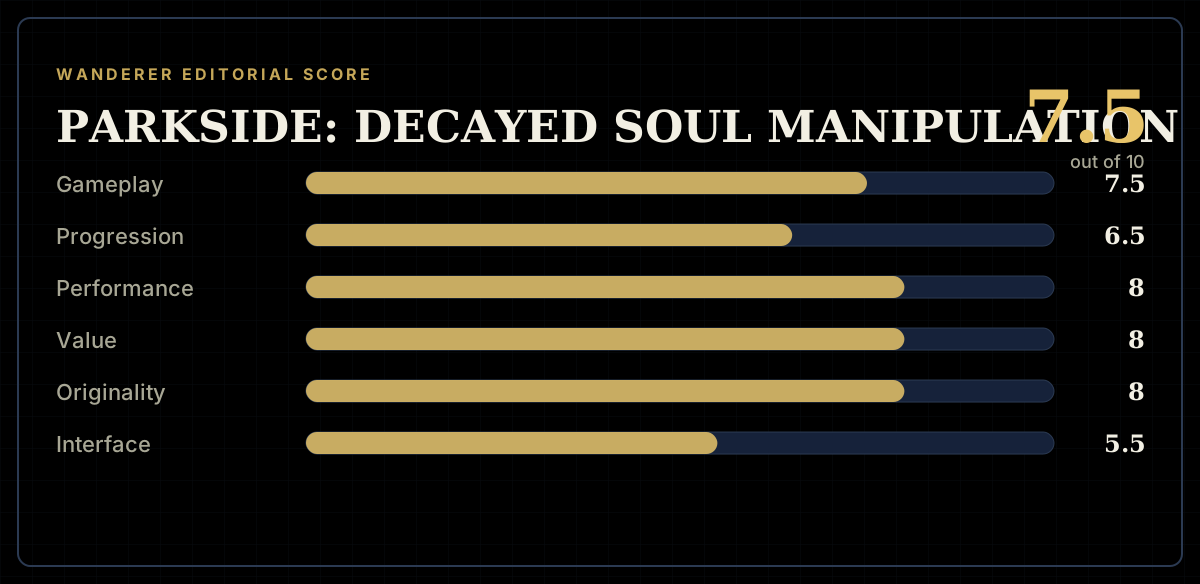
How the review scores each part of the gameWanderer Editorial -
The short versionWanderer Editorial