
Game review
Parcel Simulator
7 / 10
- Developer
- Dansan Digital
- Publisher
- Dansan Digital
- Released
- 20 June 2025
- Platforms
- Windows
- Genre
- Casual, Indie, Simulation
- Monetisation
- paid
- Players
- false
The short version
Biggest strengths
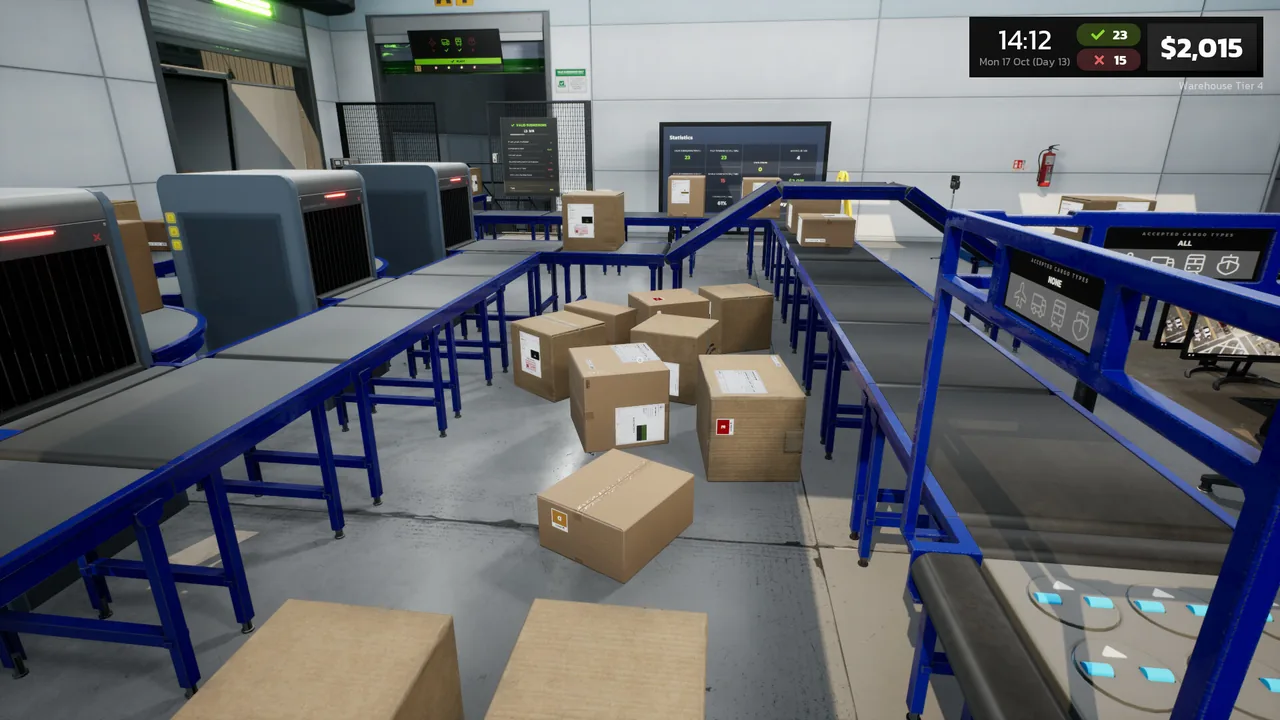
- A genuinely satisfying core loop of manually sorting parcels early on, then gradually replacing yourself with conveyor belts, machines, and automated inspection systems
- An active developer with a track record of substantial free content updates, including a full second warehouse (the Regional Sorting Centre) that several long-time players credit with reviving their interest well after finishing the base game
- Real depth for players willing to dig in, with dozens of reviewers reporting 75 to 175+ hours spent iterating and rebuilding their warehouse layouts
Biggest weaknesses
- Widely corroborated complaints about clunky item-handling: players can only carry one item at a time without a pallet, and every object requires a half-second interact hold to pick up or move, which multiple reviewers described as painful when reorganizing a large layout
- Multiple independent reviewers reported that full end-game automation is impossible, since export doors always require manual intervention to change destination countries, undercutting the promise of a fully self-running warehouse
- Weak onboarding and tutorials, with several reviewers reporting they had to figure out new mechanics and devices through trial and error, and at least one reviewer describing the game as poorly suited to controller play
Who it's for: Fans of automation and 'simulator' games looking for a satisfying, slow-burn optimization loop, who can tolerate clunky item-handling controls and early-game grind
Our recommendation: recommended
7 / 10
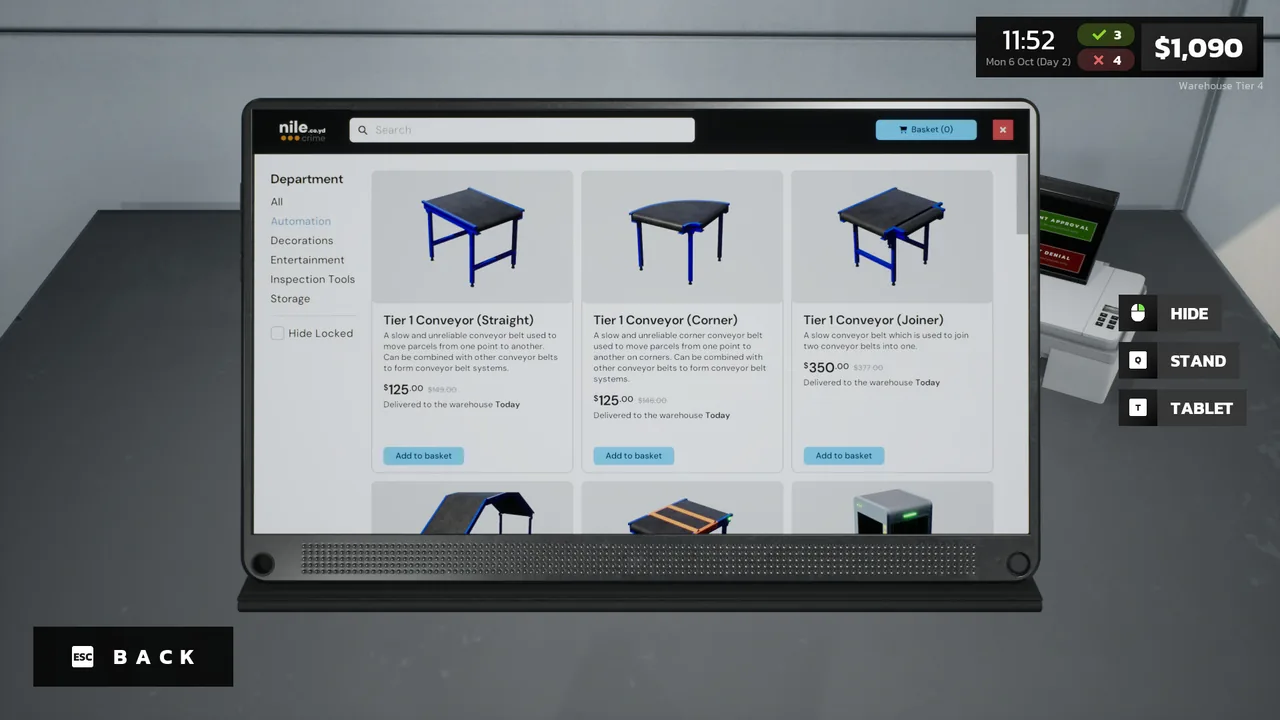
Parcel Simulator released on Steam on June 20, 2025, an $17.99 warehouse management sim from solo-flavored studio Dansan Digital that starts players out manually inspecting and sorting packages before gradually handing the job over to conveyor belts, sorting machines, and automated inspection lines. It's a familiar shape for the genre — start manual, end up an automation engineer — but its 1,693-review English pool sits at a Very Positive 92%, reflecting a game that lands its core hook cleanly even as a well-corroborated set of reviewers flag real friction in how it plays.
The core loop earns consistent, specific praise. One reviewer with 108 hours logged wrote that they aren't "usually a fan of automation games" but that this one "scratched an itch I didn't even know I had," describing the process of fixing conveyor jams and warehouse chaos as "part of the fun" and the moment everything runs smoothly as "incredibly satisfying." A reviewer with 161 hours described it as "the first 'simulator' game I've played that actually feels like real work," recounting how a project they expected to abandon at 20 hours pulled them past 86, with a second warehouse still keeping them engaged. That pattern — starting skeptical, ending up hundreds of hours deep — repeats across several of the pool's longest and most detailed reviews.
The developer's post-launch support draws particular credit. Multiple reviewers independently cited the addition of the Regional Sorting Centre, a full second warehouse added as a free update, as reason enough to return to a game they'd already finished. One reviewer with 153 hours wrote they "bought and played back when there was only 1 warehouse, and came back when the game updated with the second warehouse," while another with 66 hours noted they kept "perfecting the layout even after completing all achievements." For a genre where players routinely burn out once the optimization puzzle is solved, that kind of durable, update-driven re-engagement is a real strength.
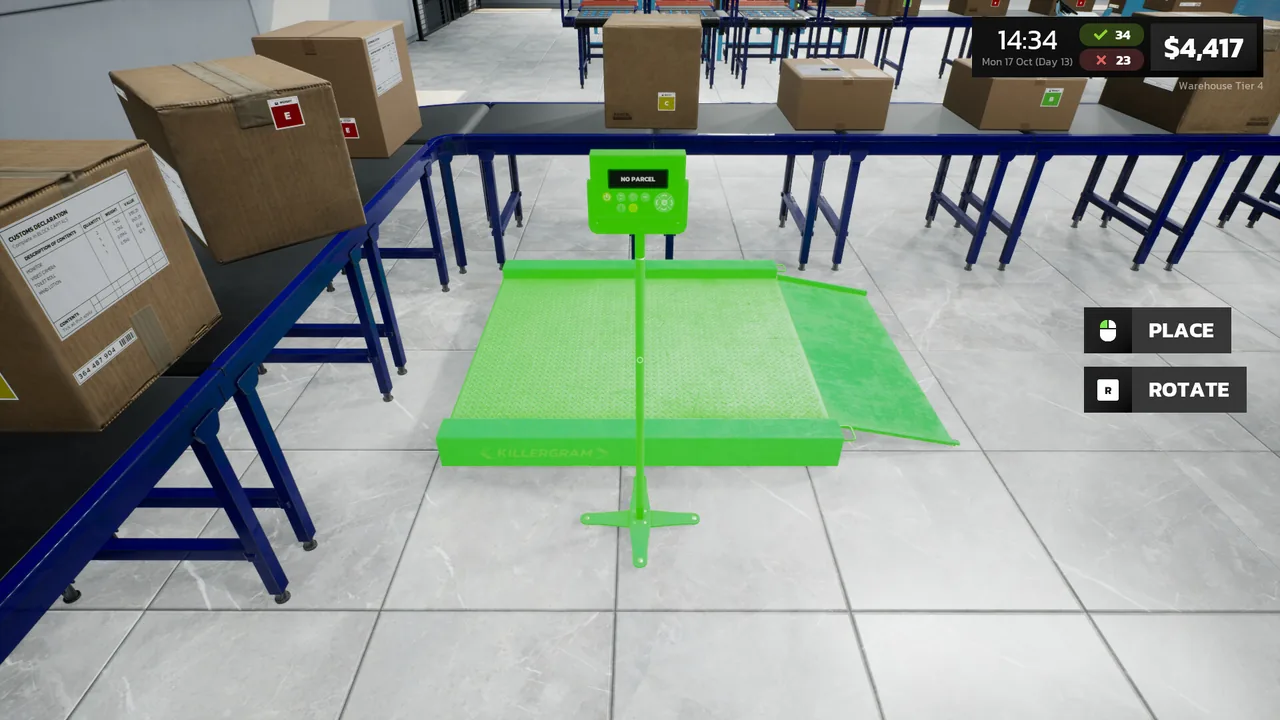
The pool's clearest, most consistently corroborated criticism targets the game's item-handling controls. One detailed negative review put it bluntly: "you can only carry one item at a time," and "any time you want to move any object you have to hold interact for 0.5 seconds, which is torturous when you need to move 30 conveyors one tile to the side." A separate reviewer independently flagged the same friction from a different angle, noting they wished for "the option to just keep building where I stand" rather than running back and forth to fetch parts, and complaining that disassembling an item randomly changes its orientation. A third reviewer, more sympathetic overall, still conceded "it needs a lot of QOL updates" around exactly this kind of interaction friction. Three separate reviewers converging on the same category of complaint, from different playtime brackets, makes it a fair and well-sourced weakness rather than a one-off gripe.
A second, more structural complaint concerns the ceiling on automation itself. One reviewer who reached what they called "the absolute end game" reported that "true 100% automation is impossible," since "the export doors always require manual intervention to change destination countries," which they felt "completely defeats the purpose of an end-game automated factory." That's a meaningful complaint for a genre built entirely around the promise of building yourself out of a job, and it echoes a milder version of the same frustration from a reviewer who called a related export-tab limitation on the new warehouse a "SERIOUS" issue that made certain layouts "worthless." Onboarding drew its own share of criticism too — one reviewer described bumbling through new mechanics without adequate tutorials and called using the in-game scanner with a controller "a nightmare," concluding the game seemed designed primarily around mouse and keyboard.
It's also worth noting a modest but real split in the negative pool between players who bounced off the early hours entirely — several very short-playtime reviews describe the manual sorting phase as "incredibly dull" or too grindy to get through — and those, like the 12-hour review quoted above, who got deeply hooked before frustration with the controls caught up with them. That's a meaningfully different failure mode than a game nobody enjoys, and it's fair to weigh both: this is a game whose loop clearly works for a large majority of its audience, but whose rough execution genuinely cost it some players who wanted to like it more than they did.
A handful of reviewers also flagged smaller platform-specific rough edges worth mentioning for anyone shopping around hardware. One reviewer who tried the game on Steam Deck reported that country names on parcel labels sometimes failed to match the in-game reference list, causing valid packages to register as rejected and vice versa, alongside occasional static on the start screen — issues that reads as unresolved compatibility testing rather than a core design flaw, but are worth knowing about before buying specifically for a handheld setup. On desktop, reports of outright crashes or performance collapse are rare in the pool; even players logging well over a hundred hours into heavily built-out warehouses generally describe slowdown as an occasional annoyance the developer has patched down over time, rather than a persistent blocker.
Taken together, Parcel Simulator earns its Very Positive standing honestly. The build-and-optimize loop is well-tuned and the developer's continued investment in free content is the kind of thing that should reassure buyers this isn't an abandoned $17.99 purchase. But the corroborated friction around item handling, the acknowledged ceiling on true automation, and thin onboarding are real enough that this is a recommendation with caveats rather than an unqualified one — best suited to players who already know they enjoy automation and logistics games and can push through some jank to get to the satisfying part.
Pros and cons
Pros
- A genuinely satisfying core loop of manually sorting parcels early on, then gradually replacing yourself with conveyor belts, machines, and automated inspection systems
- An active developer with a track record of substantial free content updates, including a full second warehouse (the Regional Sorting Centre) that several long-time players credit with reviving their interest well after finishing the base game
- Real depth for players willing to dig in, with dozens of reviewers reporting 75 to 175+ hours spent iterating and rebuilding their warehouse layouts
- A distinctive, oddly cathartic premise — turning the tedium of package delivery and customs inspection into a relaxing management sandbox
Cons
- Widely corroborated complaints about clunky item-handling: players can only carry one item at a time without a pallet, and every object requires a half-second interact hold to pick up or move, which multiple reviewers described as painful when reorganizing a large layout
- Multiple independent reviewers reported that full end-game automation is impossible, since export doors always require manual intervention to change destination countries, undercutting the promise of a fully self-running warehouse
- Weak onboarding and tutorials, with several reviewers reporting they had to figure out new mechanics and devices through trial and error, and at least one reviewer describing the game as poorly suited to controller play
- A slow, sometimes tedious early game before automation options open up, which a handful of reviewers found enough of a barrier that they stopped playing before reaching the more satisfying later hours
Screenshots
-
Parcel SimulatorImage: Dansan Digital via Steam -
Parcel SimulatorImage: Dansan Digital via Steam -
Parcel SimulatorImage: Dansan Digital via Steam