Game review
Orb of Creation
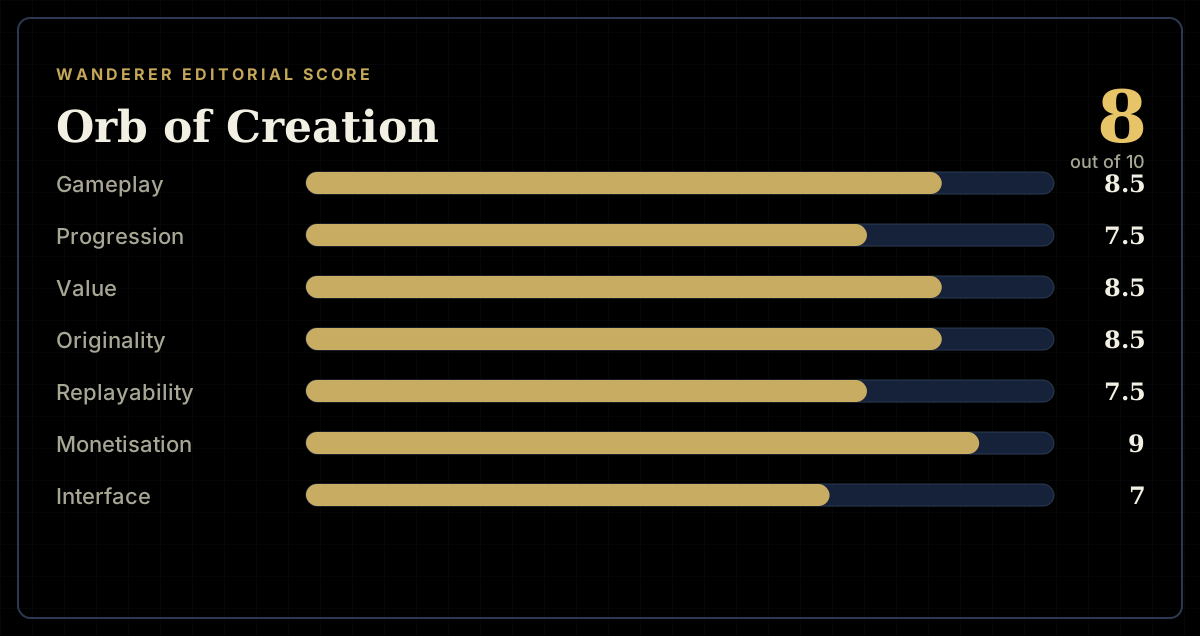
8 / 10
- Developer
- MarpleGames
- Publisher
- MarpleGames
- Released
- 23 June 2026
- Platforms
- Windows, macOS
- Genre
- Incremental Puzzle
- Monetisation
- One-time purchase, no in-app purchases, no ads
- Players
- Single-player only
The short version
Orb of Creation earns its "non-idle" label honestly. Instead of buying generators and watching a number climb on its own, you spend most of your time actively arranging and firing spell combos, and the game's best idea — crafting entirely new spells out of glyphs you've discovered — gives the incremental genre something it rarely has: a real invention mechanic instead of just a bigger multiplier.
The seams show once the honeymoon phase ends. A handful of magic schools pull ahead of the others by a wide margin, two of the later systems introduce real-time gates that can strand a build with nothing productive to do, and the game trusts you to learn its own vocabulary with almost no hand-holding. None of that undoes what the first stretch accomplishes, but it keeps this from being the genre-defining release some of its loudest fans claim it is.
Biggest strengths
- The glyph system lets you assemble entirely new spells from discovered pieces rather than just buying the next one on a list
- Spell-combo timing turns resource generation into a real skill instead of a progress bar to stare at
- Archetypes genuinely change how a run plays, from an even multi-school spread to an all-in combo build
Biggest weaknesses
- Agromancy and Ritual mechanics introduce real-time gates that can strand a build with nothing left to do, sometimes forcing a prestige before it's actually wanted
- The Druid school lags well behind Scholar and Storm in raw output, making some archetype choices feel like a trap rather than a playstyle
- The game explains almost nothing directly, and the opening hour can read as noise rather than invitation for players who don't already know the genre's shorthand
Who it's for: Incremental and idle-RPG players who want active decisions instead of a timer to watch, and anyone curious what a "crafting system" looks like when it's built for a clicker rather than an RPG.
Our recommendation: Buy it. At under twenty New Zealand dollars for a game with a genuinely interesting central mechanic and no further purchases waiting behind it, the price is not the risk here — knowing whether the active-clicking loop and the late-game time gates suit you is.
8 / 10
Most incrementals are built around a single, comforting lie: leave the tab open and something good will happen. Orb of Creation refuses to make that promise. Its wizard doesn't summon resources by waiting — they summon them by casting, chaining and timing spells against each other, and the entire game is built around the idea that an incremental can ask something of your attention rather than just your patience.
A world rebuilt one spell at a time
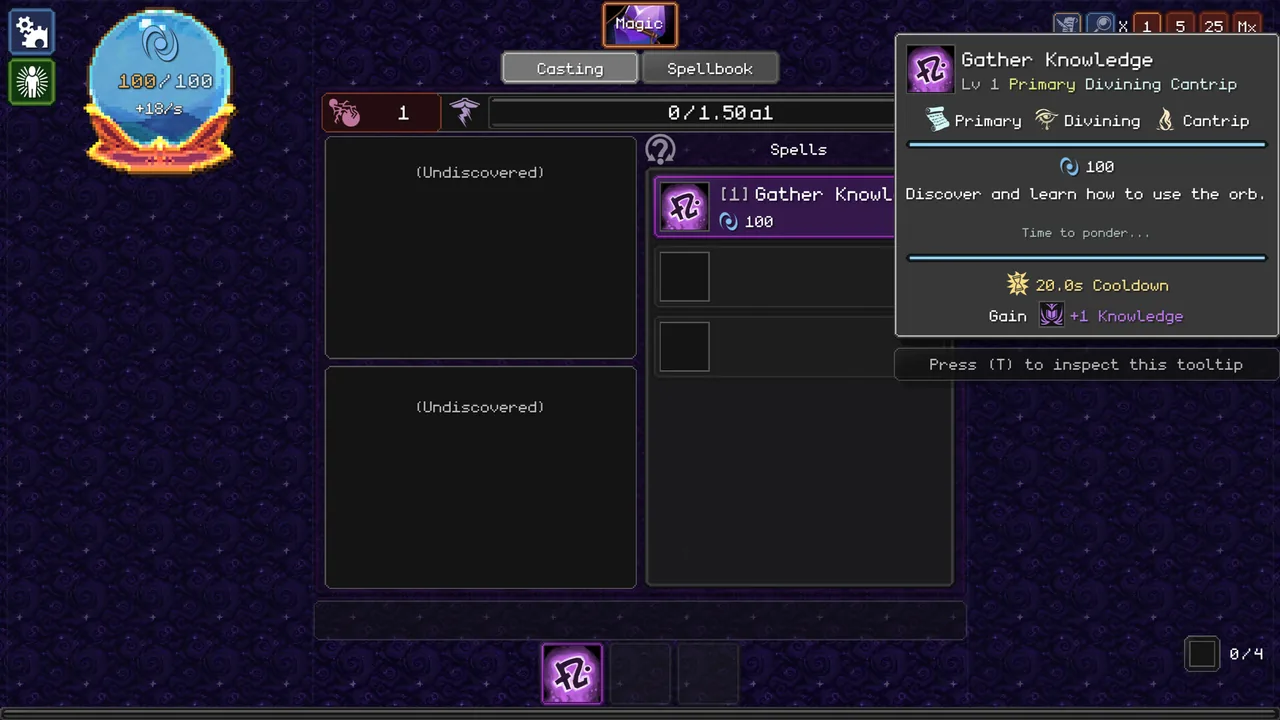
The premise is simple enough to state in a sentence: you're a wizard with a magic orb, standing in the ruins of a world, and you rebuild it by conjuring resources and spending them on upgrades, artifacts and potions. What separates it from the hundred other "summon and upgrade" clickers on Steam is what sits underneath that loop. Instead of a fixed spell list that unlocks in a predetermined order, you discover glyphs as you play and combine them yourself to create new spells — an alchemy-style crafting system grafted onto a genre that almost never lets players build their own tools. Deciding which glyph combinations are worth chasing, and which one finally breaks a resource bottleneck you've been stuck on for an hour, is where the game's actual puzzle lives.
Layered on top of that is a spell-combo system that rewards active play in a way idle games structurally can't. Casting skills in the right order and the right rhythm generates resources in sudden bursts rather than the steady drip a time bar would give you passively. That single design choice is what earns the "non-idle" label MarpleGames puts on its own store page, and it's the right call — the difference between watching numbers increase and actually producing the increase yourself is the whole personality of this game.
Archetypes give the same systems different shapes
Orb of Creation offers a genuine choice of playstyle rather than a cosmetic one. You can spread upgrades evenly across every magic school for a safe, steady build, commit hard to a single school to optimise its specific strengths, or chase explosive combo chains that clear goals in seconds rather than minutes. Each approach uses the same underlying systems but produces a noticeably different run, which is a harder trick to pull off than it sounds — plenty of incrementals claim "build diversity" and mean nothing more than which upgrade you click first.
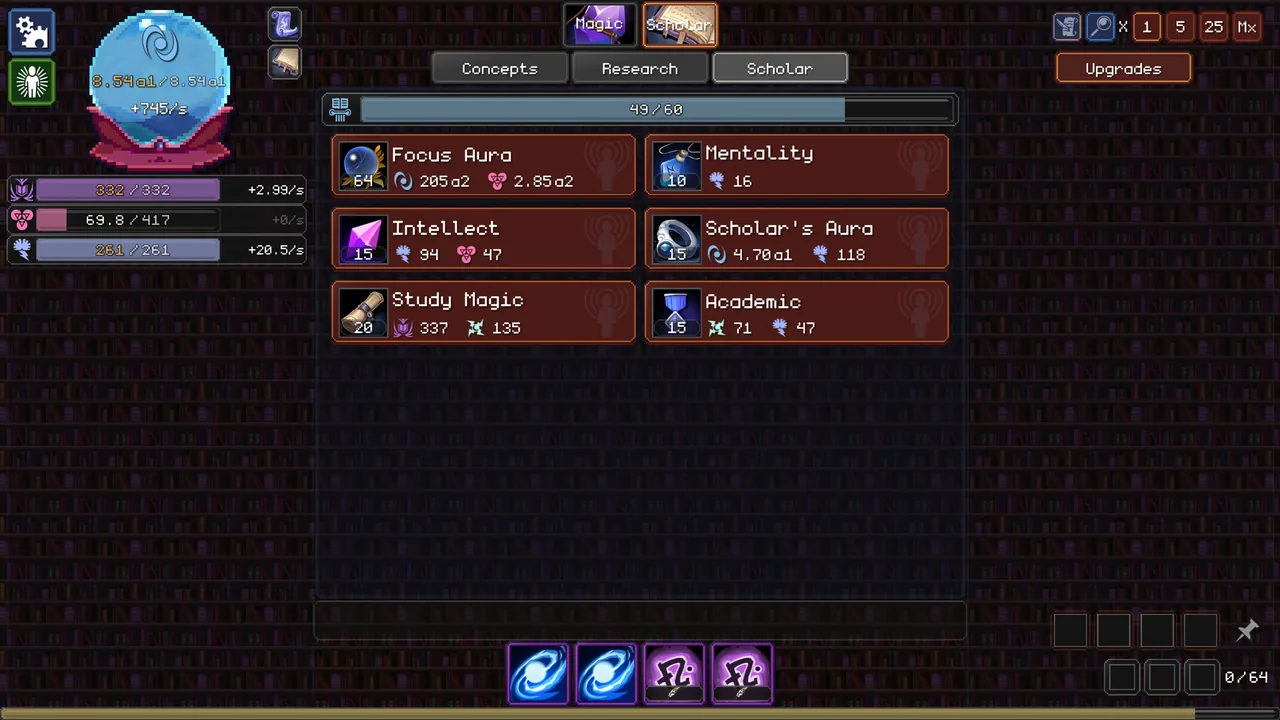
The catch is that these archetypes aren't actually balanced against each other. The Druid school in particular has drawn consistent criticism for lagging well behind the raw output of Scholar's reflection mechanics or Storm's rapid cantrip spam, which turns "focus on a school you like" into a trap for players who pick based on theme rather than a spreadsheet. A game built around player choice needs its choices to be roughly comparable, and right now some of them clearly aren't.
Where the pacing turns hostile
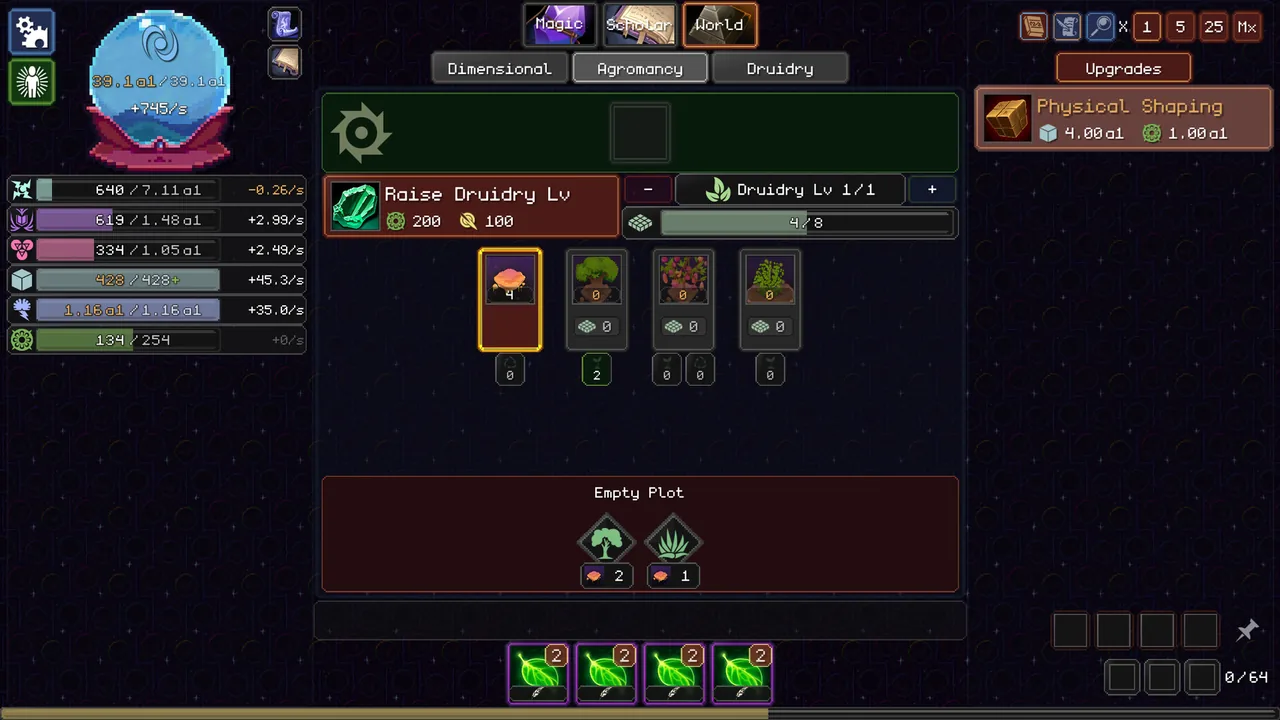
The early and middle stretches of Orb of Creation are generous — new mechanics, new glyphs and new bottlenecks to solve arrive at a pace that keeps the "one more upgrade" instinct alive without much friction. That generosity doesn't survive contact with the Agromancy and Ritual systems, both of which introduce hard real-time gates rather than resource gates. Instead of a wall you can push through by playing smarter, you hit a wall you can only push through by waiting, and several players have described those stretches as bad enough to force a prestige reset before they actually wanted one, just to have something to do again. For a game whose whole pitch is active engagement over passive waiting, a mechanic that quietly reintroduces waiting — with no combo or clever glyph arrangement able to shorten it — is a real inconsistency in the design philosophy, not a minor pacing hiccup.
The 1.0 release does attempt to address the back half of the game directly. Full world restoration, New Game+, randomised discoveries and reworked Druidry, alchemy and ritual systems all arrived with the jump out of Early Access, and they read as a genuine attempt to give completed runs a reason to restart rather than just a bigger number to chase. Whether the ritual rework actually removes the time-gate complaints or just softens them is the kind of thing that will keep shifting as the post-launch patches land — this is a game that spent over four years in Early Access already, so a slow, iterative fix cycle is the established pattern, not a surprise.
An interface that teaches by refusing to explain
MarpleGames has been explicit that the design goal is to teach the player through play rather than through menus or tutorial text, and that philosophy is all over the interface. There's very little hand-holding: the game hands you an orb, a handful of starting glyphs and trusts you to work out what a "combo" even means from the way numbers respond to your inputs. For players who already speak incremental-genre shorthand, that trust is refreshing — it's the same instinct that made the genre's best games (this site has reviewed a few) feel like discovery engines rather than checklists. For anyone arriving without that background, the opening hour can read as noise rather than invitation, and the game offers little beyond its own systems to bridge that gap. That trade-off is defensible as a design choice, but it is a real cost, and it's worth knowing about before you buy rather than after.
A rare clean monetisation story
There isn't much to say here, which is itself worth saying: Orb of Creation is a one-time purchase at NZ$18.75 with no in-app purchases, no energy system, no currency to top up and no storefront pushing anything at you mid-session. An optional soundtrack sells separately on Steam, which is as close to a monetisation complaint as this game earns. For a genre where mobile ports routinely bolt on a cash shop the desktop original never had, a premium desktop release with nothing further to buy is close to the ideal shape, and it should be called out as one of the game's clear strengths rather than a neutral non-issue.
Whether that price buys a fair amount of game depends on who you ask. Plenty of players report hundreds of hours out of it, which for under twenty dollars is an excellent rate regardless of anything else. Others have hit a stretch well under twenty hours in where the available systems run dry and the only way forward is waiting on Agromancy or Ritual timers, or on the developer's next update. Both things can be true at once — the ceiling is genuinely high, but the road to it isn't always smooth.
Verdict
Eight out of ten. Orb of Creation's central idea — that an incremental can be built around active spell-casting and genuine spell-crafting rather than a generator you buy and forget — is a real contribution to a genre that recycles the same handful of structures constantly. The glyph-alchemy system in particular deserves the attention it's getting; letting players assemble their own tools rather than unlock a fixed list is rarer than it should be in this space.
What keeps it from climbing higher is uneven execution around the edges of that idea: a magic school that's a trap dressed up as a playstyle, two late-game systems that reintroduce the passive waiting the whole game is supposed to be an alternative to, and an onboarding process that assumes you already know the genre's language. None of that erases what the first stretch gets right, but a review that only praised the invention mechanic and ignored the time gates and the balance gaps would be telling half the story.
Buy it if you want an incremental that asks for your attention rather than your patience, and you're willing to ride out a rough patch in the middle for a genuinely clever crafting system on either side of it. Players who'd rather have that same "always something progressing" feeling wrapped around a persistent character and a world to actually walk through, rather than a wizard alone with an orb, are closer to the audience Wanderer is built for.
Price and monetisation details checked 31 July 2026.
Pros and cons
Pros
- The glyph system lets you assemble entirely new spells from discovered pieces rather than just buying the next one on a list
- Spell-combo timing turns resource generation into a real skill instead of a progress bar to stare at
- Archetypes genuinely change how a run plays, from an even multi-school spread to an all-in combo build
- One-time purchase with no currency, energy system or storefront ever put in front of a decision
- New Game+ and randomised discoveries in the 1.0 release give a finished run a reason to start again
Cons
- Agromancy and Ritual mechanics introduce real-time gates that can strand a build with nothing left to do, sometimes forcing a prestige before it's actually wanted
- The Druid school lags well behind Scholar and Storm in raw output, making some archetype choices feel like a trap rather than a playstyle
- The game explains almost nothing directly, and the opening hour can read as noise rather than invitation for players who don't already know the genre's shorthand
- Some multiplier bonuses have been reported not to stack the way their own tooltips describe
Screenshots
-
Orb of CreationImage: MarpleGames via Steam -
Orb of CreationImage: MarpleGames via Steam -
Orb of CreationImage: MarpleGames via Steam -
How the review scores each part of the gameWanderer Editorial -
The short versionWanderer Editorial