Game review
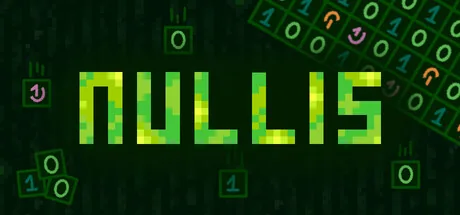
Nullis
7.3 / 10
- Developer
- Verontsik
- Publisher
- Verontsik
- Released
- 10 March 2026
- Platforms
- Windows, Linux
- Genre
- Casual, Indie
- Monetisation
- Premium
- Players
- Single-player only
The short version
Nullis is a $6.99 logic puzzle game from Estonian solo developer Verontsik, released 10 March 2026, built around clearing boards of zeros by selecting non-crossing paths while gravity and "quantum qubit" mechanics complicate the solution space. This review draws on a sample of 10 lifetime reviews, unanimously Positive with 10 positive and 0 negative, and finds a small but genuinely enthusiastic audience praising a well-paced difficulty curve, over 100 handcrafted levels, and an unusually deep accessibility feature set for a one-person project, tempered by a couple of specific, credible complaints about the soundtrack and a star-tracking bug.
Biggest strengths
- This review's sample repeatedly praised the game's difficulty curve and interface polish, with one reviewer writing 'Very satisfying little puzzler. Levels are easy enough that they are not frustrating, but complex enough to make you want to do more and more. The UI UX and keyboard shortcuts make playing it a breeze'
- This review's sample included a curator disclosure from a reviewer identifying themselves as running the European Game Atlas curator page, who wrote 'I got so immersed from the beginning. The puzzles are fun, and there are 100 of them... I also like how the mechanics are introduced gradually throughout the game so it doesn't get too overwhelming'
- This review checked the game's store categories directly and found an unusually extensive accessibility feature list for a solo-developer release, including Camera Comfort, Color Alternatives, Adjustable Difficulty, Keyboard Only Option, Mouse Only Option, Touch Only Option, and Playable without Timed Input
Biggest weaknesses
- This review's sample flagged a specific audio-design mismatch, with one reviewer writing 'the music feels to be absolutely out of place and becomes annoying pretty quickly,' and suggesting the developer 'would expect to hear something cyberpunk-ish and with maybe increasing intensity as you progress to harder levels' given the game's visual theme
- This review's sample included a specific achievement-tracking bug report, with a reviewer who played the pre-release demo noting the 'Complete 10 levels' achievement 'never triggered, probably because I already played through some levels in the Demo'
- This review notes the sample is small, only 10 lifetime reviews at time of writing, and entirely positive with no dissenting or critical review to weigh against the praise, a structural caveat worth flagging even though every available data point is favorable
Who it's for: Fans of bite-sized logic puzzlers who want a game that respects short sessions but still rewards optimization-minded replays chasing a three-star rating on every level, and players who specifically value accessibility options in a genre that doesn't always prioritize them.
Our recommendation: A confidently recommended pickup at its price for logic-puzzle fans, backed by a small but completely positive review sample and a genuinely unusual accessibility commitment for a solo-developer release.
7.3 / 10
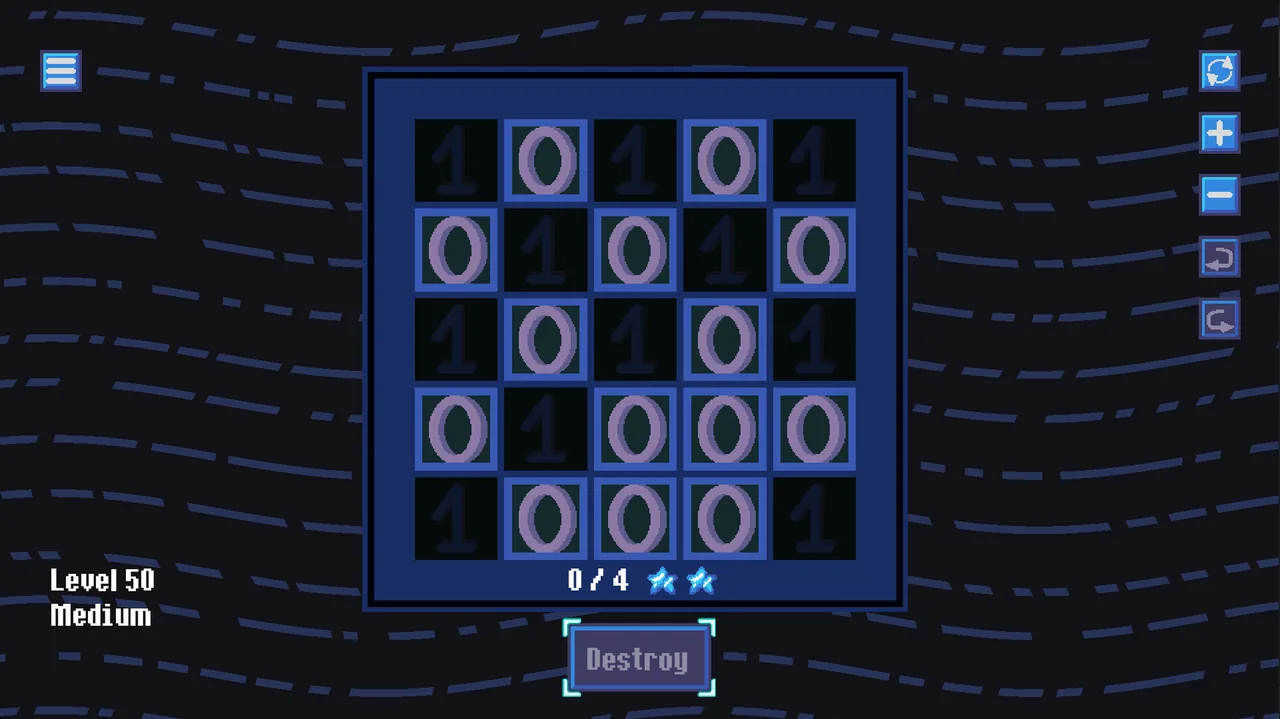
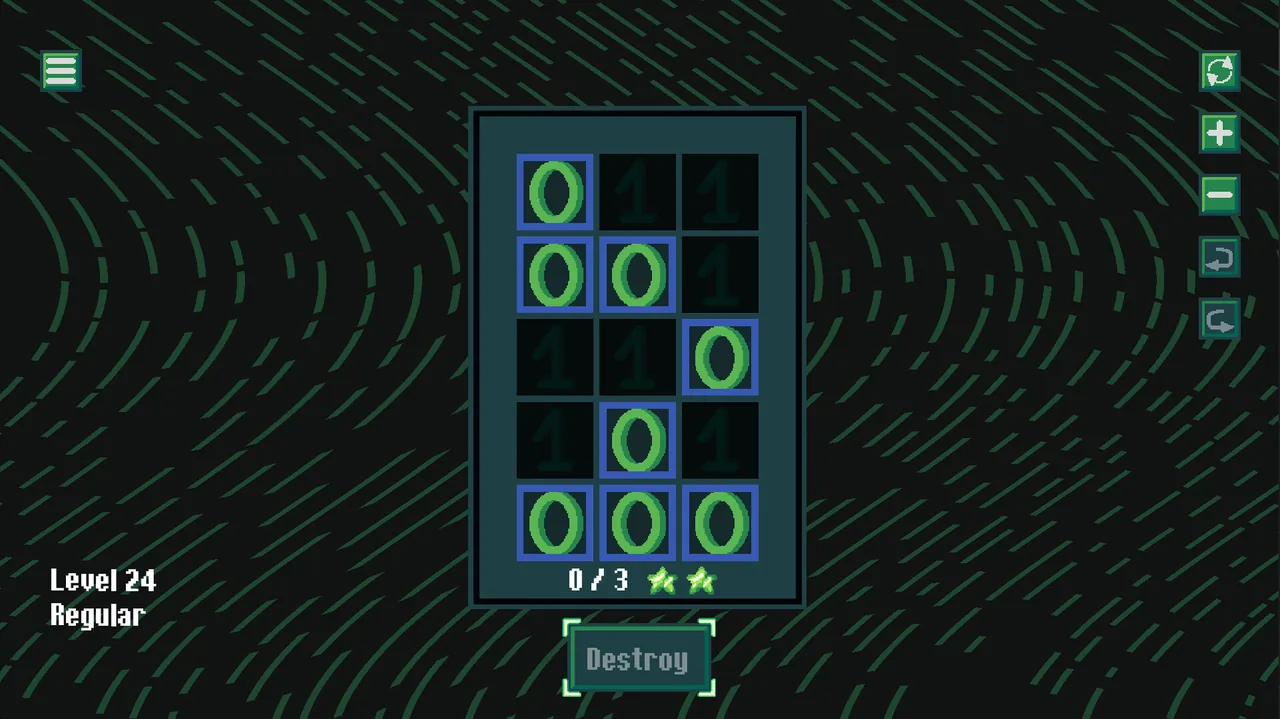
Clear every zero from the board, but don't cross your own paths, and watch out for the qubits: Nullis is a $6.99 logic puzzle game from Estonian solo developer Verontsik, released 10 March 2026. This review draws on a sample of 10 lifetime reviews, unanimously Positive with 10 positive and 0 negative, and reads the full sample in detail.
A puzzle mechanic reviewers found genuinely satisfying
This review's sample was consistent and specific in praising the core loop's pacing. One reviewer summed it up directly: "Very satisfying little puzzler. Levels are easy enough that they are not frustrating, but complex enough to make you want to do more and more. The UI UX and keyboard shortcuts make playing it a breeze." Another reviewer, who discovered the game at a regional game expo and pre-ordered on the strength of its demo, wrote that the later levels "actually made me sit and think for a while, which I loved," describing it as "a good brain workout."
Over 100 levels built around gradual escalation
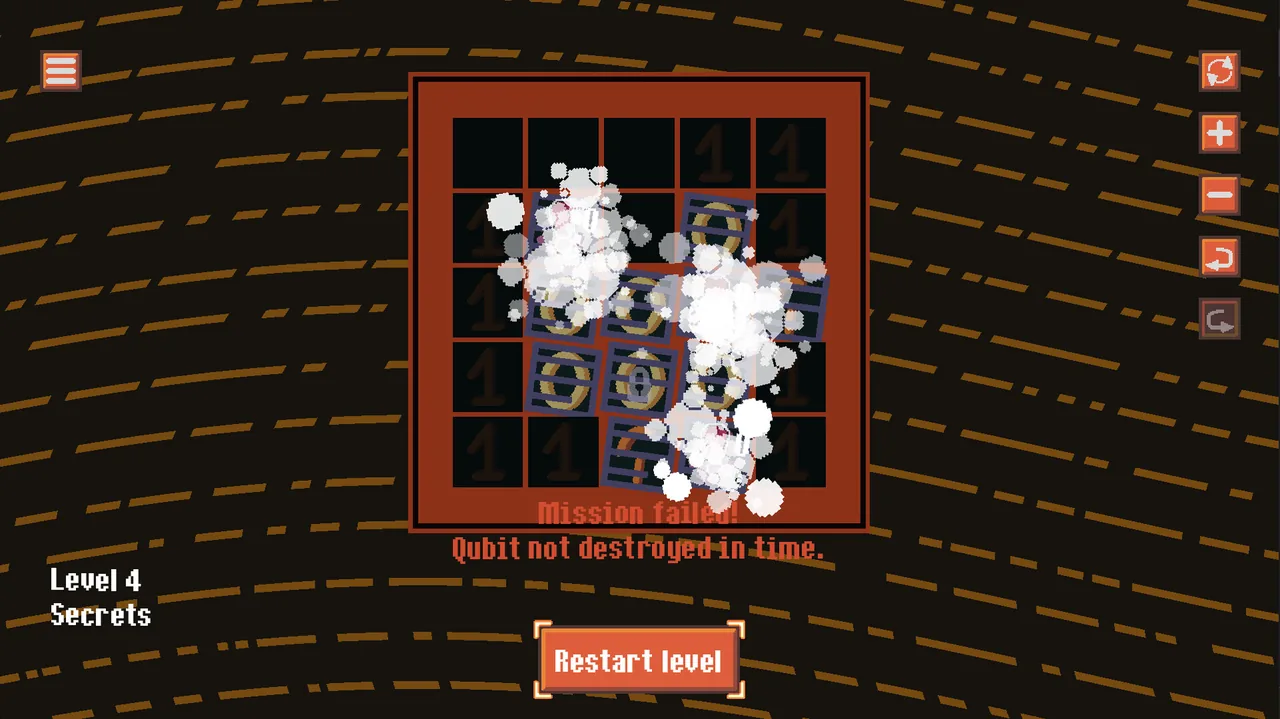
This review checked the store's own feature list and found over 100 handcrafted levels spread across three difficulty tiers plus secret levels, one of which a reviewer noted contains "a FROG." The sample repeatedly credited the game's pacing for making that volume of content approachable rather than overwhelming. The curator-disclosed reviewer wrote, "I also like how the mechanics are introduced gradually throughout the game so it doesn't get too overwhelming," while a separate reviewer praised the "nice variety of difficulty levels," noting "the puzzles are short enough that each level feels satisfying to complete."
A star-chasing scoring system that hooked the sample
This review's sample repeatedly pointed to the game's optimal-move star system as the thing that kept them coming back after finishing a level once. One reviewer admitted the competitive pull got the better of them: "The game also got my competitive side with the star system and the easy restart options, so I'm not ashamed to say I've restarted who knows how many times some levels until I got all the stars." That reviewer specifically said they were "planning on getting 100% achievement," language this review reads as strong evidence the completionist loop is landing as intended.
A soundtrack reviewers felt didn't fit the visuals
Set against that praise, this review's sample raised one specific, detailed complaint about audio design. A reviewer who otherwise praised the game's "clear Balatro inspiration" in its visual presentation wrote that "the music feels to be absolutely out of place and becomes annoying pretty quickly," adding they would have expected "something cyberpunk-ish and with maybe increasing intensity as you progress to harder levels" given the quantum-themed premise. This review treats that as a credible, specific mismatch between the game's visual identity and its sound design, not a vague complaint.
A demo-carryover achievement bug worth knowing about
This review's sample included one concrete bug report tied to players who tried the pre-release demo before buying the full game. That reviewer wrote the "Complete 10 levels" achievement "never triggered, probably because I already played through some levels in the Demo," despite otherwise completing the relevant milestone. This review notes the bug appears narrow, tied specifically to demo-to-full-game progress carryover, rather than a broader achievement-tracking failure, since other reviewers reported no similar issue.
An accessibility feature list unusually deep for a solo project
This review checked the game's store categories directly and found a notably long accessibility list for a one-person indie release: Camera Comfort, Color Alternatives, Custom Volume Controls, Adjustable Difficulty, Keyboard Only Option, Mouse Only Option, Touch Only Option, and Playable without Timed Input, alongside full controller support including DualSense compatibility. This review reads that breadth as a genuine differentiator, since accessibility options of this depth are uncommon even among larger studio releases in the puzzle genre, let alone a solo-developer title.
Engagement data and an open question about future support
This review checked achievement data directly and found a healthy completion curve from 100.0% for the basic tutorial down to 37.2% for the hardest two-star tier, evidence that a meaningful share of players are pushing into the game's harder content rather than stopping early. Playtime across the sample ranged from 33 minutes up to 8.58 hours, with a median of about 2.2 hours, consistent with a title built around short, repeatable sessions. This review's sample did raise one open question about the game's future, with a reviewer who praised the late-game difficulty spike adding, "Idk if this game will receive updates, but it really should," a sentiment this review notes without being able to confirm or deny given the partner events feed shows only a single launch-day post since release.
A quiet discovery, not a marketing push
This review notes the sample offers a glimpse of how the game found its early audience: word of mouth from a regional expo appearance, a curator page dedicated to European-developed games, and organic Steam browsing rather than any visible marketing campaign. One reviewer specifically traced their purchase back to "GameOn 2025 Baltics," playing the demo there before buying the finished game outright once it launched. This review reads that pattern, a small, geographically-rooted discovery path feeding into a wholly positive but modest-sized review count, as consistent with a genuine solo-developer release finding its niche organically rather than any inflated or purchased review activity.
Verdict
Nullis is a small, confidently-built logic puzzler that earns its unanimous early praise: a well-paced difficulty curve, over 100 levels, a genuinely sticky star-chasing scoring system, and an accessibility commitment well beyond what most solo-developer puzzle games attempt. Its sample is small and entirely positive, which this review flags as a structural caveat rather than a flaw in the game itself, and the two specific complaints on record, an ill-fitting soundtrack and a narrow demo-carryover achievement bug, are worth knowing going in without being remotely disqualifying. At $6.99, this review finds it a confident recommendation for anyone who enjoys optimization-minded logic puzzles in short sessions.
Pros and cons
Pros
- This review's sample repeatedly praised the game's difficulty curve and interface polish, with one reviewer writing 'Very satisfying little puzzler. Levels are easy enough that they are not frustrating, but complex enough to make you want to do more and more. The UI UX and keyboard shortcuts make playing it a breeze'
- This review's sample included a curator disclosure from a reviewer identifying themselves as running the European Game Atlas curator page, who wrote 'I got so immersed from the beginning. The puzzles are fun, and there are 100 of them... I also like how the mechanics are introduced gradually throughout the game so it doesn't get too overwhelming'
- This review checked the game's store categories directly and found an unusually extensive accessibility feature list for a solo-developer release, including Camera Comfort, Color Alternatives, Adjustable Difficulty, Keyboard Only Option, Mouse Only Option, Touch Only Option, and Playable without Timed Input
- This review's sample repeatedly praised the star-based optimal-move scoring system as a strong replayability hook, with one reviewer noting they got 'so competitive' chasing full stars that they 'restarted who knows how many times' individual levels
Cons
- This review's sample flagged a specific audio-design mismatch, with one reviewer writing 'the music feels to be absolutely out of place and becomes annoying pretty quickly,' and suggesting the developer 'would expect to hear something cyberpunk-ish and with maybe increasing intensity as you progress to harder levels' given the game's visual theme
- This review's sample included a specific achievement-tracking bug report, with a reviewer who played the pre-release demo noting the 'Complete 10 levels' achievement 'never triggered, probably because I already played through some levels in the Demo'
- This review notes the sample is small, only 10 lifetime reviews at time of writing, and entirely positive with no dissenting or critical review to weigh against the praise, a structural caveat worth flagging even though every available data point is favorable
- This review's sample noted uncertainty about the game's post-launch support, with one reviewer writing 'Idk if this game will receive updates, but it really should' after praising the late-game difficulty spike
Screenshots
-
NullisImage: Verontsik via Steam -
NullisImage: Verontsik via Steam -
NullisImage: Verontsik via Steam