Game review
NOMSTERS Review
7 / 10
- Developer
- Igor Yakunin
- Publisher
- Igor Yakunin
- Released
- 1 August 2026
- Platforms
- ["Windows"]
- Genre
- Arena Shooter
A Physics Shooter Built Around One 45-Second Idea
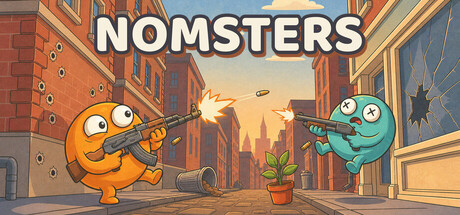
NOMSTERS launched on Steam on August 1, 2026, for $3.99 from solo developer Igor Yakunin, and its pitch is refreshingly small: two round, ball-shaped "Nomsters" drop into a tiny city, grab whatever guns and furniture they can find, and fight until only one is left rolling, all within a 45-second round. Every one of its 11 English-language reviews is positive, and the tone across the review pool is consistent, this is a game people describe playing in short bursts with a friend rather than settling in for a long session, and the small scale of both the matches and the price tag shapes how forgivingly reviewers treat its limitations. The most-cited strength, right from the opening line of the very first review in the sample, is how instantly legible the objective is: grab a gun, find the other Nomster, don't die, with no tutorial-sized ramp-up required before a first match makes sense. Reported playtimes cluster at both extremes, several reviewers logging under an hour before writing their review and a handful logging five or six, which tracks with a cheap party game that's just as easy to bounce off after one round as it is to keep queuing up round after round with the same friend.
Physics as the Whole Game, Not a Gimmick On Top
What separates NOMSTERS from a generic top-down arena shooter is how seriously it takes its own physics. Because the Nomsters are round and float freely rather than walk, movement itself becomes a puzzle: one reviewer describes pulling benches and bikes toward themselves to build a defensive pile before an opponent comes flying in to knock it apart, while another specifically calls out recoil as a mechanic that changes how you play rather than a cosmetic flourish, describing firing a shotgun and being launched backward across the street before learning to use that momentum on purpose instead of fighting it. That same reviewer notes it took a few rounds to stop treating the physics as an obstacle and start treating them as a tool, which lines up with a separate review calling the whole experience "basically a ball with a gun," a description that captures how differently NOMSTERS handles compared to a normal shooter where recoil is just visual feedback. A third reviewer's one-line lament, losing a round by the width of a single chair, doubles as a neat illustration of how granular and physical the combat actually is: position and clutter matter as much as aim.
Short Rounds, No Queue, Several Ways to Play
Reviewers consistently frame the 45-second round length as a feature rather than a limitation, one calling it "way too short" as a first impression before admitting how intense a single short match can get once both players start using cover and city clutter tactically. The generated city layout resets each match, which one reviewer credits for keeping the format from feeling stale despite how quickly rounds end, since no two arenas play out identically. On the structural side, NOMSTERS supports 1v1 and 2v2 play across online matchmaking, local split screen, or a bot opponent, and more than one reviewer specifically praises the lack of matchmaking queues or waiting, framing the game as something you can jump into and finish a session of in a handful of minutes. That flexibility matters more than it might for a bigger release, since the entire appeal here is short, replayable bursts rather than a long campaign or elaborate meta-progression, and reviewers treat "jump in, fight, done" as exactly what they were promised.
A Thin Options Menu Around a Solid Core
The one specific, recurring complaint in the review pool is about presentation rather than the core gameplay: at least one reviewer flags the lack of a visible keybinding list or the ability to remap controls, a real gap for a physics-driven game where precise input matters. That same review and another both note the developer is actively responsive, with one reviewer specifically mentioning the developer's plans to add four-player support and continue fixing bugs, cited as a strong reason to recommend the game despite its current thinness around the edges. No reviewer in the sample describes technical bugs beyond a stream-related patch referenced in the game's own update notes, and nothing in the pool suggests the physics systems that define the game are unreliable, just that the wrapper around them, menus, remapping, player count, is still catching up to the core idea. The comedic tone reviewers describe, calling the rolling Nomsters themselves "hilarious" and the overall experience "stupidly fun," reads as a genuine byproduct of the physics rather than scripted jokes or dialogue; the humor comes from watching a round little gunslinger get thrown across a street by its own weapon, not from anything the game is explicitly trying to tell you is funny.
Verdict
NOMSTERS knows exactly what it is: a cheap, tightly scoped physics shooter that turns being a rolling ball with a gun into a genuinely distinct combat feel, backed by procedurally arranged tiny cities that keep 45-second rounds from repeating themselves. It doesn't offer much beyond that one idea, there's no progression system to speak of and the options menu is missing basics like control remapping, but at $3.99 for a game built entirely around fast, no-queue matches with friends, a bot, or strangers online, it doesn't need to. Reviewers who came in expecting a throwaway novelty consistently walked away surprised by how much tactical depth the physics alone create, and that's a good sign for a solo-developed game with room to grow.
Screenshots
-
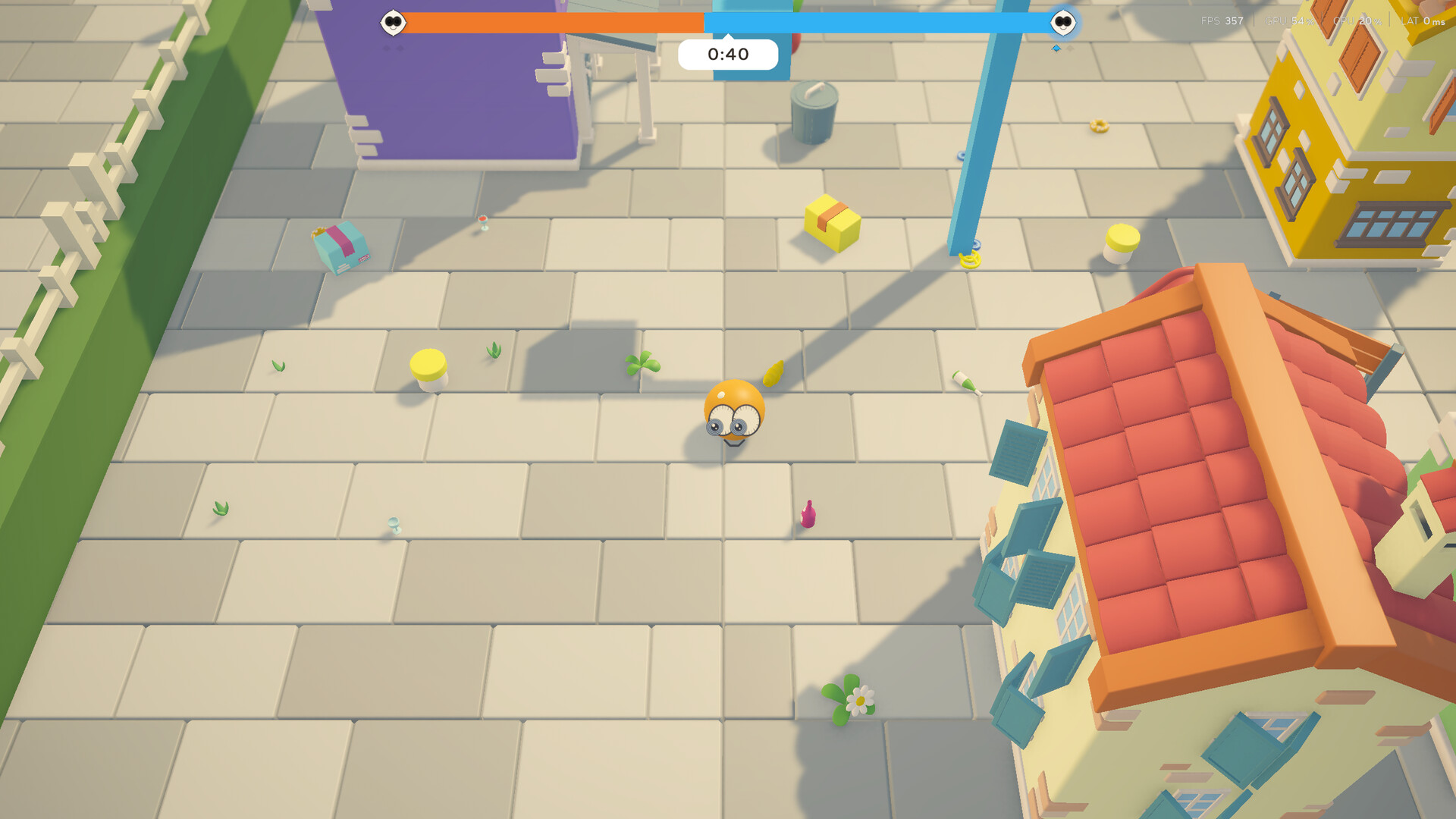
One of the freshly arranged tiny city blocks a round drops you into, part of what reviewers say keeps every 45-second round from feeling like the last.Image: Igor Yakunin via Steam -
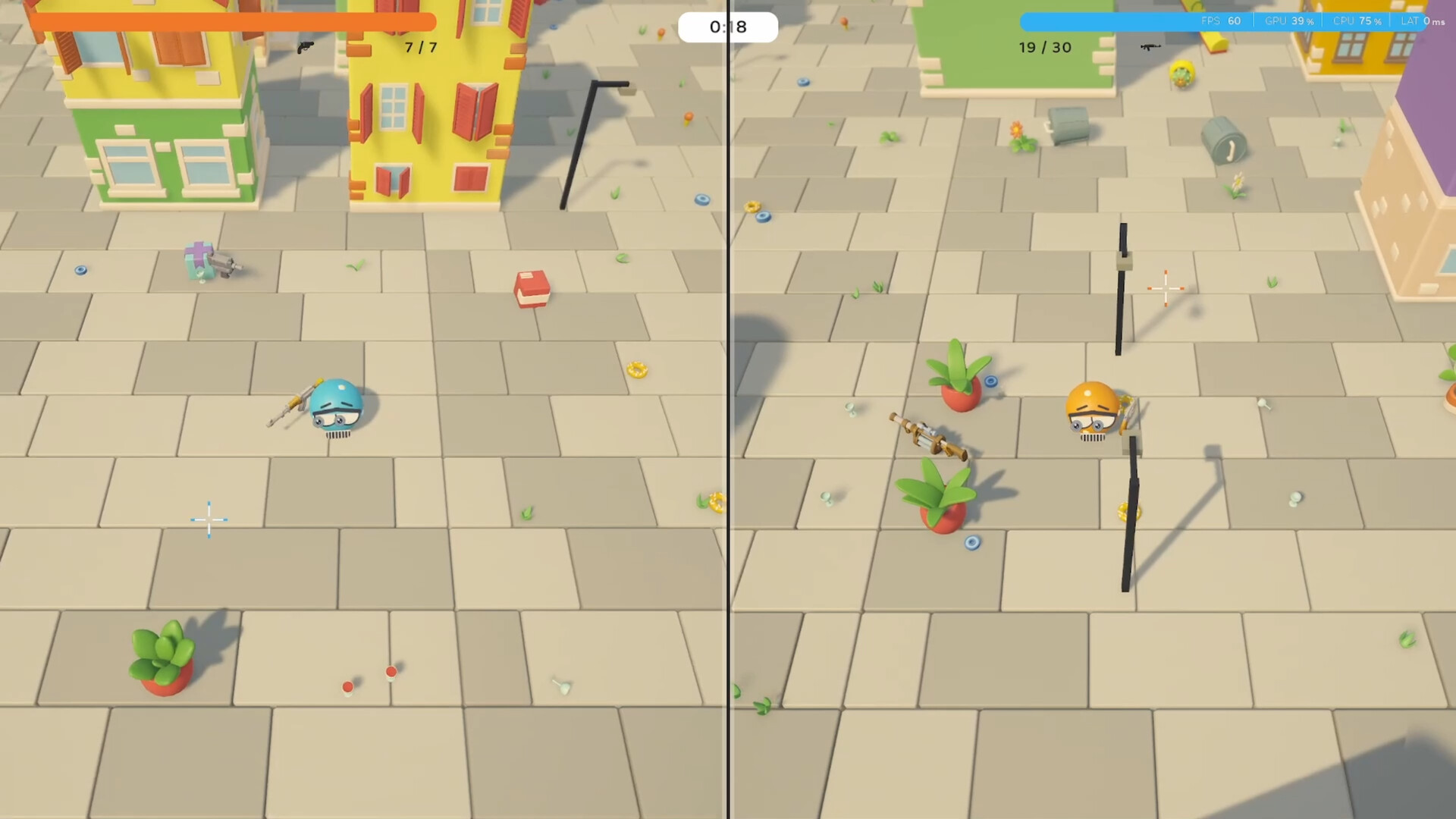
Split screen sits alongside online and bot matches as one of the ways to play, part of what reviewers call a no-queue, no-waiting structure.Image: Igor Yakunin via Steam -
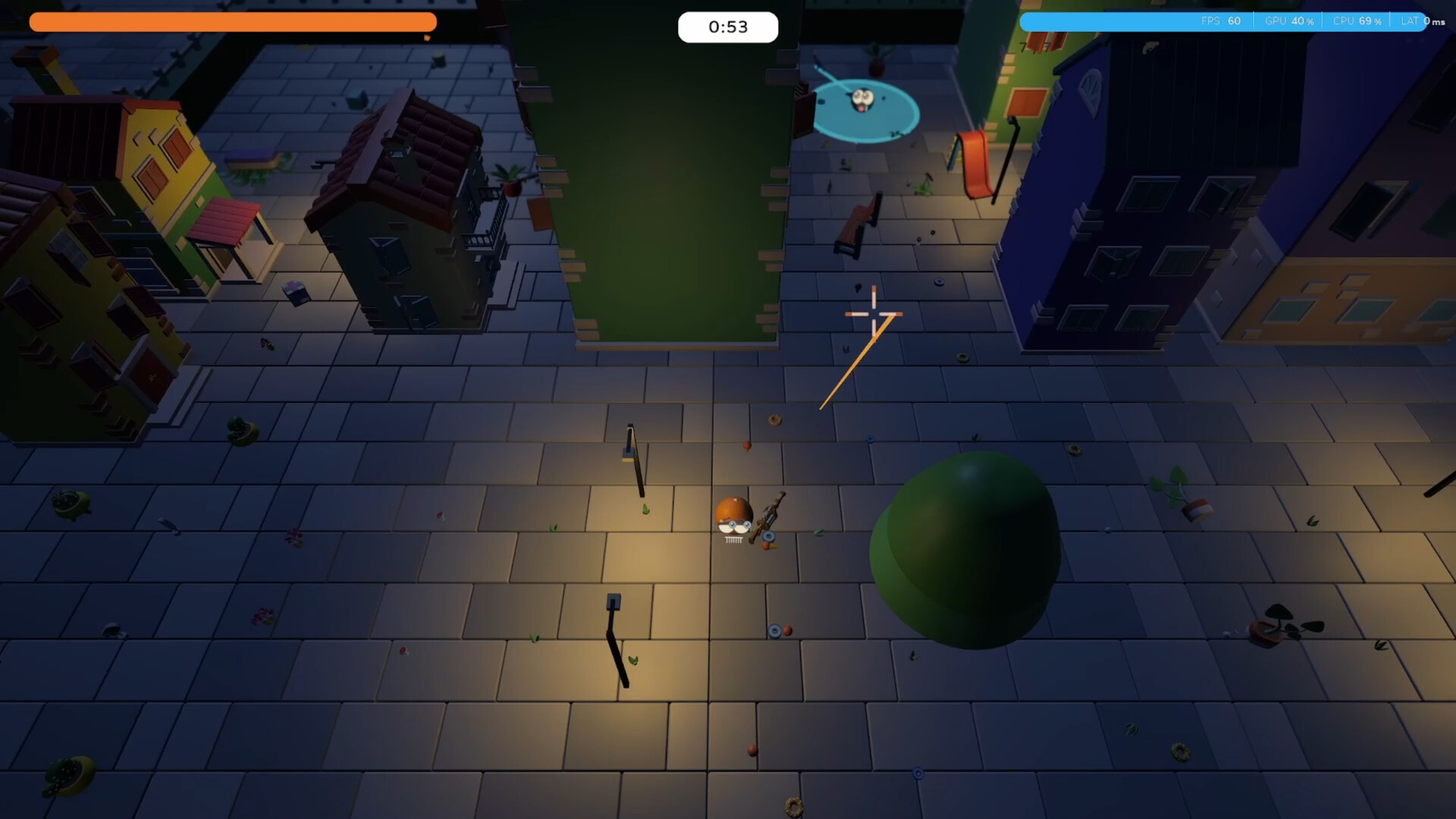
A different city layout lit for a night round, the crosshair and aim-trail a reminder that positioning around clutter matters as much as raw aim.Image: Igor Yakunin via Steam