Game review
RonkBonk Review
6 / 10
- Developer
- copoeric
- Publisher
- copoeric
- Released
- 2 September 2026
- Platforms
- ["Windows", "macOS", "Linux"]
- Genre
- Action
A Solo Dev's Take On The Trail-Duel Formula
RonkBonk, released September 2, 2026 from solo developer and publisher copoeric, is a $2.99 riff on the classic light-cycle trail-duel idea: two cubes race around a grid, painting the floor behind them, and the first to crash into a wall, an opponent, or their own trail loses the round. First to six wins the match. It's a tiny, cheap release with exactly seven English-language reviews at the time of writing, every one of them a thumbs-up, but the pool is short and enthusiastic rather than deep and detailed, and a close read of what those seven reviewers actually wrote paints a more complicated picture than a perfect score alone would suggest.
Skills And Jokers Add Real Depth To A Simple Premise
The base loop, move, dash for a burst, charge to leap several tiles, is simple enough to grasp in seconds, but copoeric layers a loadout system on top that gives the format more staying power than the core mechanic alone would justify. Before each match, players pick one of five skills, options like Infinite Charge, Clone Creation (spawning helper cubes that fight alongside you), Invisible Trail, and a Laser Trail that cuts directly across the arena, then equip up to two "Jokers" for situational edges: a faster dash, a longer charge window, an extra life, or a tool that shuts down an opponent's own Joker. New skills and Jokers unlock by beating bots or other players with them equipped, syncing over Steam Cloud, which gives even the solo Vs Bots ladder (Easy through Elite) a reason to keep playing past the first few rounds. One reviewer calls the game "one of the most interesting and creative games I've played so far," specifically citing "the difficulty of the game and the different abilities we are able to use" as the draw, and it's a fair assessment: the loadout layer is doing real work to keep a simple trail-duel from feeling one-note.
A Consistent, Corroborated Complaint: Online Multiplayer Doesn't Work
Set against that praise is a specific, repeated problem that shows up across multiple independent reviews rather than as a single isolated gripe. "Hope the multiplayer gets fixed soon on all platforms," one reviewer writes. Another asks bluntly, "why cant we play online." A third, more sympathetic to the game's tiny team, notes "the game on Steam currently has some bugs, but it's a solo dev... I played the demo with the dev for several hours... Yes, the game on Steam currently has some bugs, but it's a solo dev—so I think we should all give him some time to fix everything." Three separate reviewers flagging the same core feature, online matchmaking and friend lobbies, as broken at launch is about as clean a corroborated signal as a seven-review pool can offer, and it's a serious issue for a game whose store page leads with online PvP as a headline mode. A fourth reviewer separately flags general bugginess without specifying which system, adding weight to the pattern without changing its shape.
Controls And Presentation: A Mixed But Genuine Bag
Beyond the multiplayer issue, two reviewers independently describe the controls as "a bit hard," a specific, corroborated complaint about the moment-to-moment feel of steering a cube through dash-and-charge inputs rather than a single player's preference. One reviewer's comparison is unflattering but understandable given the presentation: "it kinda feel like a mobile game," though that same reviewer still calls it "very fun especially the concept." The retro CRT-scanlines aesthetic and the abstract grid-and-trail visual language land better with other reviewers, and the game's very first and so far only post-launch patch, six days after release, specifically targeted the trail rendering, added scanline effects, tuned an overlay heal mechanic, and locked in a color theme, evidence that copoeric is iterating quickly on exactly the kind of presentation feedback reviewers are giving. The loadout screen where all of this comes together also lets players upload a custom image onto the face of their own cube, and several of the unlockable cosmetic bind screens lean into internet-meme humor rather than a straight sci-fi theme, a lighter, joke-heavy touch that fits the game's cheap, casual price point.
Cheap, Small, And Honest About What It Is
At $2.99 there's little room to complain about value in absolute terms; even the shortest logged playtime among the seven reviewers, six minutes, represents a fair trade for the asking price, and the longest logged sessions run past ten hours. The single-player Vs Bots ladder, local split-screen, and unlock-driven loadout progression give the offline half of the game a reasonably complete shape on its own, which matters given the online half's current problems. copoeric's own store page is refreshingly direct about scope, no promises of a sprawling roadmap, just a tight, well-defined duel format with skills, Jokers, and unlocks layered on top, and that honesty about scale extends to how quickly the developer appears to be responding to the bug reports rolling in.
Verdict
RonkBonk is a clever, cheap little arena duel dragged down at launch by a specific, well-corroborated problem: the online multiplayer mode its own store page advertises doesn't reliably work yet, a complaint that shows up independently across roughly half of its available English reviews. The loadout system of skills and Jokers gives the core trail-duel format more depth than $2.99 would suggest, and the solo developer's rapid first patch is an encouraging sign for anyone willing to wait out the rough edges. Right now, though, this is a recommendation for patient early adopters and local-multiplayer players over anyone specifically chasing a polished online scene, since that's the exact part of the pitch currently falling short of what's promised on the store page.
That distinction matters more than the raw thumbs-up tally suggests. A perfect seven-for-seven review score can flatten real, specific frustration into a single green number, and RonkBonk is a case where reading past that number pays off: the skill-and-Joker loadout system is a genuinely thoughtful piece of design for a $2.99 solo project, the kind of structural depth plenty of pricier arena games skip entirely, but it's currently attached to a networking layer that multiple players independently couldn't rely on. One developer, working alone, fixing bugs off community feedback within a week of launch, is a reasonable bet for anyone who buys in now expecting rough edges rather than a finished product, and a much worse bet for anyone expecting the online lobbies advertised on the store page to just work on day one.
Screenshots
-
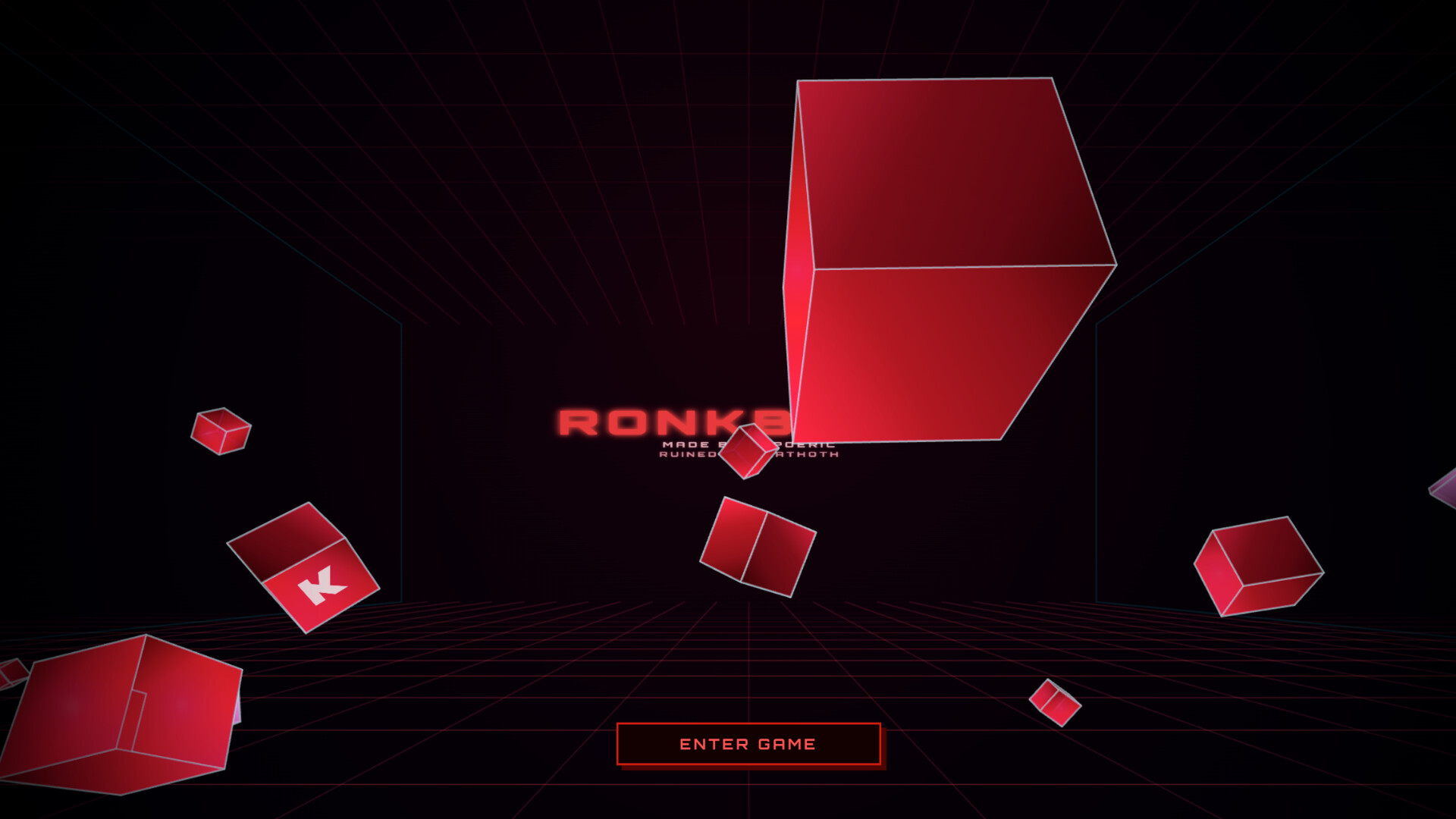
The title screen sets the retro-synthwave tone before a match even starts, all sharp red cubes and neon grid lines.Image: copoeric via Steam -
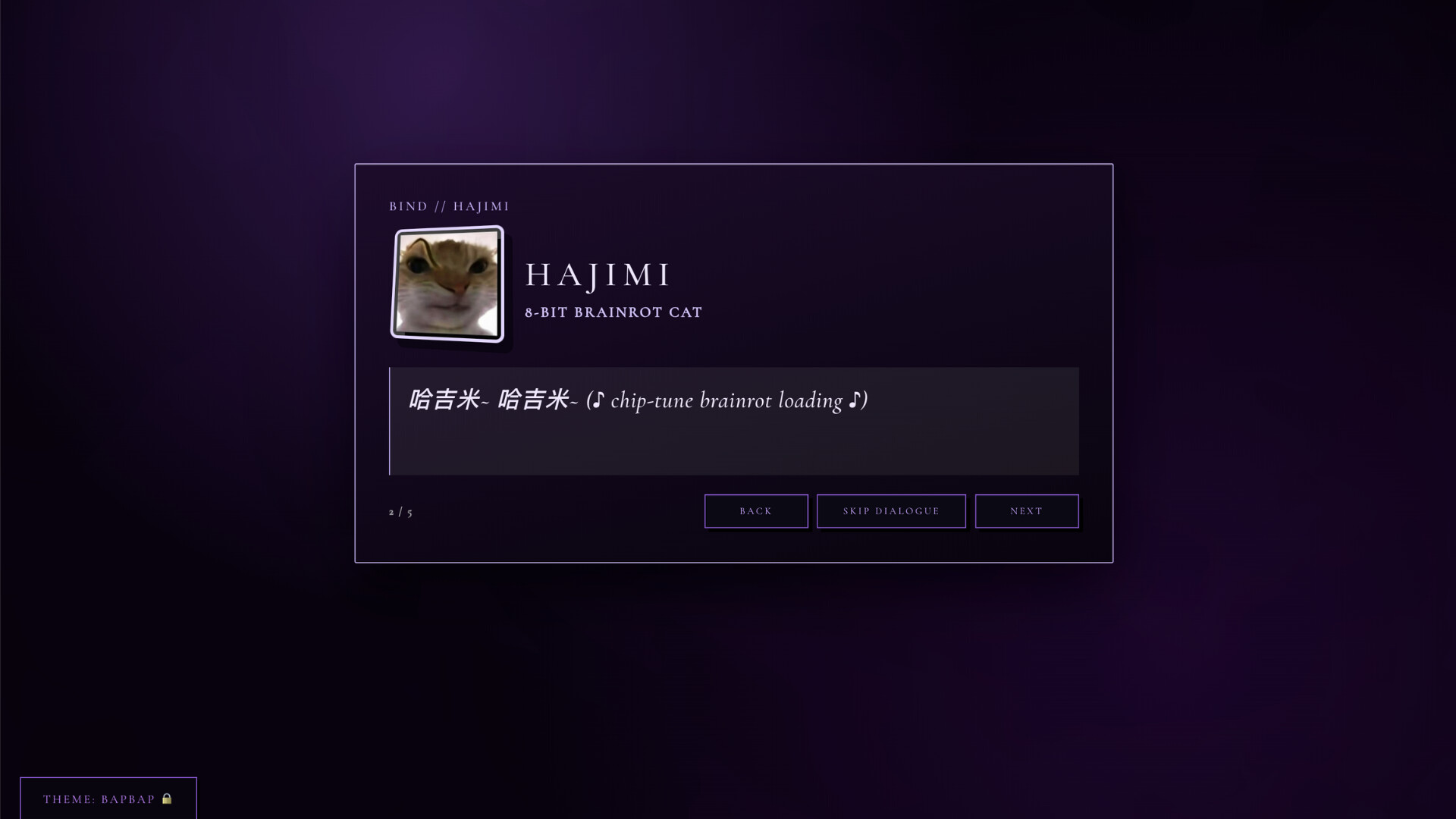
One of several unlockable cosmetic bind screens, this one built around an internet cat meme, part of the game's lighter, joke-heavy unlock content.Image: copoeric via Steam -
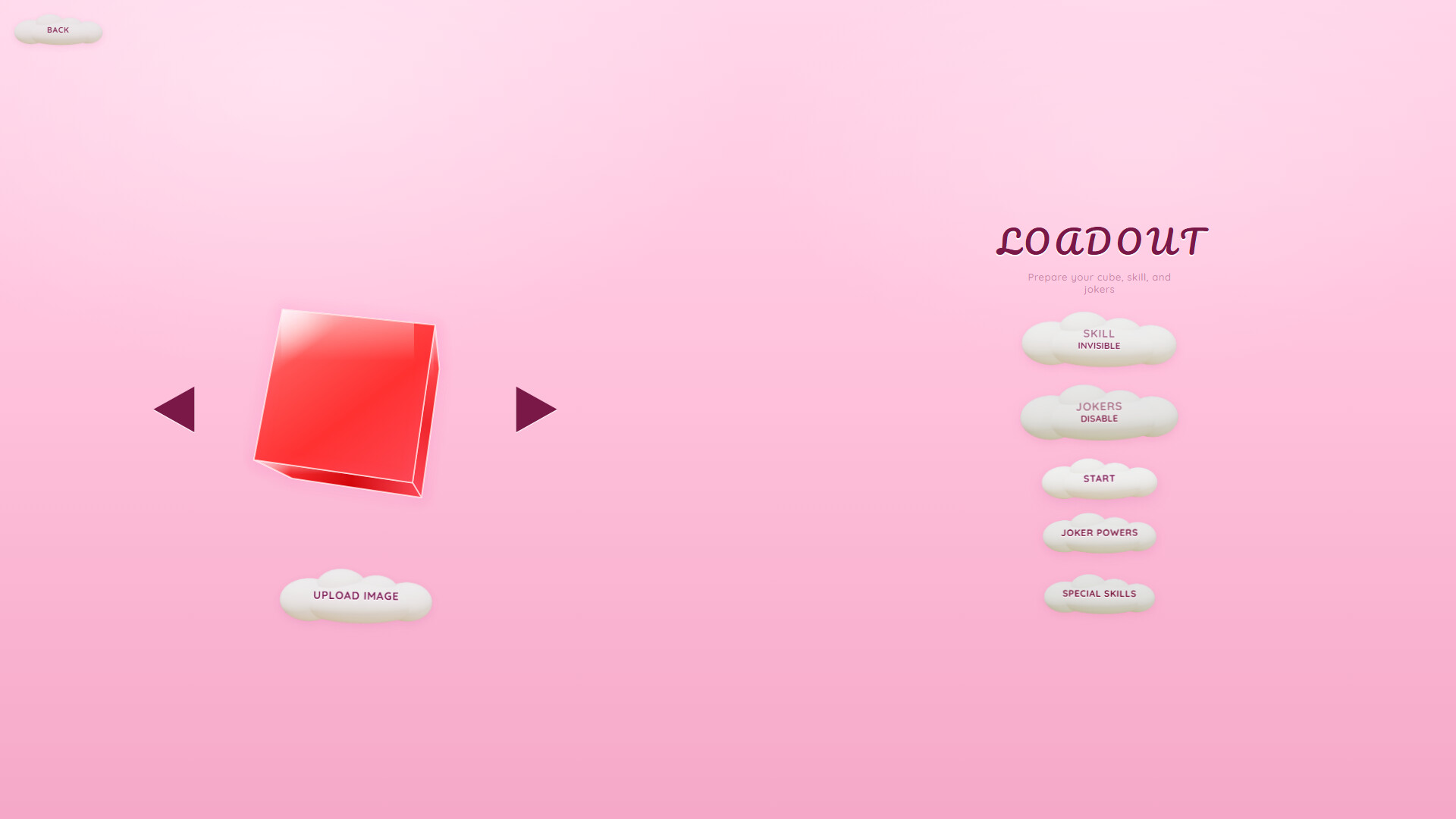
The pre-match loadout screen where skills and Jokers get equipped, and where players can upload a custom image onto their own cube.Image: copoeric via Steam