Game review
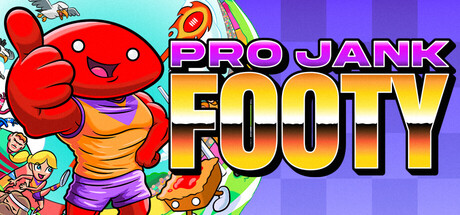
Pro Jank Footy Review
6.5 / 10
- Developer
- Powerbomb Games, Tinker Town
- Publisher
- Powerbomb Games, Umbrella Gaming
- Released
- 12 August 2026
- Platforms
- ["Windows"]
- Genre
- Arcade Sports Roguelite
Aussie Rules Meets NBA Jam, With a Deck of Cards Bolted On
Pro Jank Footy is Powerbomb Games and Tinker Town's pixel-art arcade take on Australian Rules football, and it wears its influences openly: the fast, two-on-eighteen chaos of NBA Jam, crossed with a Balatro-style card system where scoring a goal hands the conceding team a random powerup that can range from a minor buff to a total reality-bending rule change. Turn 80m runs into a giant kicking a ball over the stadium, a flock of seagulls interrupting play, or every player on the field losing their arms, and you have the "jank" the title promises. At $14.99 with 224 English reviews sitting at "Very Positive" (183 positive, 82%), it has clearly landed with an audience much broader than just fans of the sport itself.
The Chaos and the Commentary Are the Whole Draw, and They Deliver
The single most repeated praise across the review pool has nothing to do with sports simulation and everything to do with tone. Reviewers consistently single out the voice commentary from Broden Kelly of the Australian comedy group Aunty Donna as a genuine highlight, calling out specific bits and catchphrases by name, and just as many praise the powerup system itself for how unpredictably it can flip a match, citing examples like being shrunk to miniature size, having a football swapped for a beach ball, or the entire team losing the ability to sprint. Several reviewers explicitly compare the feel to NBA Jam and credit the Balatro-style card draw for making the roguelite layer feel purposeful rather than gimmicky, and a recurring theme is that the game works even for people with zero prior interest in or knowledge of AFL, several non-Australian reviewers say they came away with no understanding of the real sport's rules but had a great time regardless. Local couch co-op comes up constantly as the format reviewers say the game is built for, with multiple reviewers specifically recommending two controllers and a friend over solo play.
Player Switching Is the Single Most Corroborated Complaint in the Entire Pool
If there is one issue that crosses nearly every negative review and even shows up inside plenty of the positive ones, it's the automatic player-switching system. A large number of reviewers describe it as inconsistent, randomly handing control to a player nowhere near the ball at the worst possible moment, or refusing to switch to the obviously closest player, and several say this single mechanic is what turns matches into a fight against the interface rather than the opponent. A second, similarly well-corroborated complaint concerns the lack of AI difficulty options: reviewers repeatedly note there is no way to adjust the single-player opponent's skill, and describe results ranging from trivially easy to unbeatably dominant depending on the match, with no way to tune the experience in between. A third recurring thread targets the season mode specifically, several reviewers call out a particular early match in which the player's team is shrunk to a size that makes tackling and even seeing your own players close to impossible, describing that stretch of the mode as close to unplayable rather than merely difficult, and note there is no way to save progress mid-season if you need to stop partway through.
A Thin Single-Player Offering, Somewhat Papered Over by Post-Launch Patching
Beyond the switching and difficulty issues, a consistent secondary complaint is that the single-player content is sparse: reviewers note the mode selection amounts to one-off exhibition matches and a short season run, several finish everything the game has to offer solo within a handful of hours, and multiple reviewers explicitly frame the game as a party title that only really justifies its price once friends are in the room. Online multiplayer draws its own complaints, several reviewers report requiring an Epic Games account to play online (an odd requirement on a Steam release, several note), the temporary removal and later return of friend invite codes, and matchmaking that a few reviewers say struggles to find opponents outside of launch week. To the developer's credit, several reviewers who initially left negative or mixed reviews say they were revising them upward after specific patches, citing improved auto-switching, rebalanced season difficulty, and the addition of online matchmaking as concrete fixes landing quickly after launch, and the visible pace of hotfixes throughout August and September is corroborated by the patch notes themselves.
Verdict
Pro Jank Footy nails the part of the pitch that's hardest to fake: it is, by a wide and repeated margin, funny and chaotic in exactly the way its marketing promises, carried by genuinely inspired powerup design and a commentary track that reviewers keep quoting back at each other in the review section itself. Where it falls down is in the connective tissue between matches, a player-switching system corroborated as frustrating by a huge share of the review pool, no difficulty tuning for solo play against the AI, and a season mode with at least one specific stretch reviewers describe as borderline unplayable rather than just hard.
None of that is necessarily fatal for a party game whose best moments clearly happen on a couch with a second controller and a willing friend, and the developer's visible, fast post-launch patching suggests the rougher edges are being sanded down in close to real time rather than ignored. But anyone buying primarily for a solo experience, or hoping for a deep season mode with real progression, should treat the current single-player offering as thin and adjust expectations, and anyone particularly sensitive to fiddly control schemes should weigh the switching complaints heavily before buying at full price rather than waiting for a sale or a few more patches.
Screenshots
-
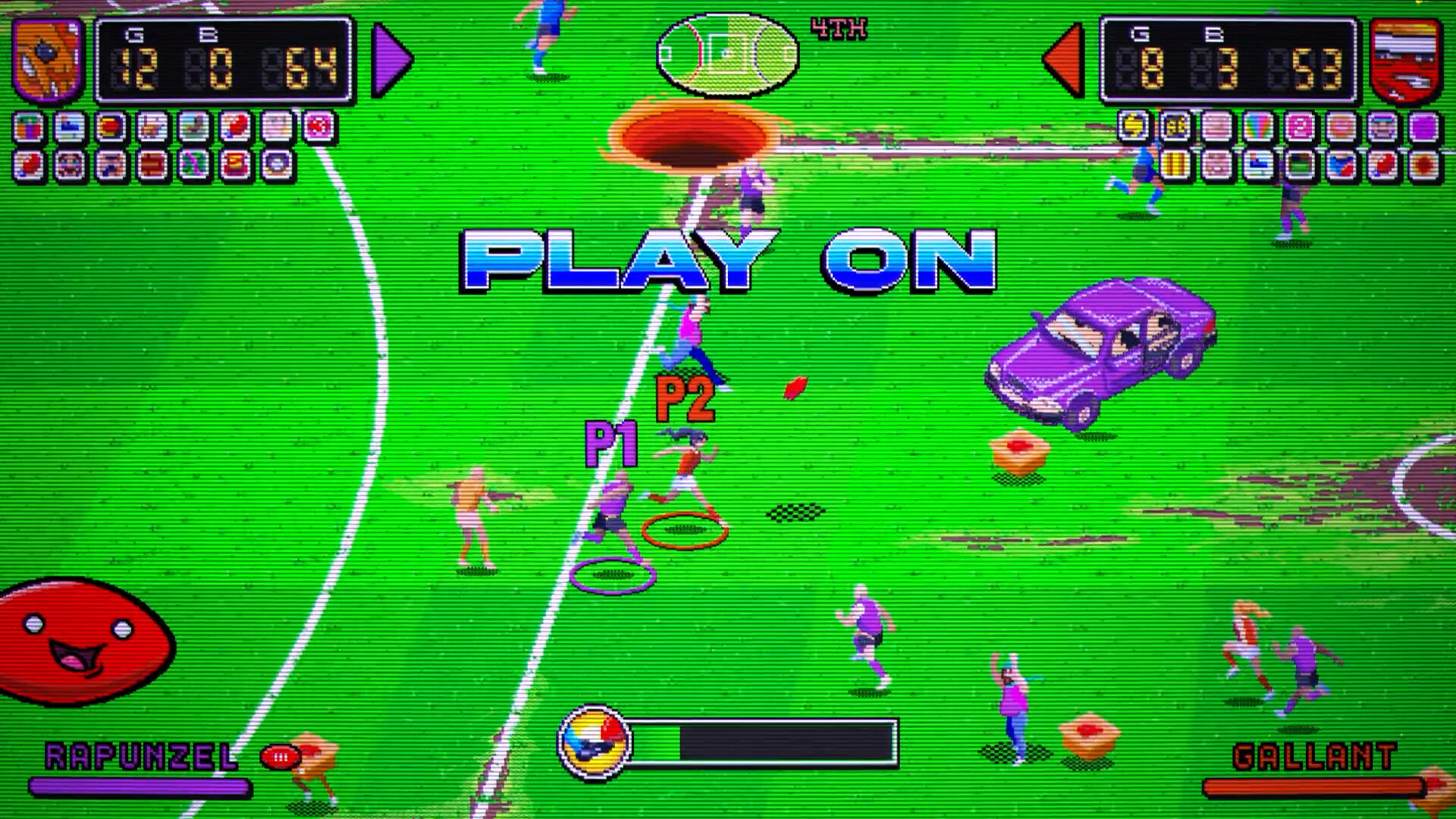
The 'jank' in action: a car has joined the pitch as a hazard while the match carries on regardless.Image: Powerbomb Games via Steam -
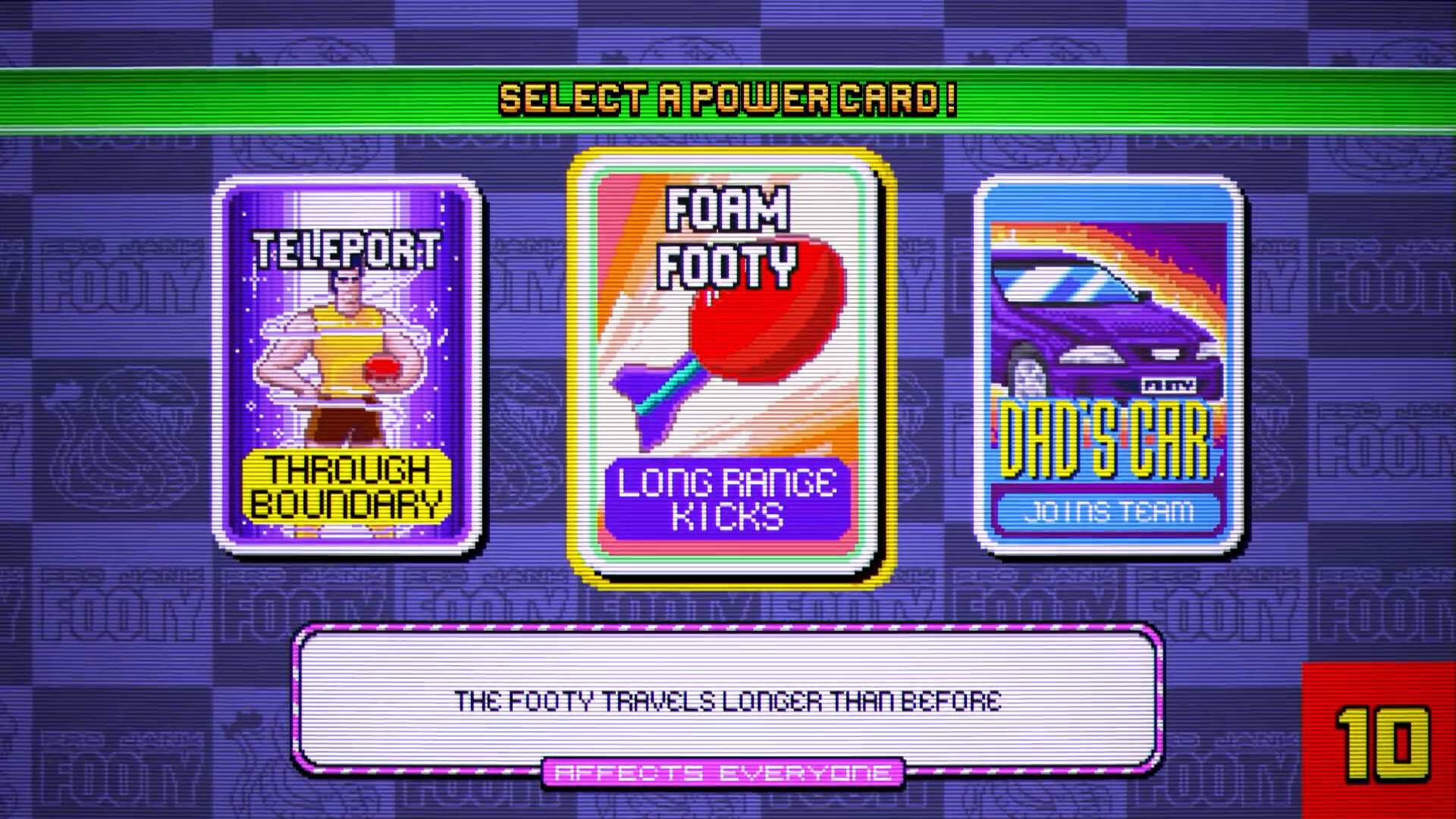
Scoring a goal hands the other team a powerup like this, the Balatro-style card draw reviewers repeatedly single out as the game's best idea.Image: Powerbomb Games via Steam -
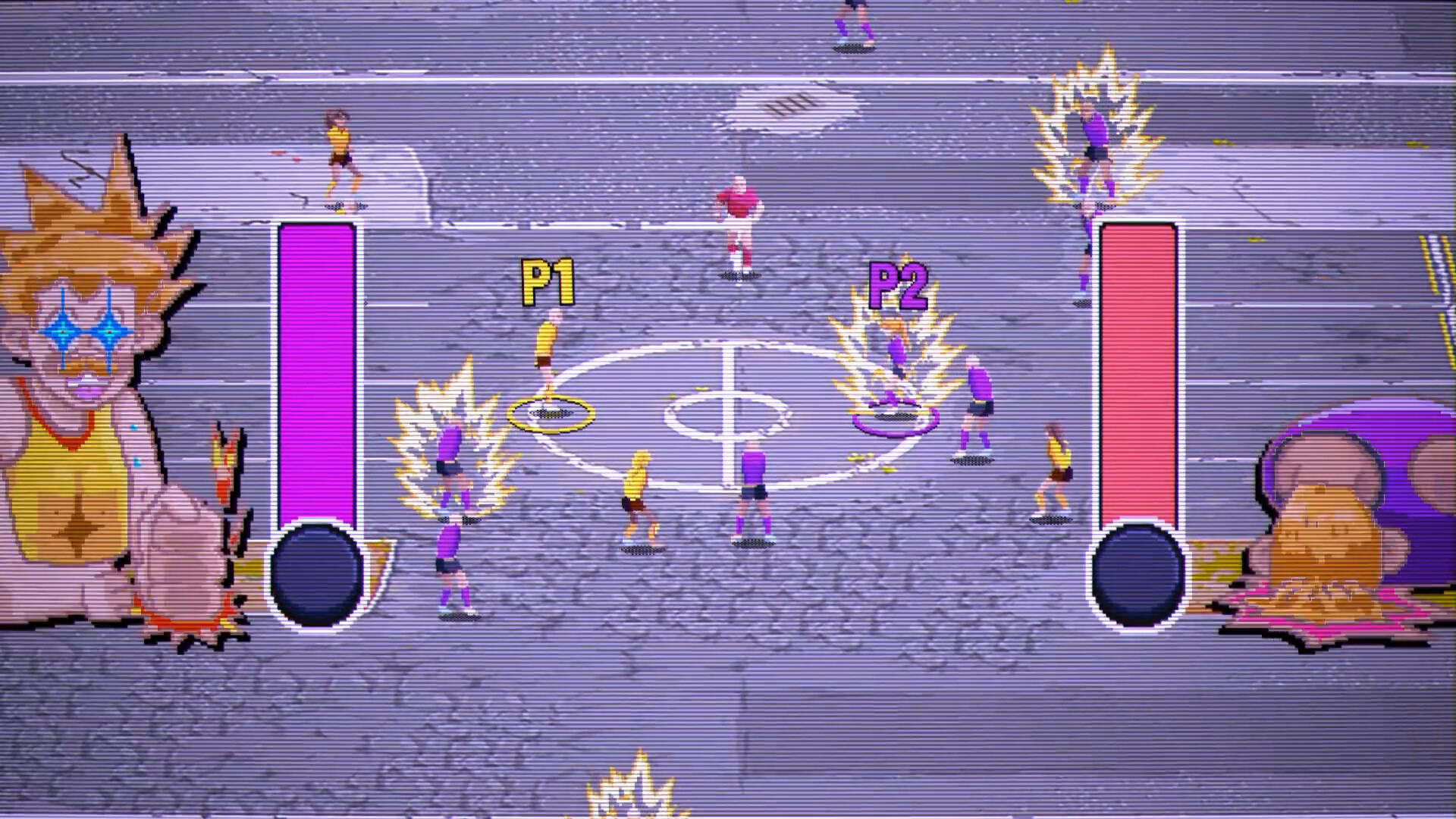
The mashing-based centre bounce and the 'tiny players' modifier, two mechanics reviewers single out among the game's most divisive moments.Image: Powerbomb Games via Steam