
Game review
Nomad Idle
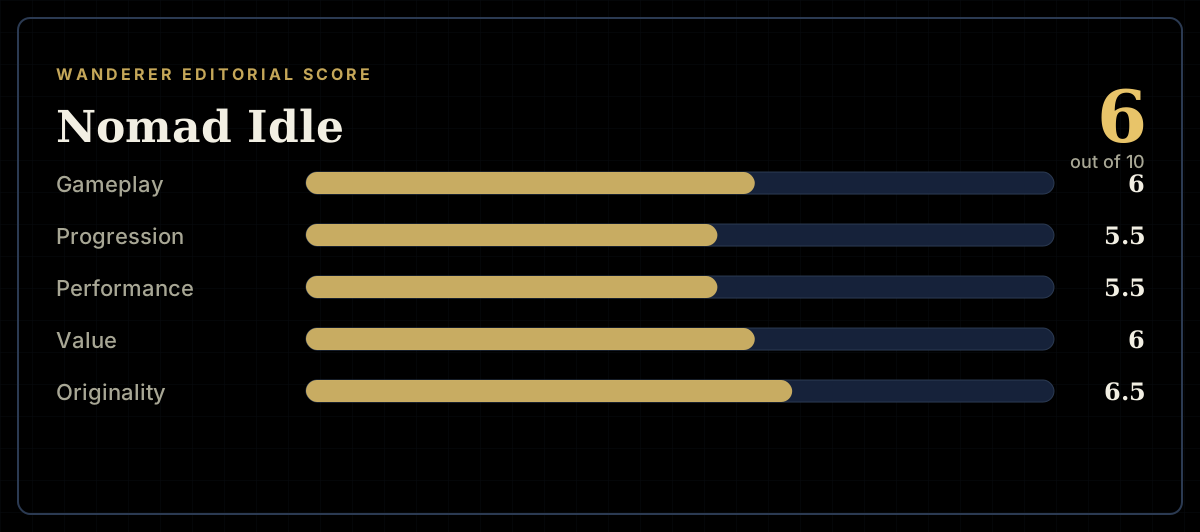
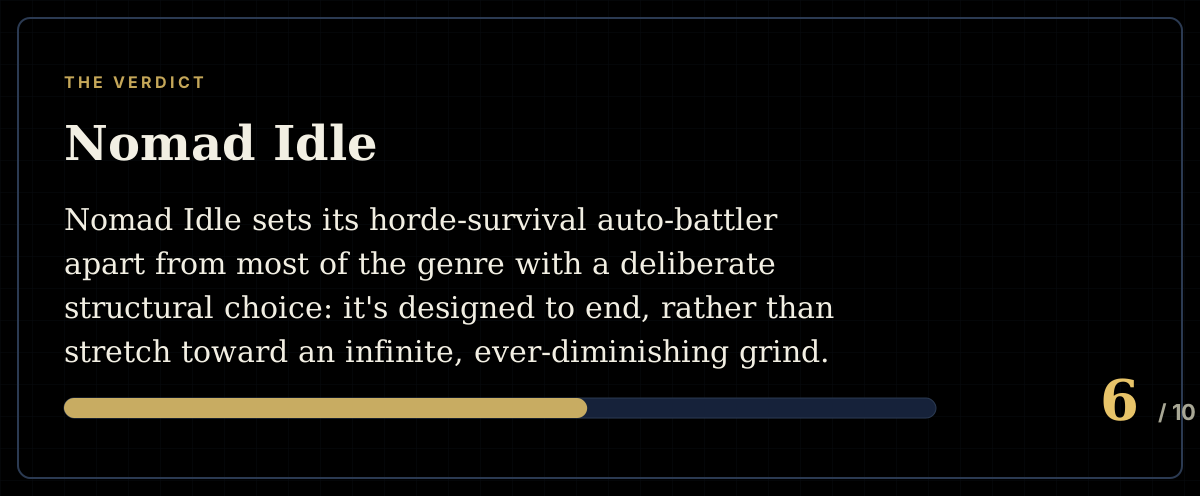
6 / 10
- Developer
- The Fox Knocks
- Publisher
- The Fox Knocks
- Released
- 4 April 2025
- Platforms
- Windows
- Genre
- Idle RPG
- Monetisation
- One-off premium purchase, no DLC, no in-app purchases and no premium currency
- Players
- None. Single-player only, with no leaderboard, co-op or shared-progress feature
The short version
Nomad Idle sets its horde-survival auto-battler apart from most of the genre with a deliberate structural choice: it's designed to end, rather than stretch toward an infinite, ever-diminishing grind. That's a genuinely interesting idea, and it wins real praise from players who specifically wanted an idle game with a finish line. Reception overall, though, sits at a Mixed 64.7% across 844 Steam reviews, and the criticism is unusually specific and consistent: progression that's more scripted and gated than organically earned, a lack of meaningful build choice once past the opening hours, real performance problems severe enough that some players say they have to deliberately reduce enemy spawns just to keep the game playable, and — despite being billed as an idle game — no offline progress, meaning it has to keep running in the background to advance at all. A "Big Rebalance Update" shipped five days after launch, but reviews raising the same core complaints continue to appear more than a year later. A further, separate pattern worth noting honestly: multiple independent reviewers describe the developer's public replies to negative reviews as combative rather than constructive.
Biggest strengths
- A genuinely distinctive structural choice — a defined ending rather than an infinite grind — that reviewers specifically praise as a refreshing break from typical idle-genre design
- The opening hours draw consistent, even reviewers-turned-critics agree the early game is genuinely fun, with pleasant art, music and satisfying early progression
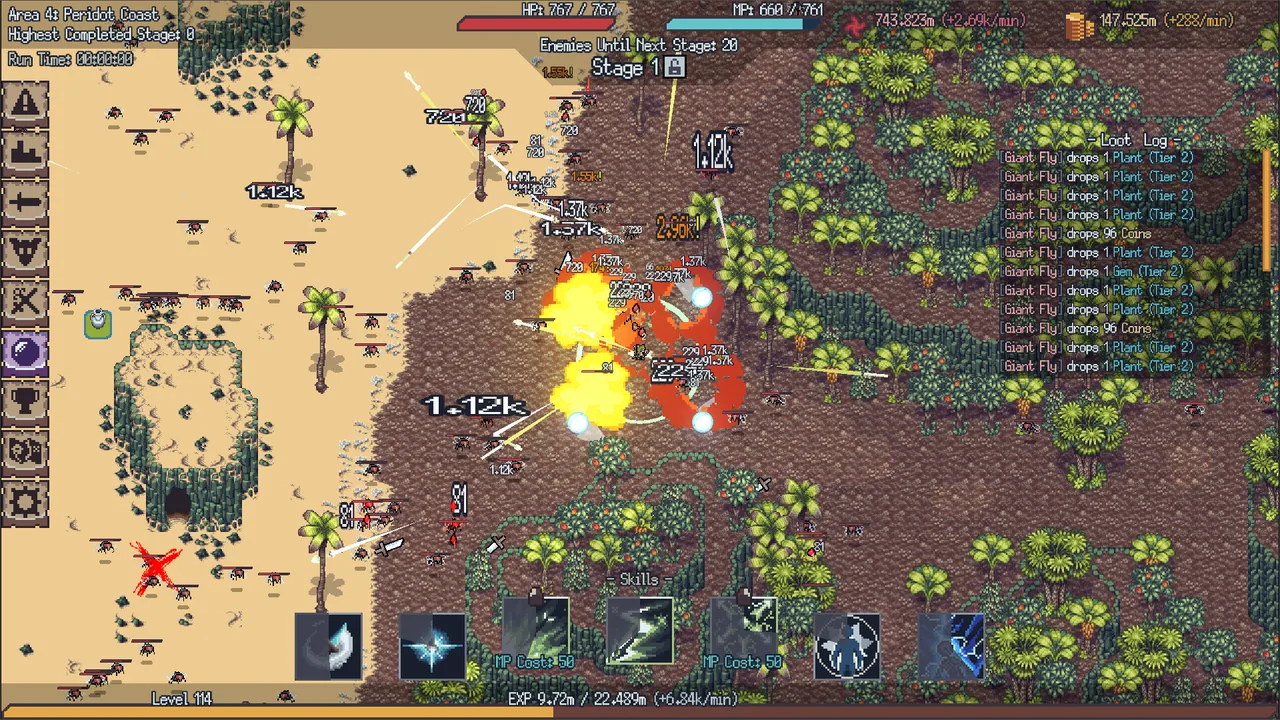
- Auto-battling horde combat with character-specific active abilities gives players a real, optional way to speed up progress rather than forcing pure passivity
Biggest weaknesses
- A specific, still-current complaint describes progression as scripted and gated behind story objectives rather than organically earned, with limited meaningful choice in gear or build once the opening hours pass
- Real, documented performance problems — mob animations reportedly tanking framerate — leave some players deliberately lowering enemy spawn rates just to keep the game smoothly playable
- Despite being marketed as an idle game, Nomad Idle has no offline progress, requiring the game to run in the background continuously rather than banking progress while closed
Who it's for: Idle-genre completionists specifically drawn to a defined, finishable structure rather than an endless grind, who are comfortable with real, documented balance and performance rough edges along the way.
Our recommendation: Worth a look at its low price specifically for the "idle game with an ending" novelty and a genuinely fun opening stretch, but go in with tempered expectations about build depth, late-game pacing, and the always-on requirement.
6 / 10
Most idle games are built to never really end — the whole point is bigger numbers, forever, with diminishing returns as the design's honest admission that "forever" is really just "until you get bored." Nomad Idle, a spin-off of developer The Fox Knocks' earlier Nomad Survival, makes a deliberate, unusual choice to reject that premise: it's designed with a defined finish line. "If you like an idle game with an end, and not a boring, monotonous infinite grind, then you'll love this," one review states, and that specific structural pitch is genuinely one of the more interesting ideas circulating in the crowded idle genre right now. Since its 4 April 2025 release, though, Nomad Idle has settled into a Mixed 64.7% reception across 844 Steam reviews — and understanding exactly why requires taking its critics as seriously as its fans.
A defined ending, and a genuinely fun opening
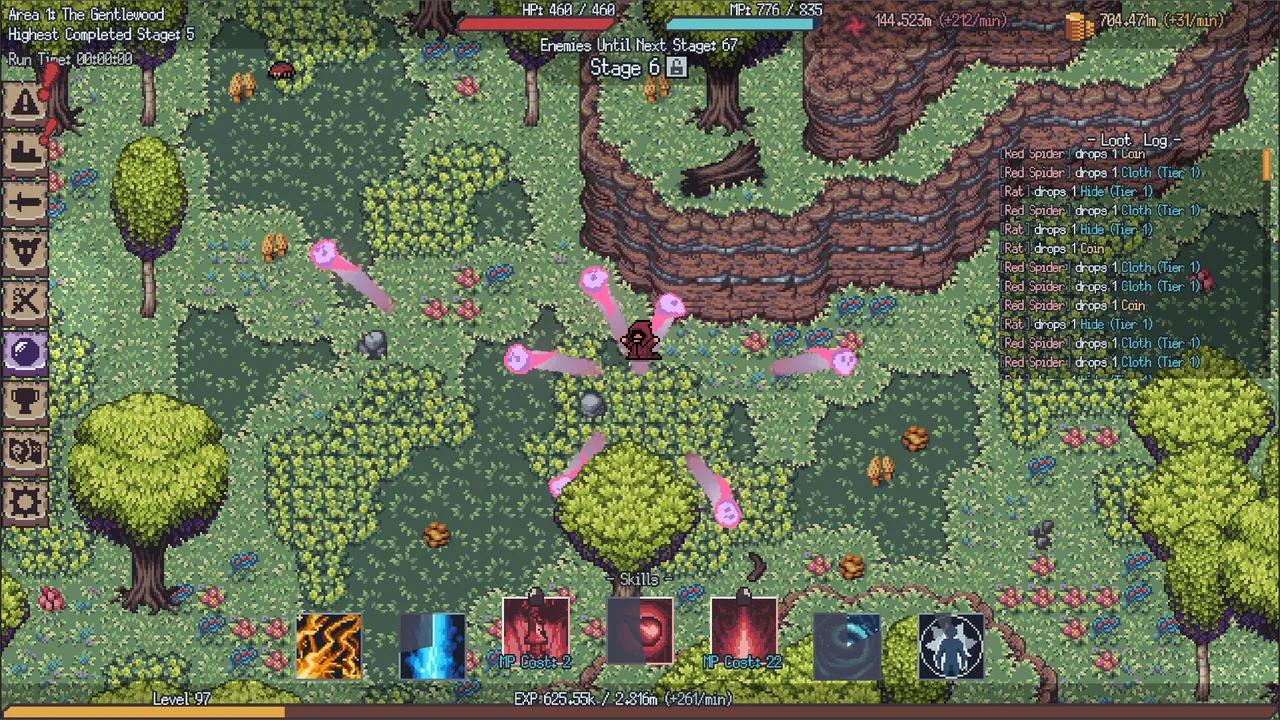
The core loop starts strong by wide consensus, even among reviewers who ultimately soured on the game. Characters move, attack and cast abilities automatically against waves of enemies, with optional active skills letting engaged players speed up their own progress rather than being purely passive spectators. "It's already pretty fun. Been playing for a little under an hour and I have barely blinked. The art style and music is good and the pacing has been great thus far," one early review states. Several reviewers who eventually landed on a negative or mixed verdict still credit the opening hours specifically — pleasant presentation, satisfying early stat growth, and enough novelty in the auto-battler structure to feel genuinely distinct from typical idle-clicker templates. "Very fun idle game masquerading as an rpg-like auto-shooter," one review puts it. "Don't be fooled by how it looks, this is not an rpg or an auto-shooter, it is an idle game" — an honest framing of what the game actually is versus how its marketing presents it.
Where the structure starts working against itself
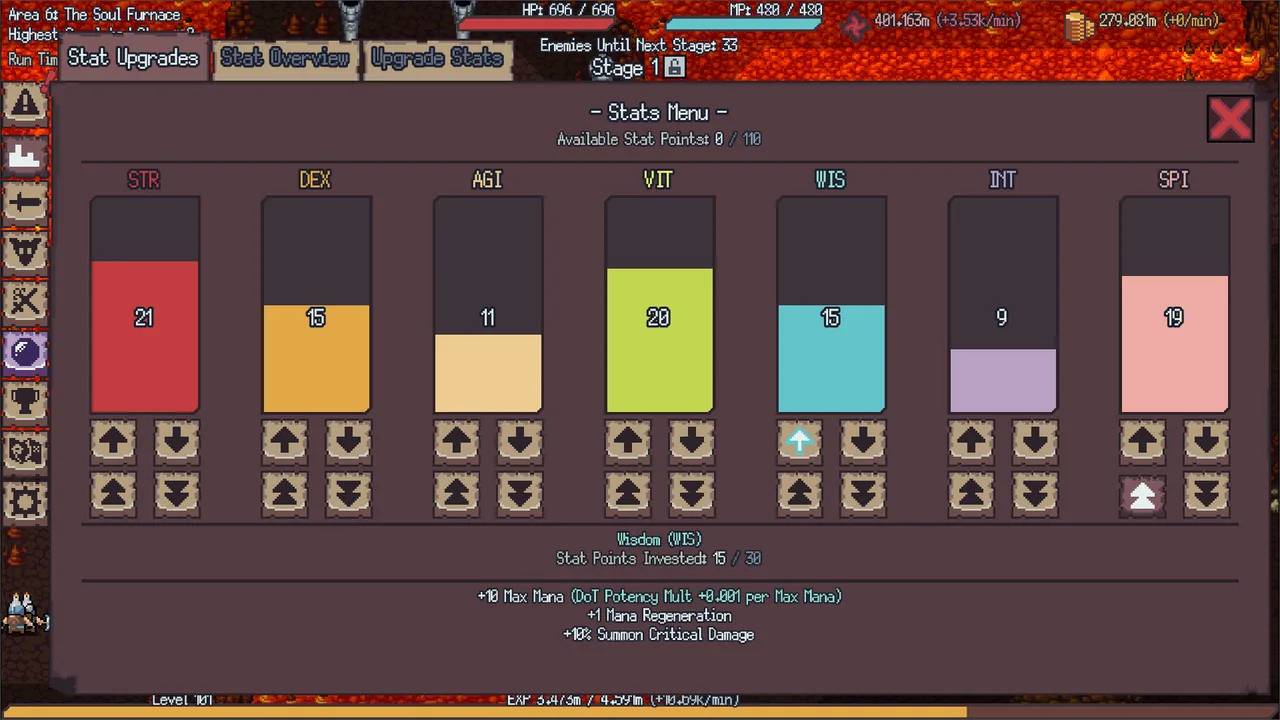
The defined-ending design that makes Nomad Idle distinctive is also where a large share of its criticism concentrates, and the complaints are specific rather than vague. "The game is way too scripted. You can only get a predefined number of upgrades before you need to complete the next objective," one detailed review states, describing a progression system that gates advancement behind story beats rather than letting players earn and spend resources on their own terms — the opposite of the freeform, player-directed builds most incremental-game fans expect. A related complaint concerns build diversity: "you equip and use all gear that drops so there's no meaningful choice about what gear to use," one review notes, while another describes the skill tree as offering "only one way to do it" regardless of a player's stated preferences. "Wide but not deep," reads a third, more concisely. "There are better incremental/idle games for cheaper."
Performance draws a specific, concrete complaint worth taking at face value: "you can't really idle this game as it absolutely tanks your PC," one reviewer states, describing having to deliberately turn enemy spawn rates down to maintain a playable framerate — a genuinely counterproductive trade-off in a game whose entire premise depends on watching hordes of enemies get mowed down. Perhaps the most surprising specific complaint, given the game's own name and marketing, concerns offline progress: "the developers didn't even have the common sense to give it offline progress. You basically have to run it in the background," one review states — a real design gap for a game explicitly billed as an idle experience, where most genre peers treat away-from-keyboard progression as table stakes.
These aren't launch-week complaints that time has since resolved. Nomad Idle received a "Big Rebalance Update" just five days after release, evidence the developer moved quickly in response to early feedback — but reviews raising the identical core complaints about scripted progression, limited build choice and thin endgame content continued appearing through mid-2025, and at least one detailed review making the same points is dated as recently as April 2026, more than a year after launch.
A pattern worth reporting plainly
One further thread in the review sample is worth stating honestly rather than glossing over, because it recurs across multiple independent reviewers rather than appearing once. "Neat little idle game. Enjoyed my time, but the developer is incredibly insecure and leaves rude comments on people that leave negative reviews," one review states. Another, more pointedly: "Echoing another review, but with a bit more distaste since the developer left a snide comment in return." A third puts it simply: "Dev seems to treat criticism as attacks... don't think there will be any improvement to the game." This review can't independently verify the specific content of any individual developer reply, and it's presented here as a documented pattern observed by multiple separate reviewers rather than a settled character judgment — but the consistency across unconnected reviews makes it a fair, relevant thing for a prospective buyer to know about, distinct from any purely mechanical complaint about the game itself.
What the game's fans genuinely value
None of this erases real, specific enthusiasm elsewhere in the sample. "Not sure why there are so many negative reviews. I'd guess it was faulty expectations," one review states, arguing the game delivers exactly what a typical idle-genre player should expect: let it run, watch progress happen, periodically re-optimise a build. Completionist accounts describe genuinely satisfying full playthroughs — one reviewer reports finishing in around 65 hours, another closer to 280 with a detailed pros-and-cons breakdown that still lands on a positive, if qualified, recommendation. "This is a smart little incremental with vampire survivors-like elements, neat pixel art, and a surprisingly engaging story for the genre," reads one more measured, tentatively positive review — evidence that for players whose expectations align with what the game is actually trying to do, it delivers a genuinely enjoyable, finishable experience.
Where this leaves a buyer
At NZ$14.99, Nomad Idle offers a genuinely novel structural idea — an idle game built to end rather than stretch on forever — that's worth real credit even where the execution around it draws legitimate, specific criticism. Players who go in expecting exactly that defined-length experience, who don't mind scripted rather than freeform progression, and who can tolerate real performance and offline-progress limitations are likely to find the same satisfying opening hours that even the game's critics acknowledge. Buyers hoping for deep build customisation, a fully idle "walk-away-and-come-back" experience, or a lategame that sustains the strength of its first few hours should weigh the specific, still-current complaints above carefully before deciding.
Pros and cons
Pros
- A genuinely distinctive structural choice — a defined ending rather than an infinite grind — that reviewers specifically praise as a refreshing break from typical idle-genre design
- The opening hours draw consistent, even reviewers-turned-critics agree the early game is genuinely fun, with pleasant art, music and satisfying early progression
- Auto-battling horde combat with character-specific active abilities gives players a real, optional way to speed up progress rather than forcing pure passivity
- A rebalance update shipped just five days after launch shows some responsiveness to early feedback, even if it didn't resolve every underlying complaint
Cons
- A specific, still-current complaint describes progression as scripted and gated behind story objectives rather than organically earned, with limited meaningful choice in gear or build once the opening hours pass
- Real, documented performance problems — mob animations reportedly tanking framerate — leave some players deliberately lowering enemy spawn rates just to keep the game smoothly playable
- Despite being marketed as an idle game, Nomad Idle has no offline progress, requiring the game to run in the background continuously rather than banking progress while closed
- Multiple independent reviewers describe the developer replying to negative reviews in ways they characterise as defensive or combative rather than constructive, a pattern that recurs across several separate, otherwise unrelated reviews
Screenshots
-
Nomad IdleImage: The Fox Knocks via Steam -
Nomad IdleImage: The Fox Knocks via Steam -
Nomad IdleImage: The Fox Knocks via Steam -
How the review scores each part of the gameWanderer Editorial -
The short versionWanderer Editorial