Game review
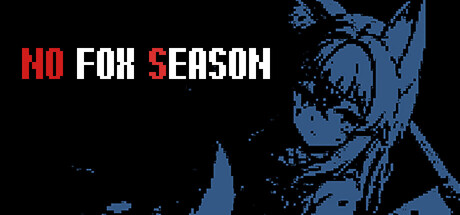
no fox season
5.3 / 10
- Developer
- mxrningstarr
- Publisher
- Nova B12
- Released
- 24 July 2026
- Platforms
- PC, Linux
- Genre
- Visual Novel, Psychological Horror, Indie
- Monetisation
- Premium (one-time purchase)
- Players
- false
The short version
no fox season pairs a genuinely effective cute-to-uneasy horror premise — rescue an injured fox, discover exactly what you've let into your home — with a serious asset-plagiarism controversy and disclosed AI-generated art that a number of reviewers simply can't get past. Judged purely as a short, cheap psychological visual novel, it mostly works. Judged on where its art and story actually came from, the picture gets a lot murkier, and that shadow hangs over everything else it does well.
Biggest strengths
- An effective contrast between an adorable fox-girl premise and creeping psychological unease, praised in detail by several reviewers
- Multiple branching endings give a genuine reason to replay a short game, with achievements tied to different outcomes
- Officially Steam Deck Verified, with controller support and a readable interface on the small screen
Biggest weaknesses
- Multiple reviewers allege that art, CG scenes and even store-page text closely match an unrelated developer's earlier games, down to specific product descriptions
- The game discloses AI-generated art in some images and AI-assisted translations, a dealbreaker several reviewers cite directly
- Reports of missing purchased content (an artbook not present after buying it) and incomplete translations in some languages
Who it's for: Fans of short, cheap psychological visual novels who are comfortable with disclosed AI-assisted art and want to judge the writing on its own terms.
Our recommendation: Recommended with real reservations — the premise and multiple endings deliver a lot for the asking price, but read the disclosed-AI and plagiarism-allegation reviews before buying.
5.3 / 10
A Rescued Fox and a Rainy-Day Setup
no fox season opens with a small, deliberately cosy hook: coming home from the store on a rainy day, the protagonist finds an injured fox on the road and, despite her parents having forbidden pets, quietly brings it home. From there the game settles into a familiar visual-novel rhythm — reading dialogue, observing scenes, and making periodic choices that steer the story toward one of several different endings. There's no combat, exploration, or puzzle-solving to speak of; the entire experience is built around watching a strange situation unfold and deciding how the protagonist responds to it.
That simplicity is by design. As one of the more detailed reviews in the sample puts it, the game "avoids burdening its unusual premise with unnecessary systems, keeping attention on the relationship between the protagonist and the mysterious fox-girl." Reviewers looking for a mechanically substantial game are likely to find the experience thin, but for a narrative-first visual novel with a runtime most players clear in one to three hours, that restraint mostly reads as appropriate rather than lazy.
Cute Aesthetic, Uneasy Atmosphere
The premise's real trick is tonal. Feeding and caring for the fox initially plays like a harmless slice-of-life setup, but the game steadily layers in a sense that something is off about the situation — and, by extension, about the fox-girl herself. One player summed up the appeal bluntly: "Very cute game, cute looking fox and cool images," while still flagging the darker turn the story eventually takes. Another, in a more extended writeup, credited the game for building "discomfort through anticipation and the feeling that an innocent situation could go wrong at any moment," rather than leaning on jump scares.
Not every reviewer bought into the late-game twist, though. One noted that "the twist in the 'true' ending is quite odd and doesn't even make sense," describing confusion over how the fox-girl and a family member's fate are meant to connect. That split is worth flagging for prospective buyers: the tonal shift from cute to unsettling lands well for a good portion of the sample, but the specific mechanics of the "true" ending's reveal don't universally land, and a few players came away more puzzled than unsettled.
Endings, Replay Value and Achievement Hunting
Where no fox season earns some of its strongest praise is in its branching structure. Multiple endings are confirmed by several reviewers, with one noting the game has "4 different endings, none are truly happy but that's okay." Because choices can meaningfully redirect where the story goes, replaying earlier scenes to see how different decisions play out becomes a real part of the intended experience rather than a token gesture, and it gives achievement hunters a concrete reason to dig through the full range of outcomes rather than stopping at the first ending they reach.
The game is also officially Steam Deck Verified, which is a genuinely useful detail for a visual novel this size — a slow-paced, reading-driven game translates naturally to handheld play, and reviewers who tested it there reported the interface holding up fine on the smaller screen with proper controller support. Combined with support for a wide range of languages, the game is at least trying to reach as broad an audience as its premise can carry, even if the mechanical depth on offer stays deliberately modest throughout.
Disclosed AI Art and a Serious Plagiarism Controversy
This is the section that can't be skipped in any honest account of no fox season, because a meaningful chunk of the negative-review sample isn't about pacing or difficulty at all — it's about where the game's content actually came from. Several reviewers allege that art, character scenes and even store-page product descriptions closely mirror the games of another developer, repeatedly named in the sample as Nupu Neko Dev, whose game Selene Apoptosis is cited by multiple reviewers as sharing scenes and wording. "A search of 'Nupu neko dev' on Steam will reveal many almost identical scenes, and even the product descriptions are the same," reads one recent review, and it isn't an isolated claim — several separate reviewers raise the same specific comparison independently, which lends the allegation more weight than a single disgruntled complaint would.
Separately, but related, the game's own store presence discloses that some images use AI-generated art and that translations into several languages relied on AI assistance. One of the most detailed reviews in the sample treats this as a straightforward, if important, factual note: "players should be aware... that the game discloses the presence of AI-generated material in some images. AI assistance was also used for translations." For reviewers who specifically avoid AI-generated visual content, that disclosure alone is enough to sink the purchase regardless of how the underlying story reads — as one put it plainly, "I enjoy my fox girl yuri without ai slop, please redraw the entire game."
It's worth being precise about what's confirmed and what's allegation here: the AI-art and AI-translation use is disclosed by the game itself and isn't in dispute. The asset-similarity claims are reviewer allegations rather than an established, adjudicated fact, though the specificity and repetition of those claims across multiple independent reviews make them difficult to wave away as coincidence. Either way, this is squarely a rough edge worth knowing about before buying, not a footnote.
Technical Bugs and Missing Content
Beyond the controversy, a handful of more conventional complaints show up in the negative reviews. One player reported that purchased bonus content simply wasn't present after installation: "missing files in game, artbook simply not present after buying and installing it (checked the files its not there), several missing translations." A separate, later review flags outright instability: "Crashes constantly, unplayable." These aren't the majority experience in the sample — most reviewers, positive and negative alike, describe the game running smoothly — but they're consistent enough across different posting dates that prospective buyers shouldn't assume a trouble-free install.
Verdict: A Promising Premise Undermined by Its Own Baggage
Taken purely as a piece of short-form psychological fiction, no fox season does what it sets out to do: it uses an adorable premise to smuggle in real unease, gives players enough branching choices to make multiple endings worth chasing, and wraps the whole thing in a cheap, Steam Deck-friendly package with broad language support. Several of the more thoughtful reviews in the sample treat it as a small, effective example of horror-through-contrast, and at NZ$6.39 for a few hours of content with real replay incentive, the raw value case isn't hard to make.
But the game doesn't exist in a vacuum, and a meaningful share of its own player base has raised pointed, specific concerns about where its art and writing actually came from, on top of the studio's own disclosure that AI tools were used for some images and translations. Neither of those things is a minor asterisk — for a number of reviewers, they're the entire reason not to buy. Anyone considering no fox season should weigh the story on its merits, but also read a few of the critical reviews first and decide how much the sourcing question matters to them, because it clearly matters a great deal to a vocal part of the people who've already played it.
Pros and cons
Pros
- An effective contrast between an adorable fox-girl premise and creeping psychological unease, praised in detail by several reviewers
- Multiple branching endings give a genuine reason to replay a short game, with achievements tied to different outcomes
- Officially Steam Deck Verified, with controller support and a readable interface on the small screen
- Wide language support and a low asking price make it an easy, low-risk pickup for VN fans
Cons
- Multiple reviewers allege that art, CG scenes and even store-page text closely match an unrelated developer's earlier games, down to specific product descriptions
- The game discloses AI-generated art in some images and AI-assisted translations, a dealbreaker several reviewers cite directly
- Reports of missing purchased content (an artbook not present after buying it) and incomplete translations in some languages
- A very short single playthrough, with a late narrative twist that a number of players found abrupt or confusing rather than satisfying
Screenshots
-
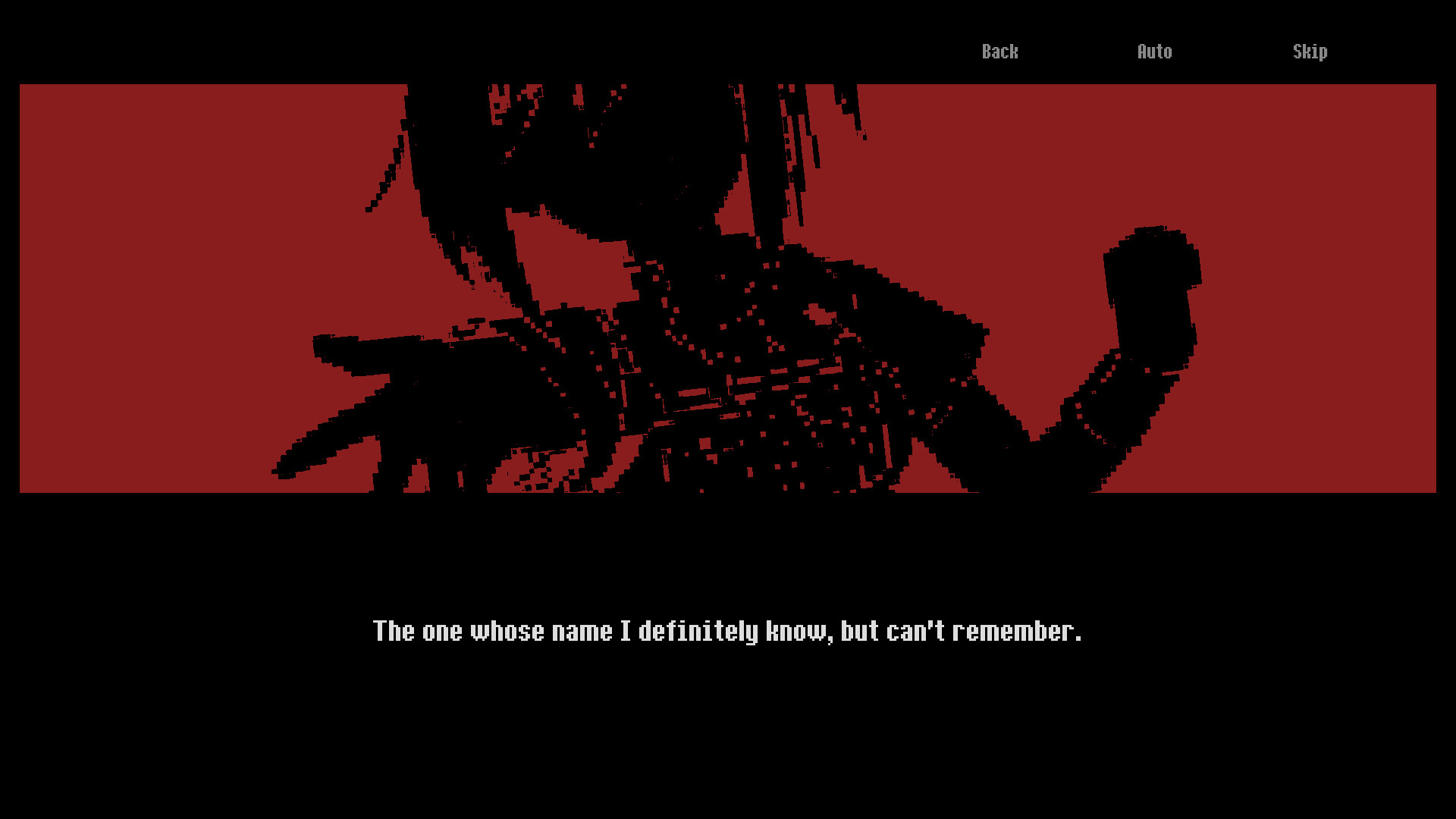
The game builds unease through stark, high-contrast visuals rather than jump scares.Nova B12 -
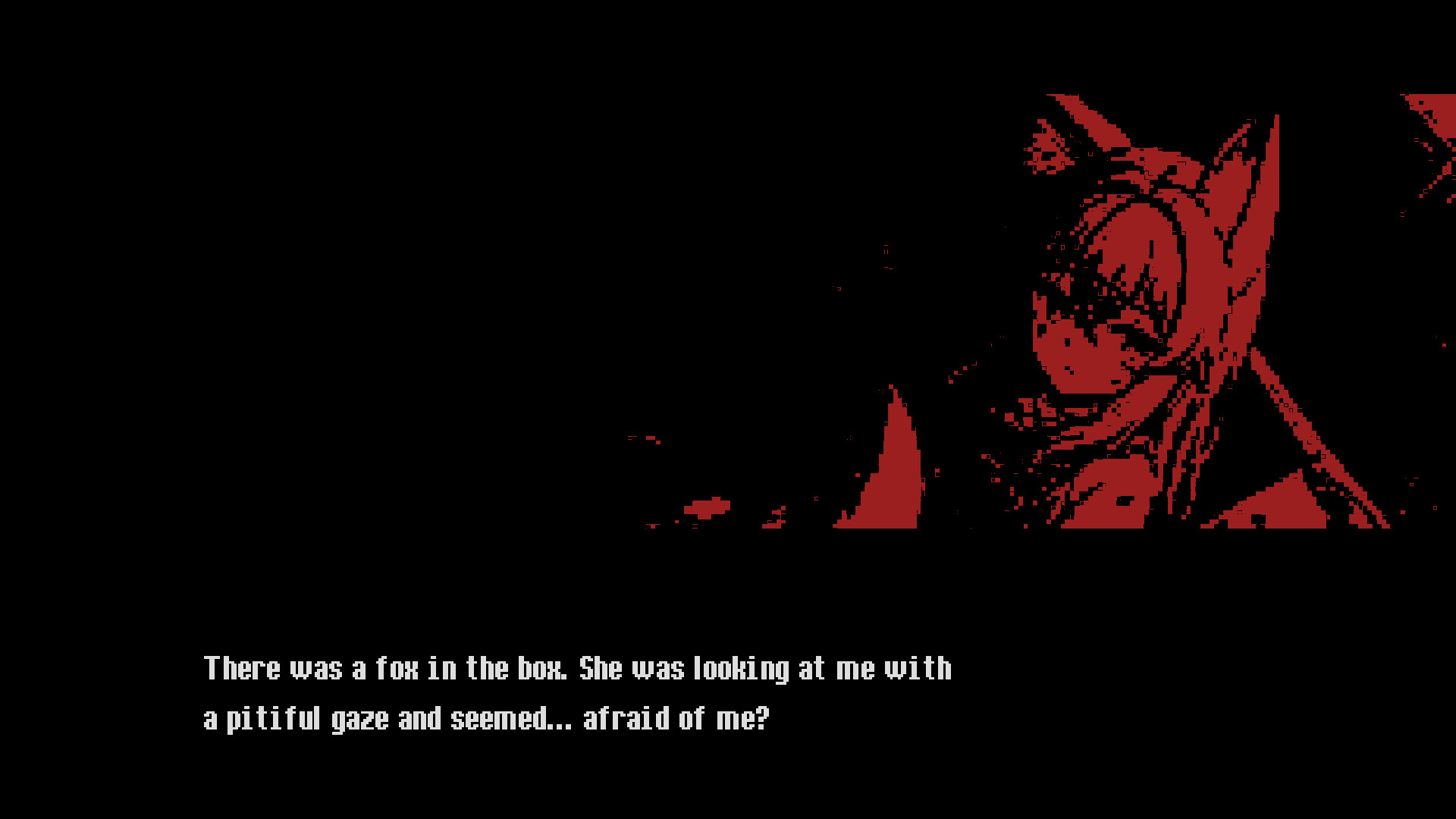
The story's cute-to-uneasy premise starts with a simple rescue and gradually turns unsettling.Nova B12 -
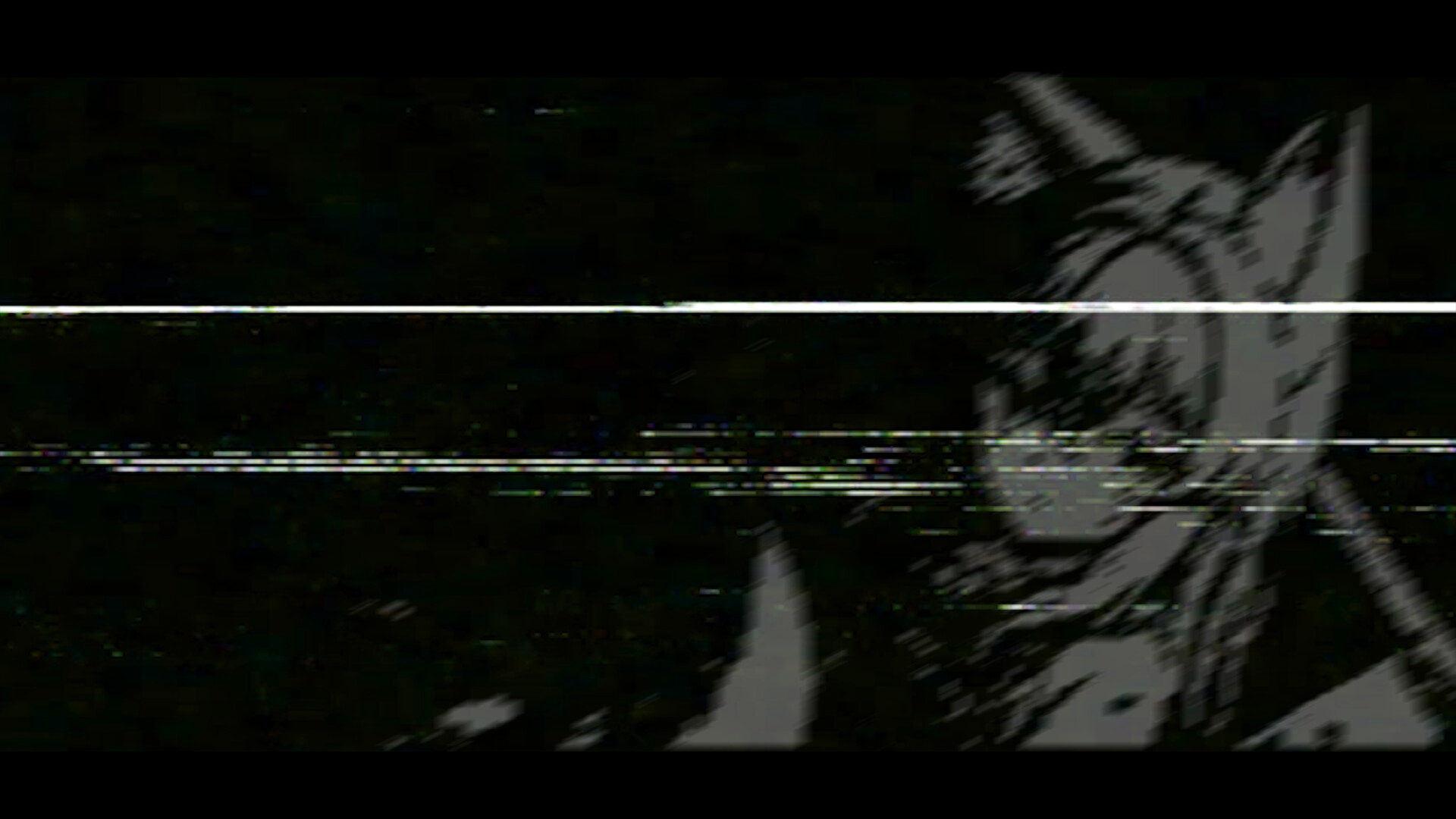
Glitch and VHS-style effects reinforce the game's psychological-horror tone in its later scenes.Nova B12 -
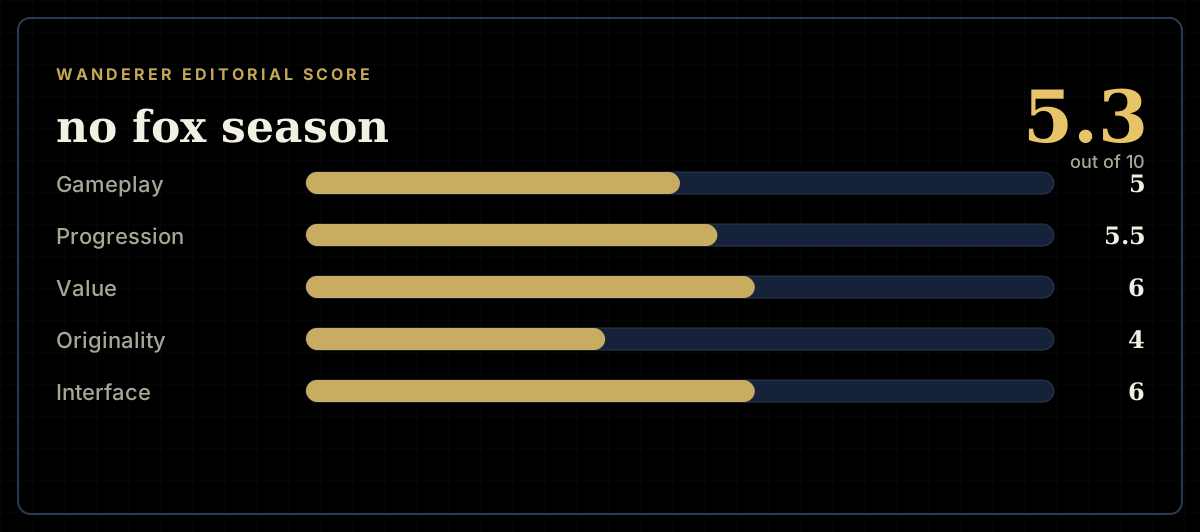
How the review scores each part of the gameWanderer Editorial -
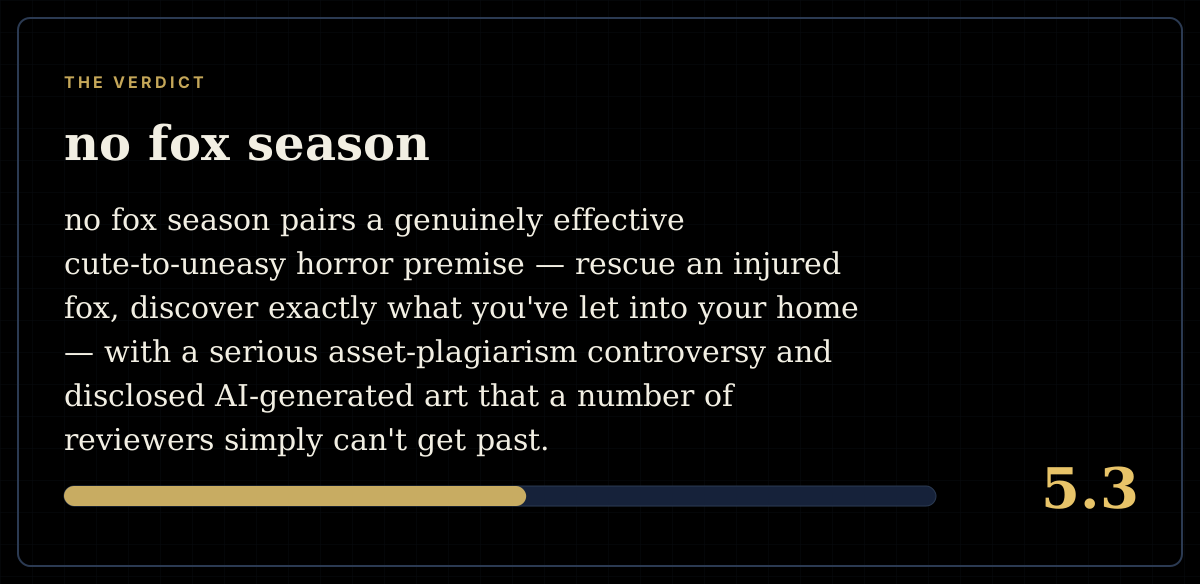
The short versionWanderer Editorial