Game review
Nexfall
5.5 / 10
- Developer
- BrotherByte Studio
- Publisher
- BrotherByte Studio
- Released
- 5 August 2026
- Platforms
- Windows
- Genre
- Multiplayer Parkour Platformer
- Monetisation
- One-time purchase, NZ$10.12 at launch. Steam also lists "In-game purchases" as a content descriptor, with no itemised store page section describing what they are.
- Players
- Online free-for-all for 3-6 players per match; no listed co-op or team modes and no offline single-player mode described on the store page.
The short version
Nexfall drops three to six players into a dark-fantasy obstacle course and asks them to reach the top before anyone else, using a loadout of offensive, protective and support abilities players build for themselves before each run. It has a genuine hook in that combination — competitive precision platforming crossed with a small deckbuilding layer — and a level-based unlock ladder running from a first-run achievement up through ranks like Rising, Veteran and Ascended toward a capped "Nexfall Legend" title. What it doesn't have yet, two days after launch, is any evidence of a population to climb that ladder with: a single user review, a Steam player-count check that returned zero, and an achievement curve so thin that "Steam is learning about this game" and doesn't yet count it toward global stats.
Biggest strengths
- Loadouts built from Offensive, Protection and Support ability categories give a competitive parkour match a genuine build-crafting layer most games in the genre skip entirely
- A visible, achievement-charted level ladder (Level 10, Level 30, max level, plus climb-themed ranks from Rising to Ascended to Nexfall Legend) gives repeat matches a reason to keep playing beyond just winning the next race
- Accessibility options are unusually thorough for a small studio's first multiplayer release — colour alternatives, camera comfort settings, custom volume controls and full play without timed-input reflexes
Biggest weaknesses
- A live check of Steam's player-count API returned zero concurrent players two days after launch, and the store page describes no bot-filled or solo mode to fall back on if a lobby of three to six humans doesn't materialise
- Exactly one user review exists at time of writing, a negative one citing balance and physics optimisation, from 22 minutes of recorded playtime — nowhere near enough to judge, but also the entirety of the independent record so far
- Steam lists "In-game purchases" as a content descriptor with no section on the store page explaining what they actually are, an unusual gap for a game asking full price up front
Who it's for: Small groups of three or more who want a competitive platformer with actual build variety, and who are willing to be among the first people populating a brand-new multiplayer game's lobby.
Our recommendation: The ability-deck idea is sound and the unlock ladder gives it a real sense of progression, but buy this expecting to bring your own lobby. Public matchmaking currently has nobody in it, and there's no solo or bot-filled mode described anywhere on the store page to fall back on if your friends aren't online.
5.5 / 10
Climb, build a deck, and try not to get knocked off
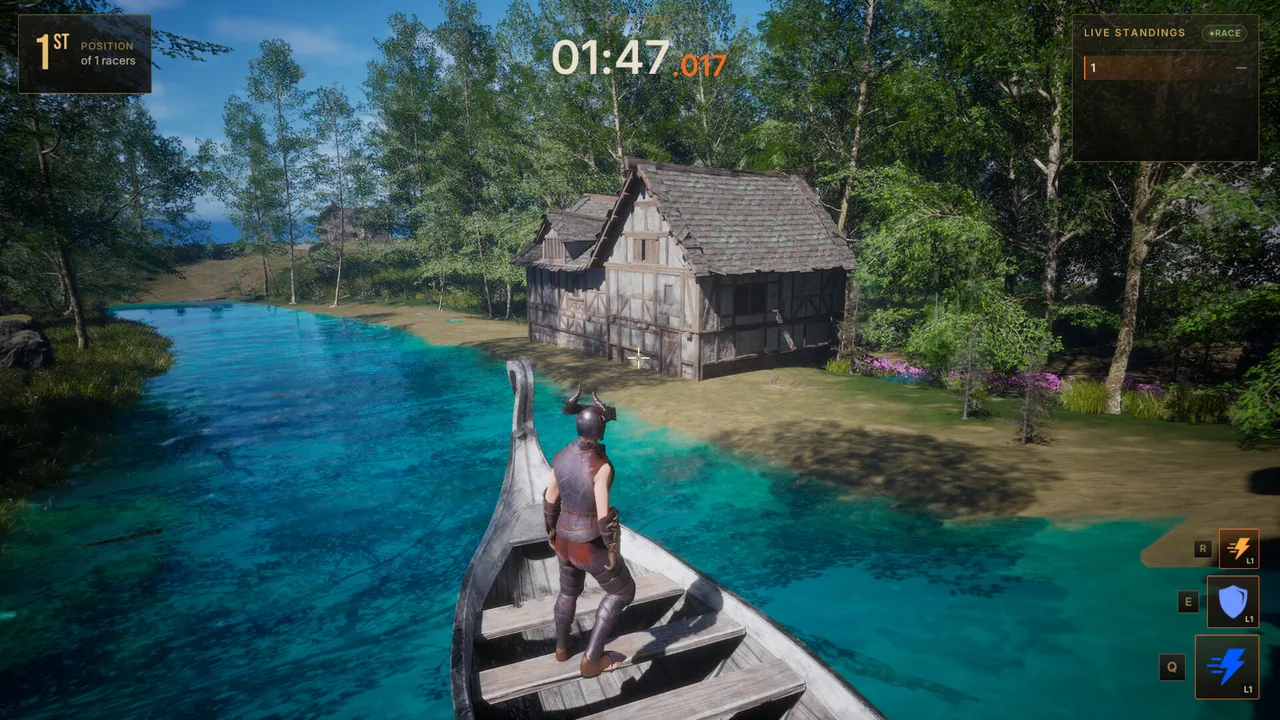
Nexfall's pitch is a straightforward crossbreed: take the reflex-testing obstacle courses of a precision parkour game, then wrap them in the loadout-building layer of a hero shooter. Three to six players race the same handcrafted dark-fantasy route at once, working through moving obstacles, trap-lined paths and momentum-based platforming sections, and the fastest clean run wins. What separates a given run from the next isn't just execution, it's the loadout each player assembles beforehand from three ability categories — Offensive, Protection and Support — which lets someone build toward sabotaging the field, insulating themselves from sabotage, or supporting whatever the rest of their loadout is trying to do. That's a real design idea, not a cosmetic label: a course that plays out the same physically can still feel completely different depending on who brought a knockback trap and who brought a shield.
The ladder underneath the runs
The part of Nexfall worth leading with is the progression sitting on top of those matches, because it's more built-out than a lot of small multiplayer launches bother with. The achievement list charts an explicit climb: an opening "First Steps" and "Loadout Ready" give way to level milestones at 10 and 30 and a maximum level, alongside a parallel set of climb-themed ranks — Rising, Seasoned Climber, Veteran, Ascended — that top out at "Top of the Tower" and a capped "Nexfall Legend" title. There's a death counter tracked too (50 deaths, then 200), which fits a genre where falling is the primary way a run ends, and a specifically flagged "Be Right Back" achievement for getting kicked from a match for going AFK — a small detail, but one that suggests the developers built anti-AFK enforcement into a game where an idle player in a six-person lobby would otherwise just be dead weight. Put together, this reads like a studio that thought about what keeps someone coming back past their first few runs, rather than shipping the courses alone and calling it done.
What the store page won't tell you yet
Here's the honest complication: none of that ladder means anything without people to climb it, and Nexfall's own numbers two days after launch don't show any. A direct check of Steam's public GetNumberOfCurrentPlayers endpoint returned zero concurrent players at the time of this review — a single snapshot that can shift for a brand-new release, but a real number rather than a guess. Exactly one user review exists on the store page, in Russian, negative, citing poor balance and missing physics optimisation from 22 minutes of recorded playtime; that's far too small a sample to draw a conclusion from, and it isn't treated as one here, but it is currently the entire independent record of how this game plays for anyone who isn't the developer. The achievement percentages tell the same story from a different angle — Steam's own storefront flags Nexfall with a "Steam is learning about this game" notice, meaning it isn't yet counted toward global achievement or collector stats, and the completion numbers on record come from a population small enough that one more player finishing the game would visibly move them. None of this means the game plays badly. It means there is currently no outside evidence either way, on a genre — free-for-all multiplayer with a hard floor of three players — that stops functioning entirely without a lobby to fill.
Presentation, accessibility and the fine print
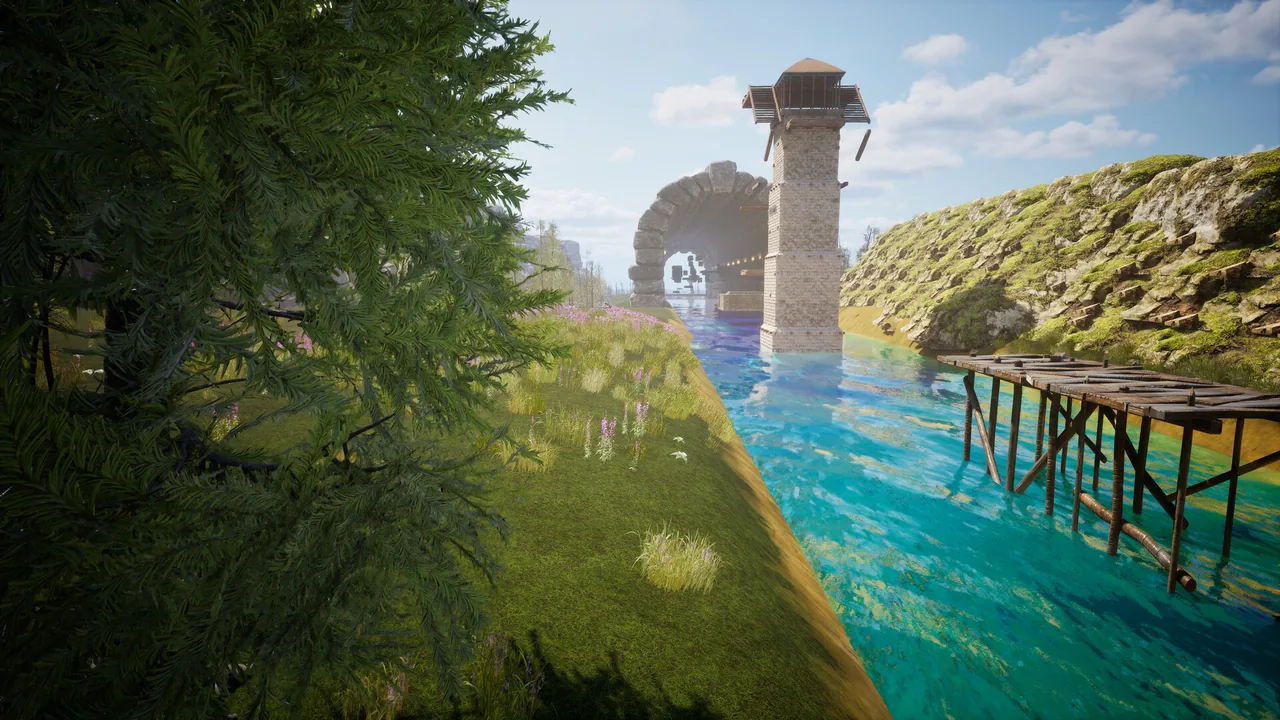
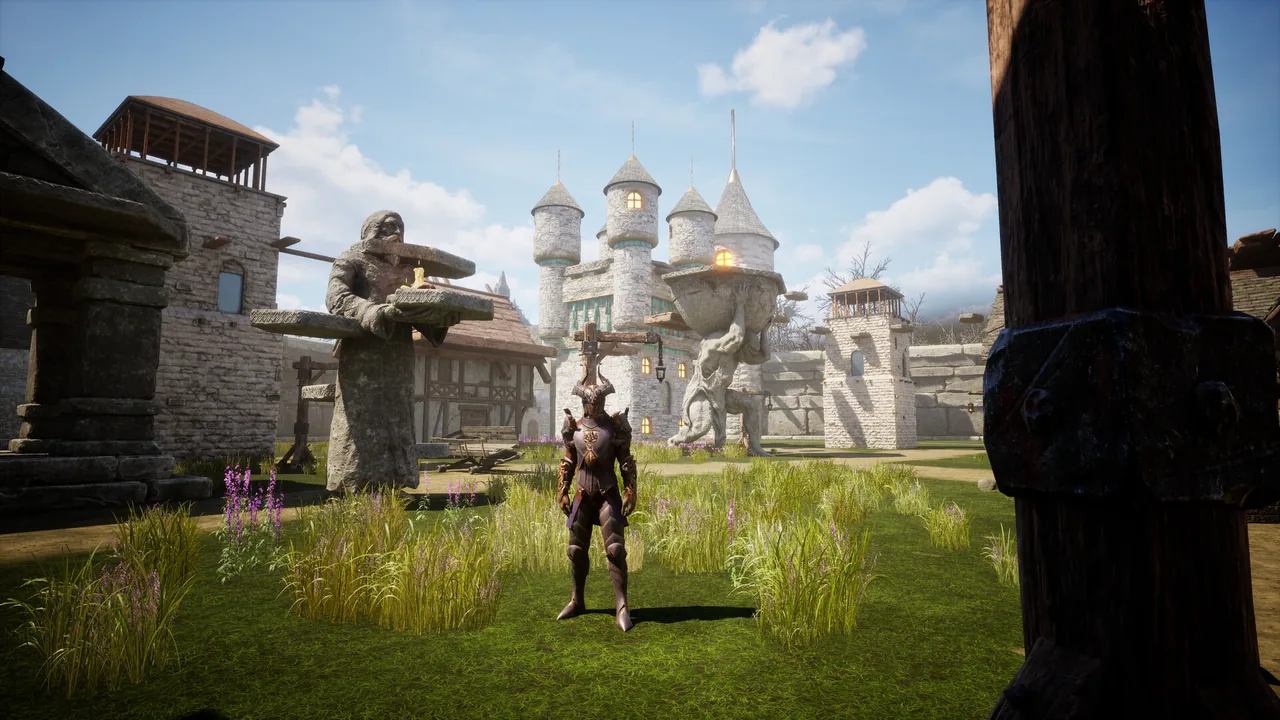
The screenshots and trailer describe a stylised dark-fantasy environment built around ruined kingdoms and ancient structures, which suits a parkour game better than photorealism would — clean geometric read matters more than texture detail when players need to judge a jump at speed. Steam's own content descriptors keep it to "stylized fantasy violence" with no gore or realistic violence, consistent with a game built for wide appeal rather than shock. Accessibility gets real attention for a studio's first multiplayer release: colour alternatives, camera comfort settings, custom volume controls, stereo sound and a "playable without timed input" option all appear on the store page, which matters in a genre that leans hard on reflexes by default. Two gaps stand out against that care, though. First, there's no controller support of any kind listed — full, partial or otherwise — which is an unusual omission for a precision-platforming game, where a lot of players expect a gamepad to be the more natural input. Second, the store page lists "In-game purchases" as a content descriptor but never explains what they are anywhere in the visible listing; the base price is a clean one-time NZ$10.12 at launch, with no battle pass or subscription in sight, but buyers currently have to take the existence of purchases on faith without knowing what they buy. Windows is the only supported platform, and the developers disclose that generative AI was used during development "for selected concept art, promotional graphics, and logo ideation," with no live-generated AI content used during gameplay itself.
Final verdict
Nexfall earns a 5.5 for a design idea that's genuinely worth the premise — a loadout deck built from real tradeoffs, dropped into competitive precision parkour, backed by a visible, achievement- charted level ladder that gives repeat play an actual destination. It doesn't score higher because almost everything a buyer would normally use to judge a multiplayer game currently doesn't exist: one user review, an achievement sample too small for Steam's own systems to count, no controller support, and a live player count of zero. A hard floor of three players makes that population problem existential in a way it wouldn't be for a game with a solo mode to fall back on. If you've got two or more friends willing to be early adopters, the loadout system and the climb are worth trying. Everyone else should wait for the lobby, and the review sample, to actually show up.
Pros and cons
Pros
- Loadouts built from Offensive, Protection and Support ability categories give a competitive parkour match a genuine build-crafting layer most games in the genre skip entirely
- A visible, achievement-charted level ladder (Level 10, Level 30, max level, plus climb-themed ranks from Rising to Ascended to Nexfall Legend) gives repeat matches a reason to keep playing beyond just winning the next race
- Accessibility options are unusually thorough for a small studio's first multiplayer release — colour alternatives, camera comfort settings, custom volume controls and full play without timed-input reflexes
- A clean one-time purchase with no season pass or subscription structure visible on the store page
Cons
- A live check of Steam's player-count API returned zero concurrent players two days after launch, and the store page describes no bot-filled or solo mode to fall back on if a lobby of three to six humans doesn't materialise
- Exactly one user review exists at time of writing, a negative one citing balance and physics optimisation, from 22 minutes of recorded playtime — nowhere near enough to judge, but also the entirety of the independent record so far
- Steam lists "In-game purchases" as a content descriptor with no section on the store page explaining what they actually are, an unusual gap for a game asking full price up front
- No controller support of any kind is listed for a game built around precision jumps, and no macOS or Linux builds exist
- The achievement data is effectively unreadable as evidence of anything: Steam's own "learning about this game" notice means the release isn't yet counted toward global achievement stats, and the percentages on record come from a population small enough that a single early player can swing them by double digits
Screenshots
-
NexfallImage: BrotherByte Studio via Steam -
NexfallImage: BrotherByte Studio via Steam -
NexfallImage: BrotherByte Studio via Steam -
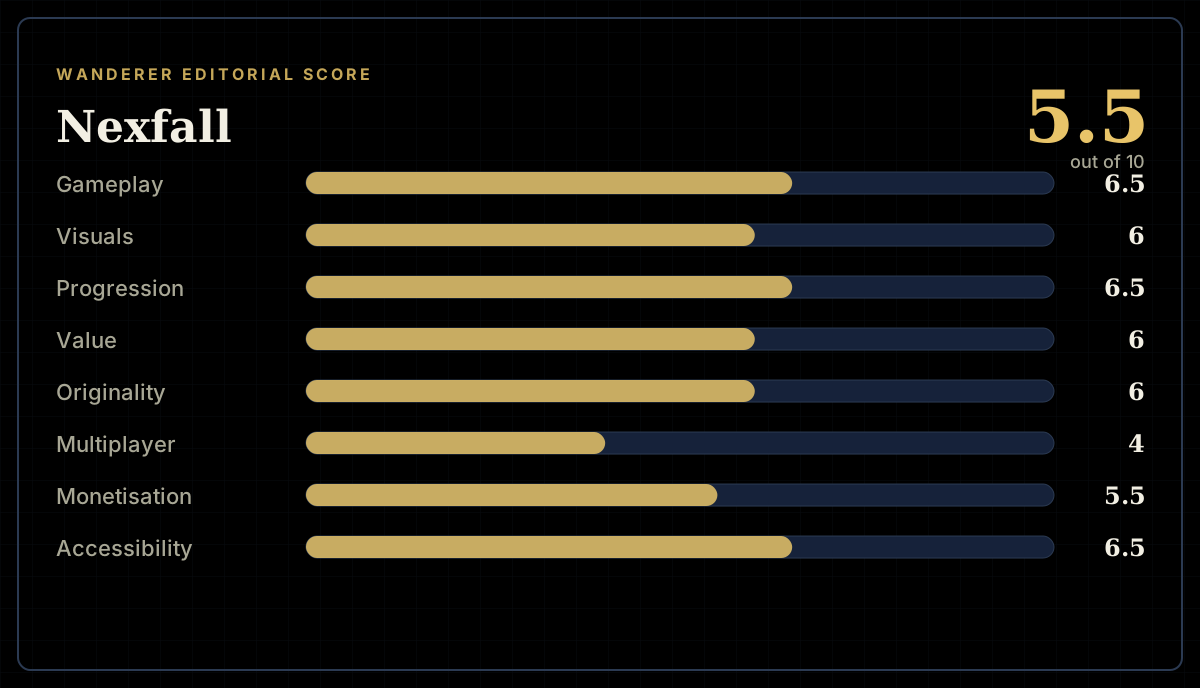
How the review scores each part of the gameWanderer Editorial -
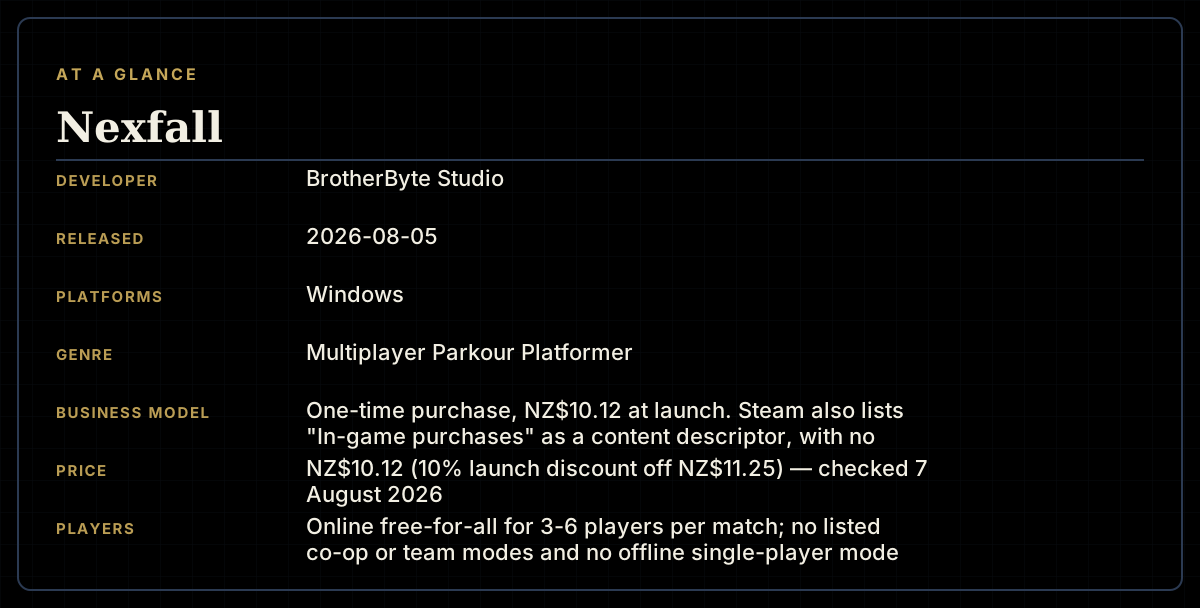
The game at a glanceWanderer Editorial -
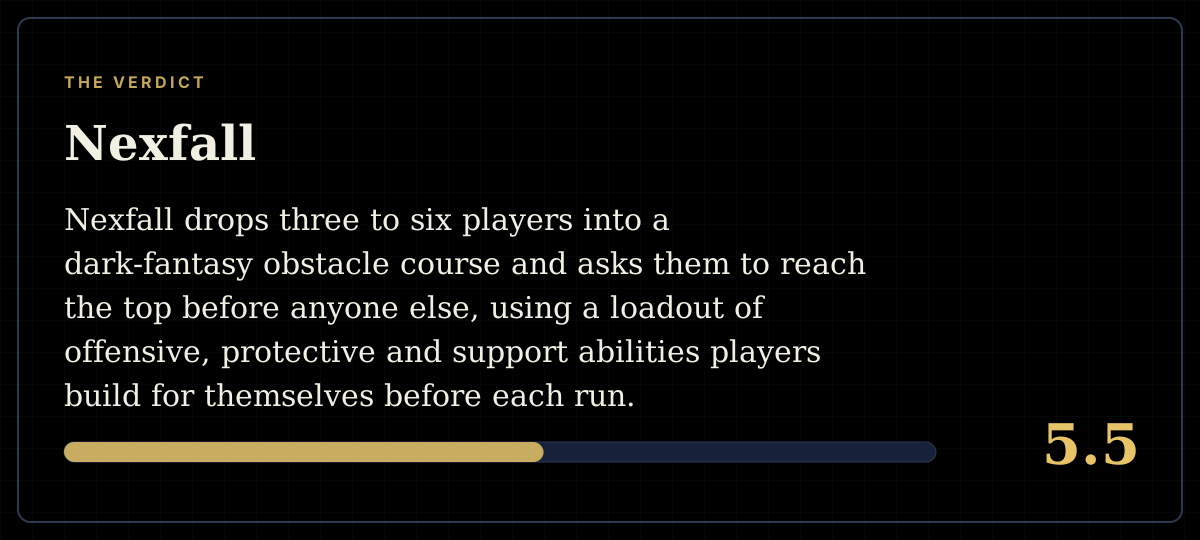
The short versionWanderer Editorial