Game review
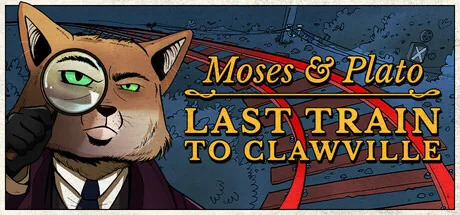
Moses & Plato - Last Train to Clawville
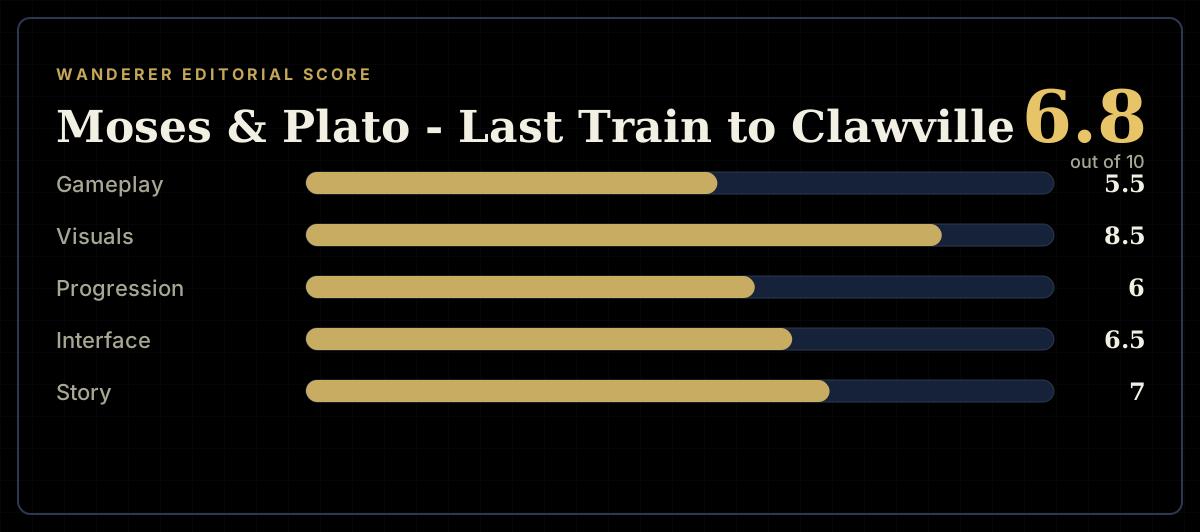
6.8 / 10
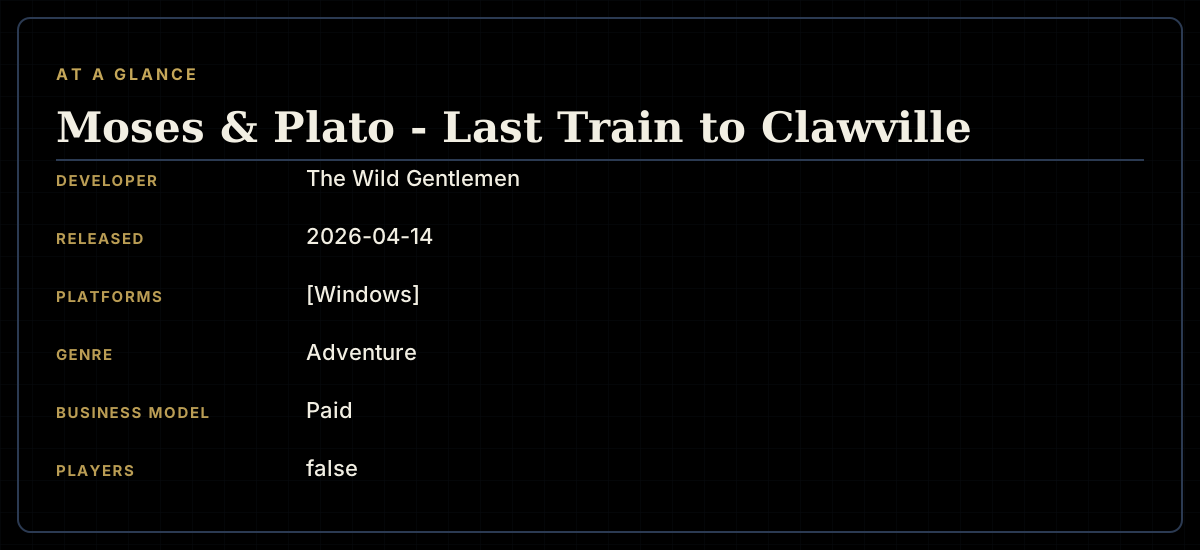
- Developer
- The Wild Gentlemen
- Publisher
- Toge Productions
- Released
- 14 April 2026
- Platforms
- [Windows]
- Genre
- Adventure
- Monetisation
- Paid
- Players
- false
The short version
Moses & Plato - Last Train to Clawville is a beautifully drawn, warmly voice-acted expansion of the World of Wilderness universe, and its two new detectives are worth the trip on their own, even though the actual detective work underneath them is thinner than the premise promises.
Biggest strengths
- Gorgeous hand-drawn art direction and animation that reviewers consistently call a step up from the developer's earlier games
- A uniformly praised, fully-voiced cast, with Moses and Plato singled out repeatedly as an engaging, well-written detective duo
- Meaningful world-building that expands the Chicken Police universe's lore and geography without requiring prior familiarity
Biggest weaknesses
- The actual detective and interrogation mechanics are widely described as shallow and heavily linear, with little room to genuinely go astray
- Several reviewers correctly guess the culprit within the first chapter, undercutting the mystery's central tension
- Minigames and investigative tools (item presentation, a card game) are introduced but used sparingly enough to feel underdeveloped
Who it's for: Fans of the Chicken Police series and narrative-first visual novels who want charming characters and world-building over a genuinely challenging mystery.
Our recommendation: Recommended
6.8 / 10
All aboard the Clawville Express
Moses & Plato - Last Train to Clawville, released April 14, 2026 by The Wild Gentlemen and published by Toge Productions, is the latest entry in the studio's World of Wilderness universe, the anthropomorphic-animal noir setting best known for the Chicken Police games. Rather than following Sonny and Marty, this spinoff puts a pair of rival detectives, the titular fox Moses and his partner Plato, at the center of a murder investigation aboard a luxury train carrying an ambassador on a fragile peace mission. It landed to a Very Positive reception, 133 reviews and roughly 89% positive, with a review sample that's remarkably consistent about both what works and what doesn't.
Characters and craft carry the experience
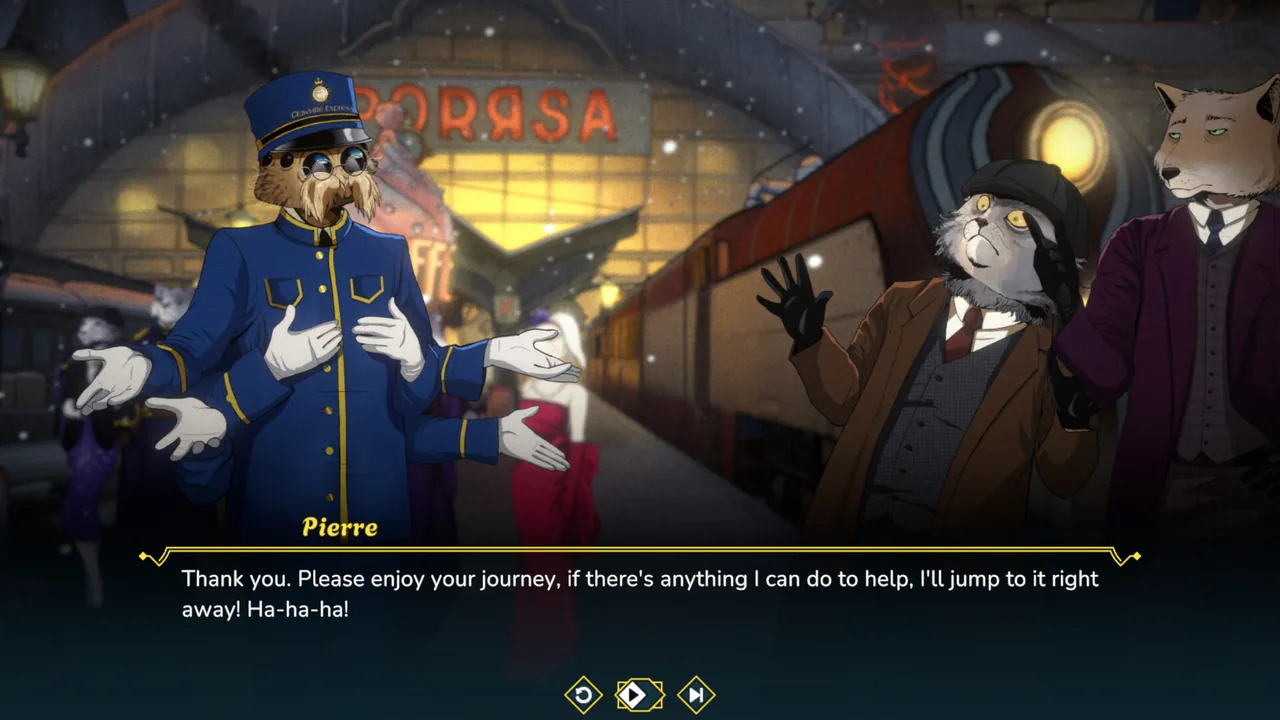
The dominant, near-universal praise across the sample is for presentation and cast. Reviewers repeatedly describe the hand-drawn art as a genuine step forward from the studio's earlier games, and the fully-voiced dialogue is singled out again and again, several reviewers explicitly say the voice acting alone elevates otherwise middling scenes into something memorable. Moses and Plato themselves land well as a duo, reviewers who've played the earlier Chicken Police games describe warming to this new pair just as much, if not more, than to the series' original leads, and the broader supporting cast of train passengers and suspects gets similar praise for personality and writing, even from reviewers otherwise critical of the plot mechanics surrounding them.
A mystery that solves itself too easily
Where the game consistently disappoints is in the actual detective work. Multiple reviewers, including several who came in as enthusiastic fans of the developer's prior games, note that the culprit and their motive are guessable within the first chapter, undercutting the tension a murder-mystery structure depends on. The investigation itself is described as heavily linear, players gather clues and interrogate suspects, but the underlying structure rarely allows for genuine deduction or meaningfully different paths through a case, functioning closer to a guided visual novel than an interactive whodunit. One especially detailed review calls the ending's core twist, a fantastical plot device used to explain the crime's motive, tonally jarring compared to the more grounded political intrigue set up earlier in the story, a critique echoed by several other reviewers frustrated that a promising setup pays off in a less satisfying way.
Underused systems
Several specific investigative tools, presenting evidence to witnesses, a card minigame used in certain sequences, are introduced but appear infrequently enough that reviewers describe them as underdeveloped rather than meaningfully integrated into the case-solving loop. A handful of reviewers compare this unfavorably to genre touchstones like the classic Ace Attorney or Return of the Obra Dinn formula, games that build their investigative tension through genuine deductive mechanics rather than narrative pacing alone. It's a consistent thread across otherwise positive reviews: the game is happy to dress itself as a detective story, but plays, in the words of one reviewer, more like "a visual novel-plus" than a true investigation game.
Rough edges in presentation
Beyond the narrative-mechanical gap, a smaller set of technical complaints recurs: slow or occasionally disorienting camera movement during investigation sequences, mouse input described by one reviewer as sluggish compared to keyboard controls, and at least one prominent warning circulating in the review section against force-quitting the game via alt+F4, citing a save-corruption risk. None of these appear to be widespread game-breaking issues, but they're specific enough, and repeated across enough independent reviews, to be worth flagging for anyone planning a purchase.
Worth the ticket for returning fans
For players already invested in the World of Wilderness setting, the consensus is clear: this is a worthwhile, if imperfect, expansion of the universe's lore and character roster, several reviewers explicitly rank it as their favorite entry in the series so far specifically because of Moses and Plato's chemistry. For newcomers expecting a genuinely challenging detective game first and an anime-adjacent visual novel second, the balance is likely to disappoint, and the reviews bear that distinction out consistently, nearly every negative review centers on gameplay depth rather than presentation or writing quality.
How it compares to the Chicken Police games
Reviewers with direct experience of the earlier Chicken Police titles are largely split on how this spinoff stacks up. Some describe it as a clear evolution, citing the improved art direction, expanded world-building beyond Clawville itself, and a more optimistic, less noir-grim tone that several find a refreshing change of pace after two darker entries in the same universe. Others push back, arguing the mystery writing here is noticeably weaker than the original game's tighter plotting, with one detailed review noting the story loses momentum in its back half after a strong opening, and another citing a thinner original soundtrack compared to the acclaimed score of the first Chicken Police. What's consistent across both camps is that the character writing, specifically the central detective duo, is judged to be at least as strong as, and by several accounts stronger than, the series' original leads, which speaks well of the studio's ongoing investment in this fictional universe regardless of where individual reviewers land on the mystery-plotting question.
The verdict
Moses & Plato - Last Train to Clawville succeeds as a lushly presented, well-acted expansion of its studio's established universe, and its title characters are genuinely worth spending a handful of evenings with. It falls short as an actual detective game, its mystery mechanics are thin, its central twist undercuts the grounded intrigue that precedes it, and the investigative tools it introduces rarely get room to matter. Recommended for series fans and visual-novel enthusiasts who prioritize character and atmosphere; a more cautious pick for anyone hoping for real detective-game challenge.
Pros and cons
Pros
- Gorgeous hand-drawn art direction and animation that reviewers consistently call a step up from the developer's earlier games
- A uniformly praised, fully-voiced cast, with Moses and Plato singled out repeatedly as an engaging, well-written detective duo
- Meaningful world-building that expands the Chicken Police universe's lore and geography without requiring prior familiarity
- A well-paced runtime that most reviewers finish in a handful of satisfying sittings without it overstaying its welcome
Cons
- The actual detective and interrogation mechanics are widely described as shallow and heavily linear, with little room to genuinely go astray
- Several reviewers correctly guess the culprit within the first chapter, undercutting the mystery's central tension
- Minigames and investigative tools (item presentation, a card game) are introduced but used sparingly enough to feel underdeveloped
- Some reviewers report slow, occasionally disorienting camera movement, and at least one warns against force-quitting due to a save-corruption risk
Screenshots
-
Moses & Plato - Last Train to ClawvilleImage: Toge Productions via Steam -

Moses & Plato - Last Train to ClawvilleImage: Toge Productions via Steam -

Moses & Plato - Last Train to ClawvilleImage: Toge Productions via Steam -
How the review scores each part of the gameWanderer Editorial -
Key facts at a glanceWanderer Editorial -
The short versionWanderer Editorial