
Game review
Mirklurk: Every Step Matters
7 / 10
- Developer
- Edym Pixels
- Publisher
- Edym Pixels
- Released
- 11 June 2026
- Platforms
- Windows
- Genre
- RPG, Survival, Early Access, Roguelite
- Monetisation
- paid
- Players
- false
The short version
Biggest strengths
- A genuinely deep, well-regarded combat and crafting foundation that reviewers compared favorably to Stoneshard, NEO Scavenger, and Project Zomboid
- A satisfying sense of hard-won self-sufficiency as players establish camps and manage limited resources across a punishing procedurally generated map
- A strong main questline layered over the survival systems, giving players goals beyond simply staying alive
Biggest weaknesses
- Real, specific bugs reported by multiple reviewers, including inventory weight miscalculations after upgrades and audio occasionally cutting out during transitions
- A punishing turn-based movement and action-point system that at least one detailed reviewer found tedious rather than tense, especially navigating in darkness
- Thin content outside the main questline, with reviewers noting large stretches of the map feel empty once the primary loot and dungeons are exhausted
Who it's for: Fans of punishing, systems-driven survival RPGs like NEO Scavenger or Project Zomboid who are willing to tolerate real Early Access rough edges for a genuinely deep crafting and combat foundation
Our recommendation: recommended with caveats
7 / 10
A brutal swampland that earns its subtitle
Mirklurk: Every Step Matters drops players into The Mirk, an exiled wanderer's unforgiving swampland where every choice, what path to take, what beast to fight, what to carry into a dungeon, carries real weight. It's an open-ended, turn-based survival RPG that leans hard into genre comparisons reviewers reached for repeatedly. One detailed reviewer placed it precisely: "the game has a vibe that feels like it lands somewhere between Gothic, Drova, Neo Scavenger, and Project Zomboid... the general feel of the gameplay lands somewhere between Stoneshard, Neo Scavenger, and Project Zomboid." Another reviewer put it more bluntly: "The game is essentially NEO Scavenger's little brother. And while this is a good thing, as a little brother, it's not fully developed."
Systems reviewers genuinely respect
Beneath the punishing survival loop, reviewers consistently praised the specific mechanical systems Edym Pixels built. One wrote plainly, "I love the combat system and the survival style and the whole thing is very cool," while singling out "woodcutting, and the fire making systems" as "prime examples of good unique implementations." Another reviewer, deep into a long-term save, described the appeal of the game's procedural variance directly: "The procedurally generated map means you get a fresh run of luck with every generated 'world'... My longest run is 67 days, level 23." That same reviewer called the overall experience "great for what it is: a survival sim," even while flagging real frustrations along the way.
A loop some found tense, and others found exhausting
The pool's sharpest criticism, a long, deliberately grinding narrative review written entirely in second person, laid out the moment-to-moment survival loop as a relentless cycle of scarcity: "You spend the days collecting wood and searching for stones... You found 5 stones after looking under 80 rocks... You feel like you play an 80 year old man with a broken leg, collecting dirt and eating vermin." The same reviewer specifically criticized the turn/action-point system's impact on basic movement and combat: "You must press space after each hit, because of the ungenerous turn system," concluding, "You know now why the subtitle is 'Every step matters'. You decide to let it be." It's a striking counterpoint to the pool's dominant praise, and a useful signal that the game's deliberately slow, resource-starved pacing genuinely won't land for everyone, particularly players expecting a faster-paced survival loop.
Real bugs, not just difficulty complaints
Several reviewers distinguished between the game's intentional difficulty and its unintentional rough edges. One wrote about a specific, reproducible bug: "if you upgrade your carry capacity while your inventory is overloaded, the game resets your currently carried weight to the current level. Stripping my character nude and tossing all my gear on the ground, I was still carrying 15/46... which lead to a death spiral I couldn't pull out of." The same reviewer also flagged "odd bugs, like occasionally shutting off all the sound on transitions/resting." A separate reviewer described UI friction more broadly: "You have your main bag, pouches, crafting and equipment all with separate UI boxes. You can freely drag them around, great. The problem is they o[verlap]," alongside "frequent bugs" that reviewer said made them split on recommending the game at all.
Detailed, constructive feedback from engaged players
One of the pool's longest reviews reads almost like a developer feedback document, and it's worth taking seriously as a signal of the community's investment in the project. Among its specific points: "Bows are impossible to use in dungeons making the skill tree options for them, irrelevant," and "There is no reason to explore most of the place... apart from the main quest, the game is empty. Sidequests are needed and more content on the maps." The same reviewer suggested a fast-travel or teleportation system to ease tedious backtracking, while still closing with clear enthusiasm: "Great game otherwise... Keep up the good work!" That kind of granular, engaged criticism from a reviewer who still recommends the game is a strong sign of a dedicated, invested playerbase rather than one giving up on the project.
Worth the price as groundwork, with the caveats stated plainly
Value assessments across the pool consistently acknowledge the game's current limitations while still landing on recommendations. One reviewer put it directly: "Absolute recommend with the caveat that it's in pretty rough shape. What's here is great groundwork for a survival/craft adventure game mixed with grid puzzles... Currently that's the extent of what's worth showcasing, a proof of concept." Another reviewer agreed on the fundamentals while flagging balance concerns around save-scumming loot rerolls and under-explained systems like the game's "wellbeing" stat, closing nonetheless with, "The game is fun, in its own way and it is worth the asking price of almost 10 Euros."
A UX quirk that colors the whole first impression
Beyond outright bugs, several reviewers flagged a specific responsiveness issue that shapes how the turn-based systems actually feel to play. One wrote, "Aside from a few minor UX/UI issues (main one being that sometimes it feels like the game is unresponsive when I'd used up my AP for the turn and the game was briefly simulating the start of the next turn prior to giving me control back), most of which I think are more general inherent quirks that a player will get used to over time, the game is already in a very solid s[tate]." That framing, a rough edge that's more of a learning curve than a dealbreaker, captures how a lot of the pool's criticism reads: real friction that experienced players expect to smooth out with familiarity and further patches, rather than fundamental design failures.
Verdict
Mirklurk: Every Step Matters offers a genuinely deep, well-liked survival RPG foundation, one reviewers repeatedly compare to respected genre touchstones like NEO Scavenger and Project Zomboid, wrapped around a deliberately punishing, resource-scarce loop that rewards patient, careful players. Its Early Access rough edges are real: specific, reproducible bugs, cluttered UI, thin content outside the main questline, and a turn-based pacing some reviewers found tedious rather than tense. For players who want to support a promising, actively developed survival RPG and can tolerate genuine jank along the way, it's a worthwhile pickup; players looking for a fully polished experience today should wait for further updates.
Pros and cons
Pros
- A genuinely deep, well-regarded combat and crafting foundation that reviewers compared favorably to Stoneshard, NEO Scavenger, and Project Zomboid
- A satisfying sense of hard-won self-sufficiency as players establish camps and manage limited resources across a punishing procedurally generated map
- A strong main questline layered over the survival systems, giving players goals beyond simply staying alive
- An honest, promising proof of concept that several reviewers said already feels worth its asking price even in its current rough state
Cons
- Real, specific bugs reported by multiple reviewers, including inventory weight miscalculations after upgrades and audio occasionally cutting out during transitions
- A punishing turn-based movement and action-point system that at least one detailed reviewer found tedious rather than tense, especially navigating in darkness
- Thin content outside the main questline, with reviewers noting large stretches of the map feel empty once the primary loot and dungeons are exhausted
- UI friction, including cluttered, overlapping inventory panels and mechanics some reviewers found unintuitive, like largely unusable bows inside dungeons
Screenshots
-
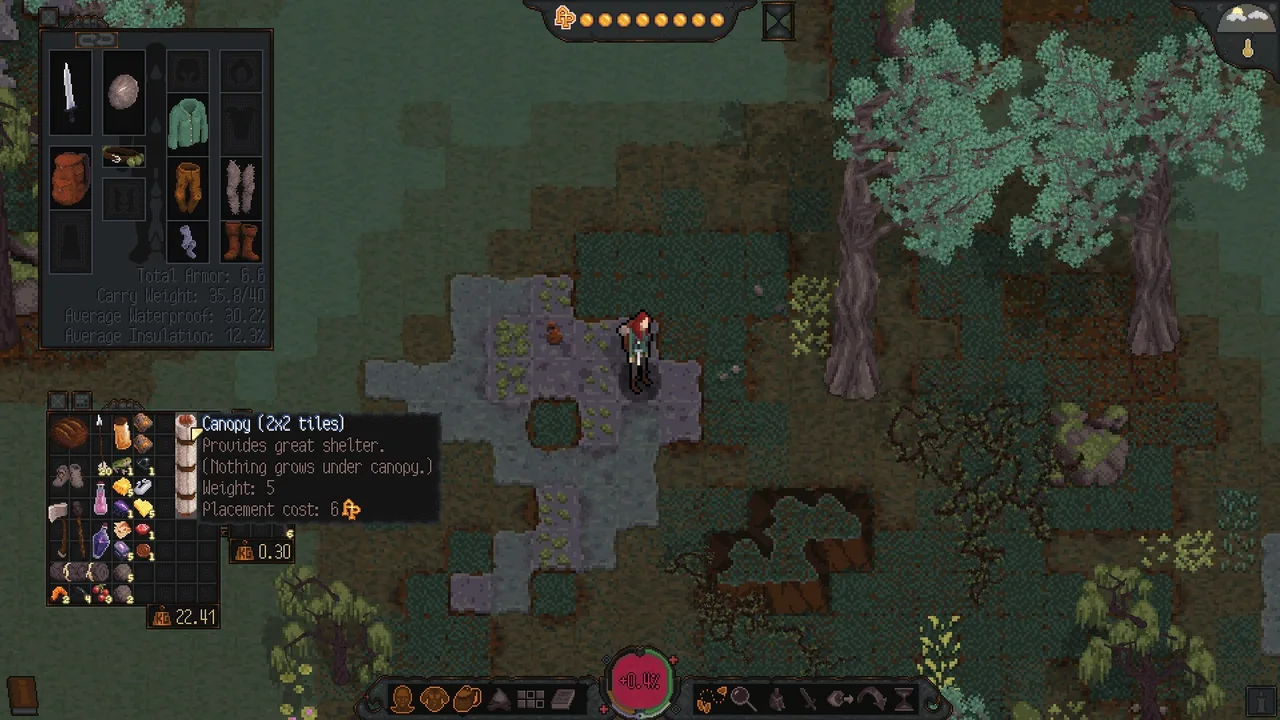
Mirklurk: Every Step MattersImage: Edym Pixels via Steam -
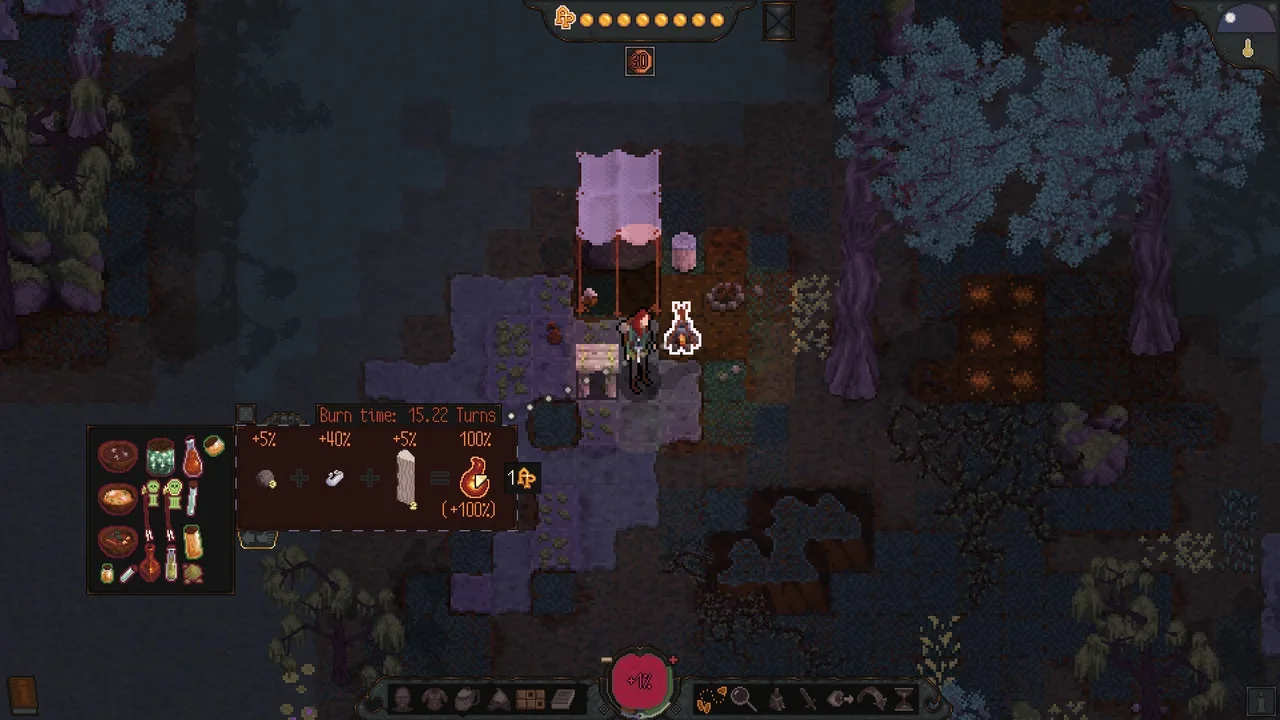
Mirklurk: Every Step MattersImage: Edym Pixels via Steam -
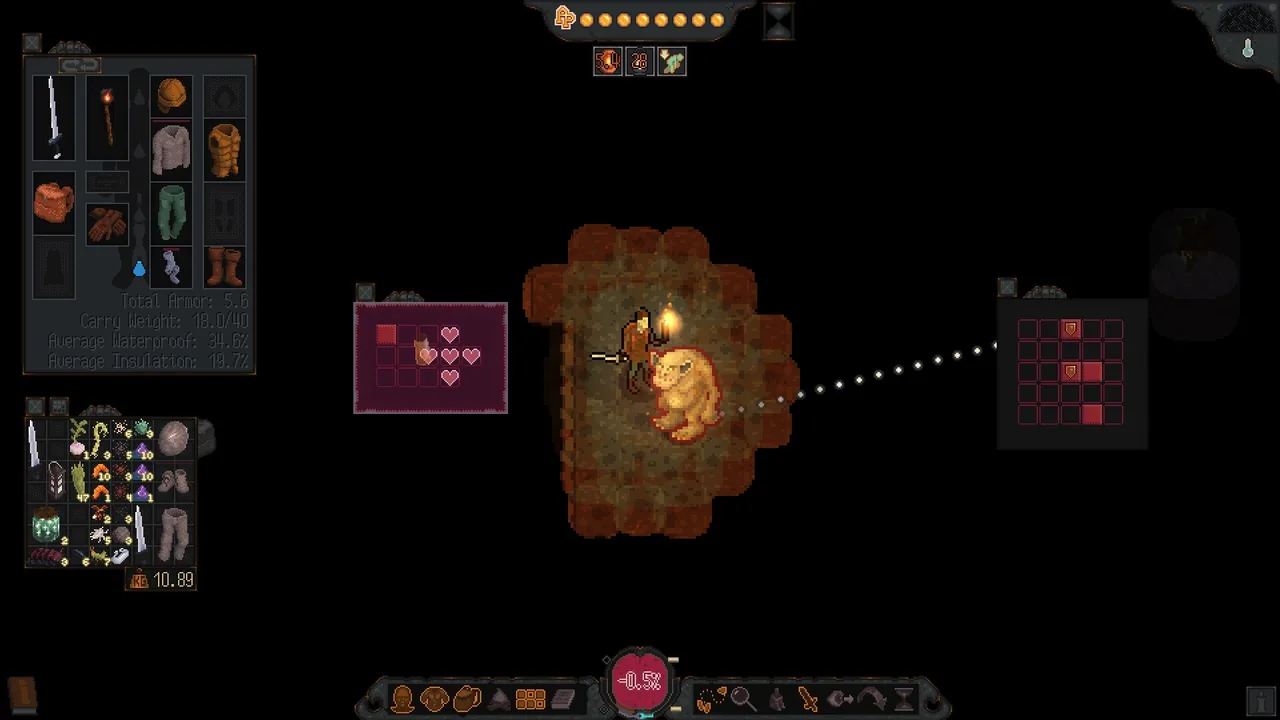
Mirklurk: Every Step MattersImage: Edym Pixels via Steam