Game review
Lost Sanity: Cthulhu Review
6.5 / 10
- Developer
- Manin Studios
- Publisher
- ZNT Productions
- Released
- 2 September 2026
- Platforms
- ["Windows"]
- Genre
- Adventure
A Kickstarter-Funded Cult Horror Story, One Chapter at a Time
Lost Sanity: Cthulhu launched September 2, 2026, from Brazilian studio Manin Studios under publisher ZNT Productions, following a Kickstarter campaign that funded in early 2026 and a demo that preceded it by several months. It's pitched as a Lovecraftian horror anthology: a reporter and investigator is kidnapped by a cult chasing the return of Cthulhu, and the player has to explore, hide, and escape across a handful of key-and-door puzzle rooms while a pursuer stalks the halls. At review time it sat at 21 positive reviews against 2 negative across all languages, a 91 percent "Positive" score built on a small but genuinely engaged pool, several of whom explicitly frame the game as a promising first entry in a longer series rather than a finished, standalone product. That framing matters, because what's actually purchasable right now is only the first of the anthology's advertised chapters, a distinction more than one reviewer flagged as worth knowing before buying in.
Scares That Land, Atmosphere That Mostly Holds
The strongest, most consistently repeated praise in the review pool is for the game's ability to actually startle players. One detailed English-language review called out the atmosphere directly as a highlight, and a Portuguese-language reviewer, writing at length, singled out the chase sequences and flashbang-style jump scares, comparing their technique to Alan Wake II, as the moments that worked best, even while wishing they leaned into more uncomfortable sound design and more frantic on-screen movement to sell the danger further. That same reviewer credited the cultist and monster designs as a real step up for the studio, calling the direction "genuinely intriguing" and noting a clear evolution in animation fluidity and art direction compared to Manin Studios' previous, more low-poly release, Sparky: Hills of Death, from 2024. The soundtrack was described as competent rather than memorable, doing its job to build tension in key moments without producing anything a player hums afterward, a fair trade-off for a small, funded-by-the-public project.
A Familiar Key-Hunt Structure, and a Monster That Doesn't Always Cooperate
Mechanically, Lost Sanity: Cthulhu sticks to a well-worn horror-adventure formula: explore rooms, find keys and items, unlock doors, avoid or evade a pursuing threat. Reviewers generally accepted this as appropriate for a short, roughly hour-long chapter, where repetition doesn't have time to set in. But the structure draws real criticism when it's stretched even a little: one reviewer, a backer of the original Kickstarter, described picking up a key in one corner of the map only to find it opens a door clear on the other side, revealing another key that repeats the pattern again, a loop they found tedious rather than tense. That same reviewer's sharpest complaint was about the pursuing monster's behavior, describing its pathing as effectively random rather than threatening: because its movement can't be predicted, it sometimes plants itself directly in the path the player needs to take, forcing a wait of several minutes for it to wander off before progress is possible. That's a pacing problem rather than a horror-design intention, and it's specifically about the creature's in-game movement logic, not anything related to the game's art or writing production.
The Recurring Complaint: One Chapter Purchased, an Anthology Promised
The most consistent reservation across independent reviewers, corroborated in both English and Portuguese-language reviews, is that the store page frames Lost Sanity: Cthulhu as an anthology while only Chapter One, a roughly hour-long slice, is currently available to buy. The Kickstarter backer's review opened with exactly this point: buyers should understand up front that they're purchasing the first installment only, with no clarity yet on whether future chapters will arrive as free updates or separate paid releases. An English-language reviewer raised the same concern independently, treating the single-chapter scope as a meaningful factor in judging value for the asking price. Layered onto that structural ambiguity, the same detailed English review catalogued a list of rough edges that read like a launch-week polish gap rather than fundamental design flaws: locked doors that give no clear feedback when they can't be opened yet, no way to decouple voice-line language from the game's interface language, no motion blur toggle for players sensitive to it, and a bug where previously opened objects can reset to appearing closed again.
A Reporter Who Deserves More Curiosity
The narrative premise, a cult pursuing Cthulhu's return and a protagonist who happens to be a reporter and investigator by trade, was described by multiple reviewers as intriguing but underexplained. Where does the cult come from, why Cthulhu specifically, and how was the protagonist taken in the first place are all questions the first chapter raises without answering, which is a defensible choice for an anthology opener but frustrated at least one reviewer who wanted more environmental storytelling, documents, and notes to reward curiosity along the way. That reviewer's framing was pointed: there's a difference between mystery, which invites the player to theorize, and a simple absence of information, which leaves them with nothing to investigate at all. Given that the protagonist's entire professional identity is built around asking questions, more than one reviewer wanted her to visibly act like it.
A Small Studio Building on Its Last Release
Lost Sanity: Cthulhu's development path, a public Kickstarter announcement in December 2025, a demo in February 2026, funding secured by March, and a launch trailer ahead of the September 2, 2026 release, points to a small team working in public and iterating quickly, with bug-fix patches following shortly after launch. Reviewers who'd played the studio's earlier work were consistently generous about the trajectory, treating this release as a clear step up in art direction and animation quality even where its systems and content remain thin. Voice acting drew mixed marks: functional but rarely exceeding what's typical for an independent production, with English dialogue that doesn't always read naturally, though the inclusion of a Portuguese dub alongside English subtitles was called out as a thoughtful choice for reaching the studio's home audience without sacrificing its international one.
Verdict
Lost Sanity: Cthulhu lands its scares, dresses them in atmosphere and creature design that genuinely improve on the studio's prior release, and sets up a Lovecraftian cult mystery with real potential. But it's currently a single, roughly hour-long chapter sold as the opener to a larger anthology whose future installments and pricing remain unannounced, wrapped around a familiar key-hunt structure that a repeat playthrough or two exposes as repetitive, a pursuing monster whose unpredictable pathing sometimes reads as broken rather than tense, and a list of launch-week UX rough edges around locked doors, audio language options, and object-state bugs. At $8.99 for what amounts to a well-atmosphered prologue, it's a reasonable bet for horror fans who want to support a small, improving studio and don't mind waiting to see where the story goes, but it's not yet the complete experience its own marketing implies, and buyers should go in knowing exactly how much game that price currently covers.
Screenshots
-
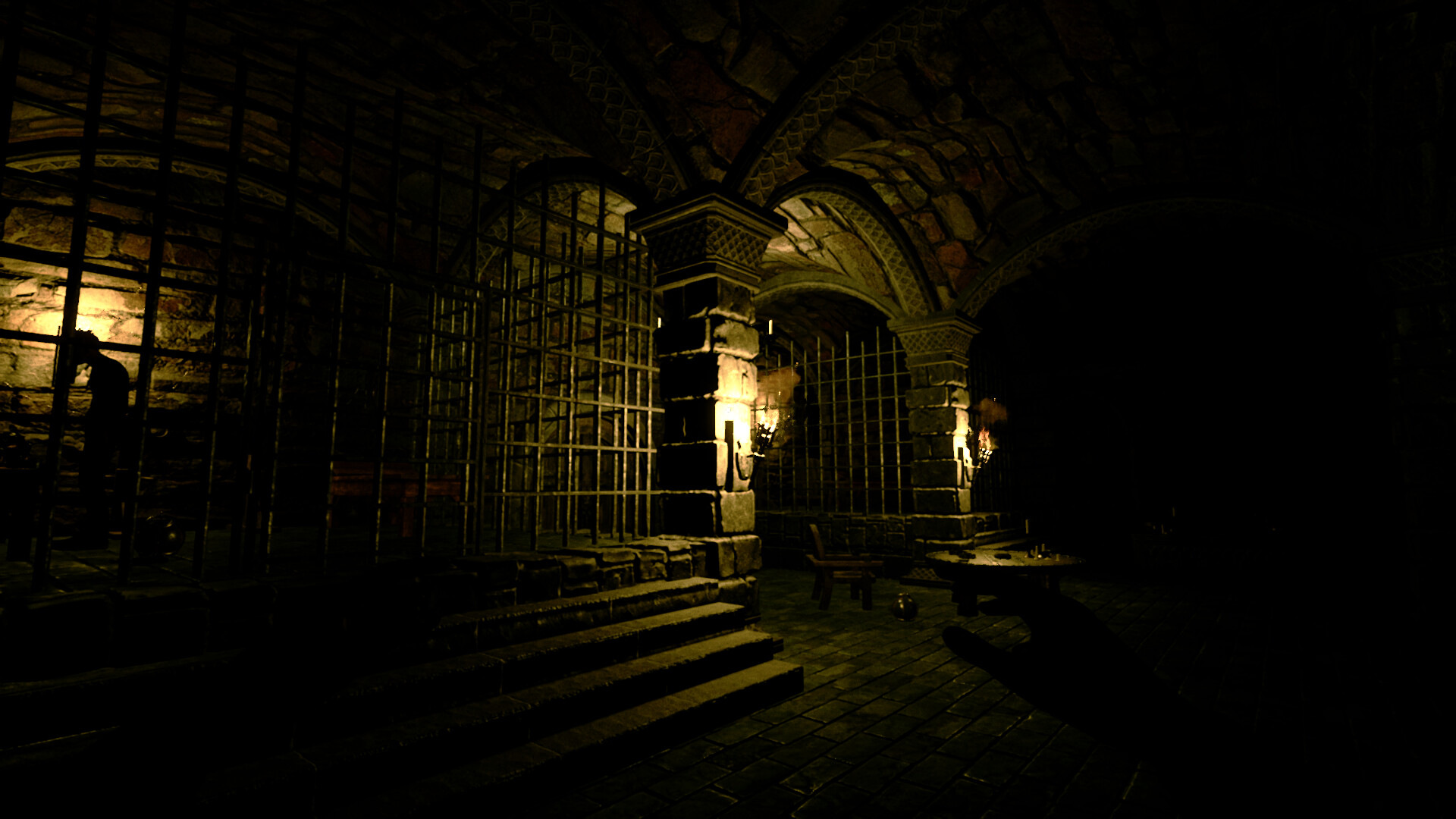
A torchlit dungeon corridor, one of the barred cell-lined spaces the player creeps through while avoiding the cult's pursuer.Image: ZNT Productions via Steam -
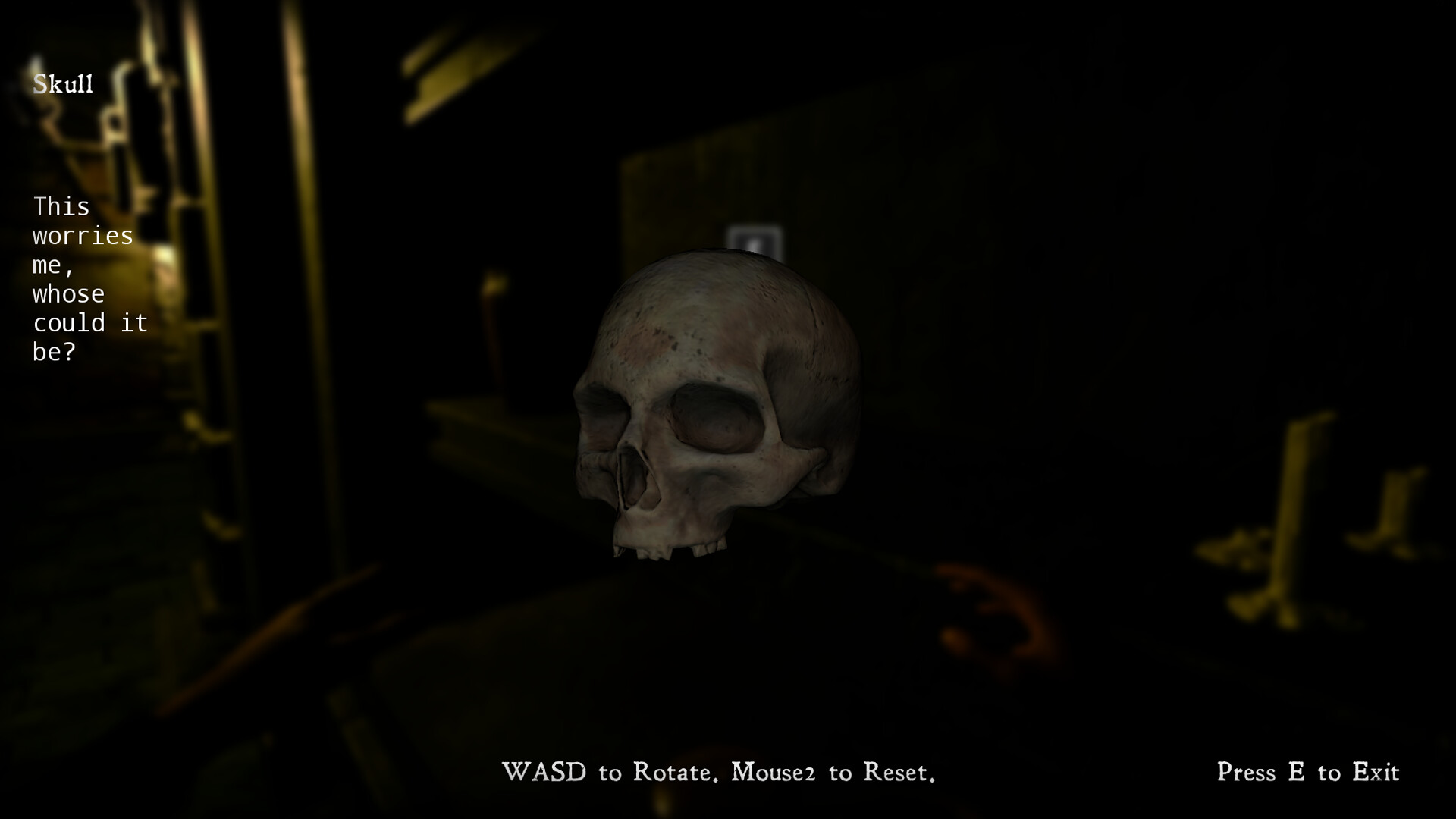
Inspecting a found skull in the item-examination view, one of the investigation beats built around the game's key-and-clue structure.Image: ZNT Productions via Steam -
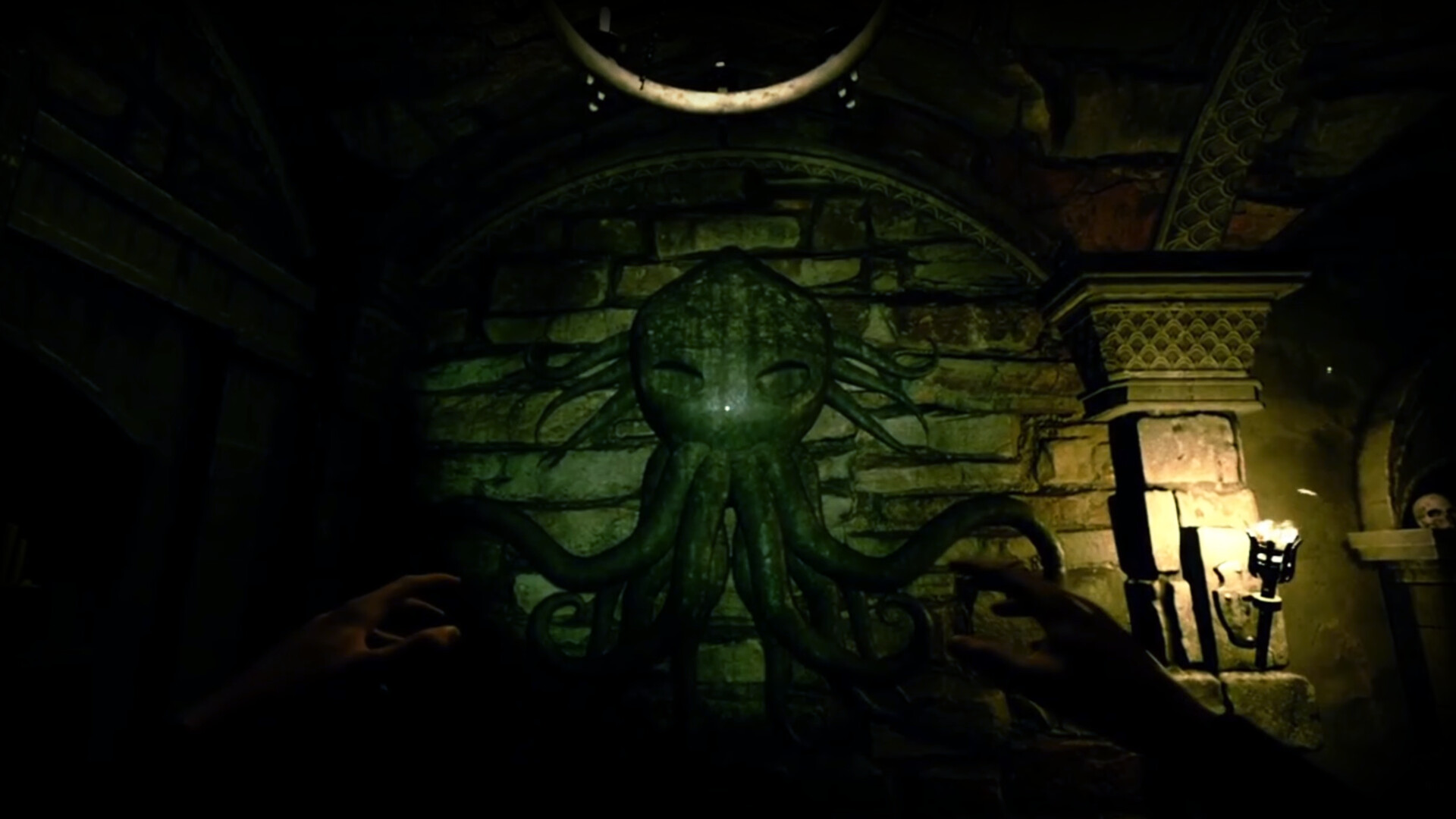
A carved cult idol set into the dungeon wall, part of the cosmic-horror iconography built up around the Cthulhu-worshipping cult.Image: ZNT Productions via Steam