Game review
Log Riders
4.8 / 10
- Developer
- Bluespy Studios
- Publisher
- Bluespy Studios
- Released
- 12 February 2026
- Platforms
- Windows, Mac, Linux
- Genre
- Co-op Platformer
- Monetisation
- Premium (one-time purchase)
- Players
- true
The short version
Log Riders nails the specific, chaotic joy of co-op physics comedy — two players fighting to keep a rolling log balanced while blaming each other for every wipeout — but the goodwill that generates runs up against genuinely twitchy steering, hazard patterns that repeat for far too long without variation, and a handful of players getting outright stuck. It's most fun exactly as long as the chaos stays funny rather than frustrating, and for a meaningful chunk of its audience that window closes before the level does.
Biggest strengths
- Genuinely funny, chaotic co-op dynamic that reviewers consistently credit as the game's best feature
- Clean, bright, coherent art direction that keeps the physics-driven chaos easy to read
- Cheap entry price for a couple of hours of memorable multiplayer chaos
Biggest weaknesses
- Steering feels imprecise and over-sensitive to many reviewers, with small bumps sending the log into an uncontrollable spin
- Hazard variety is thin — several reviewers report the same obstacle types repeating for most of the level with only one real environment change
- Multiple reports of getting stuck between obstacles with no way to free yourself
Who it's for: Couch co-op and online-co-op groups looking for a short, cheap, ragdoll-physics party game to blame each other over — not recommended as a solo experience despite technically supporting one.
Our recommendation: A solid pickup at its low price for a group looking for a quick, funny co-op session, but go in expecting real control friction and level-design repetition rather than a polished, tightly-tuned platformer.
4.8 / 10
What Is Log Riders?
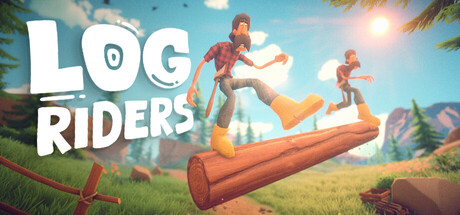
Log Riders is a two-player co-op platformer in which you and a partner ride a single log downriver, balancing it by moving forward, backward, or staying still — leaning too far one way while your partner does the opposite sends the log spinning, and losing your balance sends you both tumbling off. It sits squarely in the lineage of chaotic co-op physics games like Getting Over It or the more recent viral hit Chained Together, built around the specific comedy of two players fighting the same physics object with only partial control over it. At NZ$7.39 (frequently discounted further), it's priced as a short, cheap party experience rather than a full-length game, and Steam's user base has responded with a more mixed reception than most titles in this lane — 70% positive across 658 reviews, with a slightly softer 66% over the most recent 30 days.
That gap between the co-op comedy on offer and the technical friction required to access it defines almost the entire review conversation around the game.
The Co-op Chaos Genuinely Lands
When it works, Log Riders delivers exactly what it promises. Reviewers repeatedly describe genuine laughter, chaotic blame-trading, and the specific pleasure of watching a friend or partner mess up a simple-looking obstacle in spectacular fashion. "The physics make every round unpredictable and full of laughs, especially when things go completely wrong in the best way," as one reviewer puts it, while another calls the frustration of watching a partner tip the log into disaster "where this game truly shines," precisely because the eventual victories feel earned as a result. Several reviews frame the game explicitly as friendship-testing material in a fond, self-deprecating way — a genre of co-op game that thrives on exactly this kind of chaos rather than being undermined by it.
The visual presentation supports this well: reviewers consistently praise the game as clean, bright and easy to read even during the most chaotic moments, which matters more than it might seem for a game built around fast, physics-driven failure states. A shop and cosmetic customisation system, unlocked with in-run currency, adds a light layer of longer-term incentive beyond a single playthrough, and multiple difficulty levels give groups some control over how punishing the experience is.
Steering and Level Variety Are the Real Sticking Points
The praise for the core concept comes with a consistent, specific set of complaints about execution. Steering is the most frequently cited problem — reviewers describe the controls as difficult to learn, oversensitive to small inputs, and prone to sending the log into an uncontrollable spin from what feels like a minor misstep. "Steering is terrible - in a way that you spend 1-2 minutes just trying to correct yourself," as one more detailed critical review puts it, and several others echo the same frustration with less patience for it. There's no in-game tutorial for a lot of players either, with more than one review describing the opening minutes as "pure panic and guessing controls" before things start to click.
Level and hazard variety draws similarly pointed criticism from a meaningful slice of the review base. One detailed negative review lays out the issue specifically: recurring obstacle types — spinning spikes, swinging hammers — repeated with little to no variation across almost the entire length of the first map, with only a single environmental biome change in the middle. That's a real structural problem for a game built around a single continuous level rather than discrete, varied stages, and it explains why some reviewers who otherwise enjoyed the core physics still came away feeling the experience dragged. A smaller number of reviewers report a more serious issue: getting stuck between obstacles with no way to free themselves, forcing a restart.
Interestingly, difficulty perception splits sharply across the sample. A meaningful group finds the game punishingly hard, particularly without a tutorial, while others complete a full run in under 90 minutes and call it "too easy." That inconsistency suggests the difficulty curve leans heavily on whether a given pair of players can quickly find a rhythm together — which, for a game entirely about two-player coordination, is either the whole point or a real tuning problem, depending on your patience for the learning curve.
Solo Play Is an Afterthought
Log Riders technically supports single-player, but reviewers are blunt that it's poorly explained and awkward in practice — one player controls both characters simultaneously, effectively splitting attention between two halves of the same puzzle. A couple of reviewers report finding this more enjoyable than expected once they adjusted, framing it almost as a separate, harder "ambidexterity" challenge mode, but it's clearly not the intended way to experience the game, and the menu options for finding it are reportedly unclear. Anyone buying this expecting a solid solo platformer experience should recalibrate those expectations before purchasing — this is a co-op game first, with solo play functioning more as a curiosity than a real alternative mode.
Final Verdict
Log Riders has a genuinely good idea at its core and, for the right group of players in the right mood, delivers real laughs from its chaotic co-op physics. But steering that many reviewers find imprecise, a level that leans on the same handful of hazards for too long, and scattered but real reports of getting stuck outright, keep it from being an easy recommendation across the board. At its low price, it's a reasonable pickup for a group looking for a short, funny co-op session with the right kind of patience for some control friction — just don't expect the polish of the genre's best recent breakout hits, and don't buy it planning to play solo.
Pros and cons
Pros
- Genuinely funny, chaotic co-op dynamic that reviewers consistently credit as the game's best feature
- Clean, bright, coherent art direction that keeps the physics-driven chaos easy to read
- Cheap entry price for a couple of hours of memorable multiplayer chaos
- Difficulty levels and a checkpoint system that most reviewers find fairly placed
Cons
- Steering feels imprecise and over-sensitive to many reviewers, with small bumps sending the log into an uncontrollable spin
- Hazard variety is thin — several reviewers report the same obstacle types repeating for most of the level with only one real environment change
- Multiple reports of getting stuck between obstacles with no way to free yourself
- Solo play is technically supported but poorly explained, requiring one player to control both characters at once
Screenshots
-
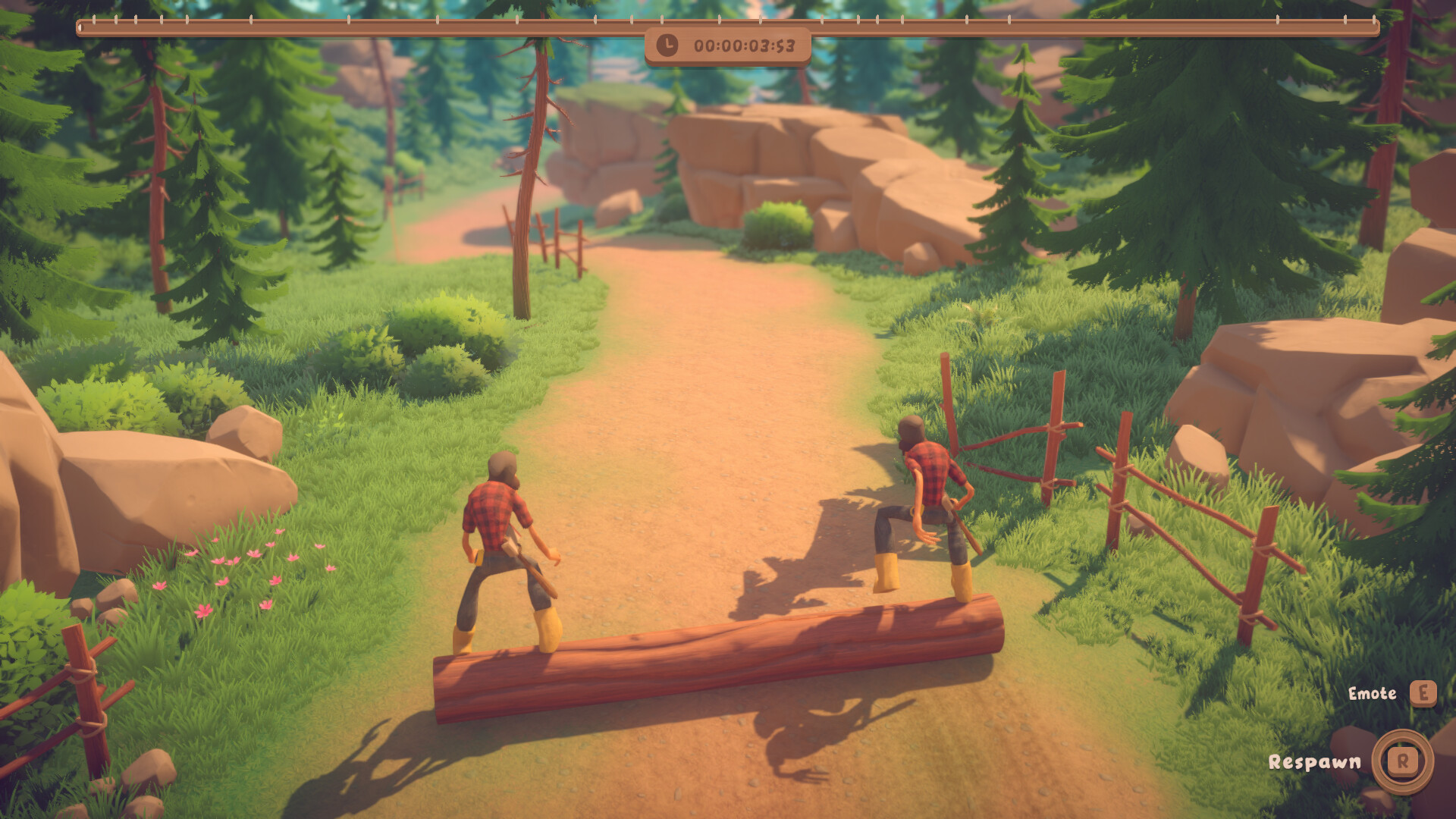
Runs are timed, and every route starts with the same simple balancing actBluespy Studios -
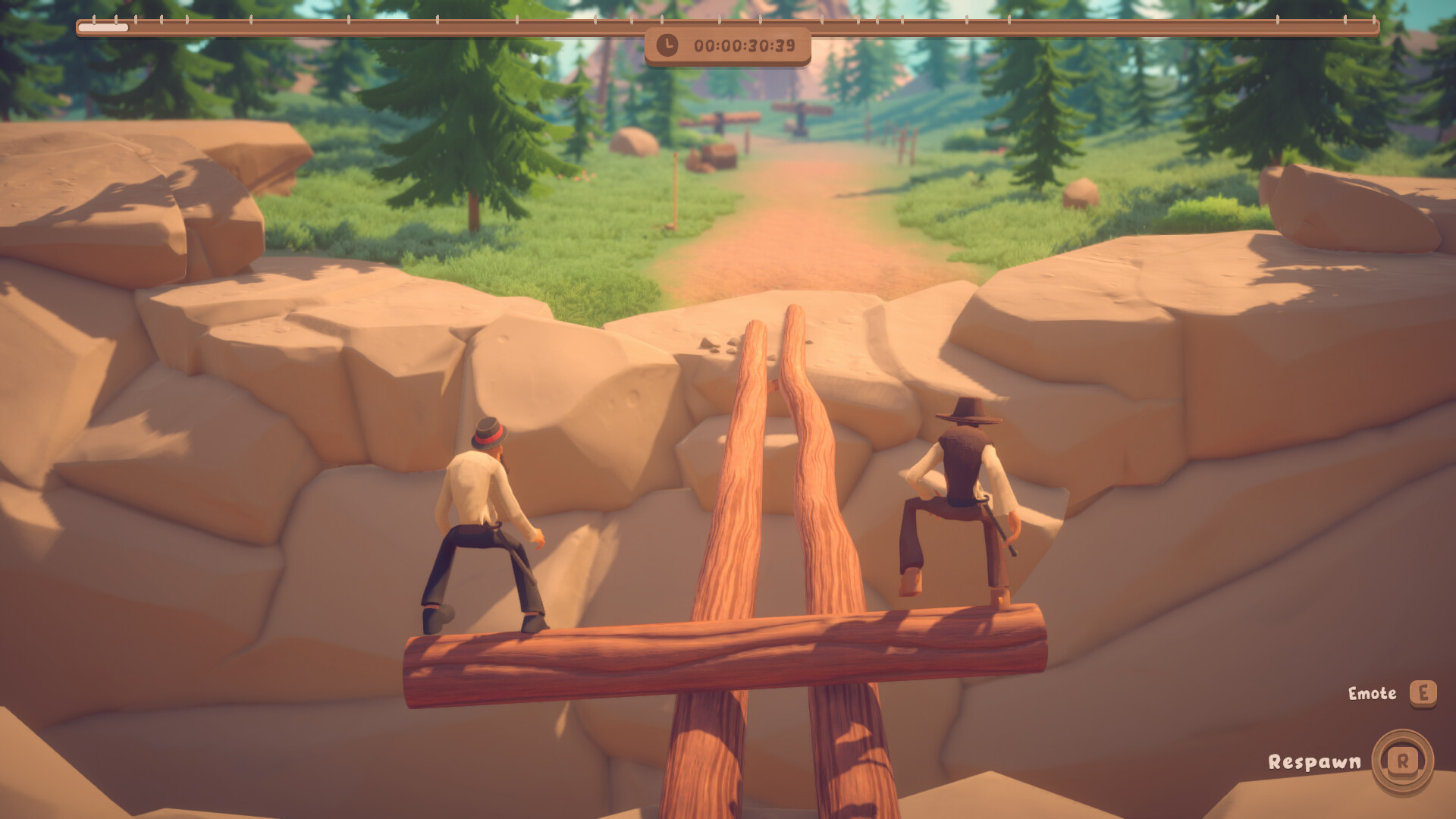
Later obstacles raise the stakes, with a fall meaning a long drop back to the last checkpointBluespy Studios -
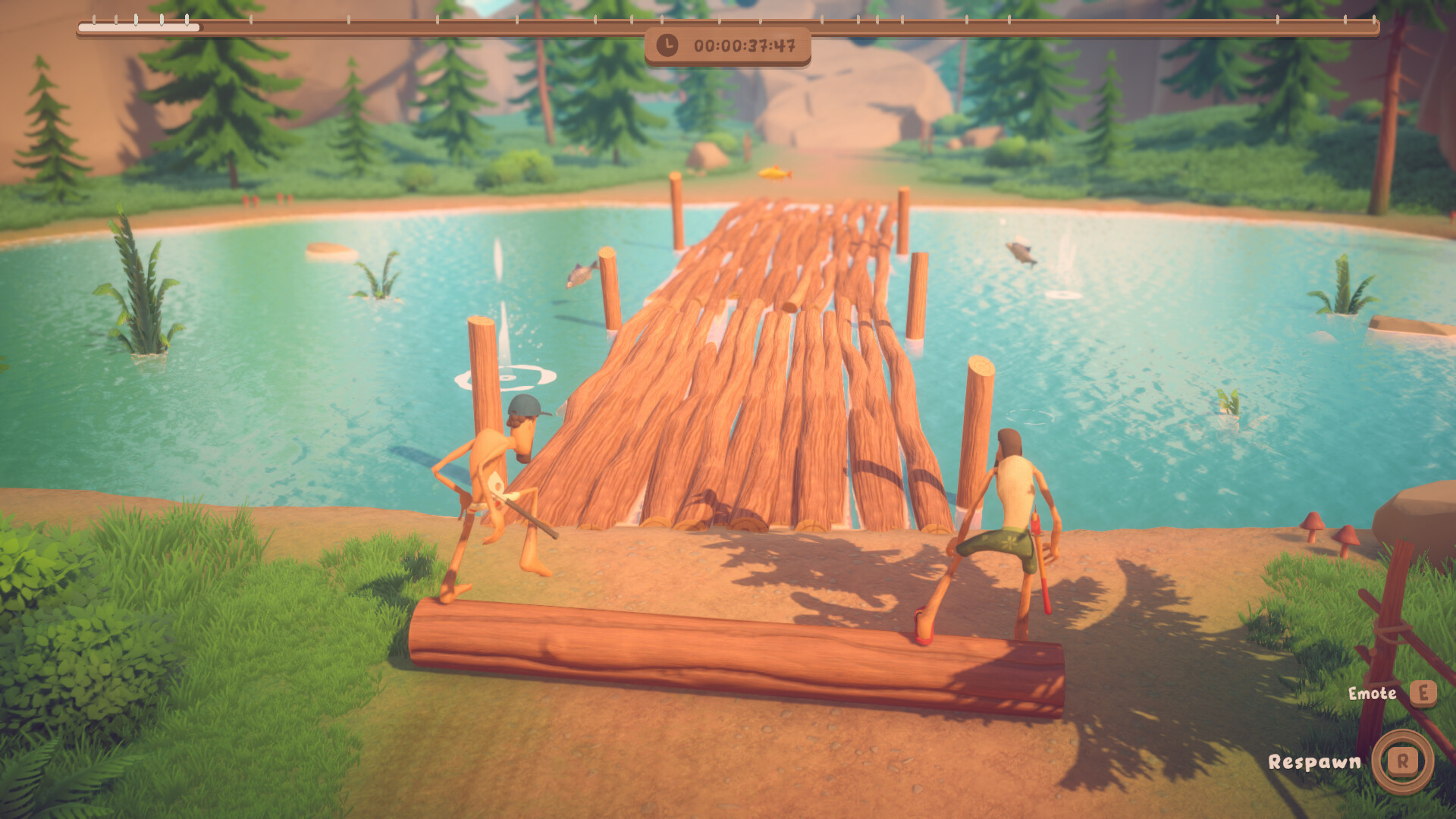
Water crossings add another layer of hazard to the log-balancing formulaBluespy Studios -
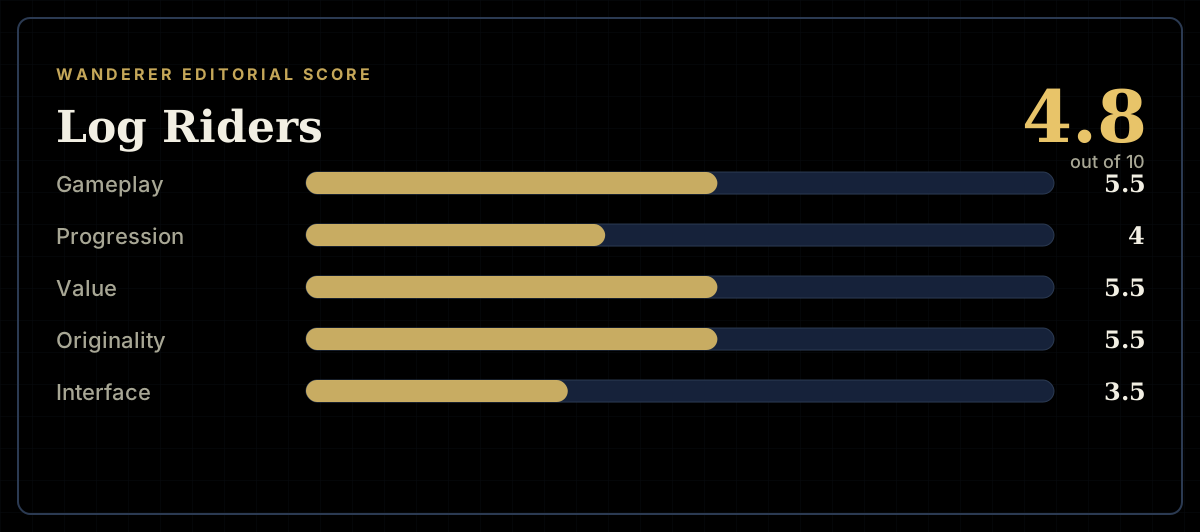
How the review scores each part of the gameWanderer Editorial -
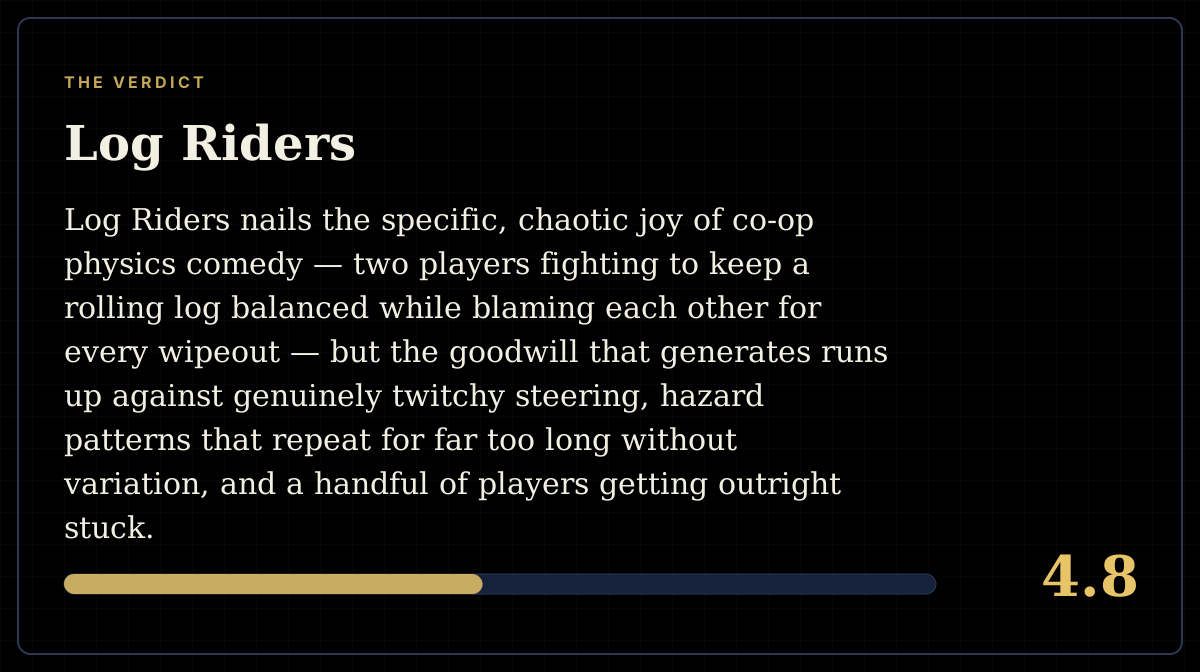
The short versionWanderer Editorial