Game review
KnitBone Review
6.4 / 10
- Developer
- aespipu, remarkablemark, Myka Valerio
- Publisher
- remarkablegames
- Released
- 8 September 2026
- Platforms
- ["Windows"]
- Genre
- Visual Novel
The Therapist Is More Traumatized Than the Patient
KnitBone is a free, short-form psychological horror visual novel built around a pitch-black inversion of the therapy-session premise, promising from its very first line that "the therapist is more traumatized than the patient." Players step into Eden Cross, a chronic insomniac feeling disconnected from their own life, who's approached by Ryohei, an old college acquaintance, offering an "experimental therapy" for the sleeplessness that increasingly resembles a guided ritual the deeper it goes. Built around roughly 7,000 words of dialogue and an estimated 30 to 50 minutes of playtime, the game structures its handful of therapy "sessions" around dialogue choices, light minigames, and an in-fiction personality test, leading to two main endings and one shorter alternate ending depending on how those sessions play out. Content warnings up front cover jump scares, cult themes, emotional manipulation, body horror, and depictions of death, positioning it firmly as a compact, self-contained horror experience rather than a sprawling one. It released free on Steam on September 8, 2026, developed by a small credited team, artist and project lead aespipu, programmer remarkablemark, and co-writers Myka Valerio and A. Villarroel, alongside a dedicated composer and a Russian translator, under publisher remarkablegames, a level of role specialization that's unusual for a free, half-hour project and points to a team treating the release as a genuine portfolio piece rather than a throwaway experiment.
A Tiny, Unanimously Positive Launch
KnitBone launched to 10 total reviews at the time of writing, every one of them positive, spread across English, Russian, and Japanese audiences despite the store page listing no Japanese localization at all. It's far too small a sample to draw sweeping conclusions from, but for a short, free horror visual novel released without much fanfare, a perfect early record from a genuinely international audience is a meaningful signal in itself, and the reviews that exist are detailed enough to sketch a clear picture of what's working.
A Tight, Specific Horror Hook That Reviewers Say Earns Its Premise
The praise for KnitBone centers overwhelmingly on how quickly and effectively it makes players suspicious of what's actually happening beneath its therapy-session surface. One reviewer describes enjoying the "gradual shift from ordinary discomfort into horror," praising the interactive structure of the sessions for making that unease feel earned rather than rushed given the game's short runtime. Another single-line review sums up the entire pitch succinctly: "and this is why I don't go to therapy," a reaction echoed by a longer review joking they'll "never go in a room with a psychologist" again after finishing it, specifically praising the well-fleshed-out characters conveyed through the personality-test minigame's metaphorical framing. Reviewers repeatedly single out the presentation for a game this small in scope, one calling out the pixel-drawn backgrounds specifically, while a detailed Japanese-language review, despite noting the absence of Japanese text entirely, still recommends the game to Japanese players comfortable with basic English, praising its partial voice acting on short lines like laughter, its light jump scares, and how tightly the choice structure ties back into its handful of endings without ever feeling padded or overcomplicated. A player who completed what they believe were all three endings calls the game "not exactly scary" on its own but genuinely shudder-inducing during its jump scares, and specifically praises the dialogue for staying short and readable enough that non-native English speakers should have no trouble following it.
A Short Runtime, a Muted Horror Pitch, and an Underdeveloped Central Dynamic
Even inside an entirely positive pool, several reviewers flag real, specific limits rather than treating the game as beyond criticism. The most measured review in the pool, a Russian-language write-up scoring the game 6 out of 10 despite recommending it, says the story is "cleverly built" and did manage to startle them at points, but ultimately concludes the game "didn't quite reach" the level of horror its premise promises, a genuine tension between what KnitBone sets up and what it actually delivers in its brief runtime. Length comes up elsewhere too, with one reviewer explicitly thanking the developers for making the roughly 30-minute experience free rather than positioning it as a full-price purchase, implicitly acknowledging how short a play session actually is. A separate reviewer, more focused on the writing itself, notes they didn't see as much of the central dynamic between Eden and Ryohei, specifically Eden's idealization of their old acquaintance, developed to the degree they felt the story's turn needed, even while saying the story still worked despite that gap. None of these are severe complaints, but together they describe a game whose horror hook and character work are both real and specific, without being executed at full depth in the time the game gives itself to land them.
Verdict
KnitBone earns its unanimous early praise by doing a small, specific thing well: setting up a genuinely unsettling inversion of the therapy-session premise and following through on the dread it promises, aided by well-drawn pixel backgrounds, light but effective jump scares, and a personality-test minigame that reviewers say says more about its characters than exposition alone could. It's a short, free game, and that shortness cuts both ways in the reviews, praised for asking nothing financially while also drawing specific, reasonable criticism for not fully cashing in on the horror or character depth its premise sets up. At no cost and roughly half an hour of playtime, this is an easy, low-risk recommendation for horror and visual-novel fans willing to accept a genuinely creepy hook delivered at a shorter, lighter weight than its premise might promise.
Screenshots
-
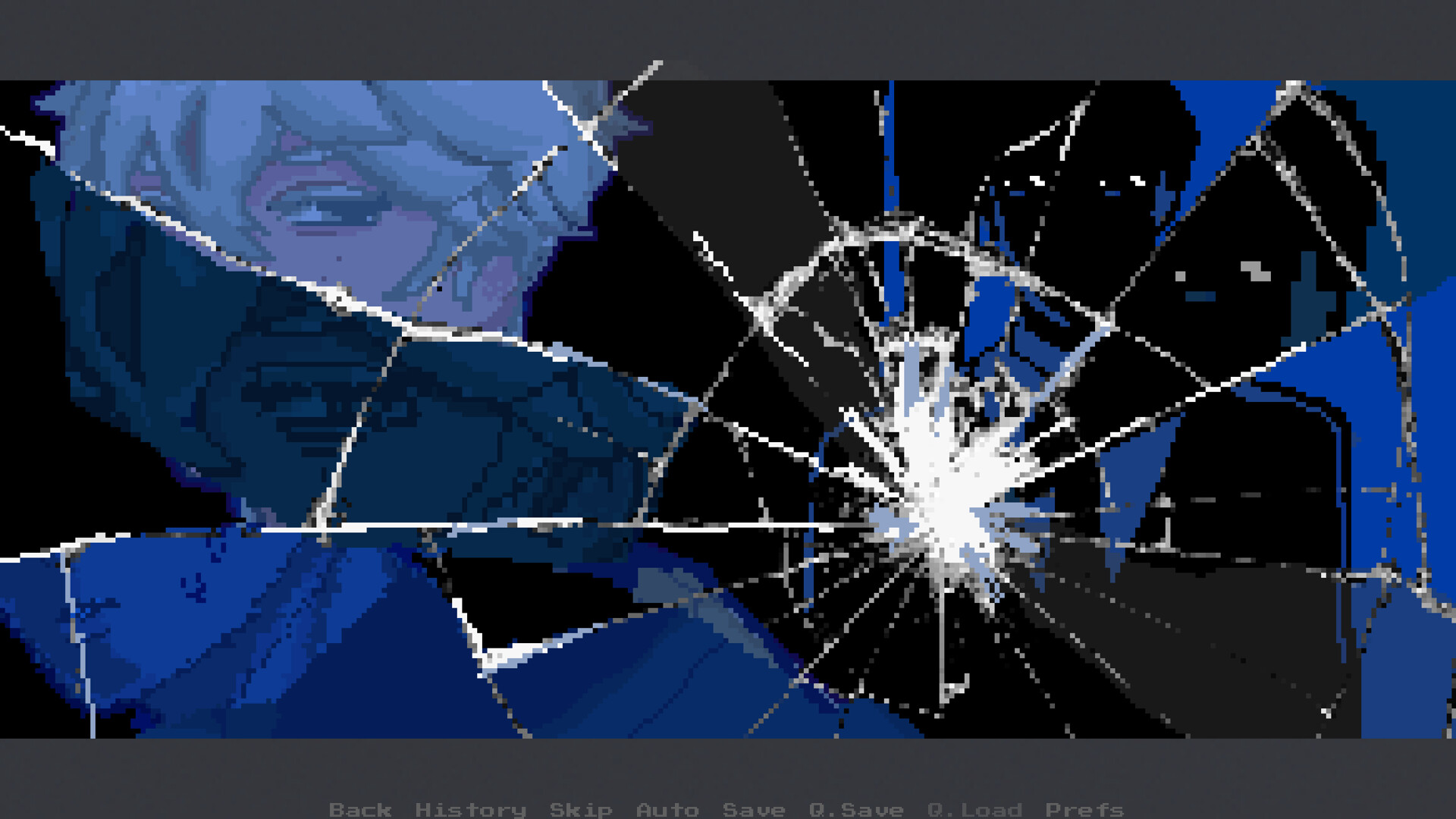
A shattering-glass effect punctuates one of the story's tenser beats, part of the light but effective jump-scare presentation reviewers praisedImage: remarkablegames via Steam -
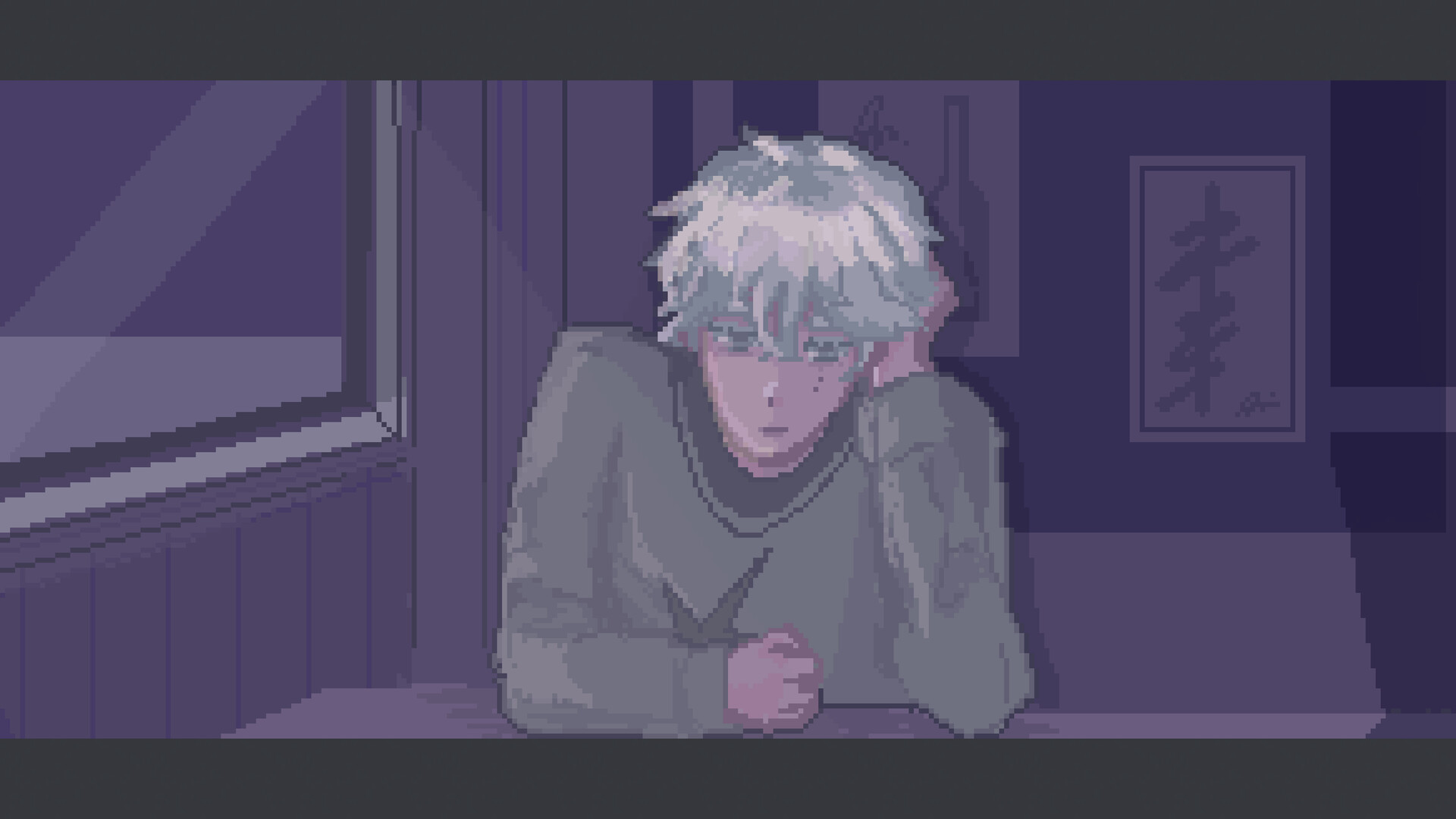
Eden Cross, the insomniac protagonist, is introduced in a quiet, exhausted moment before the therapy sessions take a stranger turnImage: remarkablegames via Steam -
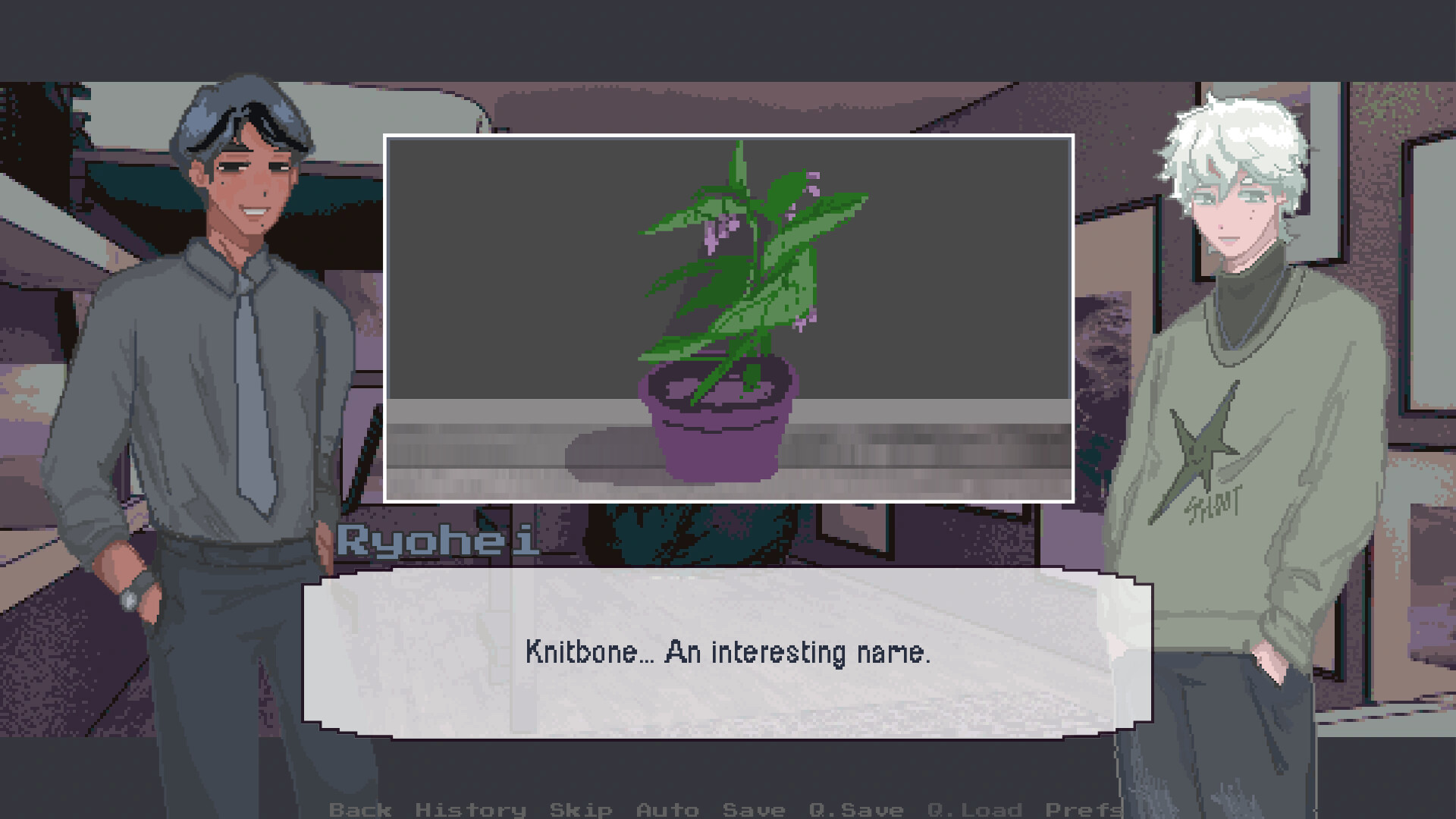
Dialogue scenes pair character portraits with small inset images, part of the visual novel's compact, dialogue-driven presentationImage: remarkablegames via Steam