
Game review
KilaFlow
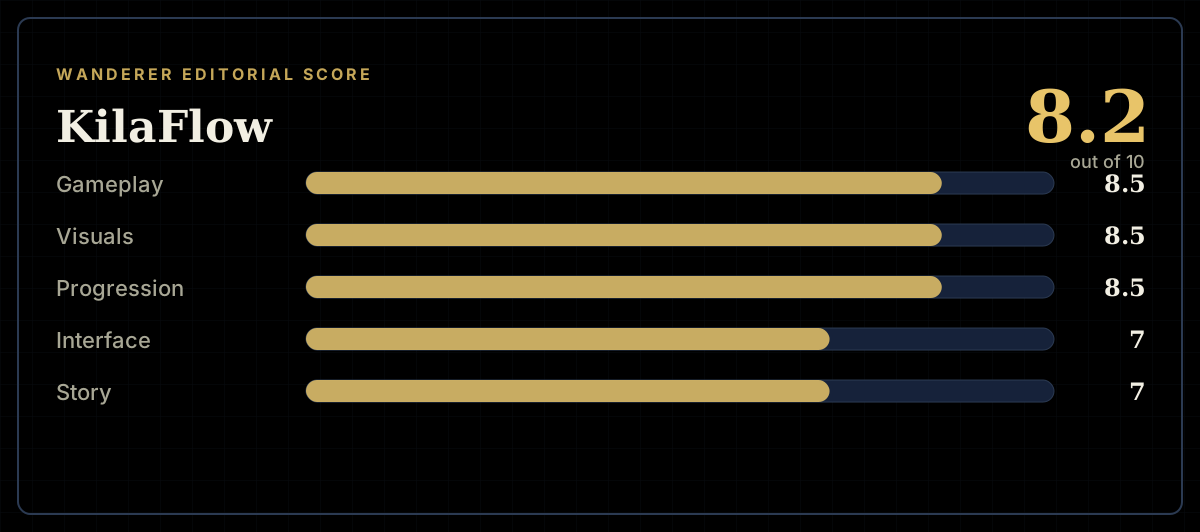
8.2 / 10
- Developer
- Chao Kompany LLC
- Publisher
- Chao Kompany LLC
- Released
- 24 April 2026
- Platforms
- [Windows, Linux]
- Genre
- Action
- Monetisation
- $19.99
- Players
- false
The short version
KilaFlow is a genuinely excellent speed-platformer whose momentum-based flow mechanic and mascot charm earn comparisons to Sonic and Neon White, held back only by camera and depth-perception issues that surface right when its late-game difficulty demands the most precision.
Biggest strengths
- A momentum-based 'flow' mechanic that extends existing speed rather than simply boosting it, creating a genuinely distinct feel that reviewers consistently compare favorably to Sonic and Neon White
- A charming, internet-aesthetic art direction built around a cute robotic antivirus mascot, paired with a soundtrack reviewers repeatedly call one of the game's best assets
- Bite-sized levels with multiple completion goals and hidden routes that give committed players real reasons to replay stages for better ranks and times
Biggest weaknesses
- Persistent camera control complaints, especially during reversed-gravity and high-speed vertical sections, that several reviewers say actively work against the player rather than with them
- Depth-perception problems caused by busy backgrounds that make it hard to read platforms and hazards clearly, a complaint that intensifies in the harder late-game worlds
- A noticeable difficulty spike from around world seven onward that a meaningful minority of reviewers found frustrating rather than satisfying
Who it's for: Fans of Sonic-style speed platforming, precision-focused genres like Neon White or A Hat in Time's Deathwish content, and anyone drawn to charming mascot-driven indie games.
Our recommendation: Buy it
8.2 / 10
An antivirus with main character energy
KilaFlow, released April 24, 2026 by solo studio Chao Kompany LLC, casts players as Kila, a robotic antivirus mascot fighting to purge a mysterious infection from a digital world called Datyte across nine themed programs, or worlds. It's a $19.99 precision 3D platformer built entirely around speed, and it launched to a Very Positive reception, 197 reviews, roughly 97%, after building a following through a public demo the year before release. Reviewers describe a game that earned its audience the old-fashioned way: by nailing its core movement before anything else.
The flow that gives it its name
The game's central mechanic, its namesake "flow" system, doesn't work like a typical speed boost. Instead of adding a burst of new velocity, flowing extends whatever speed a player already has when they trigger it, meaning momentum has to be built and preserved rather than summoned on demand. Reviewers describe this as a deceptively deep system that takes real practice to use well, comparing the resulting feel favorably to Sonic Adventure's momentum-based routing and to precision-platformer touchstones like Neon White. Multiple reviewers specifically call out how many deaths came from misjudging when to trigger flow early on, followed by a real sense of mastery once the timing clicked.
That flow system is layered on top of a broader gear-switching toolkit built around Kila's antivirus identity, letting players swap between movement states to bounce off surfaces, redirect momentum, and chain tricks across a level rather than following a single fixed path. Reviewers frequently point to that layered toolkit as the reason the game holds up over repeat playthroughs: because so many levels support multiple valid routes and combo chains, reviewers speedrunning for better ranks describe genuinely different solutions to the same stage rather than one memorized optimal line, and that variety is a big part of why so many reviews explicitly mention replaying finished levels purely for fun.
Cute enough to want to pet, robotic enough to be gender-neutral
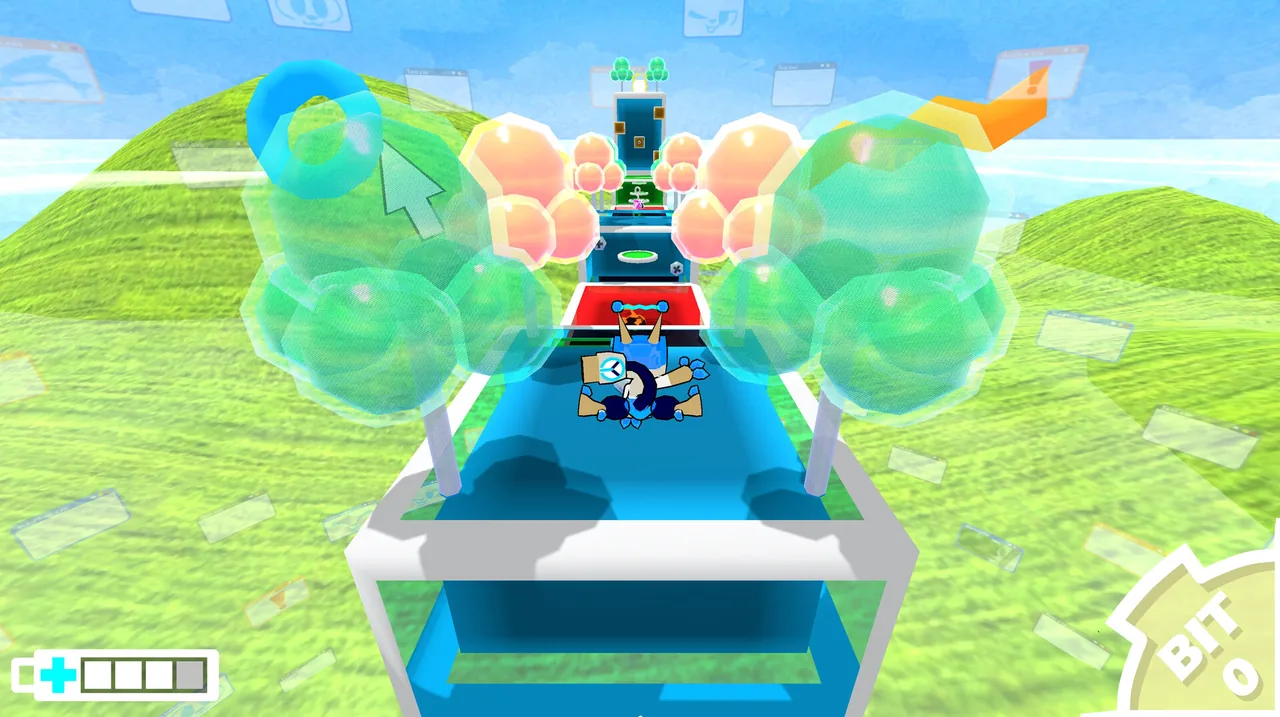
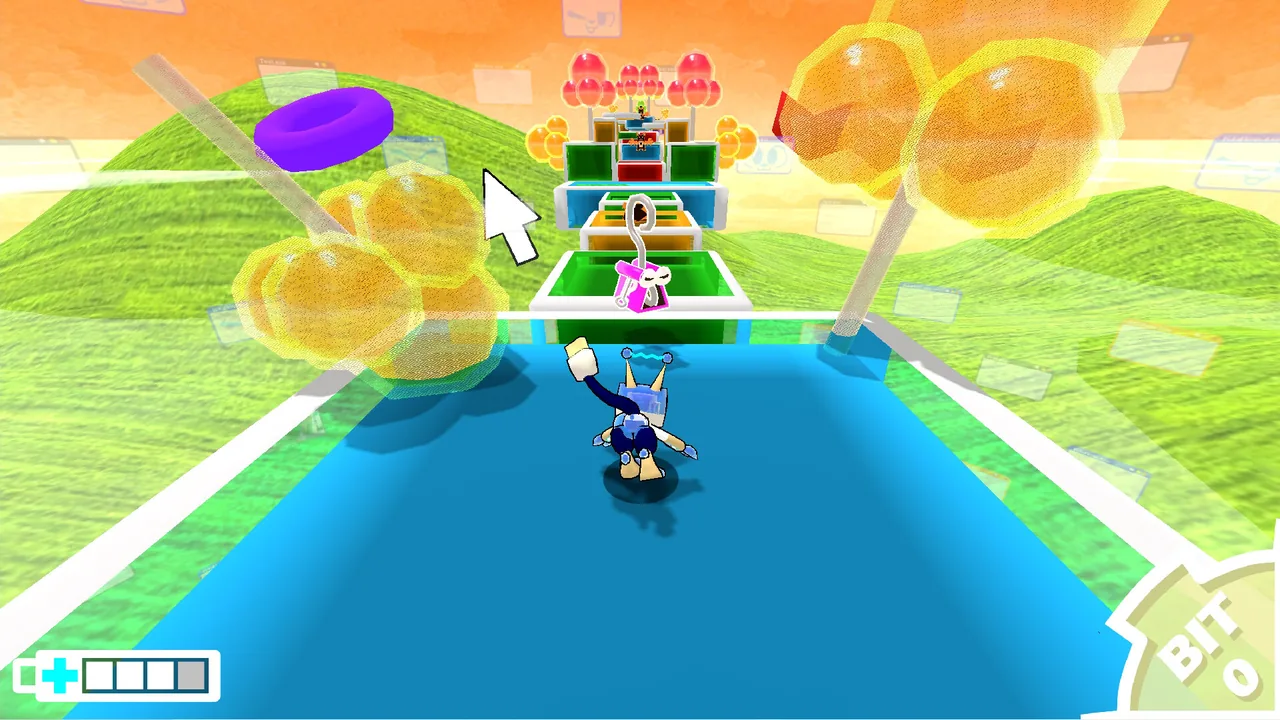
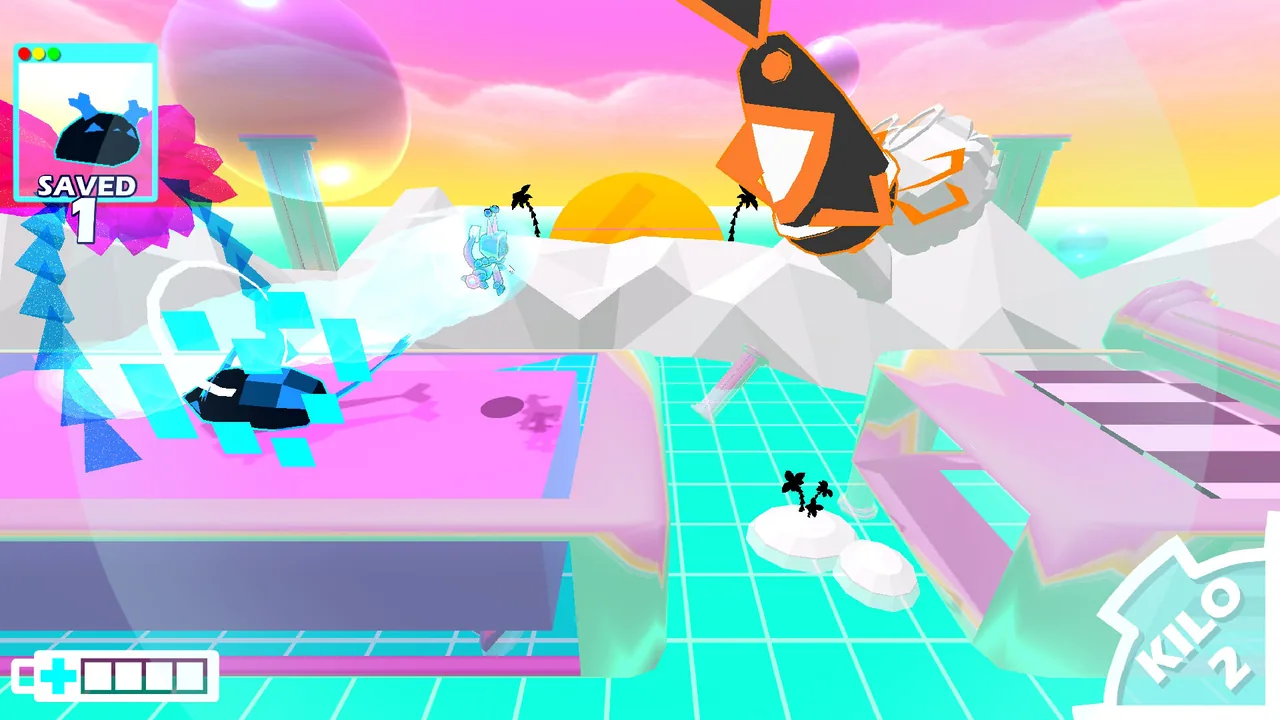
KilaFlow's presentation draws enthusiastic, specific praise. Kila's design and the broader roster of alternate costumes and characters earn constant affection in the review sample, several reviewers openly joke about how attached they got to the mascot, and the game's aesthetic, a blend of early-2000s internet nostalgia, frutiger aero, and vaporwave influences, gives each of its nine worlds a distinct visual identity. The soundtrack draws similarly strong praise throughout the sample, with several reviewers naming it among the best parts of the whole package, though one reviewer notes a recurring trumpet motif that wears thin by the end. The narrative thread tying the nine worlds together is light and mostly played for laughs rather than emotional weight, but several reviewers say the game's sense of humor and community goodwill around Kila's design carried the story further than its actual plot beats did.
When the camera fights back
The most consistent complaint in the review sample concerns camera control, particularly during the game's reversed-gravity sections and its fastest vertical stretches, where reviewers describe genuinely losing track of where they're going through no fault of their own. That problem compounds with a related depth-perception issue: busy, detailed backgrounds that look great in screenshots make it harder to read platform edges and hazards clearly during actual play, a complaint that shows up across multiple reviews as getting worse the deeper into the game's harder worlds players go. Neither issue derails the experience for most reviewers, several explicitly separate their score from the frustration, but it's a real and repeated friction point rather than an isolated nitpick.
A fair fight that gets meaner around world seven
KilaFlow's difficulty curve draws broad praise for feeling earned rather than arbitrary through its early and middle stretches, with reviewers repeatedly describing mistakes as clearly their own fault rather than the game's. That reputation gets more contested once players hit roughly world seven onward, where a meaningful minority describe frustration outweighing satisfaction, citing gimmicky level mechanics, harsh execution demands, and rough patches in the final worlds and boss fight that feel less polished than everything preceding them. It's a real fall-off for some players, though most who reach that point still finish and recommend the game overall.
Small annoyances worth knowing about
A handful of smaller complaints round out the negative side of the sample: a settings menu that reportedly resets after every relaunch, and a cosmetic-unlock system whose challenge requirements live outside the game's achievement list, forcing dedicated completionists to reference an external list rather than track progress in-game. Neither issue is dealbreaking on its own, but they're the kind of rough edges reviewers hope get smoothed out in future updates, and the developer's active post-launch patch cadence suggests that's a real possibility.
Who should chase the flow state
KilaFlow is an easy recommendation for platformer fans who specifically enjoy speed and precision over exploration or puzzle-solving, and it will especially resonate with players who already love Sonic's momentum-chasing philosophy or genres like Neon White's time-trial structure. Players sensitive to camera friction or steep late-game difficulty spikes should temper expectations for the back third of the game, but the demo remains a reliable way to gauge fit before buying.
The verdict
KilaFlow backs up its Very Positive reception with a movement system that's genuinely worth mastering, wrapped in mascot charm and a soundtrack players keep coming back for. Camera issues and a rockier back half keep it from greatness, but for speed-platformer fans, this is one of the strongest indie efforts the genre has produced this year.
Pros and cons
Pros
- A momentum-based 'flow' mechanic that extends existing speed rather than simply boosting it, creating a genuinely distinct feel that reviewers consistently compare favorably to Sonic and Neon White
- A charming, internet-aesthetic art direction built around a cute robotic antivirus mascot, paired with a soundtrack reviewers repeatedly call one of the game's best assets
- Bite-sized levels with multiple completion goals and hidden routes that give committed players real reasons to replay stages for better ranks and times
- A fair, if steep, difficulty curve that rewards mastering the movement system rather than punishing execution mistakes arbitrarily
Cons
- Persistent camera control complaints, especially during reversed-gravity and high-speed vertical sections, that several reviewers say actively work against the player rather than with them
- Depth-perception problems caused by busy backgrounds that make it hard to read platforms and hazards clearly, a complaint that intensifies in the harder late-game worlds
- A noticeable difficulty spike from around world seven onward that a meaningful minority of reviewers found frustrating rather than satisfying
- A cosmetic-unlock system that tracks challenge requirements outside of the in-game achievement list, which a few reviewers found tedious to reference
Screenshots
-
KilaFlowImage: Chao Kompany LLC via Steam -
KilaFlowImage: Chao Kompany LLC via Steam -
KilaFlowImage: Chao Kompany LLC via Steam -
How the review scores each part of the gameWanderer Editorial -
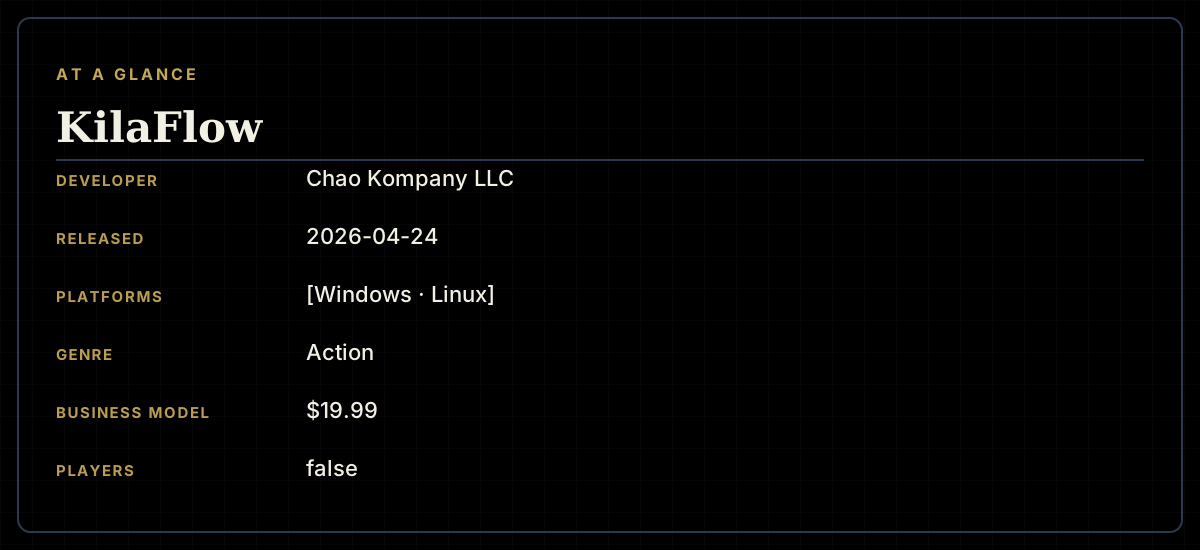
Key facts at a glanceWanderer Editorial -
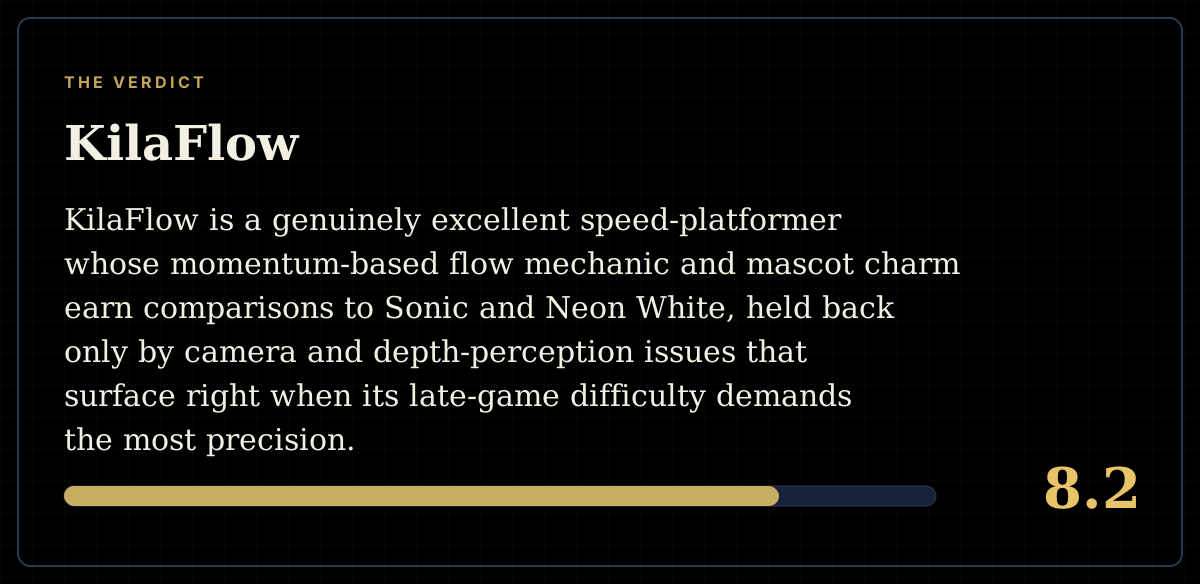
The short versionWanderer Editorial