Game review
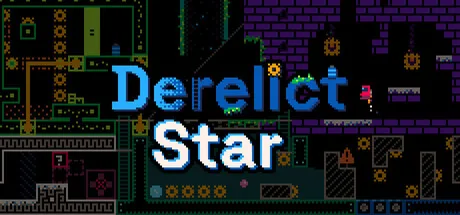
Derelict Star
8.4 / 10
- Developer
- gate
- Publisher
- Luminous Tree Games
- Released
- 2 April 2026
- Platforms
- [Windows, macOS]
- Genre
- Platformer
- Monetisation
- $9.99
- Players
- false
The short version
Derelict Star is a masterclass in movement design, a precision platformer whose momentum-based physics reward patient mastery with some of the most satisfying traversal in the genre, though its unforgiving difficulty and lack of hand-holding will shut out players who aren't willing to fail hundreds of times to get there.
Biggest strengths
- A momentum-based movement system that reviewers across the sample, including well-known figures in the platformer community, single out as one of the deepest and most rewarding in years
- Over 500 screens of open, non-linear exploration with no permanent upgrades gating progress, letting players tackle challenges in almost any order
- A generous checkpoint system and built-in assist options that keep the game's brutal difficulty from feeling unfair, even in its hardest sections
Biggest weaknesses
- Physics that several reviewers find loose or imprecise given how much precision the level design demands, a frustration that can compound in the game's hardest sequences
- No coyote time, a missing convention from most modern platformers that some reviewers say costs them jumps that should have connected
- A steep difficulty curve and total absence of tutorializing that several reviewers found alienating rather than inviting, even among people who enjoy hard platformers
Who it's for: Precision-platformer veterans who loved Celeste, N++, or Animal Well and want a deep, unguided movement system to master over dozens of hours.
Our recommendation: Buy it
8.4 / 10
Stranded, and better for it
Derelict Star, released April 2, 2026 by solo developer gate and publisher Luminous Tree Games, strands you aboard an abandoned freighter with a dying spacecraft and no way out except forward. It's a momentum-based precision platformer with over 500 interconnected screens to explore, no permanent upgrades, and no tutorials beyond what the level design itself teaches you. It launched to a Very Positive reception, 159 reviews, roughly 94%, and drew the kind of sustained, effusive praise from the platformer community that few indie games manage, including a widely shared piece describing how the game's uncompromising design famously frustrated Braid and Witness creator Jonathan Blow enough to make him quit mid-stream, while still calling it one of the most fascinating indie platformers in years.
Movement as the whole game
The consistent throughline across nearly every review, positive or negative, is the depth of Derelict Star's movement system. Reviewers describe a physics engine built on P-Speed-style momentum conservation, similar in spirit to Super Mario 3's running mechanics but pushed into far more nuanced territory, where nearly every micro-decision, when to jump, how long to hold a direction, when to trigger the jetpack, shapes the outcome of a screen. Because there are no permanent ability upgrades gating progress, all of that depth is available from the very first minutes, and the entire game becomes an exercise in understanding that one system more and more deeply rather than accumulating new toolsets. Multiple reviewers, including prominent figures in the platformer design community, call it one of the most rewarding movement systems they've encountered, precisely because mastering it feels like genuine, hard-won understanding rather than following a tutorial's instructions.
Five hundred screens, no hand-holding
The game's structure, a large, non-linear, interconnected world with no explicit tutorials, draws consistent praise for trusting players to learn through experimentation rather than exposition. Reviewers frequently compare the resulting sense of discovery to Animal Well or N++, describing individual screens as small puzzles that force you to interrogate your own understanding of the controls before you can solve them. Completion times in the sample range widely, from roughly ten hours for players focused on the main path to forty or more for those chasing full completion, and several reviewers explicitly say the game's optional hard content, additional collectibles and secrets scattered throughout the freighter, is where the design reaches its most demanding and most rewarding extremes.
A brutal, and occasionally unfair-feeling, difficulty curve
Derelict Star does not soften its challenge, and that's the single biggest fault line in the review sample. Most reviewers frame the difficulty as fair, if unrelenting, citing generous checkpoint placement and built-in assist options that let struggling players adjust without losing the core experience. But a meaningful minority describe the demands as genuinely alienating: several negative reviews single out the physics as feeling loose or imprecise relative to how much precision individual screens require, and multiple reviewers, including some who otherwise enjoyed the game, specifically call out the absence of coyote time, the small forgiveness window most platformers give players after they've walked off a ledge, as a real and avoidable source of frustration. For a genre where feel is everything, that's a fair complaint even from reviewers who ultimately recommend the game.
Presentation that gets out of the way
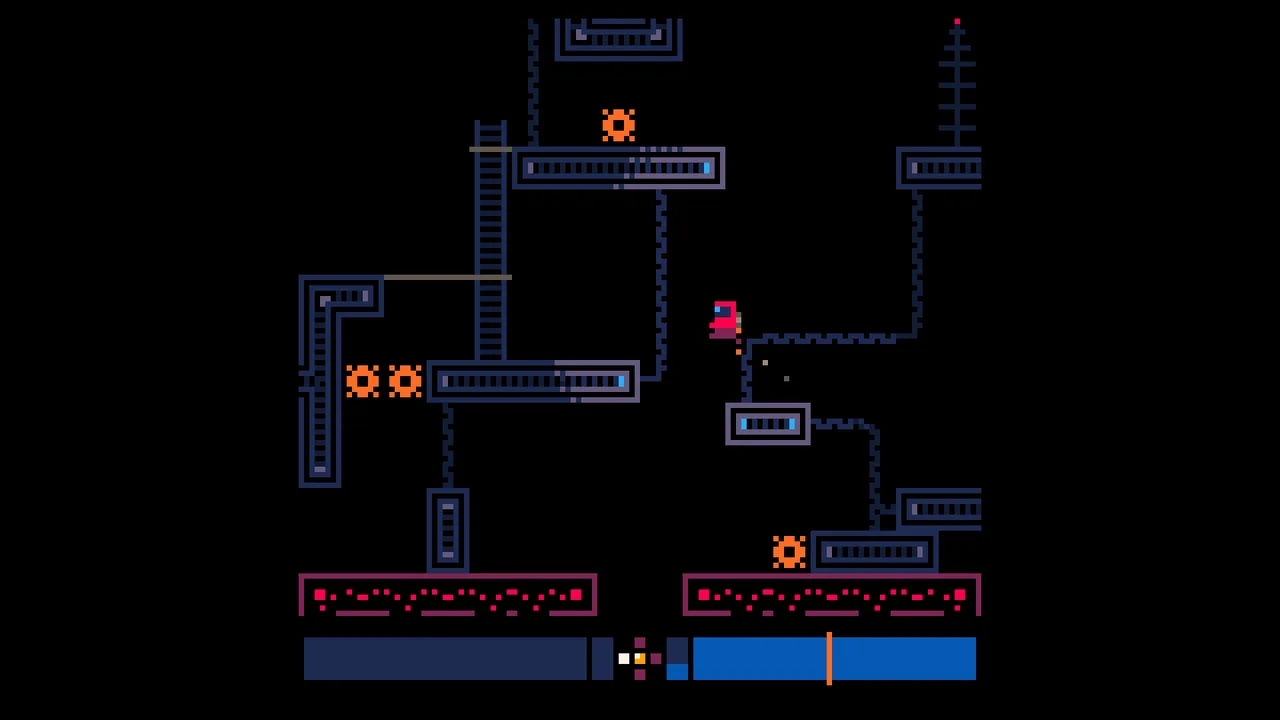
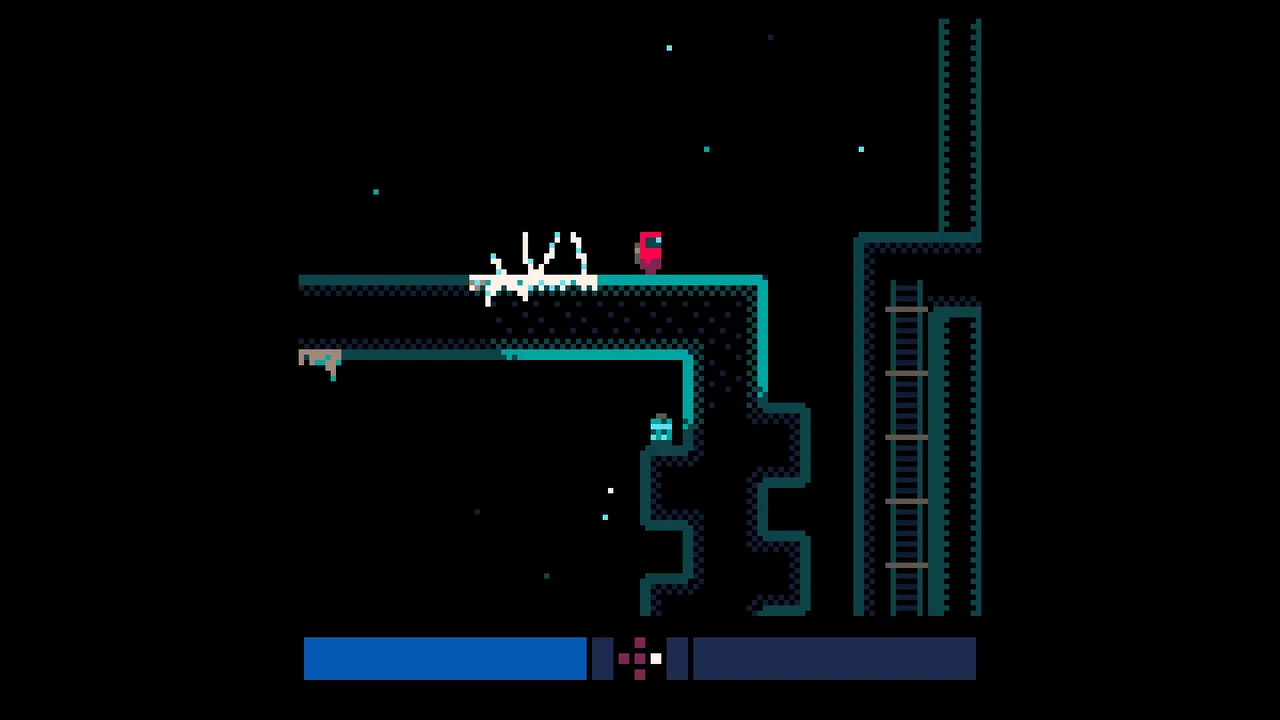
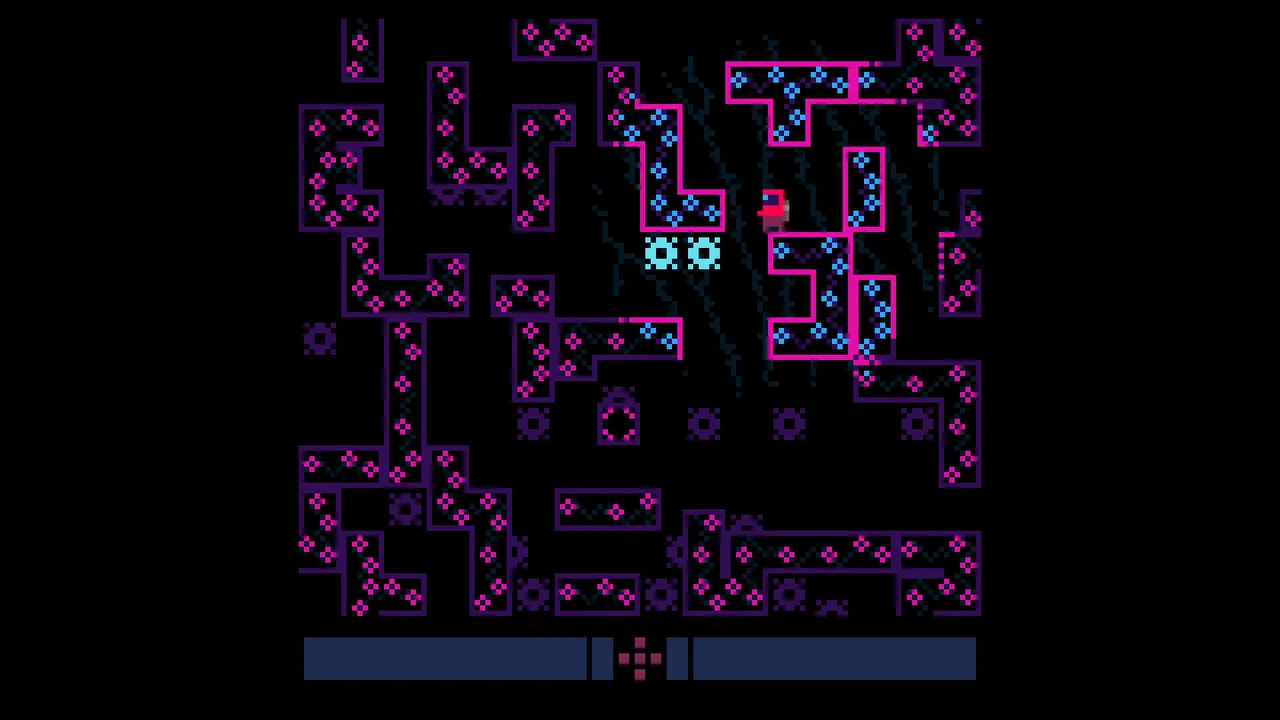
Reviewers consistently describe the pixel art and chiptune-adjacent soundtrack as understated but well-matched to the game's tone, minimalist enough to keep focus on movement without feeling cheap or unfinished. A handful of reviewers note that the small pixelated font used for in-game text can be hard to read, a minor but recurring complaint given how sparse the actual text in the game is to begin with.
A tone unlike most hard platformers
Several reviewers highlight the game's unusually gentle framing of its own difficulty: in-game text reminds players there's no grand narrative stakes to chase, that quitting at any point is a legitimate choice, and that satisfaction should come from the act of play rather than any external reward. That tonal choice, paired with the total absence of pressure to "beat" the game in any conventional sense, is cited repeatedly as part of why reviewers who normally bounce off punishing platformers found themselves sticking with this one.
Value at $9.99
Nearly every reviewer in the sample treats $9.99 as a clear bargain given the volume and quality of content on offer, several explicitly calling it one of the best value indie purchases of the year regardless of genre. The caveat, consistent with the difficulty discussion above, is that value here is inseparable from tolerance for repeated failure: players who bounce hard off precision platforming won't find that math working in their favor no matter how cheap the entry price.
Who should board the freighter
Derelict Star is built for players who already enjoy precision platforming and want a movement system with real depth to sink into over dozens of hours, particularly fans of Celeste, N++, or Animal Well's brand of unguided discovery. Players who want a gentler difficulty curve, explicit tutorialization, or forgiving physics with generous coyote time should look elsewhere, since none of those things are what this game is trying to be.
The verdict
Derelict Star earns its outsized reputation among platformer fans through a movement system that rewards genuine mastery rather than memorization, wrapped in a confident, unpretentious presentation that never oversells itself. It's not for everyone, and its harshest critics have real, specific complaints about feel and forgiveness, but for the audience it's built for, this is one of the standout platformers of 2026.
Pros and cons
Pros
- A momentum-based movement system that reviewers across the sample, including well-known figures in the platformer community, single out as one of the deepest and most rewarding in years
- Over 500 screens of open, non-linear exploration with no permanent upgrades gating progress, letting players tackle challenges in almost any order
- A generous checkpoint system and built-in assist options that keep the game's brutal difficulty from feeling unfair, even in its hardest sections
- A confident, understated tone, minimalist pixel visuals and a relaxed soundtrack that several reviewers say perfectly complement the meditative focus the platforming demands
Cons
- Physics that several reviewers find loose or imprecise given how much precision the level design demands, a frustration that can compound in the game's hardest sequences
- No coyote time, a missing convention from most modern platformers that some reviewers say costs them jumps that should have connected
- A steep difficulty curve and total absence of tutorializing that several reviewers found alienating rather than inviting, even among people who enjoy hard platformers
- A small pixelated font that a few reviewers report straining to read
Screenshots
-
Derelict StarImage: Luminous Tree Games via Steam -
Derelict StarImage: Luminous Tree Games via Steam -
Derelict StarImage: Luminous Tree Games via Steam -
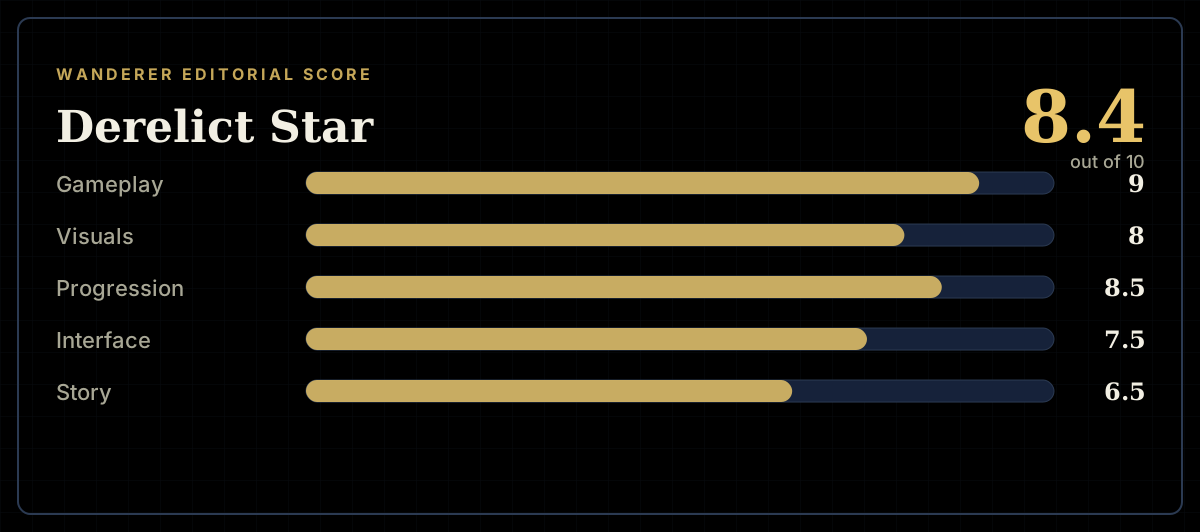
How the review scores each part of the gameWanderer Editorial -
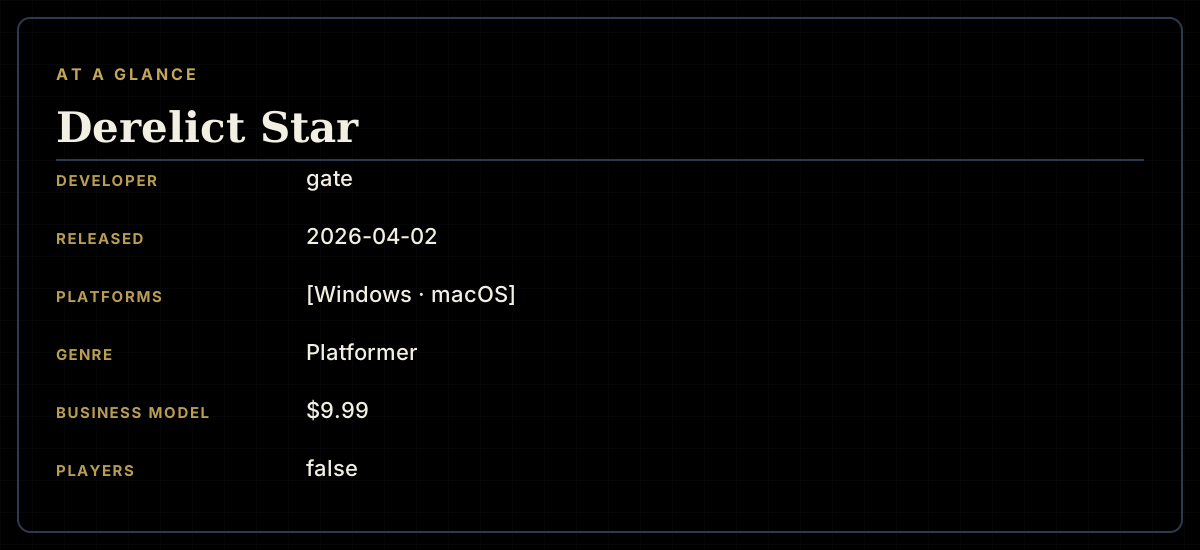
Key facts at a glanceWanderer Editorial -
The short versionWanderer Editorial