Game review
Iron Blight Review
6.9 / 10
- Developer
- Ronesans Interactive
- Publisher
- Rock Paper Publisher
- Released
- 24 August 2026
- Platforms
- ["Windows"]
- Genre
- Action
A Retro-Styled Nightmare in Eastern Europe
Iron Blight drops players into Prasnova, a rain-soaked Eastern Bloc town, trapped in a room while abominations claw at the door, tasked with surviving the night and finding a missing wife named Valeria. It's a first-person survival horror shooter built on chunky, point-filtered retro visuals that reviewers repeatedly connect to a specific lineage: Half-Life 2, Cry of Fear, and modern retro-horror throwbacks like Abiotic Factor and Obsenteur (Obenseuer). "Very consistent point texture filtering style, think abiotic and obenseuer. But also reminiscent of Half Life 2 and Cry of Fear," one of the most-upvoted reviews summarizes, adding praise for immersive-sim touches like manually checking magazine counts and difficulty options that let ammo drop with dead weapons rather than disappearing outright. With 382 English-language reviews and a 93% positive score, the reception has been strong for a studio's first announced survival horror release, developed by Ronesans Interactive and published by Rock Paper Publisher.
The gunplay draws consistent praise as the game's strongest pillar. One reviewer breaks down the arsenal in detail: a bolt-action sniper rifle with heavy recoil and a powerful punch, a fast-reloading but weak pistol, shotguns, SMGs, and melee weapons that break after a handful of hits — a selection reviewers describe as "solid, perhaps even a little too large for the comparatively small inventory," forcing real trade-off decisions about what to carry. Combined with a deliberately minimal HUD, several reviewers single out the moment-to-moment feel of combat and resource management as genuinely well-crafted, closer in spirit to hardcore survival shooters than typical horror-adjacent action games.
Impressive Systems, Undercut by a Short Runtime
The single most consistent complaint across the review pool, appearing in both positive and negative reviews alike, is that Iron Blight simply doesn't last long enough. "A proper zombie indie game, but it's too short. An additional chapter would be welcome," one reviewer writes, a sentiment echoed by another who clocked in at six hours across just two chapters and a prologue despite exploring thoroughly before advancing objectives. One particularly enthusiastic review captures the frustration of loving a game that ends abruptly: "There are too many EXCELLENT systems working in this game to be as short as it is... Excuse ME chef, I am still FAMISHED," they write, praising the gunplay, sound design, inventory systems, and puzzle design as all working "AMAZINGLY WELL" while wishing there had simply been more of it to play.
That short runtime becomes a more serious complaint when weighed against the $12.49 asking price, with a couple of reviewers explicitly calling the length-to-price ratio out as a weak point rather than a minor gripe. It's a familiar tension for narrow, focused horror experiences: the systems that are here are widely praised as polished and purposeful, but reviewers consistently frame the experience as a strong proof of concept rather than a fully realized, lasting campaign — several explicitly hope for DLC or an expansion to build the world out further rather than treating the current runtime as the finished vision.
A Genre Shift in Chapter Two Divides Opinion
Where reviewers diverge more sharply is on how the game's second chapter handles pacing and difficulty. One detailed negative review, written from a hardest-difficulty first playthrough, describes chapter one delivering genuine survival horror tension before chapter two — notably larger in scope — shifts into "more of a horde shooter at times combined with puzzles at the worst of times," compounded by bugs including invisible weapons and moments where the game became unresponsive. Another reviewer specifically flags that ramping up the difficulty pushed the balance further toward attrition-style horde combat than the tense, resource-scarce survival horror the marketing and early hours promise, writing that turning up the difficulty "turn[ed] it more into zomboid than survival horror" than they expected, and that the sheer number of fast-moving mutants in later sections outpaced the resources available to fight back.
Not every reviewer experienced this as a flaw — the same shift toward horde-style encounters that frustrates some readers is described by others simply as "a horde shooter while solving immediate problems," reminiscent of No More Room in Hell, without necessarily souring their overall impression. But the pattern across multiple independent reviews describing similar bugs (floating arms in cutscenes, map icons desyncing after entering menus, an upside-down map bug outside the dorm area) suggests chapter two shipped with real, reproducible technical rough edges that reviewers on both sides of the recommendation agree need patching — and the developer's active post-launch patch cadence (four patches within two weeks of release addressing many of these specific reports) suggests the team has been responsive to that feedback.
Atmosphere and Presentation Hold Up Even When the Difficulty Doesn't
Even reviewers frustrated by chapter two's pacing tend to carve out an exception for the game's presentation. The no-HUD approach draws specific praise for reinforcing the sense of isolation without becoming an obstacle to actually playing, and the retro-filtered visual style is repeatedly credited with making Prasnova feel lived-in and oppressive rather than simply nostalgic for its own sake — one reviewer calls the combination of "retro graphics with modern gameplay mechanics" one of the better executions of that increasingly crowded aesthetic they've seen this year. Sound design earns similarly consistent praise, with several reviewers specifically noting how much tension comes from tracking zombies by footstep sound alone in the dark, low-visibility interiors that make up much of the game's map.
That consistency in atmosphere across otherwise divided reviews is worth weighing on its own: even the more critical write-ups in this pool tend to frame their complaints as pacing, balance, and bug issues layered on top of a game whose core sensory experience — lighting, sound, and setting — is already working. That's a meaningfully different kind of criticism than reviewers saying the atmosphere itself falls flat, and it suggests Ronesans Interactive's foundational art direction is a genuine strength the studio can keep building on regardless of how the difficulty-balance conversation shakes out.
Verdict
Iron Blight is a tightly crafted retro survival horror shooter with gunplay, atmosphere, and inventory systems that reviewers consistently rank among the best they've seen from an indie horror release this year, undercut by a runtime that multiple reviewers finish in a single sitting and wish were substantially longer for the price. Its opening chapter delivers on tense, resource-scarce horror; its larger second chapter trades some of that tension for horde-shooter density that not everyone will enjoy, and ships with reproducible bugs the developer has been actively patching since launch. Recommended for retro-horror and immersive-sim fans who value mechanical polish over sheer length; wait for a sale or an expansion if runtime-per-dollar is your primary concern.
Screenshots
-
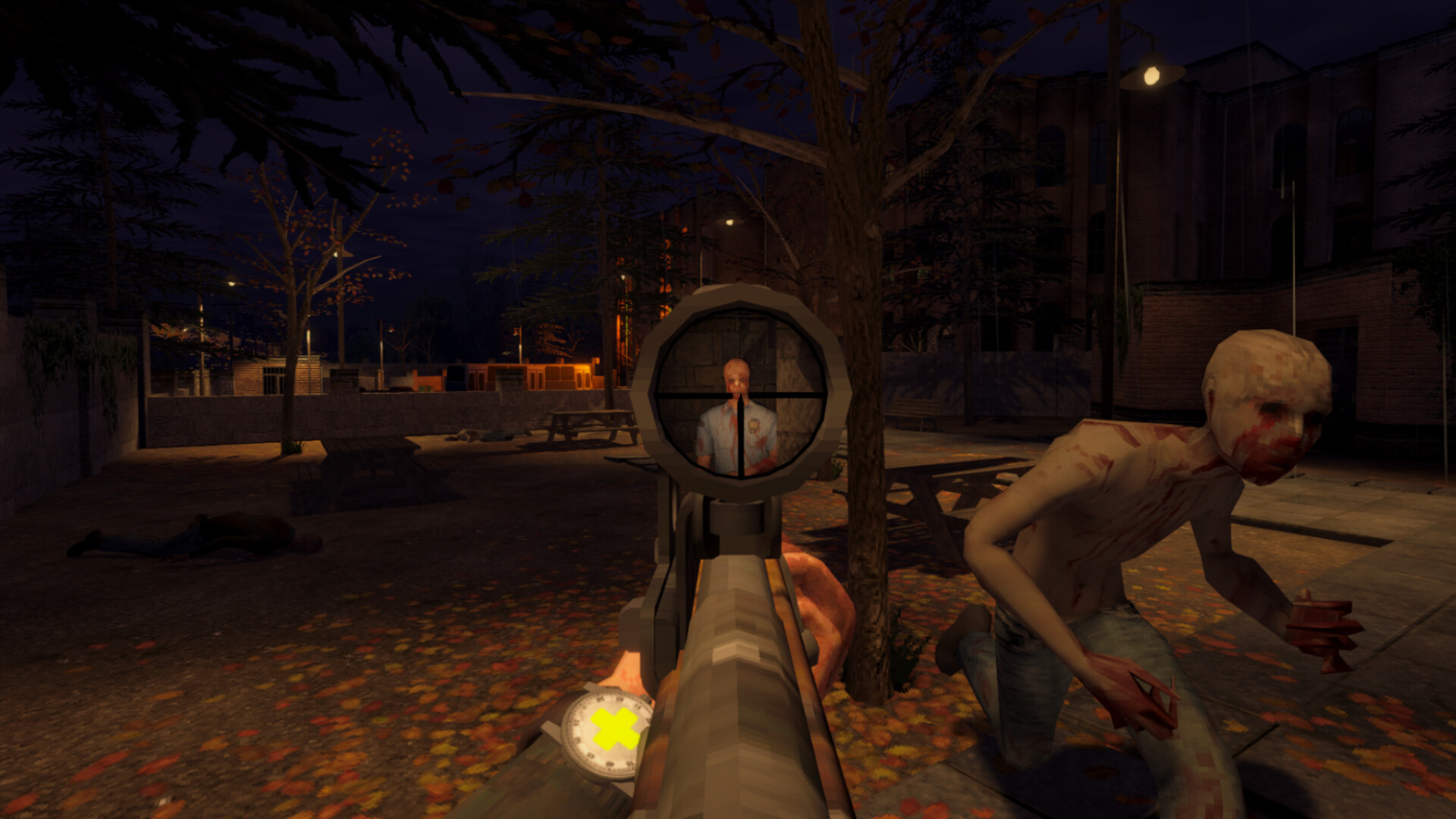
Lining up a scoped shot in one of the game's nighttime courtyard encountersImage: Rock Paper Publisher via Steam -
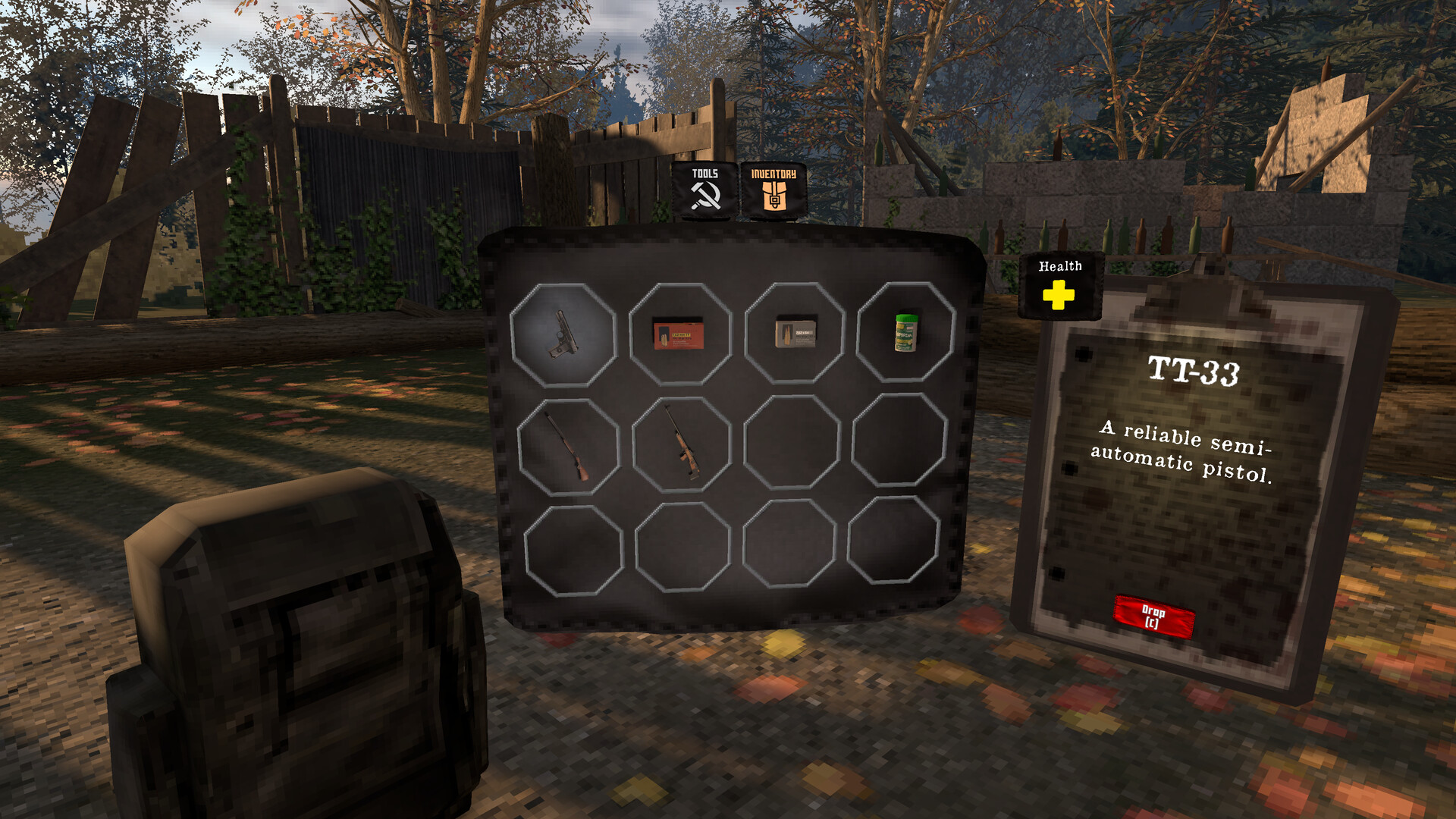
The grid-based inventory system, which forces trade-offs between weapons and suppliesImage: Rock Paper Publisher via Steam -
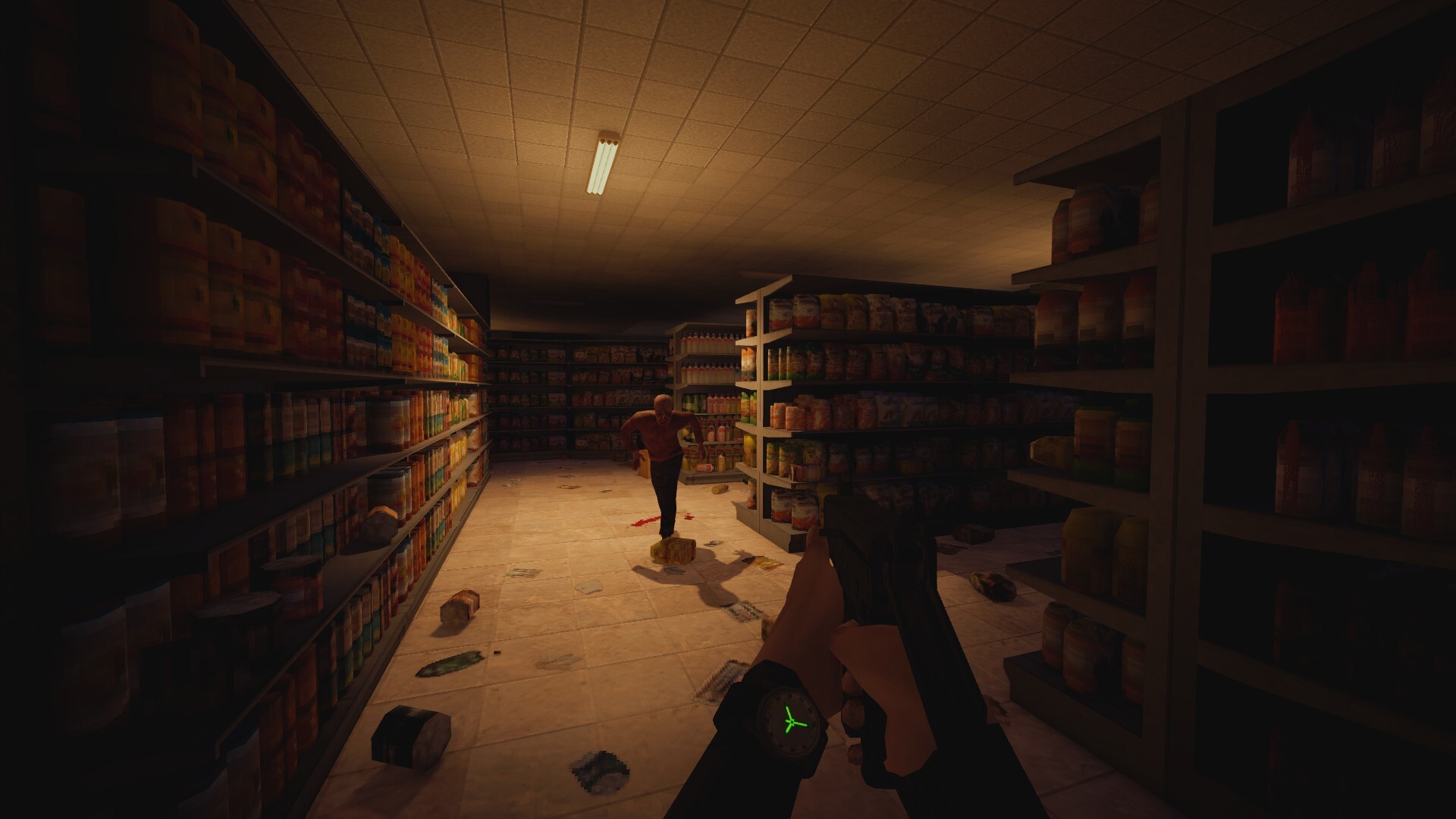
Scavenging a ransacked convenience store while a mutant closes inImage: Rock Paper Publisher via Steam