Game review
I Am Jesus Christ Review: A Sincere, Uneven First-Person Gospel
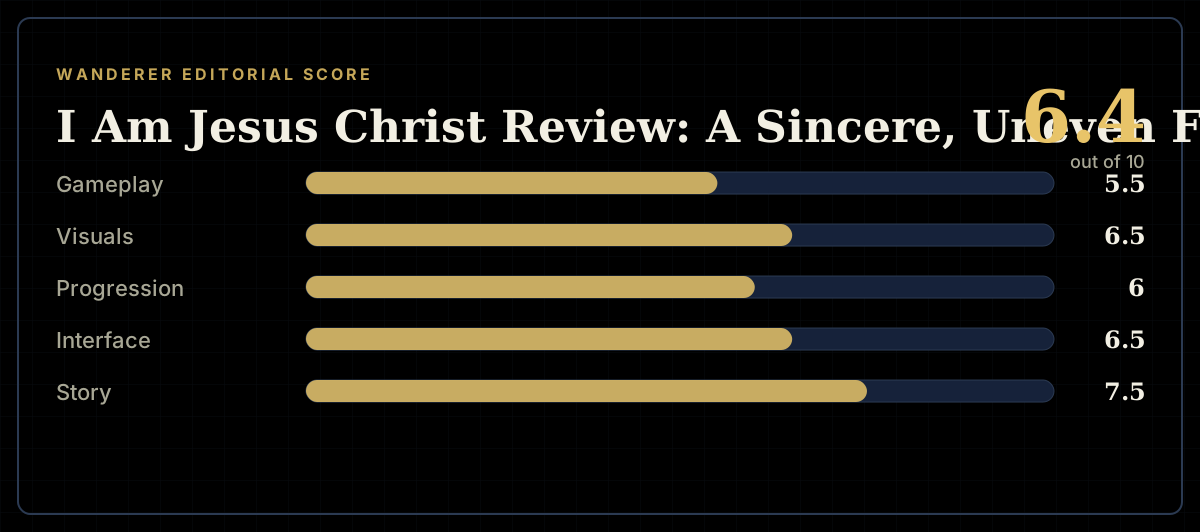
6.4 / 10
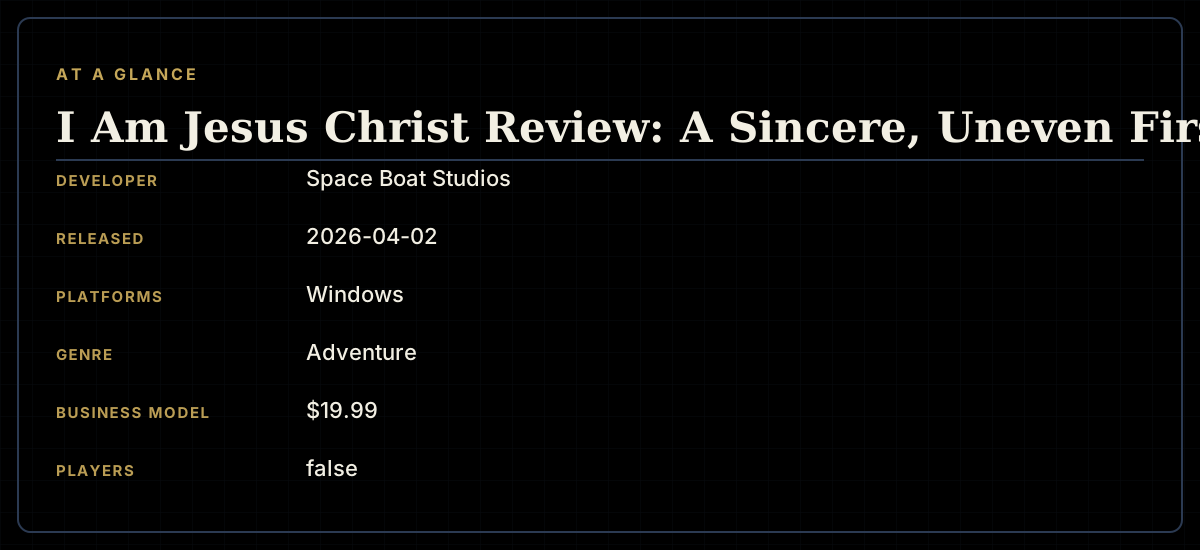
- Developer
- Space Boat Studios
- Publisher
- PlayWay S.A.
- Released
- 2 April 2026
- Platforms
- Windows
- Genre
- Adventure
- Monetisation
- $19.99
- Players
- false
The short version
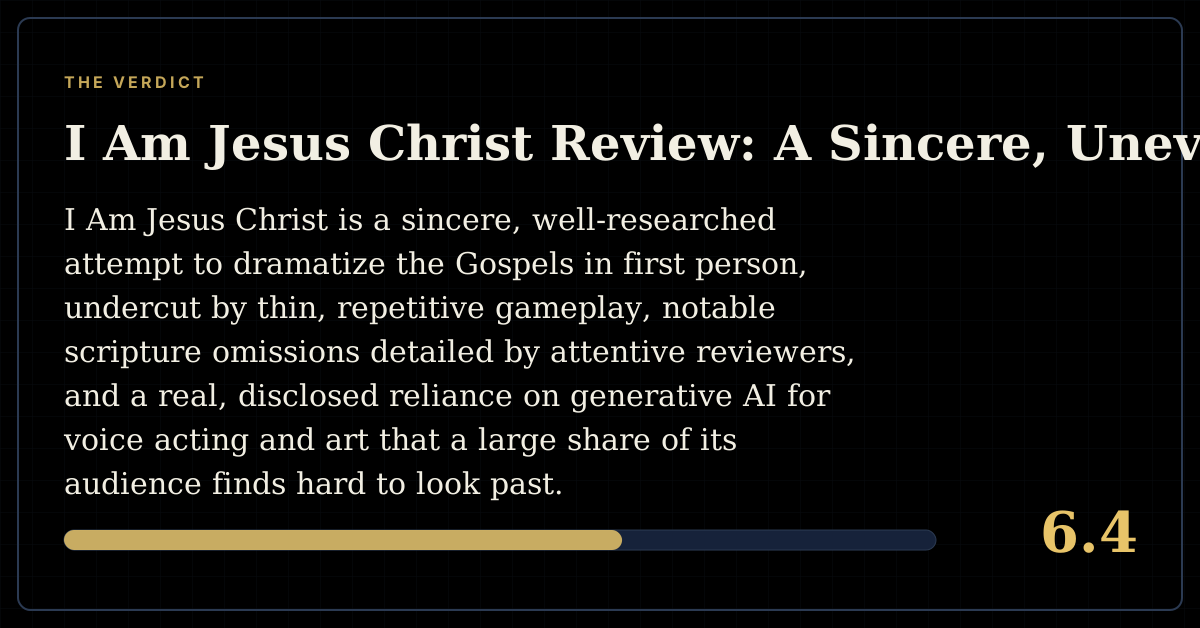
I Am Jesus Christ is a sincere, well-researched attempt to dramatize the Gospels in first person, undercut by thin, repetitive gameplay, notable scripture omissions detailed by attentive reviewers, and a real, disclosed reliance on generative AI for voice acting and art that a large share of its audience finds hard to look past.
Biggest strengths
- Genuinely researched historical environments, with one detailed review noting the developers used ground-penetrating radar data to recreate locations, and multiple reviewers specifically praising the Jerusalem vistas and overall atmosphere
- A respectful, non-satirical tone that surprised several reviewers who expected either mockery or shallow preachiness, with one self-described pastor with a biblical studies background calling it 'mostly accurate' and recommending it
- Smooth, largely bug-free traversal with no fall damage or stamina limits, which several reviewers describe as unexpectedly satisfying 'parkour' across rocky terrain
Biggest weaknesses
- A detailed, heavily cited review documents specific, significant Gospel omissions, most notably nearly all of the Sermon on the Mount, along with well-known parables like the Prodigal Son's counterpart stories and 'let him without sin cast the first stone'
- Widespread, repeated reports across the review sample that voice acting and some art assets were generated using AI, a disclosure-adjacent concern several reviewers say undercuts the emotional weight of key scenes despite otherwise careful production values
- Gameplay is consistently described as thin and repetitive: walking, simple dialogue trees with often only one available response, and a handful of easy minigames including a widely criticized fishing sequence with inverted controls
Who it's for: Best suited to players specifically curious about a respectful, educational retelling of the Gospels, particularly those with existing biblical literacy who can appreciate the historical research on display; not recommended for players seeking substantial interactive gameplay or expecting to be surprised by satire, since the tone is consistently earnest throughout.
Our recommendation: Consider it
6.4 / 10
A decade in the making, and it finally arrived
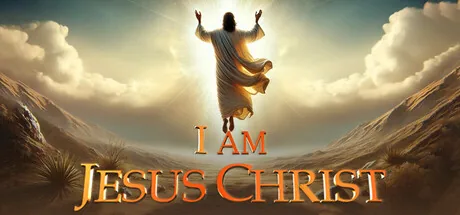
I Am Jesus Christ first surfaced as an announcement trailer nearly ten years before its actual April 2, 2026 launch, and reviewers who followed that long, winding development consistently note real surprise that it exists at all in a finished, functional state. The pitch is unusually literal: a first-person retelling of the Gospels, from Jesus's baptism through the resurrection, letting players walk through the Holy Land, witness key biblical events, and perform miracles like healing and turning water into wine, tied loosely together by simple faith-meter and follower-count systems.
Genuine research behind the setting
What earns the most consistent, specific praise across the review sample is the environmental and historical groundwork. One detailed review specifically highlights that the developers used ground-penetrating radar data to recreate real locations from the period, and multiple reviewers separately single out the vistas over Jerusalem as a visual highlight worth the price on atmosphere alone. A self-described pastor with a master's degree in biblical studies reviewed the game specifically to assess its accuracy, concluding it's "mostly accurate" and "certainly accurate enough that I feel comfortable recommending it," while noting the developers appear to be considering adding content to address a handful of omissions in future updates.
Where the Gospel gets thin
That same generosity doesn't extend to every criticism, and the most substantive negative review in the sample is worth taking seriously on its own terms: a lengthy, scripture-literate breakdown documenting specific omitted material, most notably that "the Sermon on the Mount has been written out of the story," with only fragments of Matthew 7 surviving as disconnected side-quest dialogue while the more challenging teachings of Matthew 5 are largely absent. The same review notes missing parables — the woman caught in adultery, the Pharisee and the tax collector — and argues the finished narrative underplays central themes of Jesus's ministry in favor of a smoother, less confrontational arc. This isn't a complaint about tone or reverence; it's a detailed, citation-heavy argument about editorial choices in adapting the source material, and it reads as considerably more substantive than the game's flood of purely comedic reviews might suggest.
The AI disclosure problem
The single most recurring specific criticism across the sample, appearing independently in reviews written from wildly different perspectives — religious and secular, positive and negative — is the game's evident use of generative AI in its voice acting and, per some reviewers, its art. Multiple reviewers describe voice lines that don't sync convincingly with subtitles, deliver dialogue with "no love or passion," or simply sound synthetic despite otherwise careful production values elsewhere. One reviewer frames this bluntly as a moral objection given the subject matter, quoting the commandment against stealing directly at the developers; others are more measured, suggesting the game "would've been better had the devs hired one real narrator" rather than relying on synthesized voices for its supporting cast. This is a specific, widely corroborated technical and ethical criticism rather than a vague complaint, and it meaningfully weighs down an otherwise sincere production.
A simple, repetitive interactive core
On pure gameplay terms, reviewers are broadly aligned: this is a walking simulator with light systems layered on top, not a deep interactive experience. Movement between story beats, occasional dialogue choices (frequently reduced to a single available response), and a handful of simple minigames make up the bulk of play, with one detailed review specifically calling out a fishing minigame with inverted steering controls as a rough edge. Completion times cluster around five to seven hours for most reviewers, including full achievement clears, which several frame as appropriately brief for the format rather than a shortcoming, while others found the pacing dragged specifically during the longer, more somber passion-narrative sequences near the end.
An earnest tone that surprised skeptics
A recurring narrative thread in the review sample is reviewers going in expecting either outright satire or hollow, shallow piety, and finding something more sincere than either. Several non-religious reviewers explicitly note they played on a dare or out of curiosity and came away describing the game as respectful and clearly made with real effort, even while criticizing its execution. That earnestness cuts both ways: it earns real goodwill from reviewers who wanted a genuine attempt at the material, while occasionally undercutting itself when its "video-gamey" systems — faith meters, follower counts, fast travel — sit awkwardly against the seriousness of its subject.
An audience question worth answering directly
Given how polarized and meme-heavy much of the review sample became within days of launch, it's worth answering the practical question directly: who should actually buy this. Reviewers who came in as skeptics but stayed curious tended to walk away more positive than expected, while reviewers with strong existing biblical knowledge were the ones most likely to catalogue specific frustrations with what was cut or altered. That split suggests the game rewards low expectations about gameplay depth and either genuine curiosity or a forgiving, big-picture view of scriptural adaptation — and it disappoints most reliably when approached as either a rigorous theological text or a mechanically substantial video game, neither of which it was ever really trying to be.
Verdict
I Am Jesus Christ is best understood as a sincere, well-researched edutainment project whose ambitions frequently outrun its budget and its gameplay depth. Reviewers who approach it for its atmosphere, historical detail, and respectful handling of familiar stories are likely to find real value in a short session; reviewers hoping for meaningful interactivity, complete scriptural fidelity, or voice work free of AI involvement will find the same specific, well-documented shortfalls that recur throughout its review sample.
Pros and cons
Pros
- Genuinely researched historical environments, with one detailed review noting the developers used ground-penetrating radar data to recreate locations, and multiple reviewers specifically praising the Jerusalem vistas and overall atmosphere
- A respectful, non-satirical tone that surprised several reviewers who expected either mockery or shallow preachiness, with one self-described pastor with a biblical studies background calling it 'mostly accurate' and recommending it
- Smooth, largely bug-free traversal with no fall damage or stamina limits, which several reviewers describe as unexpectedly satisfying 'parkour' across rocky terrain
- A relatively short, accessible five-to-seven-hour completion time that multiple reviewers say suits its walking-simulator pacing without overstaying its welcome
Cons
- A detailed, heavily cited review documents specific, significant Gospel omissions, most notably nearly all of the Sermon on the Mount, along with well-known parables like the Prodigal Son's counterpart stories and 'let him without sin cast the first stone'
- Widespread, repeated reports across the review sample that voice acting and some art assets were generated using AI, a disclosure-adjacent concern several reviewers say undercuts the emotional weight of key scenes despite otherwise careful production values
- Gameplay is consistently described as thin and repetitive: walking, simple dialogue trees with often only one available response, and a handful of easy minigames including a widely criticized fishing sequence with inverted controls
- The player character, Jesus himself, has no voice acting at all, which multiple reviewers say undercuts the commanding presence the game is otherwise trying to build
Screenshots
-
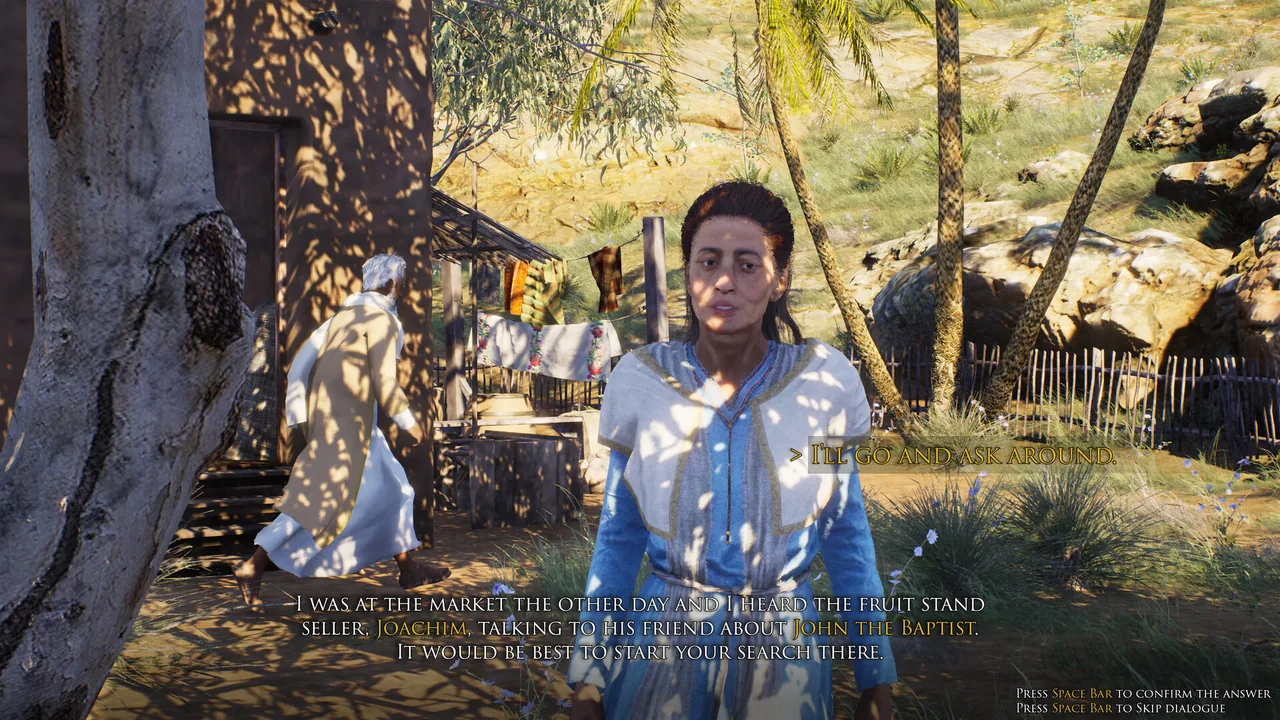
Image: PlayWay S.A. via Steam -
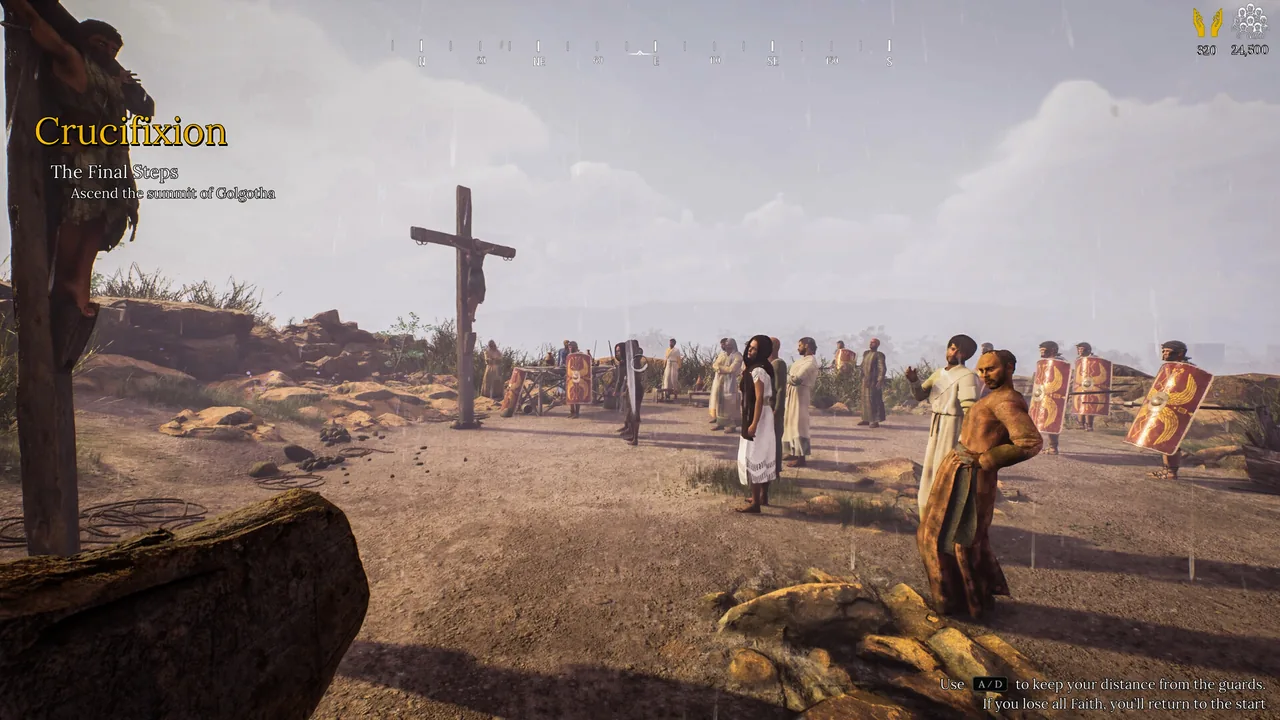
Image: PlayWay S.A. via Steam -
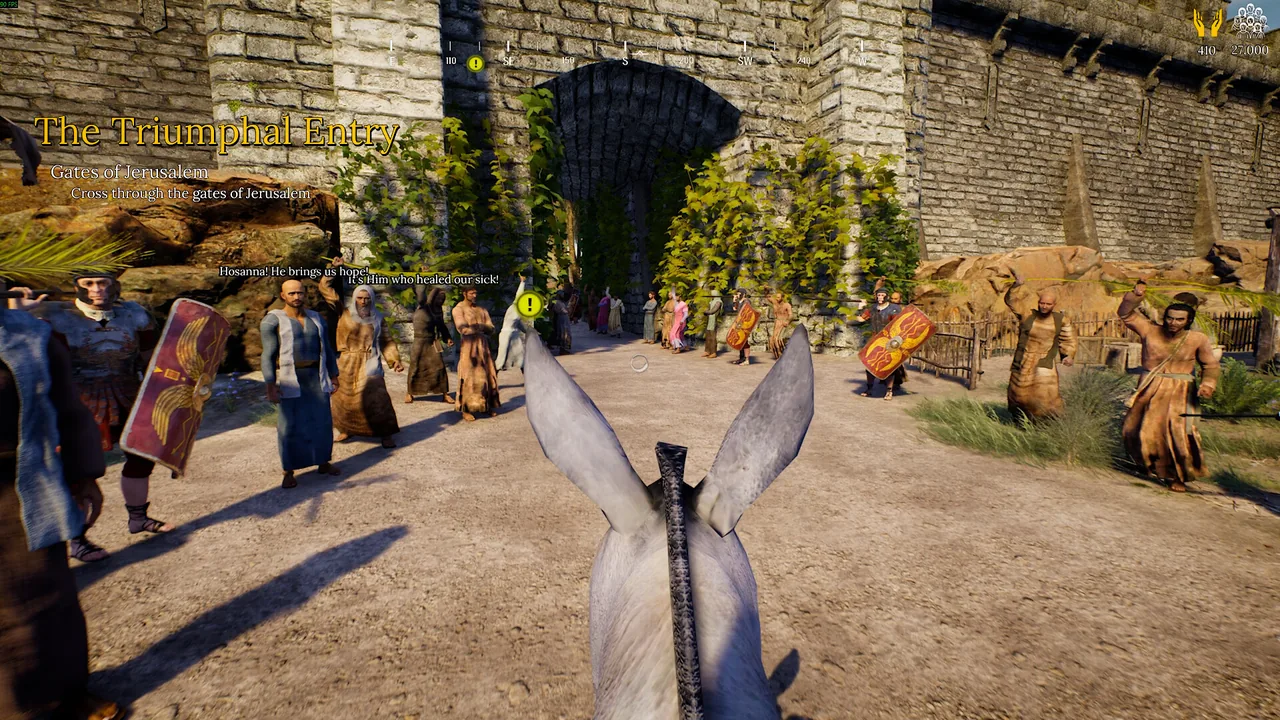
Image: PlayWay S.A. via Steam -
Wanderer Editorial -
Wanderer Editorial -
Wanderer Editorial