
Game review
How Many Secrets Under Ceiling
5.4 / 10
- Developer
- 稻歌游戏工作室
- Publisher
- 稻歌游戏工作室
- Released
- 30 March 2026
- Platforms
- Windows
- Genre
- RPG
- Monetisation
- Premium
- Players
- Single-player
The short version
How Many Secrets Under Ceiling is a $2.99 game from developer 稻歌游戏工作室, released 30 March 2026, a text-driven detective deduction game where players uncover contradictions in testimony rather than gather physical evidence, adapting Edogawa Ranpo's classic locked-room mystery "The Walker on the Ceiling." This review's 14-review, Mostly Positive sample praises an unexpectedly large amount of writing for the price and a genuine unreliable-narrator twist, while flagging a rough English localization and an unforgiving save system.
Biggest strengths
- This review checked the store's own detailed description and confirmed a distinctive premise: the scenario is written by a new author recognized with Japan's Gentosha Mystery Fiction Award, adapting Edogawa Ranpo's classic short story 'The Walker on the Ceiling,' with deduction resolved entirely through spotting contradictions in dialogue rather than collecting physical evidence
- This review's sample includes multiple reviewers specifically praising the sheer volume of content for the price, with one describing 'over a hundred thousand words of story' for roughly the price of a coffee, and another calling the deduction system genuinely well done, 'much better than' a comparable game they had played days earlier
- This review's sample includes several reviewers specifically praising the unreliable-narrator mechanic at the story's core, with multiple players independently describing being fooled by the same narrative trick even after reviewing the clues in hindsight, one calling it 'quite interesting' and worth the low asking price on its own
Biggest weaknesses
- This review's sample includes a direct English-language complaint stating plainly that 'the english version of this game is very sadly not ready for prime time,' unable to recommend it 'in its current state,' a serious concern for a text-driven game where translation quality is central to the experience
- This review's sample includes a detailed negative reviewer describing the game's overall production quality as comparable to amateur, free Chinese visual-novel-making tools at points, and specifically criticizing the central deduction twist as closer to a low-to-mid tier murder-mystery party game than genuine detective fiction
- This review's sample includes multiple reviewers separately flagging save-system friction, with one warning players must remember to save manually or risk needing an auto-clicker to sit through long stretches of dialogue again, and another specifically wishing for a fast-forward option that isn't currently present
Who it's for: Fans of text-heavy detective and deduction games who read Japanese or Chinese mystery fiction, and who are comfortable playing primarily in Simplified Chinese while the English version catches up.
Our recommendation: A genuinely interesting, content-rich pick for deduction-game fans able to work around its current English-localization rough edges, less confidently recommended for English-only players right now.
5.4 / 10
No physical clues, no evidence bags, just a room full of testimony and the contradictions hiding inside it. How Many Secrets Under Ceiling is a $2.99 game from developer 稻歌游戏工作室, released 30 March 2026. This review draws on the game's full 14-review sample, Mostly Positive at 11 positive and 3 negative.
A locked-room classic, reworked
This review checked the store's own detailed description and found a distinctive foundation: the case, a resident found dead in a double-locked apartment, unfolds through a new author's scenario, credited with Japan's Gentosha Mystery Fiction Award, adapting Edogawa Ranpo's classic short story "The Walker on the Ceiling." Rather than searching rooms for physical evidence, the entire deduction plays out through spotting contradictions in what suspects say, a design choice the store's own copy frames directly as eliminating "rummaging through boxes" in favor of "a pure battle of wits." One reviewer in this review's sample confirmed the case is recognizably drawn from a real, well-known mystery, but cautioned other players against assuming they already know the outcome, since the game "has a completely different story and core" from its inspiration.
A surprising amount of writing for the price
This review's sample repeatedly singles out the sheer scale of the game's content relative to its cost. One reviewer specifically described "over a hundred thousand words of story" for a price equivalent to roughly ten Chinese yuan, praising vivid character writing and plot that "progresses layer by layer." A separate reviewer called the deduction system "genuinely well done," explicitly rating it above a comparable mystery game they had played only days earlier, and recommended the game directly to genre fans given how few reviews it had received at the time. This review checked the store's price directly and confirms $2.99 is indeed the full asking price, a genuinely low figure against the volume of writing this review's sample describes.
A twist that keeps fooling players
Several reviewers in this review's sample focus on the game's unreliable-narrator mechanic as its standout feature. Multiple players independently described being caught off guard by the same narrative trick, with one writing that even after reviewing the clues in hindsight, "I've never once successfully seen through this kind of thing." Not every reviewer loved every specific narrative choice, though: one detailed, spoiler-tagged review criticized the game's decision to conceal a specific character's identity throughout, and separately found a late reveal involving a time-traveling assistant character tonally jarring against an otherwise logic-and-evidence-focused mystery, a piece of direct, specific critical feedback worth weighing alongside the broader praise.
A rough English localization
The most serious concern in this review's sample comes from its lone English-language review, which states plainly, "the english version of this game is very sadly not ready for prime time," adding "I can't recommend it in its current state." That's a significant concern for a game built almost entirely around dialogue and precise contradiction-spotting, where translation quality directly affects whether the core puzzle even functions as intended for English-only players. This review's broader sample, mostly Simplified Chinese, doesn't report the same issue, since it was written by players engaging with the game in its original language.
A specific quality complaint worth taking seriously
This review's most detailed negative review raises concerns beyond localization. That reviewer described the overall production as comparable at points to free, amateur Chinese visual-novel-making tools, and specifically criticized the central mystery's unreliable-narration trick as closer to a "low-to-mid tier" party mystery game than to genuine detective fiction. The same reviewer flagged a concrete usability problem: players must remember to save manually, or risk needing to sit through long, previously-seen dialogue again to catch back up, a specific and checkable quality-of-life gap echoed by a separate reviewer who wished directly for a fast-forward option.
A quiet, small-team release
This review checked the Steam achievement API and the developer's partner-events feed and found a thin footprint on both: no tracked achievements at all, and just two partner-events posts, a demo update from October 2025 and the official launch announcement in March 2026. That's consistent with a small, likely solo or near-solo development effort rather than a heavily resourced launch, and it fits the game's history as a crowdfunded project, a detail one reviewer in this review's sample mentioned directly, funded through the Chinese platform Modian ahead of release.
A hand-drawn presentation, acknowledged as a limitation and a charm
This review's sample is candid about the game's visual presentation. One reviewer noted directly that the team had no dedicated artist, describing the character portraits as simple, cute round shapes drawn in what looked like basic paint software, adding pointedly that the story itself "isn't a cute-themed story" despite that choice. Rather than treating that as a dealbreaker, the same reviewer framed it as evidence of the small team's resourcefulness, closing with direct encouragement for what they called the genre's "first light novel-style immersive detective game" and anticipation for a second project. A separate, longer-playtime reviewer echoed that read, saying they could fully accept the art style, calling it charming "little kid" doodles rather than a shortcoming, and specifically wishing to see more of the detective's world rendered in the same style.
Tags that stretch further than the game itself
This review checked the store's own tag list against what this review's sample and detailed description actually describe, and found some real overreach. "Immersive Sim" and "RPG" both appear on the store page, but nothing in this review's sample or the store's own copy describes anything resembling systemic simulation or role-playing progression, the game as described is a linear, dialogue-driven deduction story with no character-building or open systems to speak of. "Character Customization" is a similar stretch, no reviewer in this review's sample describes any such feature. Tags like "Visual Novel," "Detective," "Mystery," "Dialogue Heavy," and "Logic" fit far more precisely against what this review's evidence actually supports.
Verdict
How Many Secrets Under Ceiling offers a genuinely distinctive premise, a text-only deduction game built around contradiction-spotting rather than evidence-gathering, backed by a surprising amount of writing for its $2.99 price and a narrative trick multiple reviewers found genuinely effective. But this review's sample also surfaces real, specific problems: an English localization one player called not ready for release, a save system with real friction, and at least one detailed complaint about the writing's overall polish. Worth trying for deduction-game fans comfortable navigating those rough edges, particularly those reading in Simplified Chinese, with real caution warranted for English-only players until the localization improves.
Pros and cons
Pros
- This review checked the store's own detailed description and confirmed a distinctive premise: the scenario is written by a new author recognized with Japan's Gentosha Mystery Fiction Award, adapting Edogawa Ranpo's classic short story 'The Walker on the Ceiling,' with deduction resolved entirely through spotting contradictions in dialogue rather than collecting physical evidence
- This review's sample includes multiple reviewers specifically praising the sheer volume of content for the price, with one describing 'over a hundred thousand words of story' for roughly the price of a coffee, and another calling the deduction system genuinely well done, 'much better than' a comparable game they had played days earlier
- This review's sample includes several reviewers specifically praising the unreliable-narrator mechanic at the story's core, with multiple players independently describing being fooled by the same narrative trick even after reviewing the clues in hindsight, one calling it 'quite interesting' and worth the low asking price on its own
- This review's sample includes a detailed reviewer praising the character writing directly, describing vivid, distinct personalities with 'Japanese-paper-doll-style' charm that never felt awkward in dialogue, and specifically praising the pacing of everyday banter as more comfortable than many longer, more expensive visual novels
Cons
- This review's sample includes a direct English-language complaint stating plainly that 'the english version of this game is very sadly not ready for prime time,' unable to recommend it 'in its current state,' a serious concern for a text-driven game where translation quality is central to the experience
- This review's sample includes a detailed negative reviewer describing the game's overall production quality as comparable to amateur, free Chinese visual-novel-making tools at points, and specifically criticizing the central deduction twist as closer to a low-to-mid tier murder-mystery party game than genuine detective fiction
- This review's sample includes multiple reviewers separately flagging save-system friction, with one warning players must remember to save manually or risk needing an auto-clicker to sit through long stretches of dialogue again, and another specifically wishing for a fast-forward option that isn't currently present
- This review checked the store's accessibility feature-flag block directly and found zero of nineteen tracked flags true, and also checked the Steam achievement API and the developer's partner-events feed, finding no tracked achievements and only two partner-events posts total, a thin structural footprint for a text-heavy game genre where accessibility options like adjustable text speed are especially valuable
Screenshots
-
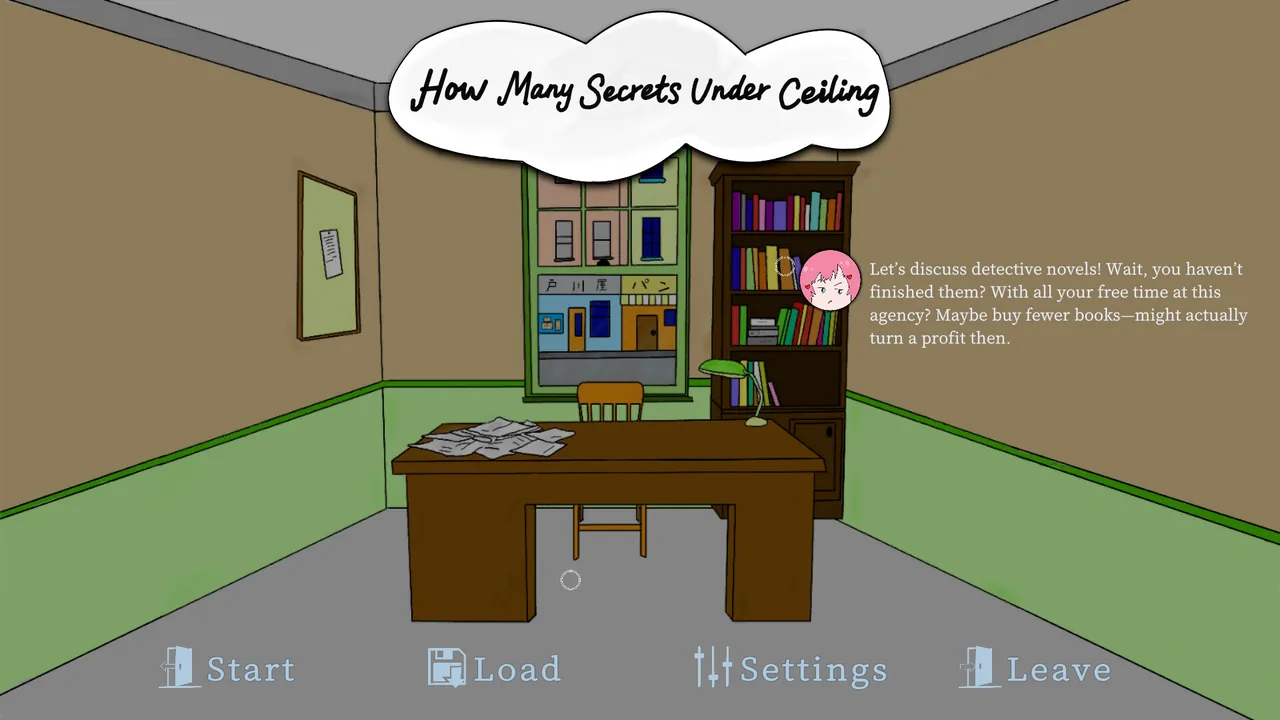
How Many Secrets Under CeilingImage: 稻歌游戏工作室 via Steam -
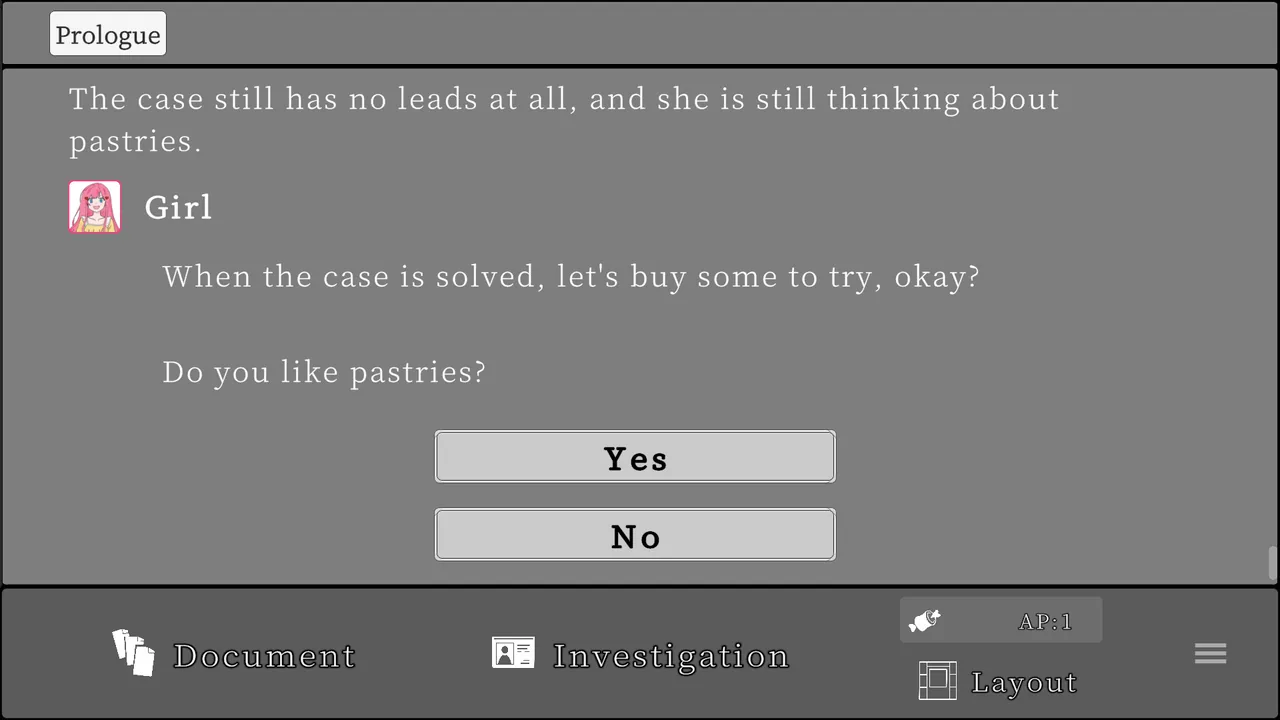
How Many Secrets Under CeilingImage: 稻歌游戏工作室 via Steam -
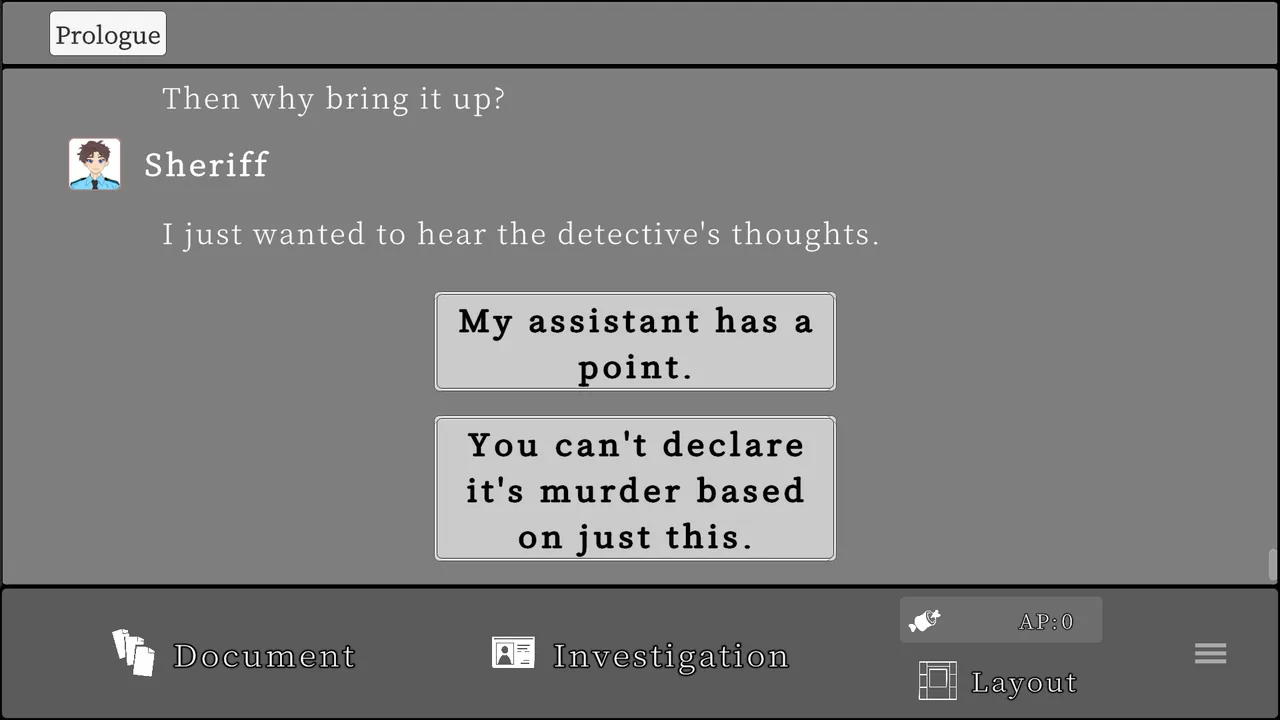
How Many Secrets Under CeilingImage: 稻歌游戏工作室 via Steam