
Game review
Horse Magnifier: The Full Horse
6.5 / 10
- Developer
- sketbordcat
- Publisher
- sketbordcat
- Released
- 10 August 2026
- Platforms
- Windows
- Genre
- Casual
- Monetisation
- One-time purchase
- Players
- Single-player
The short version
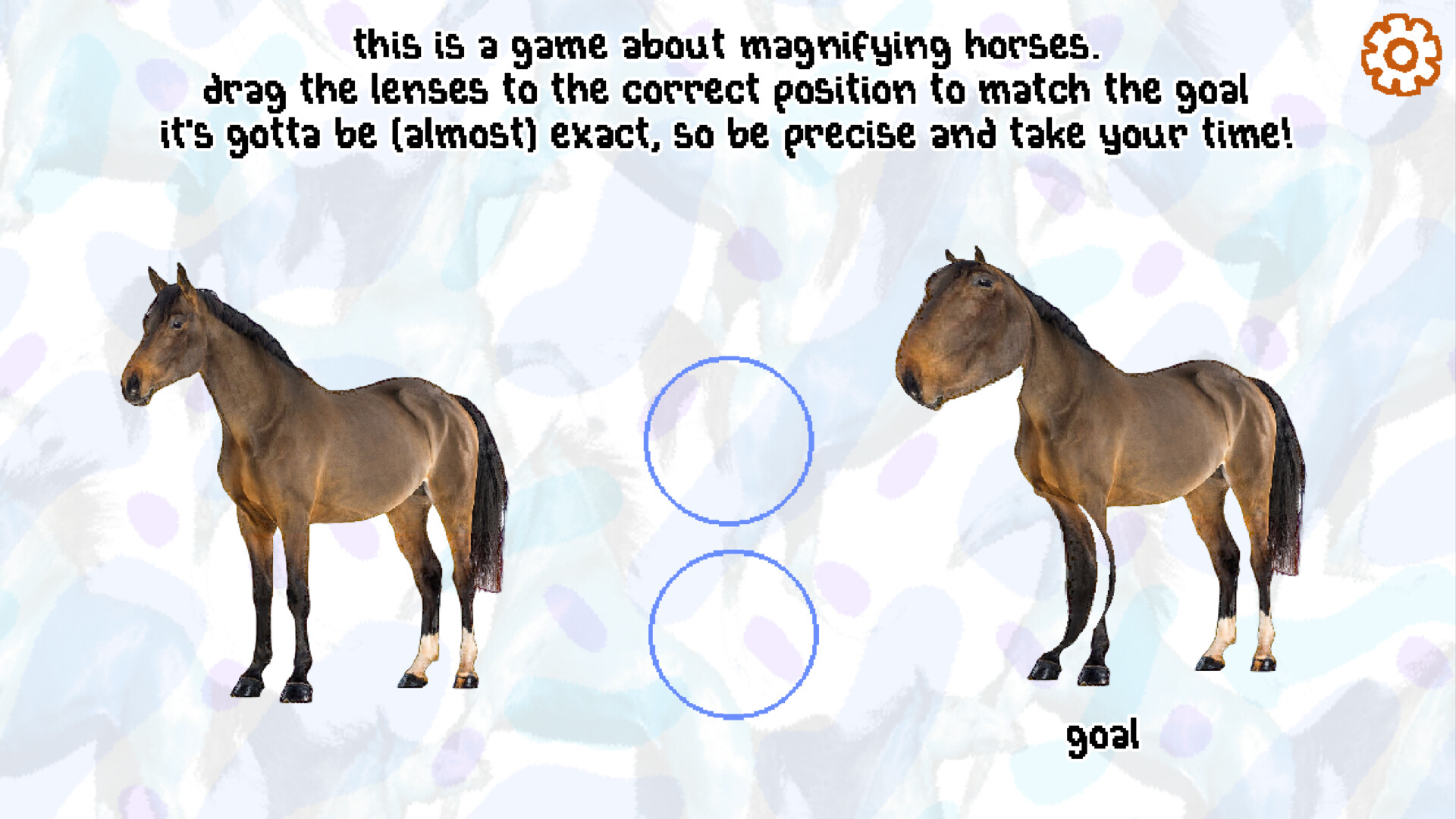
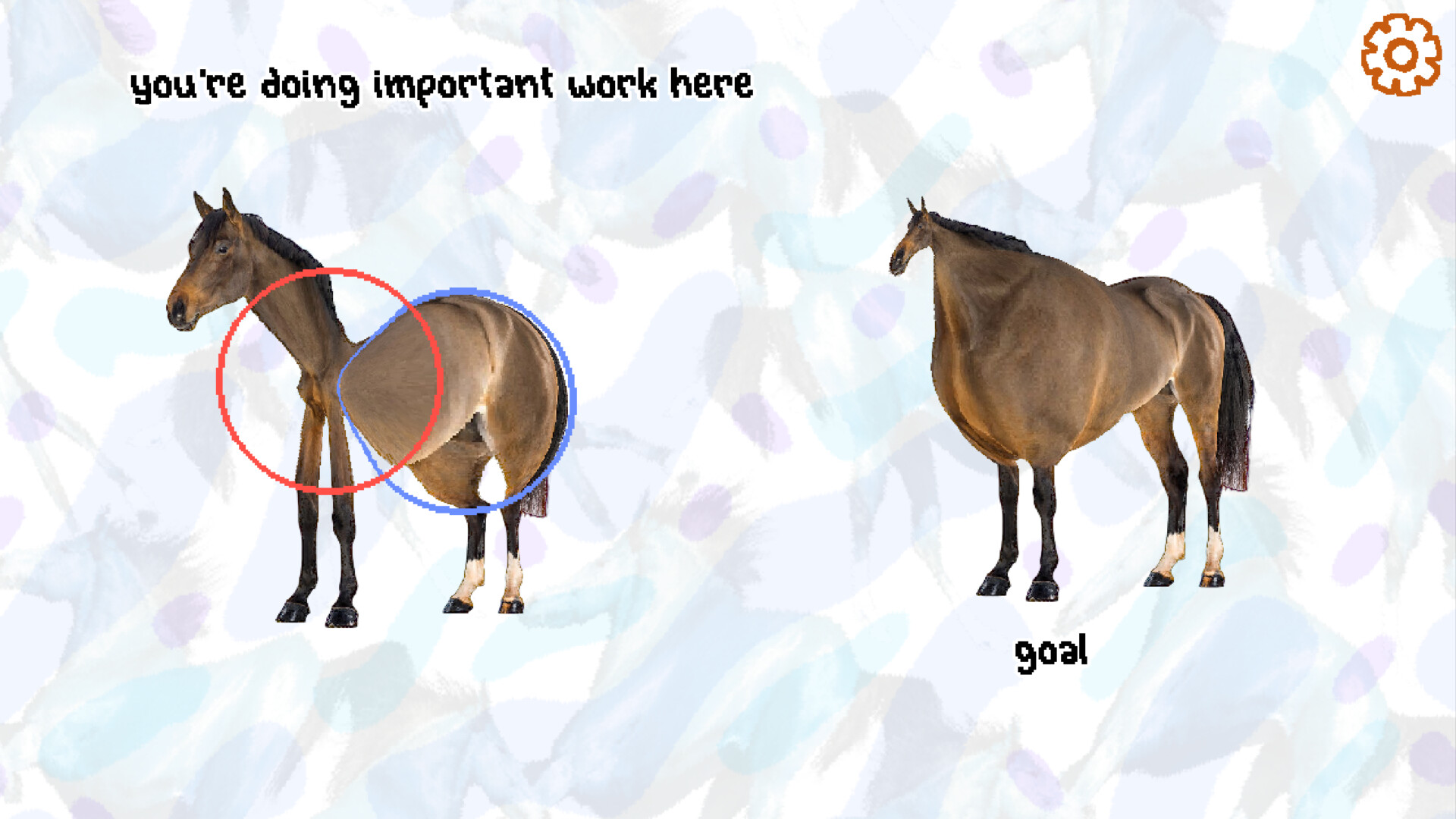
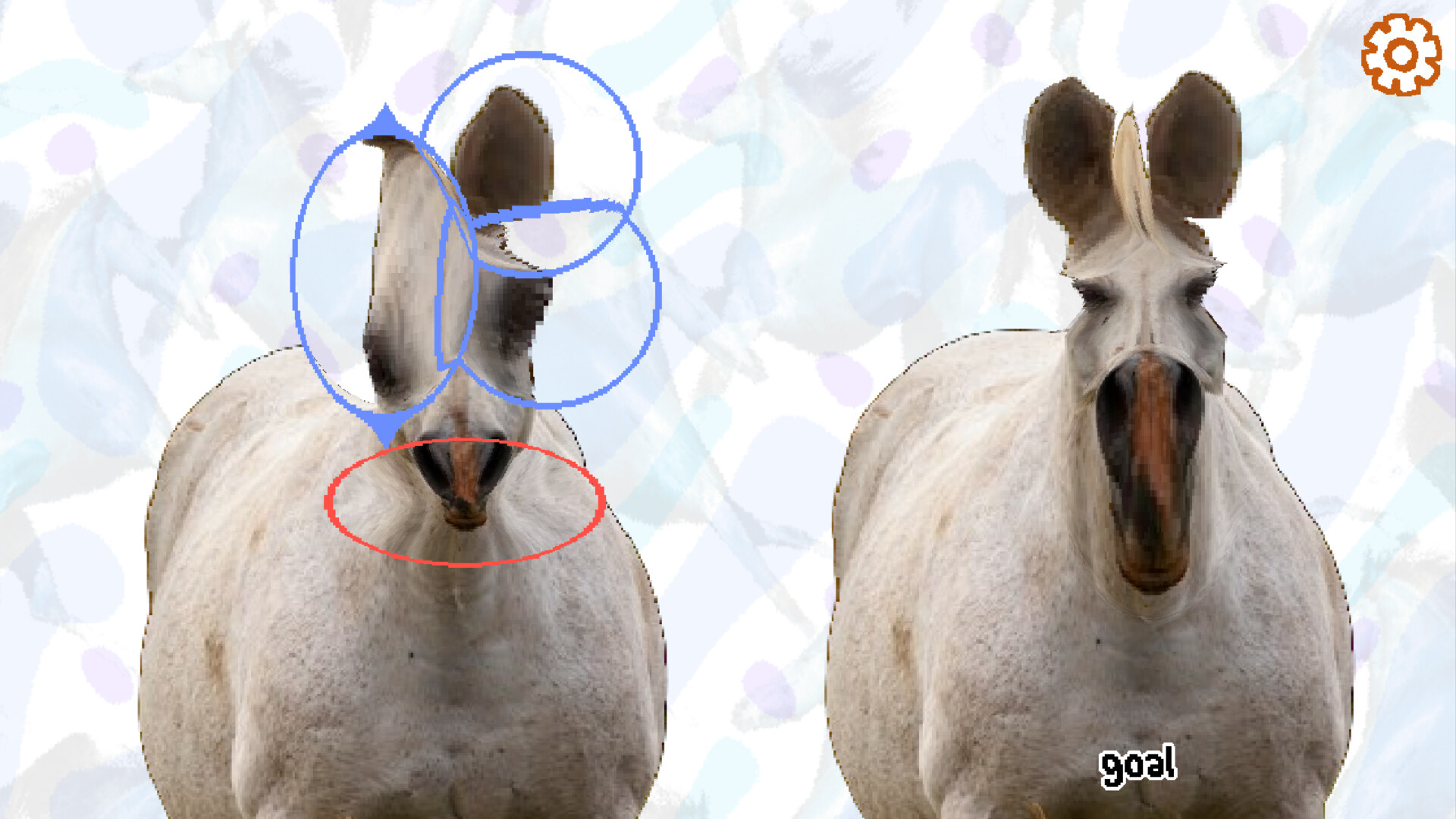
Horse Magnifier: The Full Horse, released 10 August 2026, expands a viral browser puzzle game into a 54-level Steam release where players drag different kinds of magnifying glasses over a picture of a horse until the distorted image matches a target. Its huge review sample is dominated by absurdist comedy, but a smaller, more detailed thread of feedback describes a genuinely well-constructed matching puzzle with a real difficulty curve, undercut by a short three-hour campaign, some inconsistent visual cueing between similar-looking tools, and built-in jumpscares that a meaningful number of players found more unpleasant than fun.
Biggest strengths
- The core mechanic, layering different magnifying and distortion tools over a horse image to match a target, is repeatedly described by more detailed reviews as a genuinely well-designed puzzle system with a real, well-paced difficulty curve across its 54 levels
- Steam Workshop integration lets players build and share their own puzzles using custom images, giving the game replay value well beyond its short main campaign for a very low price
- Accessibility options including a colorblind toggle that labels the visually similar tools and a static-background mode for players sensitive to motion are specifically praised as thoughtful additions for a game this small and this cheap
Biggest weaknesses
- The main campaign runs close to three hours for most players, and beyond the Workshop there isn't much pulling players back once the levels and their twists are exhausted
- Several tools that look visually near-identical are not always clearly distinguished, and one detailed review specifically cites a level where two same-colored mirrors serve different functions with no way to tell which is which except trial and error
- Built-in jumpscares, while technically optional through a settings toggle, are described by a number of reviewers as arriving unexpectedly or being more intense than they wanted, with a few specifically asking the developer to soften or better signal them
Who it's for: Puzzle fans who enjoy short, mechanically clean image-matching games, and anyone drawn to internet-absurdist indie games that lean fully into their own premise rather than winking at it.
Our recommendation: A cheap, well-made puzzle game that's easy to recommend for an evening, provided buyers know the built-in jumpscares exist and don't expect the roughly three-hour campaign to stretch much further without diving into the Workshop.
6.5 / 10
Horse Magnifier: The Full Horse takes an image of a horse, hands the player a handful of magnifying glasses that warp, shrink, swap colours, or open portals in whatever they're placed over, and asks them to recreate a target image before moving on to the next of 54 levels. Released 10 August 2026 as a full, expanded version of a browser game that went viral earlier in the year, it arrived on Steam with an enormous wave of goodwill: over 1,600 reviews, nearly all positive, the overwhelming majority of them jokes, memes, and elaborate bits about the transformative power of magnifying horses. Underneath that noise, though, sits a small but detailed body of genuinely evaluative feedback, and reading it closely reveals a puzzle game that's better constructed than its premise suggests, with real, specific flaws worth knowing about before buying.
A real puzzle wearing a joke's clothing
It would be easy to dismiss Horse Magnifier as pure meme bait, and the review sample is happy to lean into that reading; the vast majority of positive reviews are single lines of absurdist comedy rather than assessments of the game itself. But the handful of longer, more substantive reviews in the sample describe something more considered: a matching puzzle where new tool types, mirrors that shrink, expand, recolour, or teleport sections of the image, are introduced steadily across the campaign, with later levels requiring two or more tools working together to hit the target image. One particularly detailed review, updated twice as the developer patched issues, calls the pacing of new mechanics well judged, praising the game for introducing a new twist "every few levels" so that it never gets stale before the next idea arrives. The developer's Steam Workshop integration extends that structure outward, letting players build and share their own puzzles using custom images through an in-game editor described as intuitive after a short learning curve.
Short, and rougher at the edges than the polish suggests
That same detailed feedback is where the game's real weaknesses show up, and they're worth taking seriously precisely because they come from reviewers who otherwise recommend the game. The campaign itself runs close to three hours for most players, after which the main pull is the Workshop rather than any built-in reason to replay the existing levels. Within that campaign, a specific and credible complaint concerns visual clarity: certain tools that look nearly identical, sharing a colour and shape, serve different functions, and at least one level is cited by name as requiring pure trial and error to figure out which of two identical-looking mirrors is the one connected to the puzzle's solution. The built-in hint system, which nudges players toward an unsolved tool after a short wait, is reported to become far less useful once several tools cluster close together, though the developer has patched at least part of this since launch. A single music track carries the entire main campaign, and more than one otherwise positive review specifically flags it as repetitive over a longer session. Smaller interface quirks, like a "main menu" button that actually returns to the level-select screen, or on-screen elements that fall into place with a brief physics animation before they can be clicked, round out a picture of a small, mostly polished game with a handful of real rough edges its developer hasn't fully sanded down.
Jumpscares that some players didn't sign up for
One recurring thread that stands apart from the game's puzzle design is its use of built-in jumpscares: sudden, loud horse images that appear at set points, toggleable through a settings menu. Several reviewers describe being caught off guard by them despite the option existing, and at least one explicitly asks the developer to soften or better telegraph them in a future update, noting they nearly derailed an otherwise enjoyable session. It's a small but consistent thread across the sample, and worth flagging clearly for players who are sensitive to sudden loud audio-visual surprises, since the setting to disable them isn't obvious to everyone on a first playthrough.
From a browser toy to a full release
Horse Magnifier's Steam page is upfront that this is an expanded version of a free browser game that spread quickly earlier in the year, and several longer reviews specifically compare the two versions. The core puzzle mechanic carries over largely unchanged, but the Steam release adds a substantially larger level count, the custom soundtrack, and the Workshop-based level editor, none of which existed in the original. At least one reviewer notes a small regret that a specific piece of music from the original browser version didn't make the transition, having to loop it manually in the background as a workaround, a minor but specific piece of feedback that suggests the fanbase carried real attachment to the free version rather than treating it as a disposable curiosity. That lineage also explains some of the review page's tone: a meaningful share of buyers already knew and loved the mechanic before paying for it, which likely inflates both the review volume and its overwhelmingly celebratory character relative to a completely new, unproven release.
Final Verdict
Strip away the layers of internet-absurdist comedy that dominate its review page, and Horse Magnifier: The Full Horse is a genuinely well-built, steadily-escalating image-matching puzzle with thoughtful accessibility options and real Workshop-driven longevity, sold at a price that makes it an easy impulse buy. It's also a short game with a few specific, recurring rough edges, inconsistent visual cueing between similar tools, a hint system that struggles when pieces overlap, one repetitive music track, and jumpscares that won't land well for every player. None of those issues are severe on their own, but together they're enough to keep this from being the flawless "game of the year" its meme-heavy review page jokingly claims. For the asking price, it's worth the few hours it takes to see.
Pros and cons
Pros
- The core mechanic, layering different magnifying and distortion tools over a horse image to match a target, is repeatedly described by more detailed reviews as a genuinely well-designed puzzle system with a real, well-paced difficulty curve across its 54 levels
- Steam Workshop integration lets players build and share their own puzzles using custom images, giving the game replay value well beyond its short main campaign for a very low price
- Accessibility options including a colorblind toggle that labels the visually similar tools and a static-background mode for players sensitive to motion are specifically praised as thoughtful additions for a game this small and this cheap
Cons
- The main campaign runs close to three hours for most players, and beyond the Workshop there isn't much pulling players back once the levels and their twists are exhausted
- Several tools that look visually near-identical are not always clearly distinguished, and one detailed review specifically cites a level where two same-colored mirrors serve different functions with no way to tell which is which except trial and error
- Built-in jumpscares, while technically optional through a settings toggle, are described by a number of reviewers as arriving unexpectedly or being more intense than they wanted, with a few specifically asking the developer to soften or better signal them
- A single repeating music track carries the entire main campaign, and more than one detailed review flags it becoming grating over a longer session despite otherwise praising the sound design
Screenshots
-
Horse Magnifier: The Full HorseImage: sketbordcat via Steam -
Horse Magnifier: The Full HorseImage: sketbordcat via Steam -
Horse Magnifier: The Full HorseImage: sketbordcat via Steam