Game review
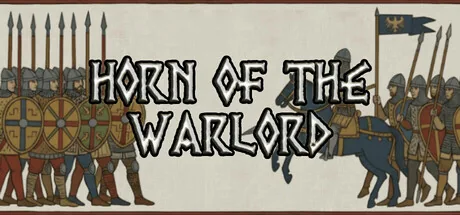
Horn of the Warlord
7.5 / 10
- Developer
- MagicKrol
- Publisher
- MagicKrol
- Released
- 29 June 2026
- Platforms
- Windows
- Genre
- Indie, Strategy
- Monetisation
- paid
- Players
- false
The short version
Biggest strengths
- Genuine strategic depth hidden beneath a simple-looking hex-grid conquest system, with multiple reviewers describing an 'aha' moment once the underlying supply and unit mechanics click
- Clean, immersive art, audio, and UI that reviewers repeatedly called crisp, intuitive, and well suited to the Viking setting
- An unusually responsive solo developer, praised across a large share of the review pool for rapidly acting on player feedback and bug reports
Biggest weaknesses
- A detailed, well-reasoned negative-leaning review reported that the game 'loses its luster' after the first hour, citing a single music track, one unchanging playable faction, and missions that start to feel repetitive once the core trick to winning is learned
- A single-source but specific complaint that mission success can hinge on RNG-determined resource placement (gold and iron) and pre-set map food limits, making some missions feel like guessing the developer's intended solution rather than open strategy
- No multiplayer, noted as a missing feature by more than one reviewer despite the game's board-game-like structure seeming well suited to it
Who it's for: Fans of lighter, board-game-flavored strategy (Risk, Catan, older titles like Vikings: Fields of Conquest) who want real tactical decisions without grand-strategy bloat, less suited to players wanting deep faction variety or any multiplayer option
Our recommendation: recommended
7.5 / 10
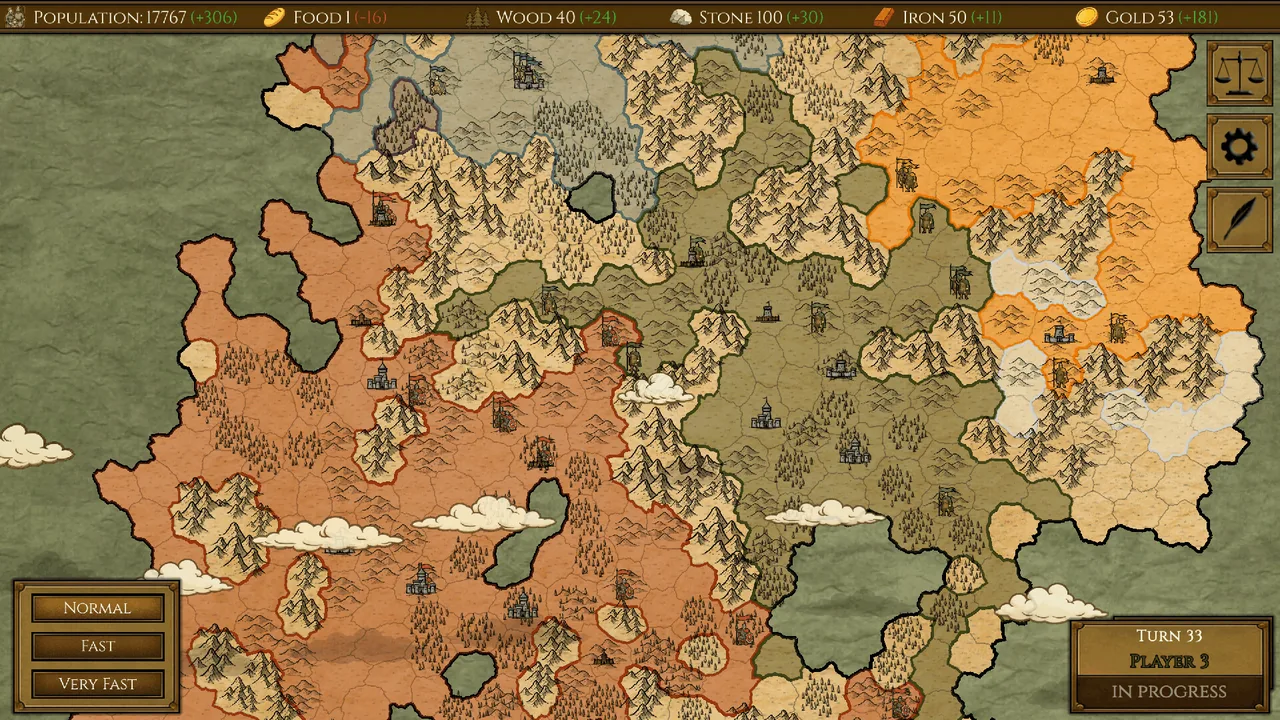
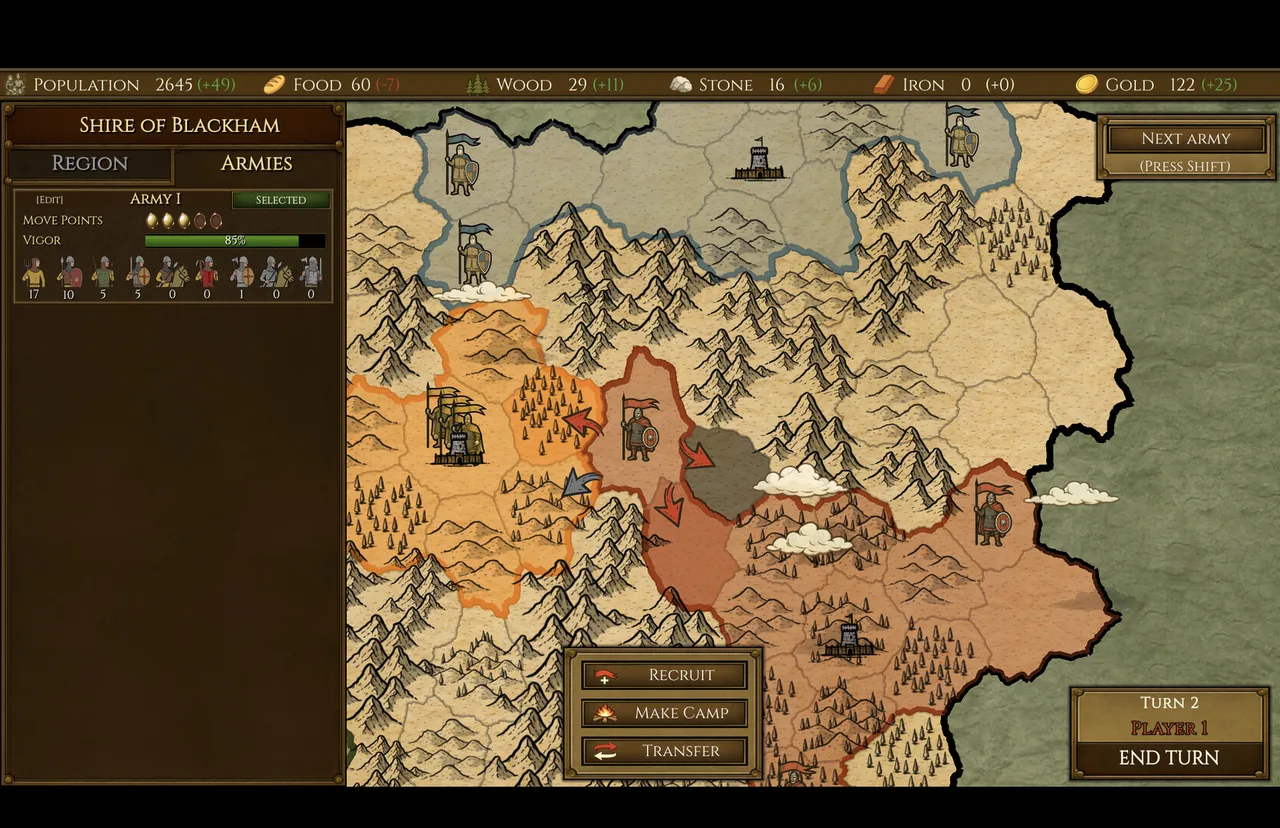
Horn of the Warlord released in full on Steam on June 29, 2026, from solo developer MagicKrol, a turn-based Viking conquest strategy game where players expand a kingdom, raise armies, and besiege castles across hex-grid maps. Its 26-review English pool sits at a strong Positive (25 up, 1 down, 96%), and reviewers overwhelmingly describe a deceptively deep, board-game-flavored strategy title whose simple surface hides real tactical nuance, backed by a developer reviewers repeatedly praised as unusually attentive.
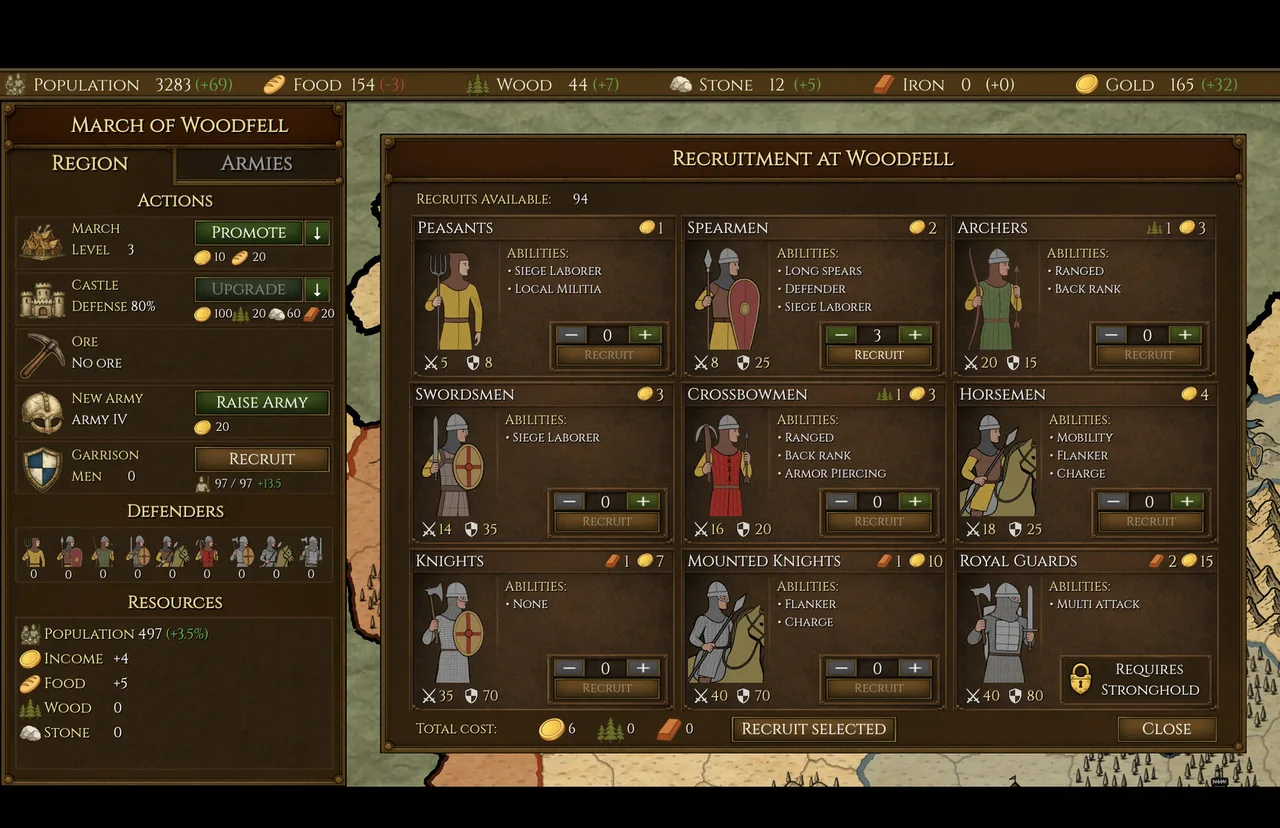
The game's central hook, hidden mechanical depth beneath a simple-looking system, comes up again and again, often as a genuine change of heart. One reviewer described initially finding the game "boring and basic," watching the AI seemingly move "aimlessly" and feeling "overwhelmed" by enemy forces, before eventually realizing "the problem was with me": once they understood the supply system and unit interactions after roughly a dozen games, the experience transformed into something they called "beautiful," with "a lot of subtle details in the game mechanics" that only reveal themselves with time. Another detailed reviewer laid out the strategic texture directly, explaining how unit choice depends on situational tradeoffs, cheaper spearmen with siege and defensive bonuses versus knights that are more resource-efficient to feed, concluding that balancing troop types, economy, and castle placement "makes me appreciate the challenges and decisions a dark age or medieval commander had to face."
Presentation draws consistently strong, specific praise. One reviewer called the visuals and audio a "cool viking wargame feel," while another described the UI and art style as "intuitive, straightforward, and engaging," giving "the information needed at a glance." A separate reviewer compared the overall feel to "RISK! expansion meets Catan economy with Civ units," a framing echoed by multiple other reviewers who explicitly likened it to classic board games, noting how a short match length translates into "more meaningful moves and decisions, not less strategy."
The solo developer's responsiveness is one of the pool's most frequently repeated points, appearing across reviews with very different overall takes. One reviewer noted having "a few recommendations for the developer after playing the demo," and that "he responded very positively right away," with most of the requested tweaks already headed into an update. Another reviewer updated their own review upward, from an initial 6/10 to 8/10, specifically because "the developer fixes bugs and corrects features faster than it takes me to write them down." A third simply called the developer "super chill and responsive," hoping the game finds "that marketing push that breaks through the noise" it deserves.
Not every reviewer stayed convinced past the opening hours, however, and the pool's most detailed critical take is worth engaging with directly. One reviewer, who still rated the game a barely-passing 5.5/10 and technically recommended it, laid out a specific arc: "the first hour or so of gameplay is great," fast to learn and rewarding, but "after the first hour the game really starts to lose its luster." They pointed to a single music track, always playing the same faction with the same available armies, and missions that "start to feel the same" once the winning formula (chokepoint defenses, resource-grabbing skirmishers, a late "doomstack" of knights) is discovered. That same reviewer directly questioned the $15 price relative to what they judged to be "only 1 quality hour of gameplay" before the loop stopped teaching them anything new.
The pool's sole negative review raises a related but distinct concern: that mission success can hinge heavily on randomness outside the player's control. They argued that gold and iron resource placement is RNG-determined per mission, and that food production, which limits army size, is fixed by whoever built each map, concluding the game amounts to "guessing how the dev wanted you to succeed in the mission." It's a single-source complaint, but a specific and checkable one about the game's mission design rather than a vague dismissal, and worth flagging alongside the repetition concern above since both point at the same underlying worry: that the campaign's structured missions offer less genuine strategic freedom than the game's open, emergent early hours suggest.
A smaller but recurring wish-list item is multiplayer, absent from the current release. One reviewer flatly listed "lacks multiplayer" among an otherwise glowing set of positives, while another separately suggested "multiplayer would be a good idea for the future," given how naturally the game's short, decision-dense format seems to lend itself to head-to-head play.
A separate reviewer with more than ten hours logged, including significant time in the pre-release demo, offered a useful middle-ground perspective between the pool's raves and its lone frustrated report: they praised the AI as "balanced, challenging without feeling like cheaters," and the game's campaign, scenario, and skirmish variety as genuinely substantial in the full release, while still acknowledging "a rare remark here or there that $15 is steep." Their own conclusion was that the demo alone delivered "hours and hours of quality game" even on a tight gaming budget, framing the price complaint as a minority position rather than the pool's dominant read. Other reviewers specifically requested future content, like a smithing/resource-production chain or a customizable player-created jarl, suggesting the systems already in place have left room to expand meaningfully rather than feeling like a finished, closed design.
Taken together, Horn of the Warlord is a well-crafted, unusually well-supported strategy debut that rewards patience with genuine tactical depth, particularly appealing to players who like their strategy games compact rather than sprawling. Whether the campaign holds up past its excellent opening hours is a fair point of debate within the pool itself, but with a responsive developer actively shipping improvements, it's a reasonable bet for fans of lighter, board-game-inspired conquest strategy.
Pros and cons
Pros
- Genuine strategic depth hidden beneath a simple-looking hex-grid conquest system, with multiple reviewers describing an 'aha' moment once the underlying supply and unit mechanics click
- Clean, immersive art, audio, and UI that reviewers repeatedly called crisp, intuitive, and well suited to the Viking setting
- An unusually responsive solo developer, praised across a large share of the review pool for rapidly acting on player feedback and bug reports
- Runs well on modest hardware with fast load times, and a good, non-cheating AI that multiple reviewers specifically praised for feeling fair rather than artificially difficult
Cons
- A detailed, well-reasoned negative-leaning review reported that the game 'loses its luster' after the first hour, citing a single music track, one unchanging playable faction, and missions that start to feel repetitive once the core trick to winning is learned
- A single-source but specific complaint that mission success can hinge on RNG-determined resource placement (gold and iron) and pre-set map food limits, making some missions feel like guessing the developer's intended solution rather than open strategy
- No multiplayer, noted as a missing feature by more than one reviewer despite the game's board-game-like structure seeming well suited to it
- A real, if debated, value question at $14.99 given how short some reviewers found the game's genuinely fresh strategic window to be before repetition set in
Screenshots
-
Horn of the WarlordImage: MagicKrol via Steam -
Horn of the WarlordImage: MagicKrol via Steam -
Horn of the WarlordImage: MagicKrol via Steam