
Game review
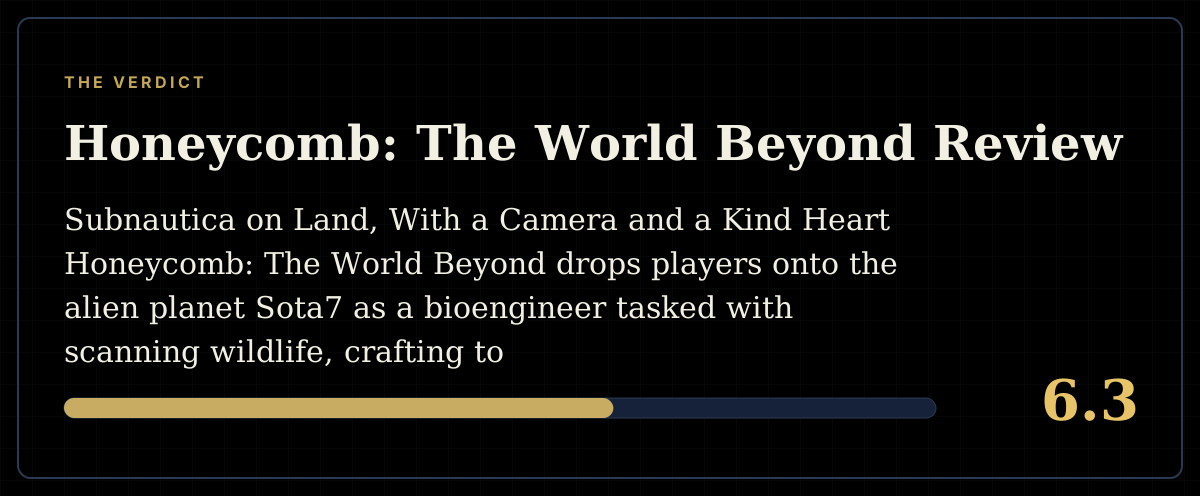
Honeycomb: The World Beyond Review
6.3 / 10
- Developer
- Frozen Way
- Publisher
- Snail Games USA
- Released
- 8 September 2026
- Platforms
- ["Windows"]
- Genre
- Adventure
Subnautica on Land, With a Camera and a Kind Heart
Honeycomb: The World Beyond drops players onto the alien planet Sota7 as a bioengineer tasked with scanning wildlife, crafting tools, and building a base to secure a means of curing a dying Earth. Reviewers reach for the same comparison again and again — several describe it as "Subnautica, but on land," and one specifically frames it as feeling like No Man's Sky's scanning-and-cataloging loop crossed with a survival-crafting base builder rooted more in a scientist's curiosity than a soldier's aggression. It's a well-worn survival-genre skeleton, but the specific combination — exploration, gentle creature interaction, and an emphasis on discovery over combat — reads across the review pool as a genuinely distinct flavor rather than a reskin.
That distinct flavor centers on the planet's wildlife. Players can tame and befriend Sota7's creatures, and several reviewers specifically cite the appeal of petting and bonding with alien animals — one describes buying the game the moment they saw someone interacting with a creature called a Camilla — while others reference crossbreeding hybrid plants and animals as a more mechanically involved system than simple pet-collecting. Reviewers consistently praise the visual presentation too, describing the game as strikingly pretty, with a large, dense map that rewards the kind of open-ended wandering the survival-exploration genre depends on.
Cozy, Exploration-Heavy Survival That Earns Real Playtime
For reviewers who click with its pacing, Honeycomb delivers a genuinely relaxing survival loop. Multiple reviewers specifically describe the game as "cozy," noting that environmental threats exist without escalating into constant stress, and that dying carries a light penalty — dropped items retrievable later — rather than punishing failure severely. That lower-stakes framing draws real praise from players who want the exploration and crafting satisfaction of the survival genre without its usual tension, and several reviewers report logging 16, 20, or more hours and still finding new content, describing an easy 30-plus hours of material for players who enjoy the core loop.
The developer's post-launch responsiveness comes up frequently and favorably. Six hotfixes landed within the game's first week alone, addressing crashes, quest-tracking bugs, and quality-of-life complaints, and multiple reviewers specifically credit that pace — one explicitly updated their review to a recommendation after a crashing issue they'd experienced was patched, crediting the "quick dev reaction" for turning their opinion around. For a $29.99 full release less than two weeks old at review time, that kind of visible, fast iteration is a meaningfully reassuring signal about where the game is headed.
Base-Building and Quest Systems Draw the Most Specific Complaints
The most detailed negative feedback in the review pool targets Honeycomb's systems rather than its core concept. Multiple reviewers describe base-building friction specifically: removing a connected device doesn't cause other devices to automatically reconnect to remaining power or water sources, and the game offers little to no feedback explaining why a given placement fails. Food spoilage is called out repeatedly as unusually harsh for the genre, and journal-tracking objectives — scanning a set number of plants or animals to progress — are described by more than one reviewer as buggy or unclear about what's actually been completed, with one reviewer specifically noting they were missing one of thirteen required plant scans with no clear way to identify which one.
A smaller but pointed cluster of complaints concerns traversal and interface polish: vegetation that should bend out of the way instead blocks movement, a map filter function some reviewers describe as completely non-functional, controller support called "wonky at best," and an inability to toggle certain tools on and off. None of these are individually severe, but their frequency across independent reviews suggests real, addressable rough edges in a game that otherwise earns praise for its core systems — several reviewers explicitly frame these complaints as things that feel more like an early access build than a finished 1.0 release, even though the game shipped as a full launch.
A Story Some Reviewers Wanted More From
Where Honeycomb draws its most emotionally charged criticism is its narrative conclusion. One reviewer who finished the story describes real disappointment with how it wraps up, arguing the game had set up far more potential than its ending delivers on, while acknowledging that story was never likely to be the game's main draw. Price is a second recurring point of friction — several reviewers suggest $29.99 sits a little high for what's currently on offer, with one specifically proposing $19.99 as a fairer starting point given the game's current content depth, even while still recommending it overall.
It's worth noting that some of the pool's harshest negative reviews come from players who report bouncing off within their first 30 minutes to a few hours, frustrated that a long-anticipated survival game didn't match expectations built up over what one reviewer describes as roughly three years on their wishlist. That's a meaningfully different kind of criticism than the more measured, specific system-level complaints from players who put in double-digit hours — both are represented in the review pool, and both are worth weighing depending on how patient a given player is willing to be with a freshly launched survival game.
Verdict
Honeycomb: The World Beyond takes a familiar survival-exploration formula and gives it a genuinely appealing identity through its alien-creature bonding, hybrid crossbreeding, and unusually gentle, cozy tone — and a developer shipping six hotfixes in its first week suggests real commitment to smoothing out its launch. But base-building connectivity issues, harsh food spoilage, buggy quest tracking, and interface rough edges are frequent, specific complaints rather than isolated gripes, and a disappointing story conclusion and a $29.99 price some feel is too high round out a real, if not fatal, list of launch-week problems. At Mostly Positive with a 72% approval rating, it's a reasonable pick for patient survival fans drawn to its cozy, creature-focused take on the genre, but players sensitive to jank should give the post-launch patch cycle more time to land first.
Pros:
- A genuinely distinct cozy, exploration-first spin on the survival-crafting genre
- Creature taming and plant/animal crossbreeding give it real identity beyond its Subnautica comparisons
- Strong visual presentation across a large, dense alien map
- A developer visibly shipping fast, frequent hotfixes in direct response to player feedback
- Low-stakes death penalty and gentle threat level suit players who want relaxed survival gameplay
Cons:
- Base-building connections don't auto-reconnect, with little feedback on placement failures
- Food spoilage and journal/quest-tracking bugs are recurring, specific complaints
- Traversal, map filtering, and controller support all draw reports of real jank
- The story's ending disappoints reviewers who expected more from its setup
- $29.99 price strikes a meaningful share of reviewers as high for the current content depth
Screenshots
-
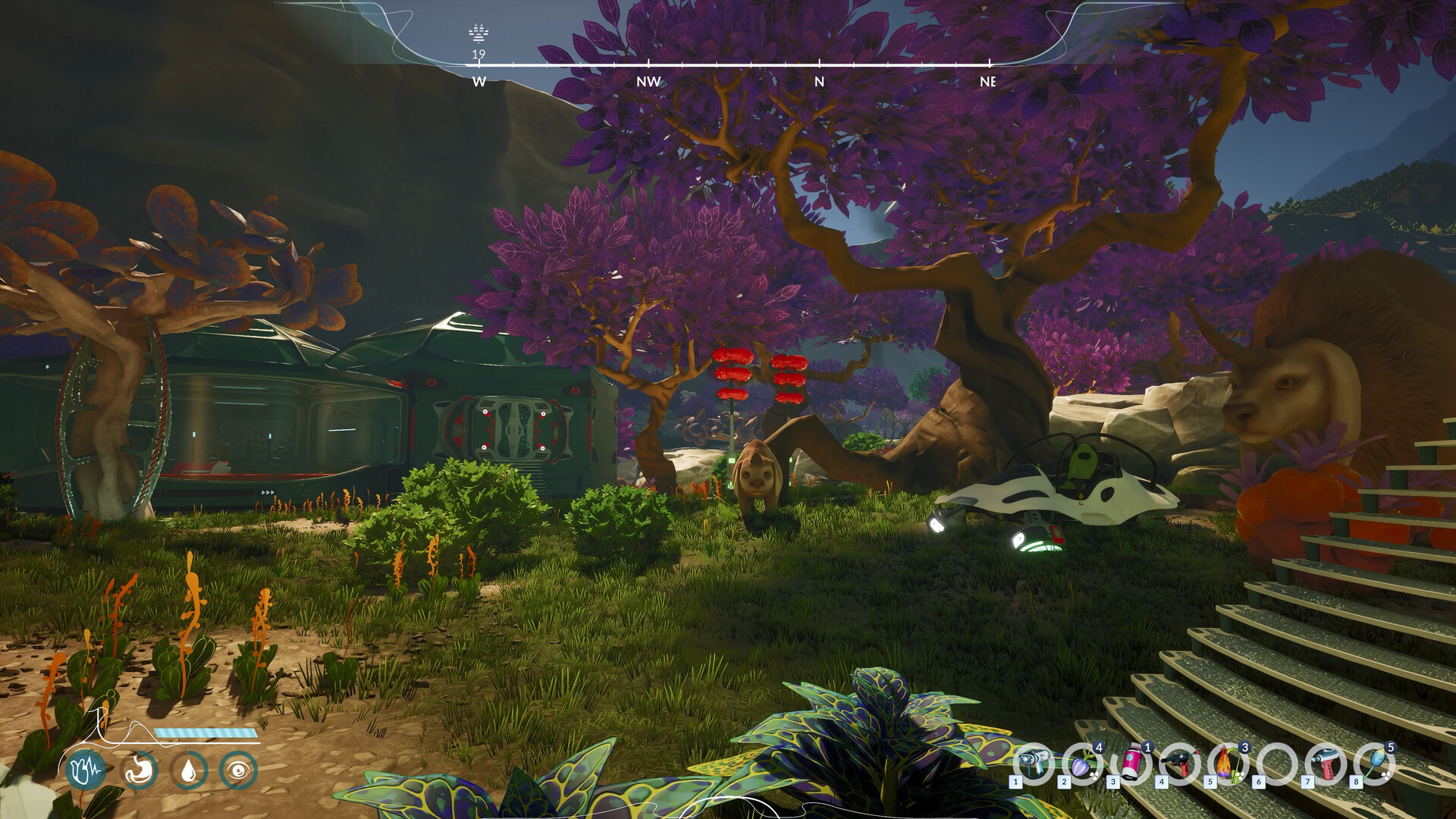
A small base sits beneath Sota7's purple canopy, with a tamed creature and scanner drone nearbyImage: Snail Games USA via Steam -
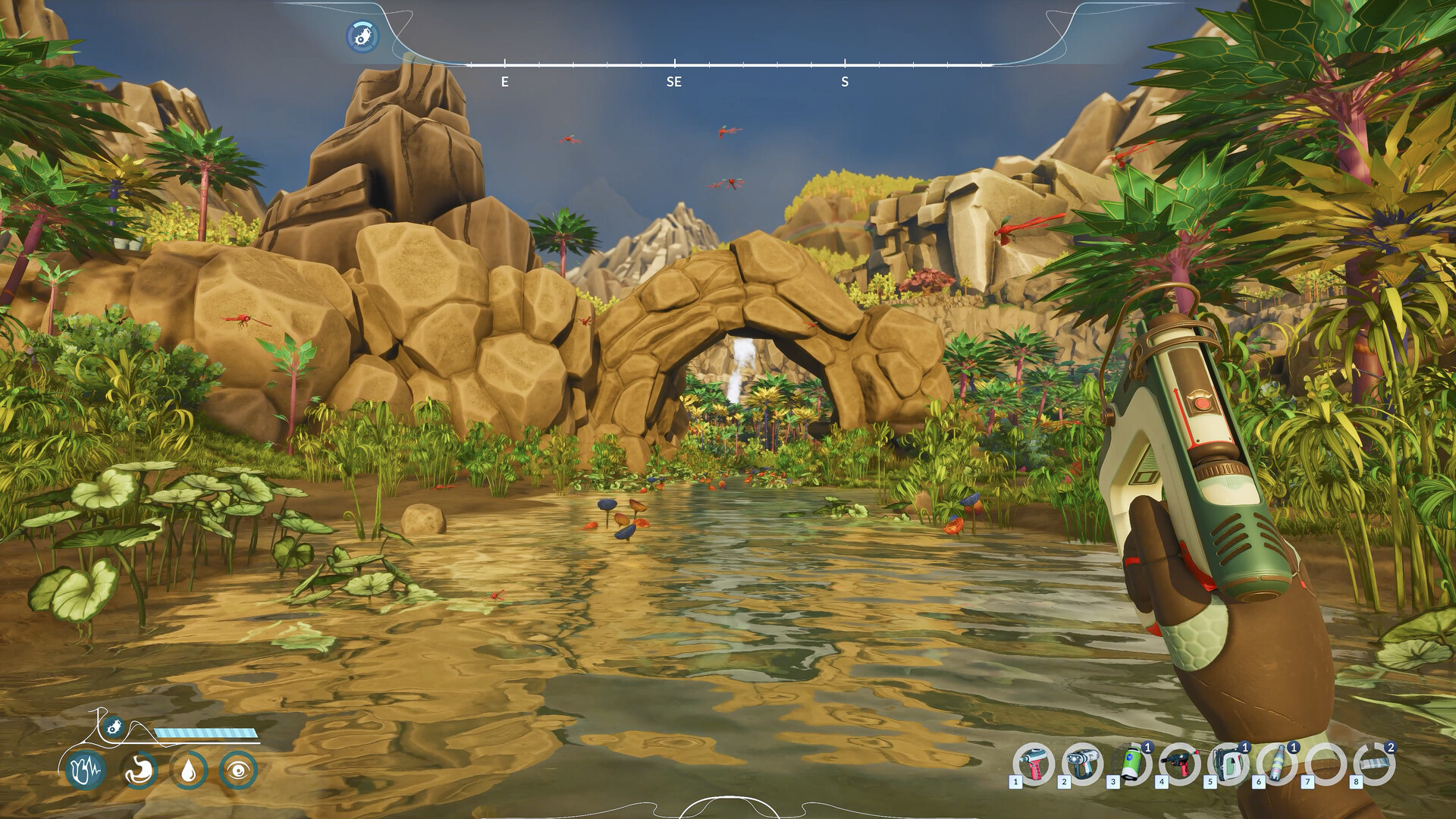
The scanning tool drives Honeycomb's exploration loop as players survey Sota7's biomes for new lifeImage: Snail Games USA via Steam -
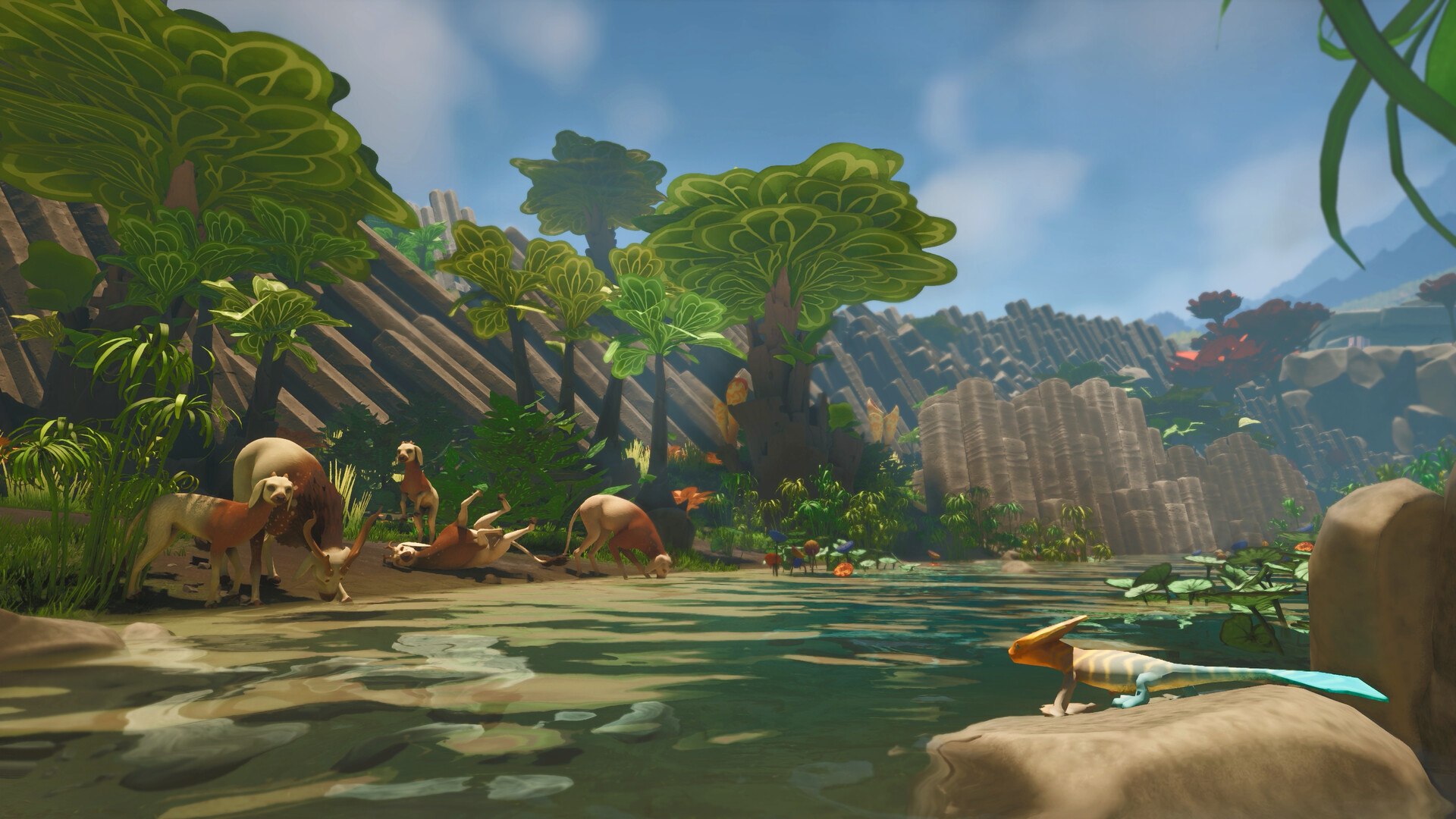
Taming and bonding with Sota7's wildlife is the game's most distinct hook, reviewers sayImage: Snail Games USA via Steam -
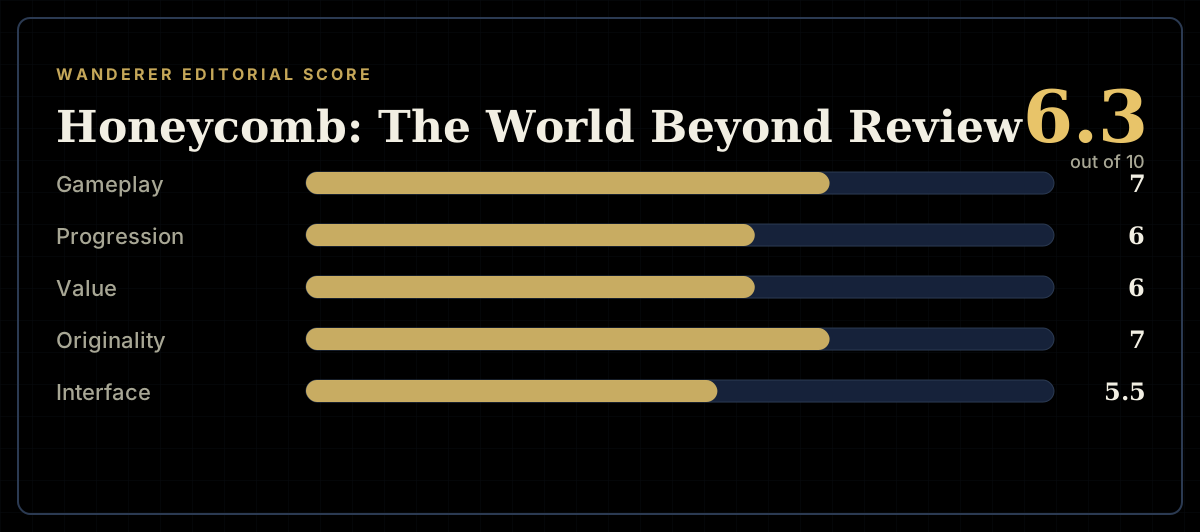
How the review scores each part of the gameWanderer Editorial -
The short versionWanderer Editorial