Game review
Granvir: Zero Front
6.5 / 10
- Developer
- Airborne Games
- Publisher
- GIGATANK 3000
- Released
- 12 May 2025
- Platforms
- Windows, Linux (Proton reported as required for some players)
- Genre
- Action, Indie, Simulation
- Monetisation
- Free to play. Serves as a prologue campaign for a separate, paid main title, Granvir.
- Players
- Online co-op multiplayer supported.
The short version
Granvir: Zero Front, developed by Airborne Games and published by GIGATANK 3000, is a free-to-play roguelite mech-builder that functions as a standalone prologue campaign to a separate, paid main game simply titled Granvir. Its review sample is genuinely enthusiastic about the core loop, praising tense, deliberate mech combat that several reviewers compare favourably to Armored Core and MechWarrior, alongside a deep part-building system with real replay value, several reviewers stating it directly convinced them to buy the paid full game. But a real, corroborated share of the sample reports a confusing, poorly explained interface, particularly around fitting and swapping mech parts, and an unforgiving tutorial that leaves new players lost rather than guided.
Biggest strengths
- Praised for tense, deliberate mech combat, with one reviewer comparing it to "old generation Armored Core games," and another describing it as feeling "like a chess match with the NPCs" on higher difficulty.
- Praised for a deep, replayable part-building system, with one reviewer highlighting "a significant amount of trinkets and bits to switch in and out for the build you want," and describing the game as "simple yet replayable."
- Successfully functioned as a genuine sales driver for its paid full-game counterpart, with multiple reviewers independently confirming the free prologue "directly led" them to purchase the main game, one specifically calling it "an easy win" given progress carries over.
Biggest weaknesses
- The single most heavily corroborated complaint concerns a confusing, poorly designed interface, with one reviewer reporting it was "extremely clunky in the HQ," specifically criticizing the lack of a "click-to-set/-remove system" for mech parts, and another separately confirming "bad UI, unexplained mechanics."
- A second, corroborated complaint concerns onboarding, with one reviewer reporting the tutorial's instructions can only be closed by clicking "Skip," calling this "counter-productive for a tutorial," and needing significant additional explanation to understand basic mission parameters.
- A third complaint concerns performance and stability variance, with one reviewer reporting "connectivity issues," another describing the Linux version as not working and requiring Proton instead, and an isolated report of the game becoming "stuck on the most blurry resolution" after switching to fullscreen.
Who it's for: Fans of slower, weightier mech combat in the Armored Core and MechWarrior tradition who enjoy deep part-tinkering and roguelite structure, and who are willing to push through a rough interface; anyone wanting a fully polished, well-onboarded experience should expect some friction before the combat clicks.
Our recommendation: A genuinely tense, well-built free mech roguelite prologue held back by real interface and onboarding problems, worth trying for its price alone.
6.5 / 10
A free prologue that sells its own sequel
Granvir: Zero Front, released 12 May 2025 by developer Airborne Games and publisher GIGATANK 3000, is a free-to-play roguelite mech-builder positioned as a standalone prologue campaign, "the resistance response to the Millennium Company invasion," to a separate, paid main game titled simply Granvir. That structure shapes much of the review sample's framing from the outset, with reviewers repeatedly and explicitly describing the free release less as a complete product in its own right and more as a highly effective sales tool for its paid counterpart. One reviewer calls it "an absolutely fantastic demo, packed full of content and replayability," specifically praising that "your progress carries over into the full game," concluding "this is an easy win." Another reviewer confirms the same pattern directly, writing the experience "100% convinced me to buy the full game," while a third notes they "ran through the campaign" and "just went and bought it to play the next campaign," reporting 87.5 hours logged in the paid title since.
That conversion strategy appears to be working as intended, and the review sample treats it as a genuinely welcome departure from typical demo practice. One reviewer argues directly "more devs and publishers should take note of this approach: quality demo for a quality game, keep adding content and updates after purchase," a specific, pointed endorsement of the model itself rather than merely the game's individual mechanics. Whatever one makes of the free release's status as a promotional vehicle, it clearly delivers enough substantive content and craft on its own terms to win that endorsement from a meaningful share of its reviewers.
Tense, deliberate mech combat with real depth
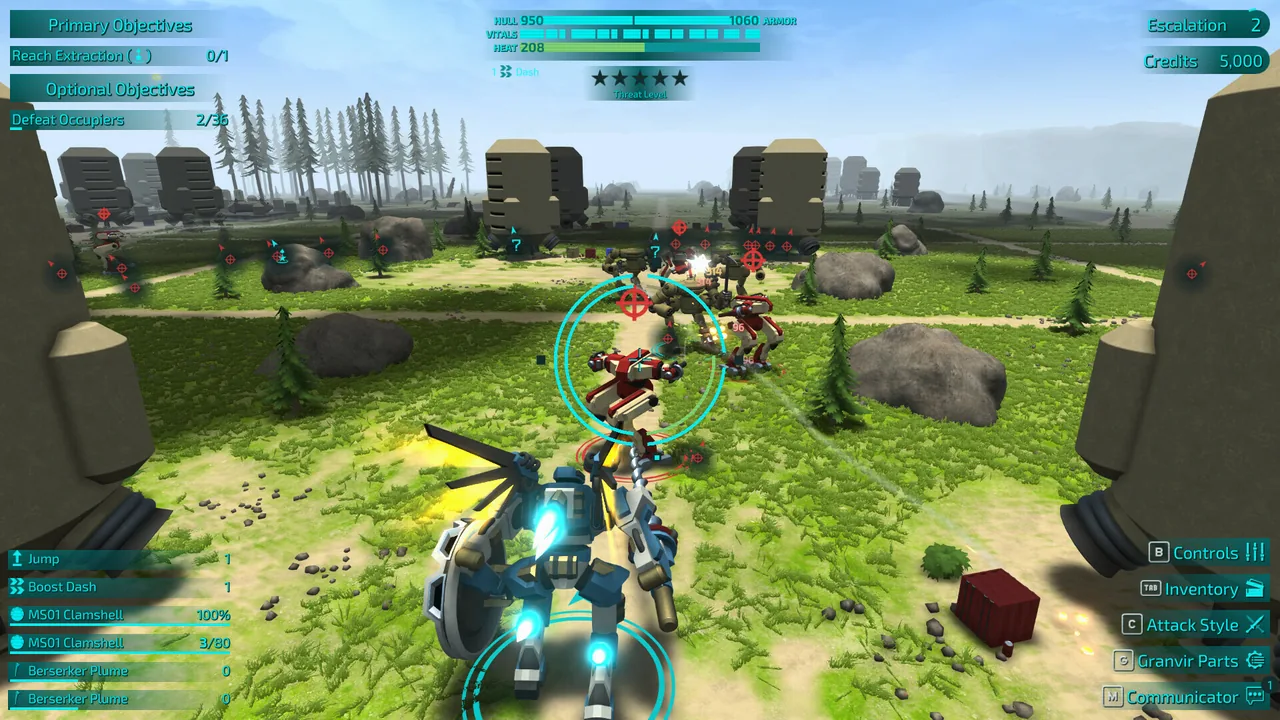
Central to that praise is the combat itself, which multiple reviewers frame as a deliberate throwback to older, more grounded mech genre classics rather than a fast, arcade-style shooter. One reviewer compares it explicitly to "old generation Armored Core games," while another describes it more casually as playing "like mechwarriors but with armored core parts." A further reviewer offers a more detailed account of a specific difficulty jump between an earlier public demo and this release, reporting that "even on Normal this game is INSANELY unforgiving in the best ways possible," adding "the combat is intense and it feels like a chess match with the NPCs," specifically praising newly added enemy and civilian NPC patrol behaviour that makes encounters feel less scripted.
That combat is paired with a part-building system multiple reviewers single out as a genuine strength. One reviewer highlights "a significant amount of trinkets and bits to switch in and out for the build you want," praising the game as "simple yet replayable" despite its modest scope as a prologue campaign. Another reviewer frames the appeal in genre terms, describing Granvir: Zero Front as "a roguelite mecha game with a slower, more grounded feeling to it, reminding me heavily of old generation Armored Core games... or something like Gundam Battle Operation 2," while noting it "differentiates itself by having its own spin on the genre and including a variety of parts to tinker and mess around with."
A confusing interface undercuts a promising core
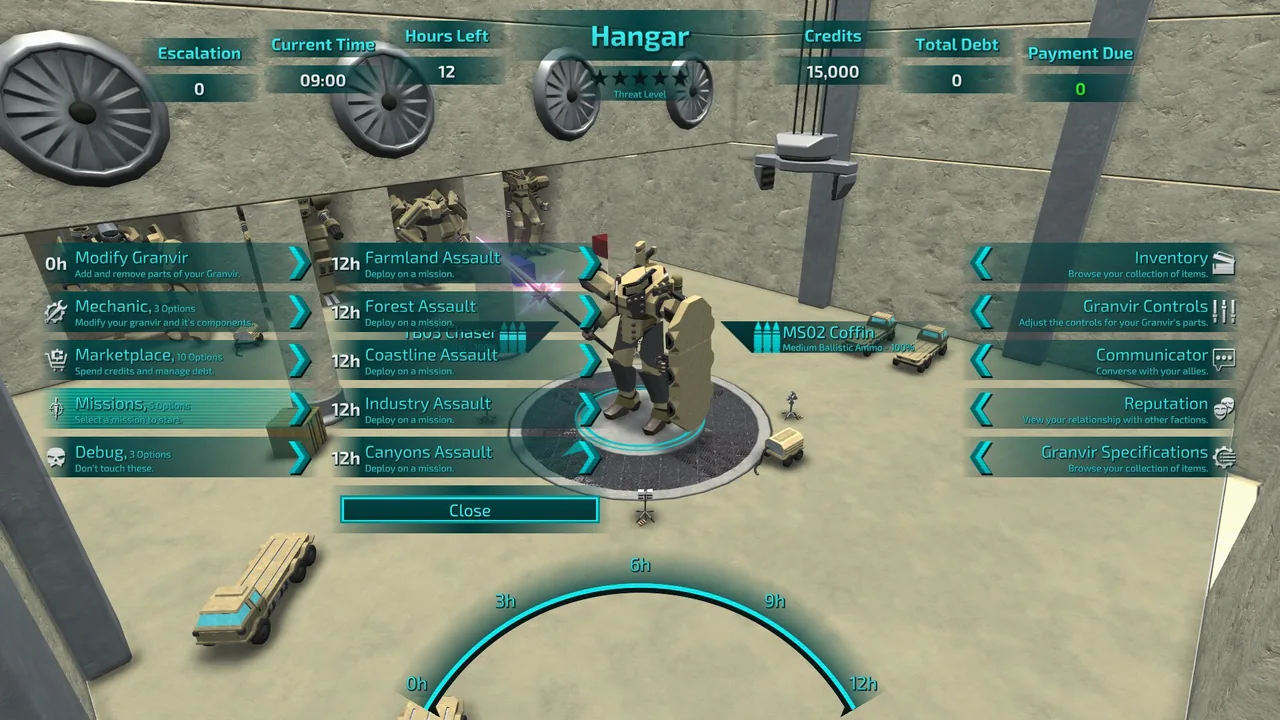
Set against that praise, the review sample's most heavily corroborated criticism concerns the game's interface, particularly around managing and fitting mech parts at its home base. One detailed, critical review reports finding it "extremely clunky in the HQ," specifically criticizing the absence of "a click-to-set/-remove system" and questioning "why was there a separate individual depot and a shared one," concluding that "passing items was tedious at best and frustrating at worst." A separate reviewer echoes the same underlying problem in blunter terms, reporting "bad UI, unexplained mechanics, unexplained mission parameters and vague instructions."
That onboarding friction extends specifically to the tutorial itself, with the same reviewer noting instructional messages "can only be closed by clicking 'Skip,'" a design choice they call "counter-productive for a tutorial," since it actively discourages players from reading guidance meant to help them. Given the game's genuinely demanding difficulty curve once combat begins, several reviewers who otherwise enjoyed the experience acknowledge this onboarding gap creates real friction: players are dropped into a punishing, tactically dense combat system without adequate guidance on the equally dense management systems surrounding it, a combination that risks losing exactly the newcomers a free prologue is meant to attract and convert.
Performance rough edges and mixed reception among newcomers
Beyond the interface specifically, a smaller but real cluster of complaints concerns performance and platform stability. One reviewer reports the Linux version "doesn't work," requiring Proton and the Windows build instead, despite Linux being officially listed as a supported platform. Another reviewer describes "connectivity issues" during co-op play, while a separate report describes the game becoming "stuck on the most blurry resolution" after switching to fullscreen, preventing them from properly evaluating the game. These complaints, while not universal, are specific and concrete enough to suggest genuine, unresolved technical rough edges rather than isolated hardware quirks.
Reception is also notably split along experience lines: players returning from an earlier public demo build largely praise the added difficulty and NPC behaviour as improvements, while some newcomers approaching the game cold report a rockier first impression, with one bluntly assessing "the mechs control like the walkers from the EDF series. Big, slow, clunky, with no impression of speed, weight, impact, control, personality." That gap between veteran and newcomer reception reinforces the onboarding concerns raised above, suggesting the game's genuine strengths are more accessible to players who already understand its systems than to those encountering them for the first time.
Verdict
Granvir: Zero Front is, by its own review sample's account, a genuinely well-crafted free mech roguelite prologue that succeeds at both entertaining on its own terms and selling its paid full-game counterpart, delivering tense, deliberate combat and a deep part-building system multiple reviewers say directly convinced them to buy in. But a real, corroborated interface problem around managing mech parts, an unhelpful tutorial that actively discourages reading its own guidance, and scattered performance and platform issues mean newcomers face real friction before the game's strengths become apparent. Fans of slower, weightier mech combat willing to push through some rough onboarding should find real value here, especially given the price; anyone wanting a smoothly guided first impression should brace for a bumpy start.
Pros and cons
Pros
- Praised for tense, deliberate mech combat, with one reviewer comparing it to "old generation Armored Core games," and another describing it as feeling "like a chess match with the NPCs" on higher difficulty.
- Praised for a deep, replayable part-building system, with one reviewer highlighting "a significant amount of trinkets and bits to switch in and out for the build you want," and describing the game as "simple yet replayable."
- Successfully functioned as a genuine sales driver for its paid full-game counterpart, with multiple reviewers independently confirming the free prologue "directly led" them to purchase the main game, one specifically calling it "an easy win" given progress carries over.
Cons
- The single most heavily corroborated complaint concerns a confusing, poorly designed interface, with one reviewer reporting it was "extremely clunky in the HQ," specifically criticizing the lack of a "click-to-set/-remove system" for mech parts, and another separately confirming "bad UI, unexplained mechanics."
- A second, corroborated complaint concerns onboarding, with one reviewer reporting the tutorial's instructions can only be closed by clicking "Skip," calling this "counter-productive for a tutorial," and needing significant additional explanation to understand basic mission parameters.
- A third complaint concerns performance and stability variance, with one reviewer reporting "connectivity issues," another describing the Linux version as not working and requiring Proton instead, and an isolated report of the game becoming "stuck on the most blurry resolution" after switching to fullscreen.
Screenshots
-
Granvir: Zero FrontImage: GIGATANK 3000 via Steam -
Granvir: Zero FrontImage: GIGATANK 3000 via Steam -
Granvir: Zero FrontImage: GIGATANK 3000 via Steam -
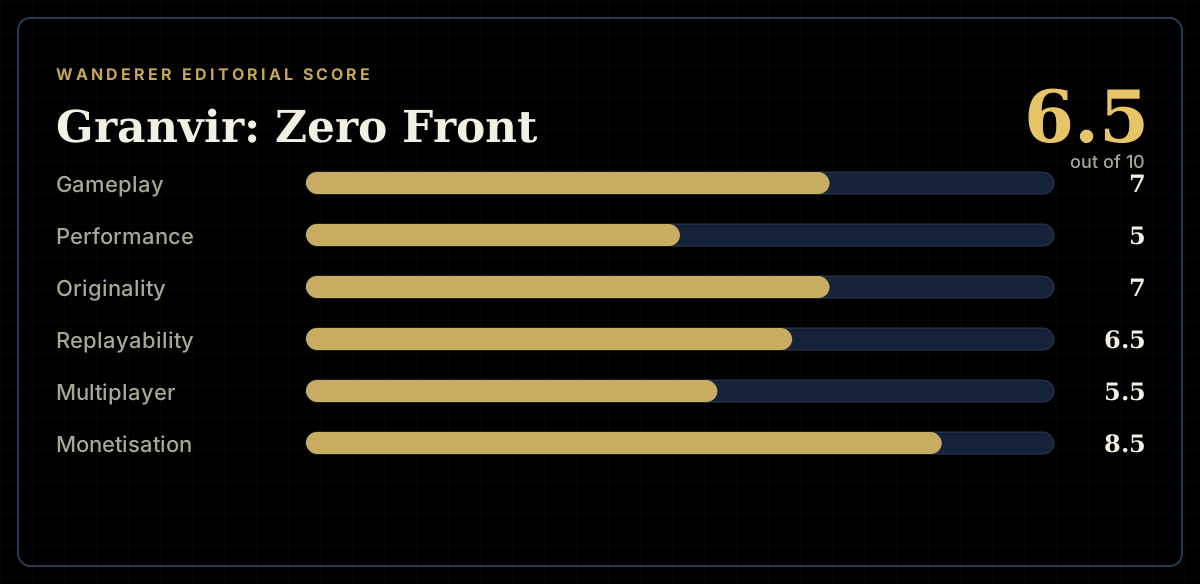
How the review scores each part of the gameWanderer Editorial -
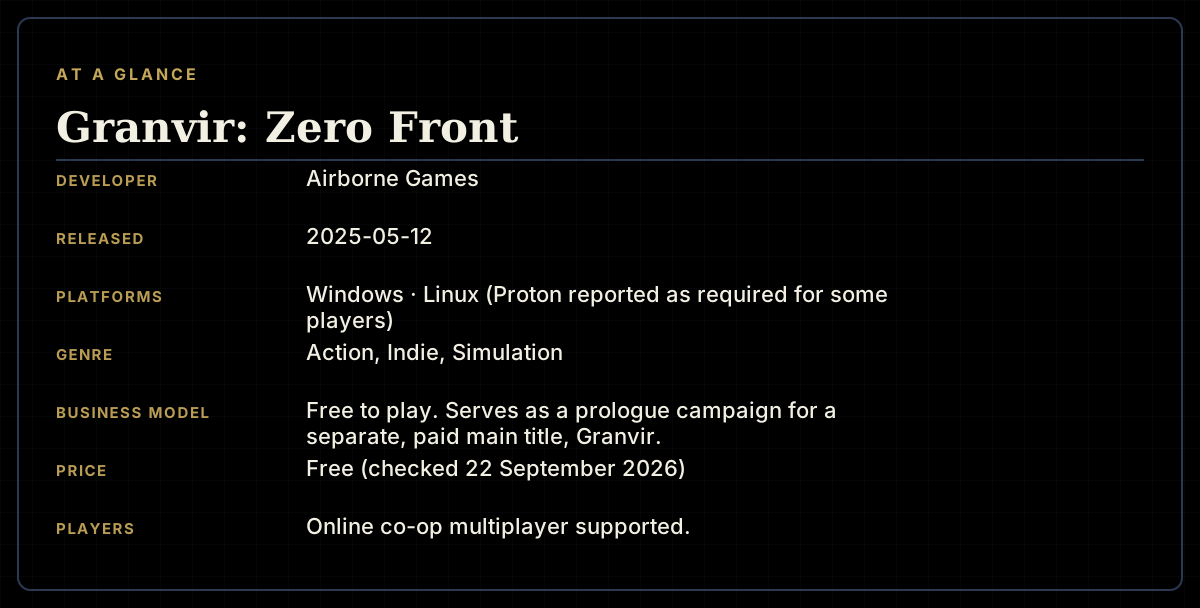
Key facts at a glanceWanderer Editorial -
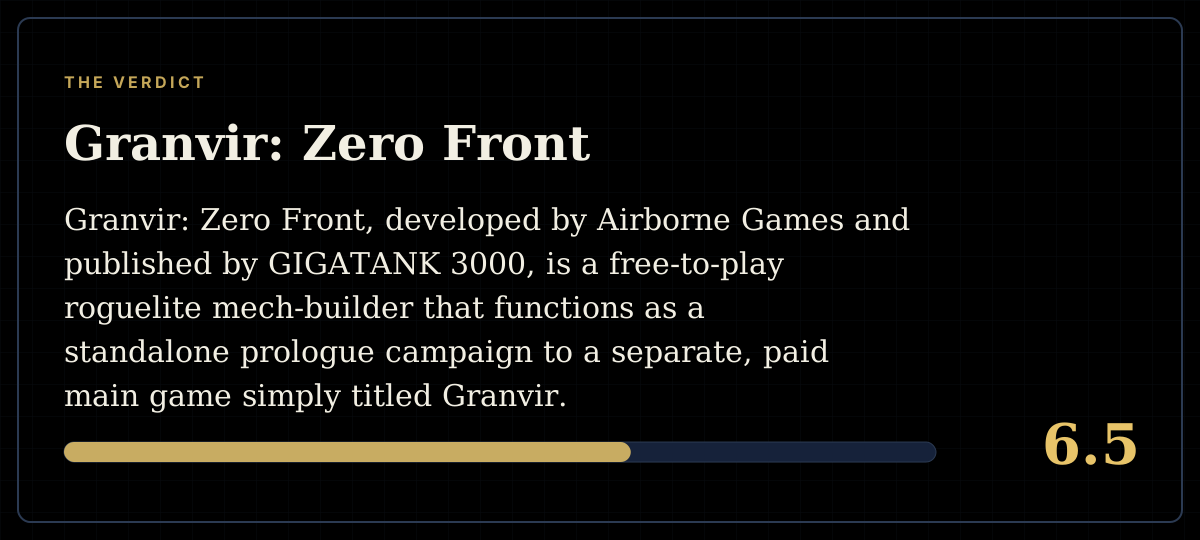
The short versionWanderer Editorial