Game review
Forgotten Blood
5 / 10
- Developer
- Maruko
- Publisher
- Maruko
- Released
- 29 June 2026
- Platforms
- Windows
- Genre
- Action, Adventure, Indie, RPG
- Monetisation
- paid
- Players
- false
The short version
Biggest strengths
- A genuinely convincing recreation of King's Field's bleak atmosphere, slow deliberate movement, and eerie sense of exploration, praised repeatedly by reviewers who grew up with the source material
- An intriguing, lore-heavy story with multiple endings, engaging enough that several reviewers reported wanting to replay it despite the game's rough edges
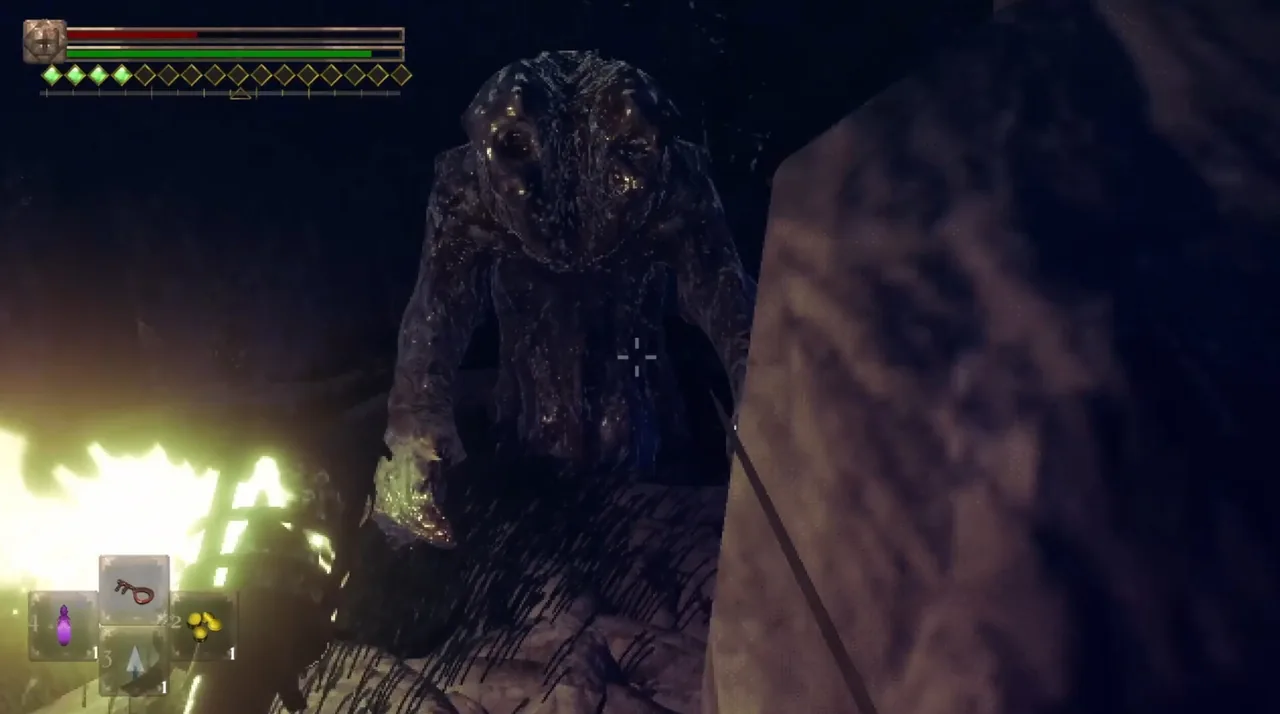
- Creative, unsettling creature and environment design that multiple reviewers singled out even in otherwise negative reviews
Biggest weaknesses
- A near-universally despised inventory system, corroborated across nearly every review regardless of score: items must be picked up by looking at a precise angle, dragged manually into free slots, and frequently fail to stack or vanish outright
- Combat repeatedly described as inconsistent and exploitable, with wildly short and misaligned hitboxes, an attack that can be spammed to trivialize early enemies, and animations that visibly whiff or clip through targets
- Multiple independent reports of progression-blocking bugs: unopenable chests, unresponsive switches, invisible or permanently respawning enemies, and at least one confirmed soft lock requiring a manual return to a checkpoint
Who it's for: Diehard King's Field and early Souls fans who can tolerate deliberate jank and near-total lack of direction, not recommended for anyone wanting a polished, clearly signposted, or bug-free experience
Our recommendation: mixed
5 / 10
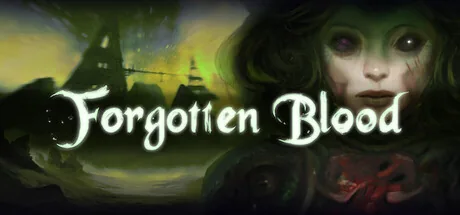
Forgotten Blood released in full on Steam on June 29, 2026, a solo-developed first-person action RPG that wears its King's Field inspiration openly, right down to the slow movement, bleak dark-fantasy environments, and deliberately obtuse design. Its 25-review English pool sits at Mixed (16 up, 9 down, 64%), and the reviews split cleanly between players who found a genuinely atmospheric, lore-rich homage worth pushing through, and players who found a barely functional mess that soured them within their first twenty minutes.
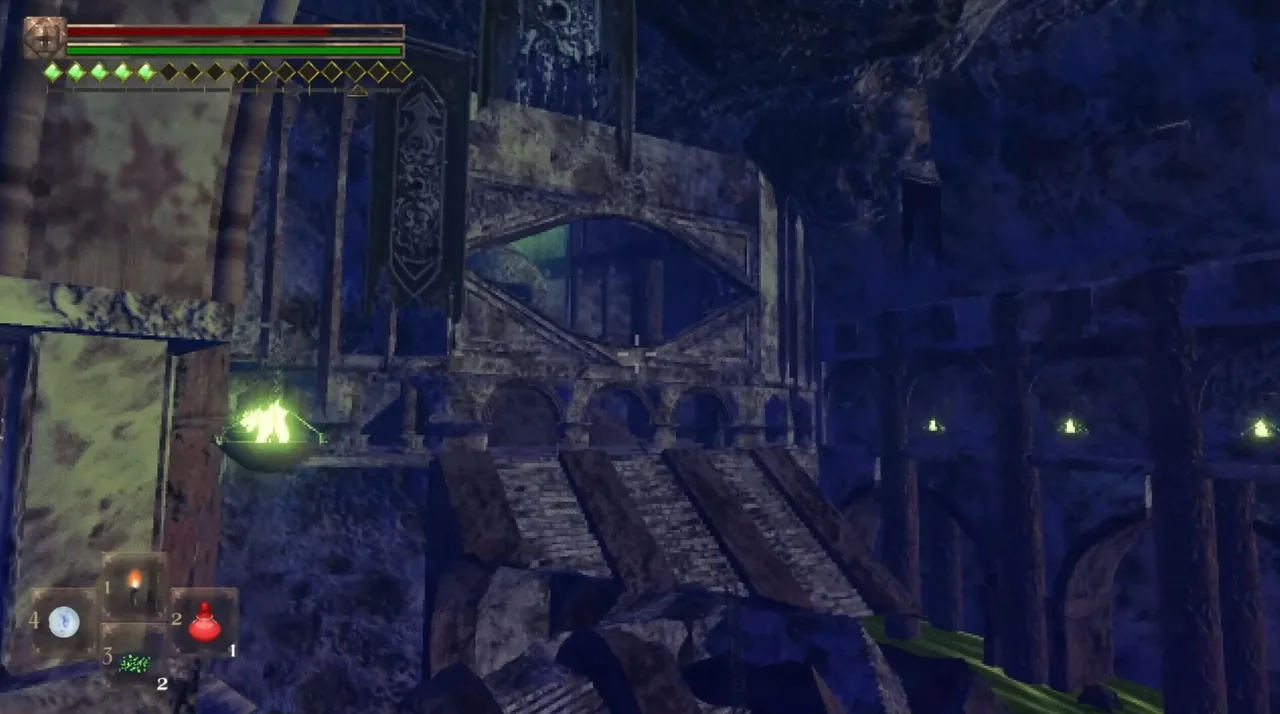
Atmosphere and world design draw the pool's most consistent praise, crossing the positive-negative divide more than almost any other topic. One reviewer, evidently a King's Field veteran, called it "one of the games that best captures the atmosphere, vibes, and overall tone of the classic King's Field games," describing the setting of Gravenstone as giving "a sense of mystery and wonder that I hadn't felt in a long time." Even a largely critical reviewer who ultimately couldn't recommend the game conceded "cool atmosphere" as the review's sole listed pro, and another negative reviewer opened by admitting they'd been excited for weeks because "the art style looks absolutely gorgeous in the trailer and screenshots, and it looks great in game too." That's a rare thing: a game whose critics and fans largely agree on what it gets right, even while diverging sharply on whether that's enough.
The inventory system is where that agreement breaks down entirely, into what is easily the pool's single most corroborated complaint. One detailed negative review walked through the process step by step: items appear as floating orbs that must be looked at from a precise angle, then manually navigated to and dragged into inventory slots that "don't align properly," sometimes leaving "a row of non-aligned items that are in fact the same item." A separate reviewer described nearly the same ordeal independently, calling it "dogwater inventory management, like truly abysmal," while a third, more sympathetic reviewer who ultimately recommended the game still listed "the extremely clunky inventory and item pickup system" as its clearest downside. Multiple reviewers, including some who otherwise liked the game a great deal, separately reported items vanishing outright after being picked up or failing to stack for no discernible reason.
Combat draws similarly corroborated criticism, though with a more technical bent. One reviewer described discovering that the starting weapon "could be swung as fast as you can click the mouse," trivializing early encounters, before finding that its effective range was "very short" and consistently misaligned with where they were actually aiming. A second reviewer independently reported enemies that "glided through me with no animation and dealt damage," instantly re-damaging them on respawn. A third called the hit feedback inconsistent enough that fights against skeletons became "a war of attrition where I would run up to things, hammer the attack and hope something contacted before I took damage." Three reviewers converging independently on inconsistent hitboxes and unreliable attack feedback, rather than simply disliking the combat's difficulty, points at a real technical problem rather than a matter of taste.
Progression-blocking bugs form a third, more alarming cluster of complaints. One reviewer described being stuck at roughly 20 hours in, unable to locate an item required by the game's own late-game objective, with "no guides or even a discord to look to for help," and reported enemies that "remain as invisible objects" after death. Another reported a specific soft lock after lighting a candle failed to trigger progression, requiring a manual return to an earlier checkpoint via the escape menu rather than any in-world fix. A third reviewer, playing on a controller, described unopenable chests found with no indication of what was needed to open them, alongside switches and other interactive objects that simply didn't respond. These aren't vague impressions; each is a specific, reproducible-sounding failure independently reported by a different player, which is a meaningfully different category of problem than ordinary indie jank.
Not every reviewer treated the jank as disqualifying, and it's worth taking that camp seriously rather than dismissing it. One reviewer argued the negative reviews were largely a case of players being "blindsided" by exactly the kind of game the store page advertises, and pointed to a free demo as proof that "no need to get a game with an available sample and give it a bad review after walking around the opening room." Another noted that "over 56% of players did not make it out of the tutorial area," framing that statistic less as evidence of broken design and more as evidence that the game is doing exactly what deliberately punishing demakes are supposed to do: filter out players who don't want that specific experience. Several reviewers who finished the story, including one who reported multiple endings across repeated playthroughs, described the clunkiness as a real but survivable cost of admission for a genre they already loved.
Taken together, Forgotten Blood is a game of real, specific strengths let down by problems that go well beyond stylistic jank, an inventory system disliked by nearly its entire review pool, combat with corroborated hit-detection issues, and a scattering of progression-blocking bugs serious enough to strand committed players for hours. Its atmosphere, lore, and King's Field devotion are genuine and clearly resonate with the audience it's built for, but this is a title to approach only with the demo tried first and patience for a solo developer still actively working through a long list of real problems.
Pros and cons
Pros
- A genuinely convincing recreation of King's Field's bleak atmosphere, slow deliberate movement, and eerie sense of exploration, praised repeatedly by reviewers who grew up with the source material
- An intriguing, lore-heavy story with multiple endings, engaging enough that several reviewers reported wanting to replay it despite the game's rough edges
- Creative, unsettling creature and environment design that multiple reviewers singled out even in otherwise negative reviews
- A remarkably large, ambitious solo-developer effort for the price, with a visibly active developer pushing frequent post-launch fixes
Cons
- A near-universally despised inventory system, corroborated across nearly every review regardless of score: items must be picked up by looking at a precise angle, dragged manually into free slots, and frequently fail to stack or vanish outright
- Combat repeatedly described as inconsistent and exploitable, with wildly short and misaligned hitboxes, an attack that can be spammed to trivialize early enemies, and animations that visibly whiff or clip through targets
- Multiple independent reports of progression-blocking bugs: unopenable chests, unresponsive switches, invisible or permanently respawning enemies, and at least one confirmed soft lock requiring a manual return to a checkpoint
- A near-total lack of direction or map clarity that several reviewers, even ones recommending the game, described as leaving them permanently lost or stuck without any community guides to fall back on
- Reported technical issues including an unusable widescreen display, an options menu with toggles that visibly do nothing, and severe performance drops in outdoor areas despite low-poly, PS2-era visuals
Screenshots
-
Forgotten BloodImage: Maruko via Steam -
Forgotten BloodImage: Maruko via Steam -
Forgotten BloodImage: Maruko via Steam