Game review
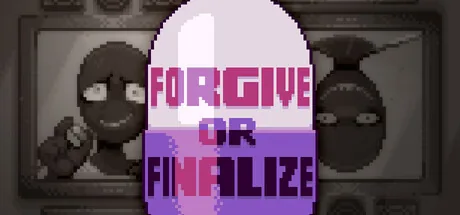
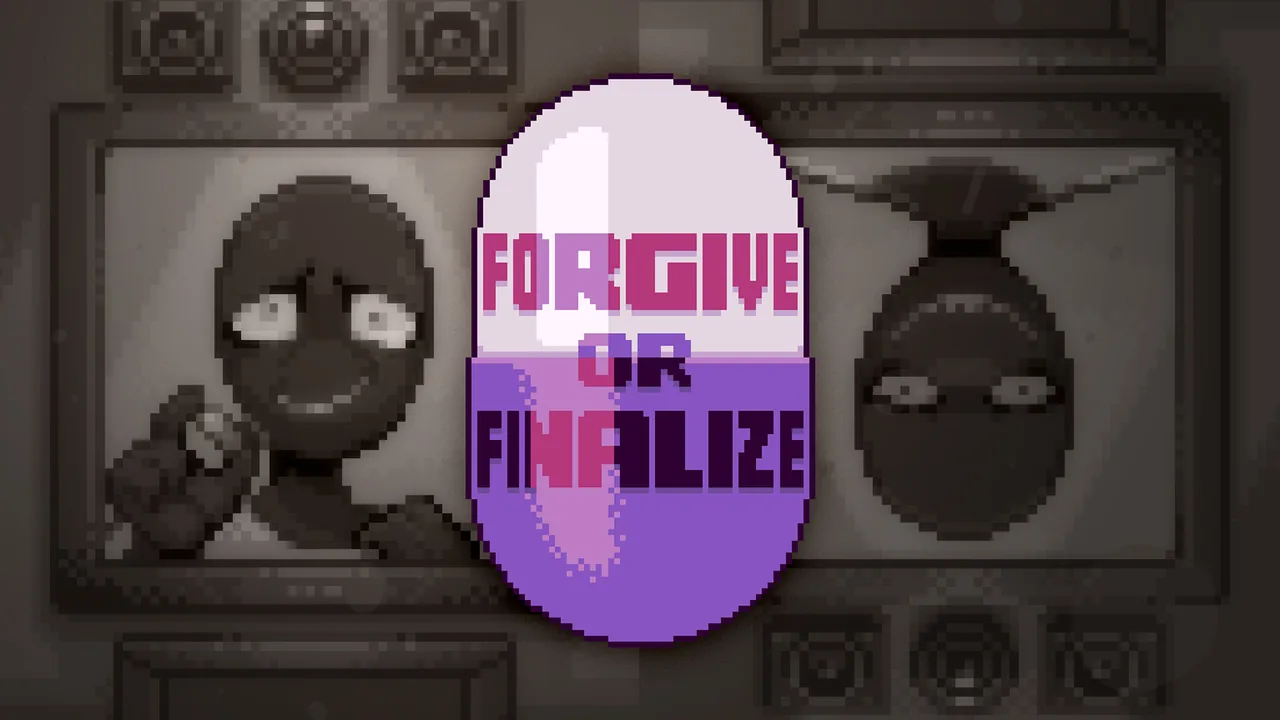
Forgive or Finalize
6.4 / 10
- Developer
- 72studio
- Publisher
- 72studio
- Released
- 13 April 2026
- Platforms
- [Windows, Mac]
- Genre
- Adventure
- Monetisation
- Free
- Players
- false
The short version
Forgive or Finalize is a free, deliberately choice-less psychological horror visual novel that lands as a tense, well-acted miniature for players who read its upfront warning and take it on its own terms, and frustrates the sizeable share of the sample who didn't.
Biggest strengths
- A tense, well-acted psychological horror story about guilt and obsession that a large share of the sample describes as genuinely affecting, some to the point of tears
- Strong character art and animation work for a free debut title, repeatedly singled out as punching above the game's zero-dollar price tag
- Its lack of player agency is explicitly disclosed on the store page before purchase, and reviewers who went in with that expectation set overwhelmingly report a positive experience
Biggest weaknesses
- The choice-less design frustrates a large share of negative reviewers regardless of the upfront warning, and several specifically call the illusion of branching paths manipulative rather than just a stylistic choice
- Dialogue that repeats and effectively rewinds the scene when players pick the 'wrong' response is a real, specific point of friction even among some positive reviews
- Several reviewers, including some playing in English, note rough, occasionally confusing translation and word choice suggesting the game wasn't originally written in the language they played it in
Who it's for: Fans of short, atmosphere-first visual novels who are comfortable with zero player agency — an experience to witness rather than a game to steer — and won't feel shortchanged by a runtime under an hour.
Our recommendation: Try it on sale
6.4 / 10
No strategy. Just witness the end.
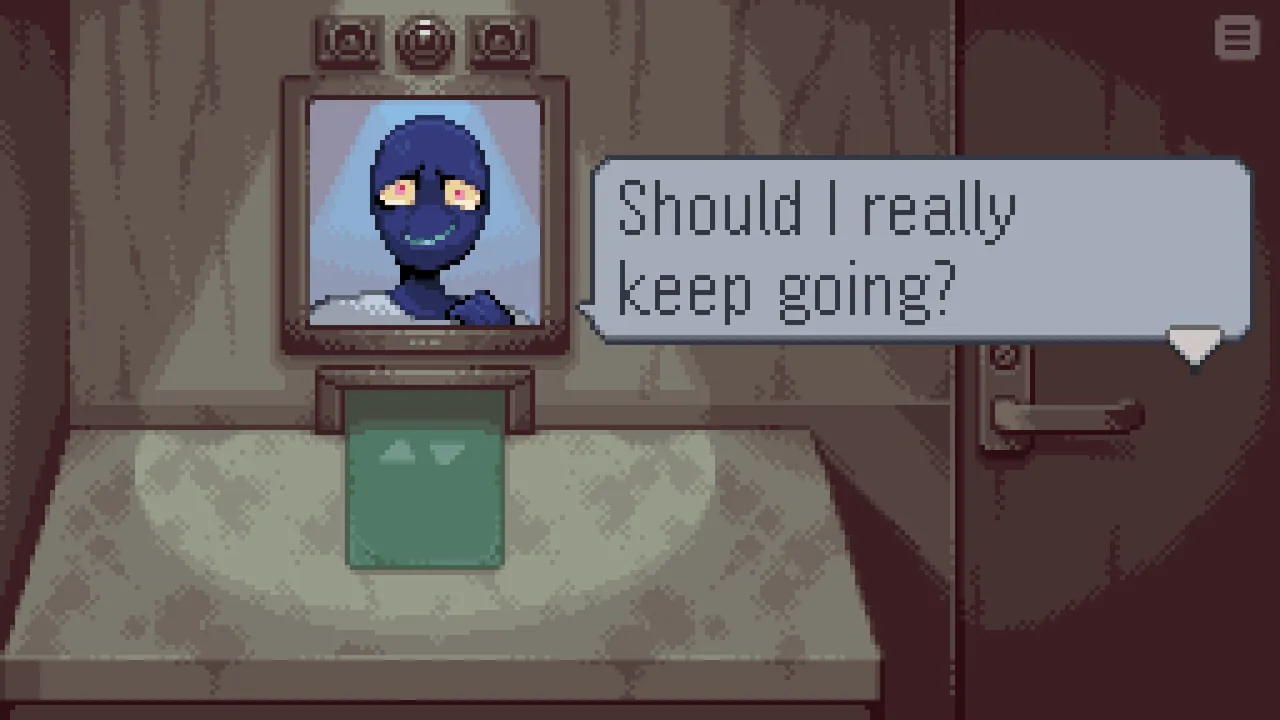
Forgive or Finalize is a free, short-form psychological horror visual novel from solo-ish developer 72studio, released April 13, 2026 on Windows and Mac. You play Jamie, confined to a room and confronting a mysterious figure named Finn through a monitor, with the game's own description warning upfront that there are "no grand reversals, intricate puzzles, or strategic elements" and "almost no freedom of choice." It's an unusually honest pitch, and it's landed to a genuinely Mixed reception (258 reviews, roughly 70% positive — just below the threshold for a better rating band) from a sample spanning English, Korean, Simplified and Traditional Chinese, Spanish, Russian, and Brazilian reviewers, many of whom are explicitly arguing with each other about whether the negative reviews are fair.
An experience, not a choice-based game
The most distinctive thing about Forgive or Finalize is how directly it disclaims the genre conventions players might expect from it. Several reviewers explicitly credit the store page's "Before You Play" warning for setting accurate expectations, and a striking number of positive reviews are written specifically to counter negative ones, pointing out that the lack of meaningful choice was never hidden. For players who take that framing at face value, the result is consistently described as a tense, compact character study — reviewers describe crying, feeling genuinely unsettled, and connecting with Finn and Jamie despite (or because of) the tight, controlled runtime.
The choice controversy runs deeper than a misunderstanding
Even so, dismissing every negative review as a failure to read the store page oversimplifies the sample. A real subset of critical reviews accepts the premise but still objects to specific design choices within it: dialogue that repeats and effectively rewinds a scene when the "wrong" response is picked, described by more than one reviewer as tedious rather than tense, and a broader complaint that presenting dialogue options that don't actually branch anything is a form of false advertising about interactivity, regardless of the disclaimer. This is a genuinely split difference in taste rather than a simple case of unread warnings — some players find the illusion of choice thematically appropriate to a story about powerlessness, others find it a frustrating mechanical tease.
A twisted, ambiguous story that rewards patience
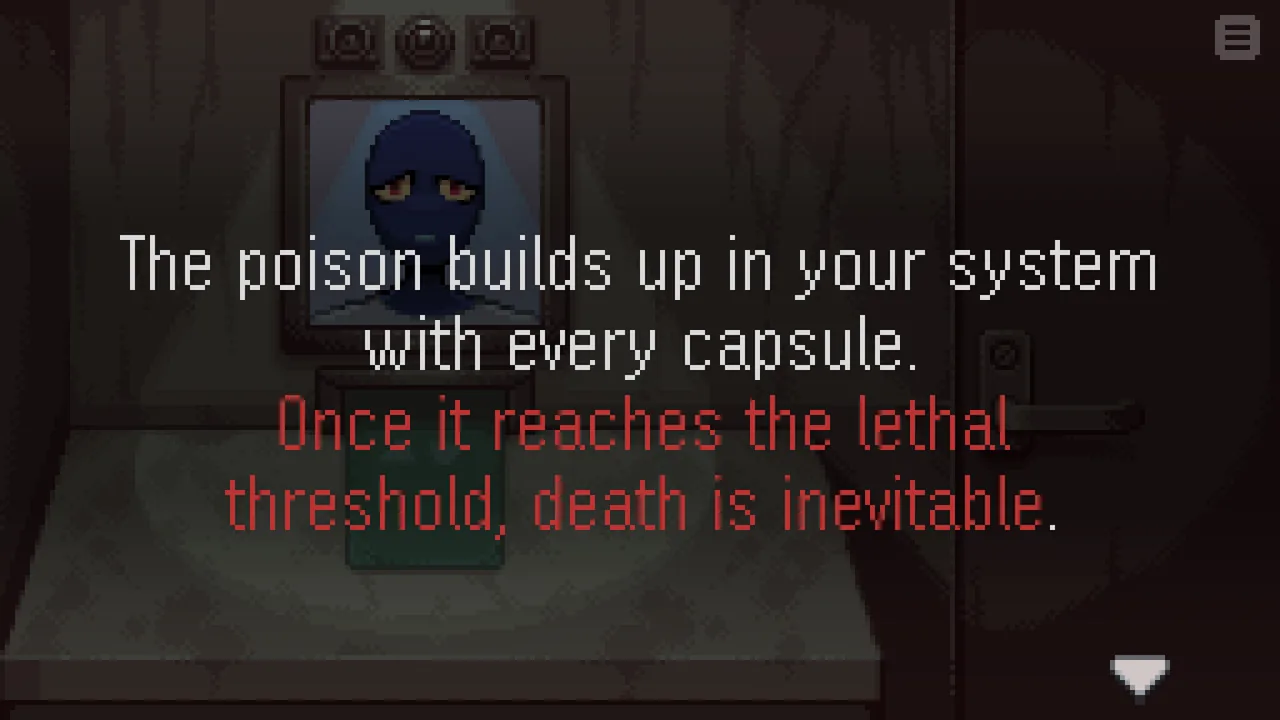
Underneath the meta-conversation about choice, the story itself — involving a pill-based ritual, a fatal debt, and a warped, obsessive kind of love between its two characters — draws real praise for its tension and its willingness to stay ambiguous rather than over-explain itself. Multiple reviewers across Chinese, Korean, and English describe piecing the full picture together only after finishing both endings, and several specifically credit the ambiguity with giving the short runtime more staying power than its length would suggest. The flip side shows up just as clearly: several reviewers, including some reading it in English, describe the writing and translation as rough or confusing enough to actively get in the way of the story rather than adding to its tone, with noticeable phrasing issues suggesting the localization wasn't given as much care as the writing and art.
Strong art for a free debut
Presentation draws some of the most consistent praise in the sample regardless of how reviewers feel about the story's structure. Character art and expression work are repeatedly singled out as well above what a free, apparently debut project usually delivers, and the animation during key emotional beats gets specific credit for landing moments the dialogue alone might not have carried. A skip function for repeat playthroughs is a small but appreciated quality-of-life touch that several reviewers explicitly call out when discussing how quickly they revisited both endings.
Free, but still worth weighing
Because Forgive or Finalize costs nothing, a meaningful share of the sample frames their recommendation around value rather than pure quality — "it's free, so why not" is a recurring sentiment even among reviewers with real reservations about the writing or the choice mechanic. That's a fair framing for most players, but it's worth noting a few reviewers explicitly argue the opposite: that a weak narrative payoff isn't excused just because no money changed hands, and that the time investment, however short, is the real cost being weighed. A couple of reviewers go further and treat the free price as a preview of the developer's talent rather than a finished statement, saying they'd happily pay for a longer, more fleshed-out treatment of the same premise and characters.
Who should confront Finn
Forgive or Finalize is easiest to recommend to fans of short, atmosphere-first visual novels who are genuinely comfortable ceding all control to the story — reviewers who went in expecting exactly that describe a tense, well-executed miniature experience. It's a much harder sell for anyone who wants dialogue choices to matter mechanically, or who finds ambiguous, slow-burn writing more confusing than intriguing; both of those reactions show up repeatedly and honestly in the sample's negative reviews.
The verdict
Forgive or Finalize succeeds at exactly what it says it's trying to do — offer a tense, character-driven psychological horror experience to witness rather than play — and does it with better art and voice than its price tag suggests. Rough localization, a repetition-heavy dialogue system, and a genre premise that alienates players expecting real agency keep its reception honestly Mixed rather than unfairly so, but for the audience willing to meet it on its own terms, the free asking price makes it an easy recommendation to at least try.
Pros and cons
Pros
- A tense, well-acted psychological horror story about guilt and obsession that a large share of the sample describes as genuinely affecting, some to the point of tears
- Strong character art and animation work for a free debut title, repeatedly singled out as punching above the game's zero-dollar price tag
- Its lack of player agency is explicitly disclosed on the store page before purchase, and reviewers who went in with that expectation set overwhelmingly report a positive experience
- A skip function and a runtime under an hour make it easy to revisit both endings without much friction
Cons
- The choice-less design frustrates a large share of negative reviewers regardless of the upfront warning, and several specifically call the illusion of branching paths manipulative rather than just a stylistic choice
- Dialogue that repeats and effectively rewinds the scene when players pick the 'wrong' response is a real, specific point of friction even among some positive reviews
- Several reviewers, including some playing in English, note rough, occasionally confusing translation and word choice suggesting the game wasn't originally written in the language they played it in
- The story rewards close attention and patience with ambiguity — reviewers who bounce off the pacing early tend to come away confused rather than intrigued
Screenshots
-
Forgive or FinalizeImage: 72studio via Steam -
Forgive or FinalizeImage: 72studio via Steam -
Forgive or FinalizeImage: 72studio via Steam -
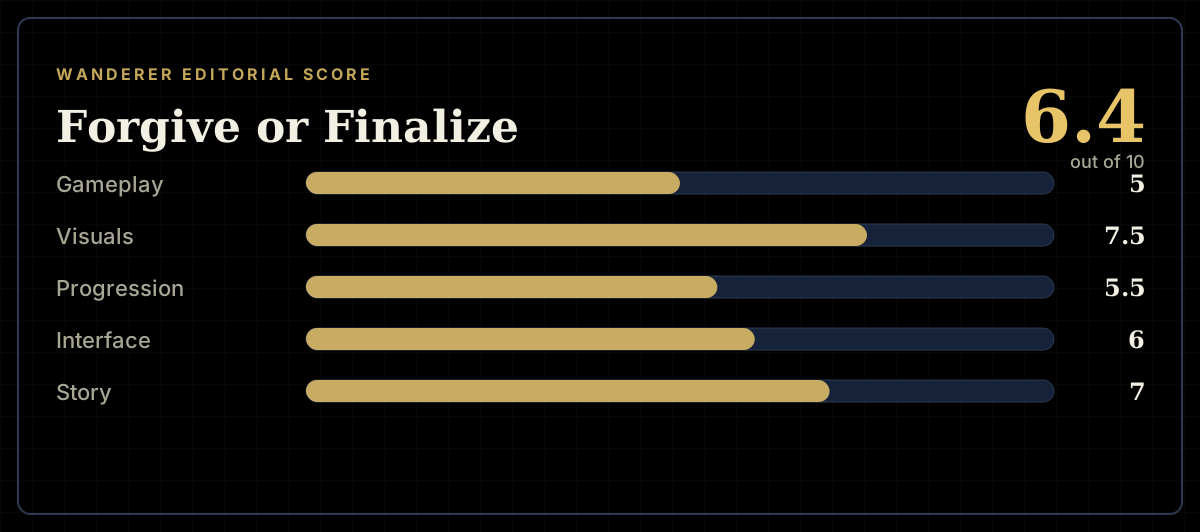
How the review scores each part of the gameWanderer Editorial -
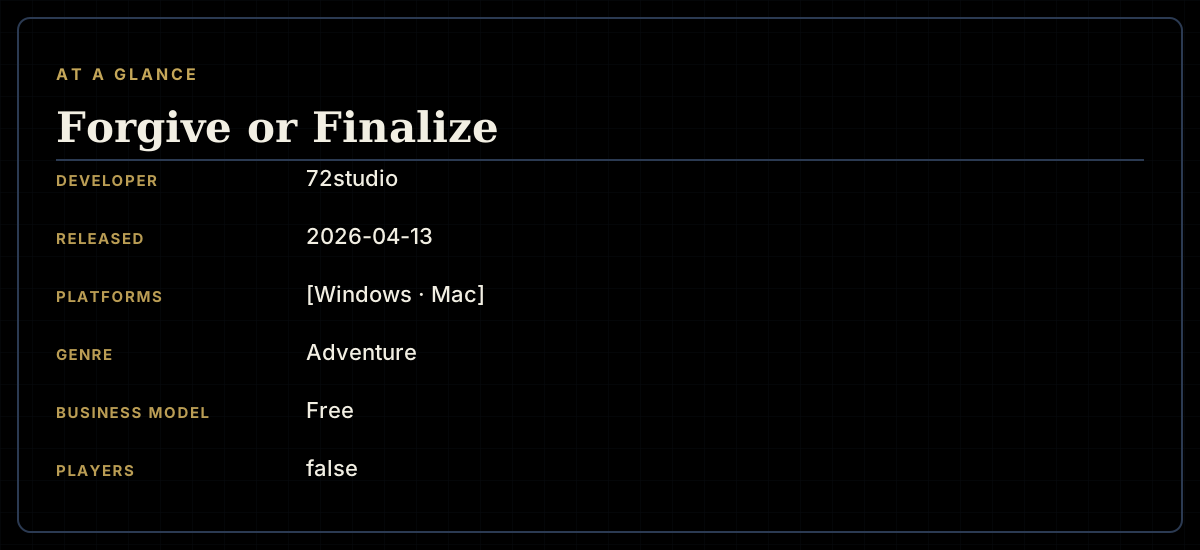
Key facts at a glanceWanderer Editorial -
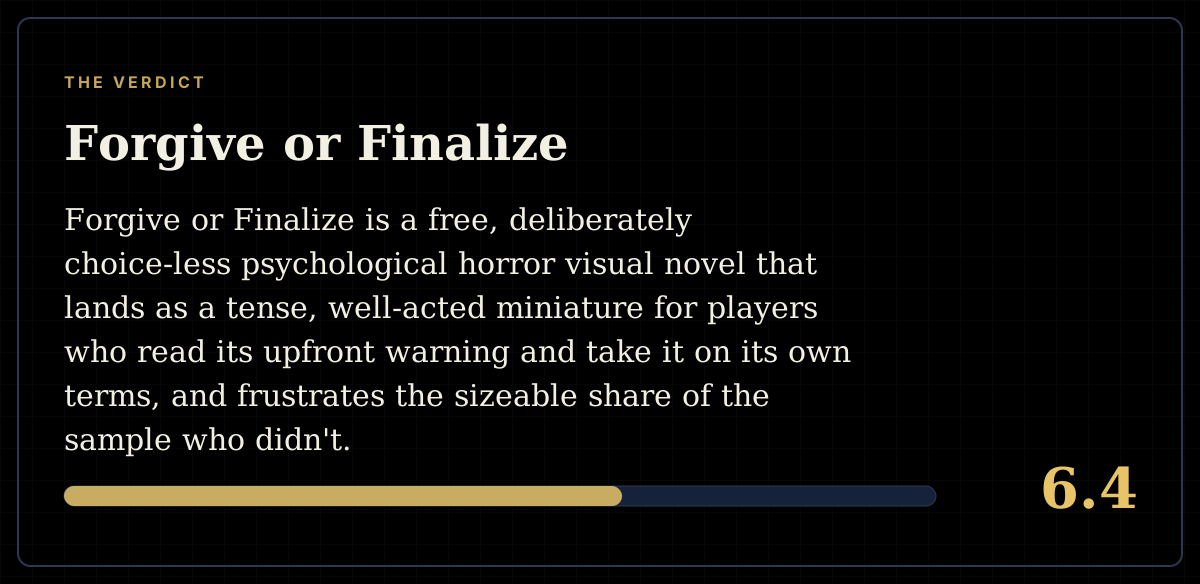
The short versionWanderer Editorial