Game review
Fingerdance
6.5 / 10
- Developer
- zniq
- Publisher
- PsychoFlux Entertainment
- Released
- 20 June 2025
- Platforms
- Windows
- Genre
- Action, Indie, Simulation
- Monetisation
- paid
- Players
- false
The short version
Biggest strengths
- A genuinely novel, rarely-attempted core idea, training independent finger movement rather than simple reaction timing, that reviewers across very different skill levels found satisfying and even oddly meditative once they adjusted
- A well-tuned difficulty curve that multiple reviewers specifically praised as 'well balanced throughout the levels,' escalating from simple holds to demanding transitions without feeling arbitrary
- Ultrawide monitor support and a satisfying, well-received menu, small details reviewers noticed and appreciated in an otherwise minimalist package
Biggest weaknesses
- Extremely short by multiple independent accounts: reviewers reported A-ranking every stage in under an hour, and full completion including S-ranks in roughly three hours, with several explicitly wishing there was more content for the price
- No accessibility or 'chill' difficulty option: the sole critical reviewer noted that a single hesitation, tremor, or accidental double-press restarts the entire level, with no easier mode for players who want to enjoy the concept without the exacting precision required for high ranks
- A single core mechanic with no real variation across its runtime; nothing here for players who bounce off the central finger-independence gimmick in the first few stages
Who it's for: Rhythm-game and dexterity enthusiasts, keyboard-instrument players, and anyone curious how well their fingers move independently of each other, who won't mind that the whole thing is over in an afternoon
Our recommendation: recommended
6.5 / 10
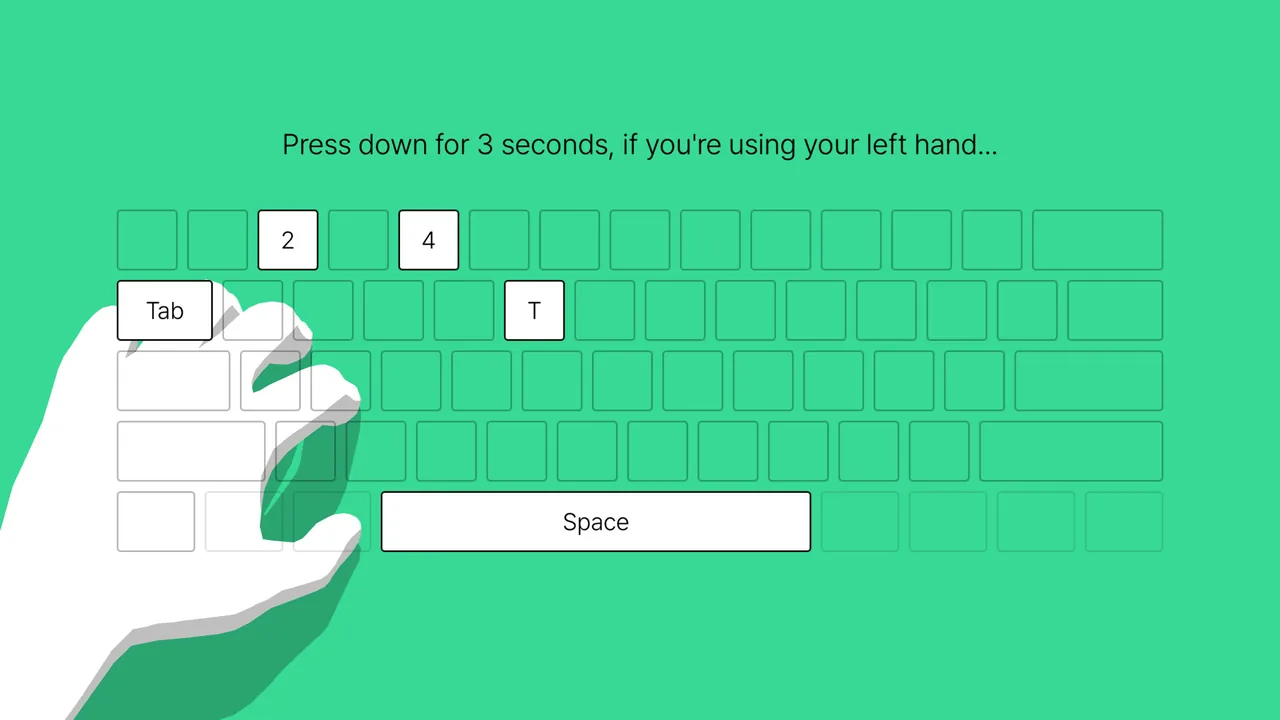
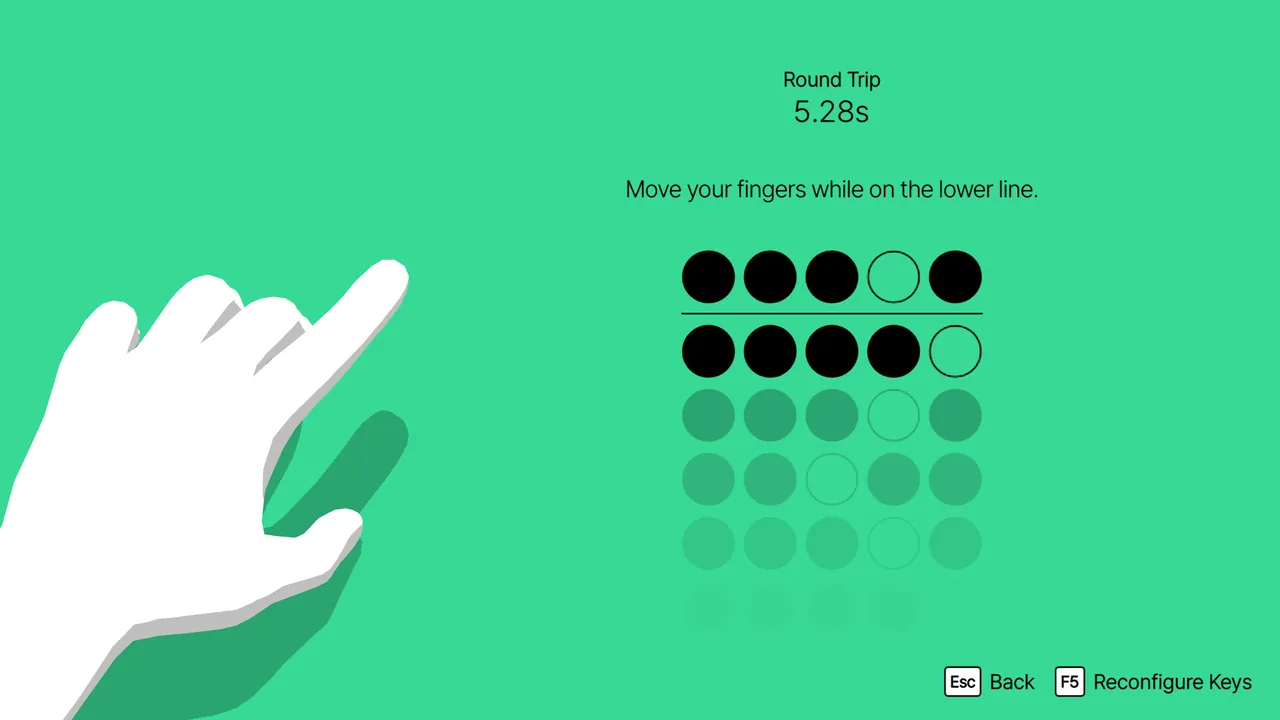
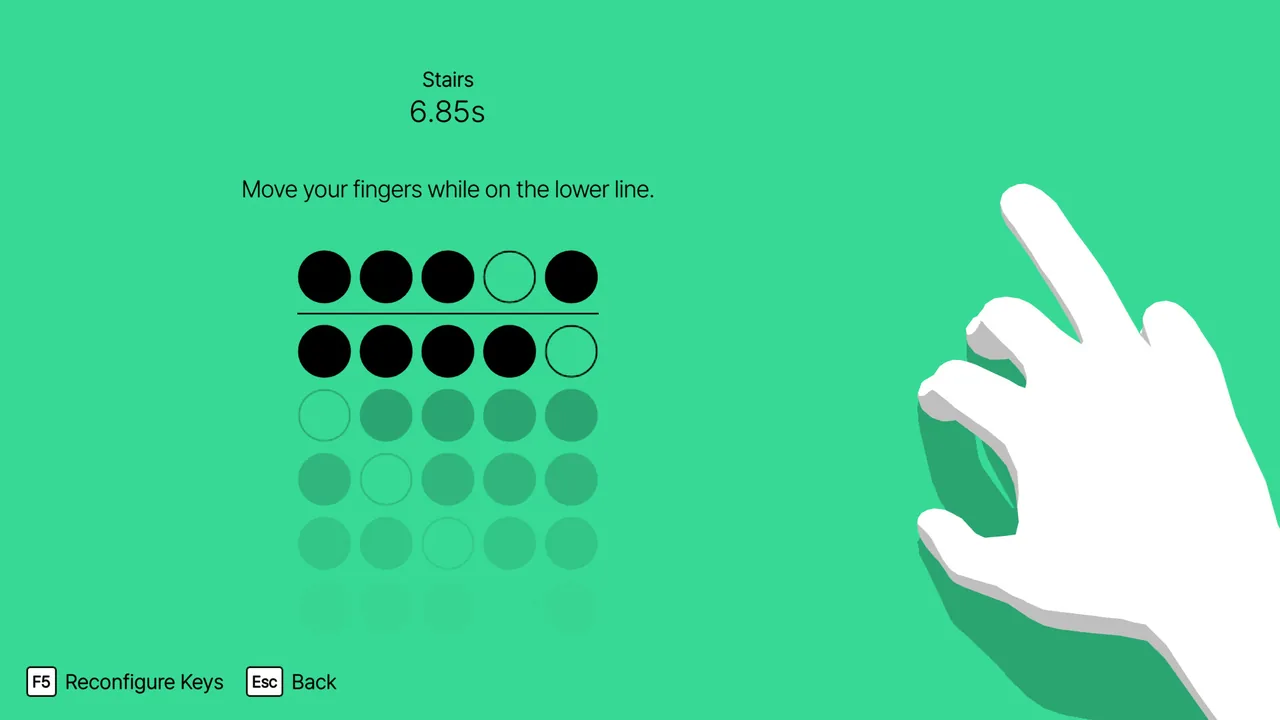
Fingerdance launched on Steam on June 20, 2025, a $2.99 solo-developed experiment from zniq, published by PsychoFlux Entertainment, built around a single, almost embarrassingly simple idea: place five fingers on the keyboard and learn to hold, release, and transition between them independently, without your fingers dragging each other along for the ride. It carries a near-unanimous Positive rating, 40 to 1 across 41 English reviews, an unusually one-sided margin even by the standards of small niche titles, and reading through the pool makes clear why: reviewers of wildly different skill levels all describe the same experience of discovering, often with genuine surprise, how badly their fingers betray them.
The premise reads as almost too minimal to sustain a full game, but reviewers consistently found the execution sharper than expected. One detailed reviewer wrote that "it's insane how this simple premise ends up being a very difficult game," breaking down the two separate failure modes at play: physical ones, where "a finger might tremble, accidentally double-pressing or briefly releasing a key," and coordination-based ones, where the brain simply struggles to send five independent signals at once. Another reviewer described the difficulty as "well balanced throughout the levels," escalating gradually from simple holds toward demanding, rapid transitions, while a third summed up the emotional arc many reviewers reported: initial frustration curdling into self-directed amusement at "my body betraying my will." The joke title several reviewers converged on independently, calling it a "Find Out How Awful Your Coordination Is Simulator," captures the tone of the whole pool: exasperated, but fond.
That fondness extends to real, specific claims of transferable benefit. Multiple reviewers, including one purchasing it explicitly as rhythm-game practice, reported that the training carried over into other games and even instrument practice, with one writing it helped them "think about changing key binds in other games to be more comfortable playing them instead of locking myself to the usual WASD," and a Japanese-language reviewer describing it as useful preparation for rhythm-game precision despite the different skill it trains directly. A handful of smaller touches, ultrawide monitor support and a genuinely well-received menu, came up unprompted in an otherwise sparse review pool, suggesting the small polish details didn't go unnoticed even in a $2.99 release.
Set against that praise, the most consistently repeated caveat in the pool is simply how little of it there is. One reviewer reported they'd "A-ranked everything in less than an hour" before revising their review to flag the short length; another, chasing full completion with every S-rank, put total playtime at roughly three hours and explicitly "wish[ed] there was more." A third reviewer, who had already refunded the game after fully completing it, called it something that "feels more like a free game rather than something that I would pay for," while still crediting the underlying concept and effort. None of these reviewers were unhappy with what they played; the complaint is consistently about quantity, not quality, but it's specific and repeated enough to weigh into any honest assessment of value at the asking price.
The sole negative review in the entire pool raises a different, more structural concern: the complete absence of an easier or "chill" mode. That reviewer wrote that "once you've done one figure, if you move any finger after that, you have a very limited time to do the next figure," and that "one hesitation, one finger that 'trembles' slightly... [and it's] game over, redo the entire level," arguing this makes the learning curve unnecessarily punishing for anyone who wants to enjoy the core idea without chasing top ranks. It's a single dissenting voice against thirty-nine others, several of whom clearly relished exactly that unforgiving precision, but it points at a real design choice rather than a bug: there's no way to soften the experience for players who find the strict fail-state more frustrating than fun. Combined with Windows-only support and a single mechanic with no real structural variation across its short runtime, Fingerdance is a game built for a specific kind of player, one who wants a tight, honest little skill challenge, rather than a broad audience.
A couple of reviewers went further and sketched out what they'd want from an expanded version. One, who had already refunded after 100%-ing the game, specifically wished for "online leaderboards or something for hand speed," framing it as something that "would be interesting in a future 1.0.0 update," while another, invoking the rhythm-game community's shorthand for brutal, high-speed challenge charts, joked they "can't wait for the freedom dive update." Neither complaint reads as a serious structural flaw so much as evidence of an audience that finished what's here and immediately wanted a reason to keep chasing improvement, whether through competitive ranking or genuinely harder content. Steam Achievements and Steam Cloud support are both present, giving completionists something to chase within the existing stage set, but with no confirmed post-launch content roadmap, players buying in today should expect the current handful of stages to be the whole experience rather than a foundation still being built on.
Fingerdance succeeds almost entirely on the strength of one good idea, well executed: finger independence training that's genuinely novel, well-paced in its difficulty, and capable of producing the kind of "my brain doesn't work" self-deprecating delight that shows up over and over in its review pool. It's just also, by its own players' repeated accounts, over almost as soon as it gets going, with no accessibility valve for anyone who wants the concept without the precision demands. At $2.99, that's an easy recommendation for rhythm-game players, musicians, or anyone curious about their own hand coordination looking for a quick, sharply-made curiosity; a much smaller one for anyone hoping for a game that lasts.
Pros and cons
Pros
- A genuinely novel, rarely-attempted core idea, training independent finger movement rather than simple reaction timing, that reviewers across very different skill levels found satisfying and even oddly meditative once they adjusted
- A well-tuned difficulty curve that multiple reviewers specifically praised as 'well balanced throughout the levels,' escalating from simple holds to demanding transitions without feeling arbitrary
- Ultrawide monitor support and a satisfying, well-received menu, small details reviewers noticed and appreciated in an otherwise minimalist package
- A near-unanimous positive reception (40 of 41 English reviews) with reviewers repeatedly describing real, tangible improvement in finger coordination that carried over into other rhythm games and even instrument practice
Cons
- Extremely short by multiple independent accounts: reviewers reported A-ranking every stage in under an hour, and full completion including S-ranks in roughly three hours, with several explicitly wishing there was more content for the price
- No accessibility or 'chill' difficulty option: the sole critical reviewer noted that a single hesitation, tremor, or accidental double-press restarts the entire level, with no easier mode for players who want to enjoy the concept without the exacting precision required for high ranks
- A single core mechanic with no real variation across its runtime; nothing here for players who bounce off the central finger-independence gimmick in the first few stages
- Windows-only, with no Mac or Linux support, narrowing its audience further given how niche the concept already is
Screenshots
-
FingerdanceImage: PsychoFlux Entertainment via Steam -
FingerdanceImage: PsychoFlux Entertainment via Steam -
FingerdanceImage: PsychoFlux Entertainment via Steam