Game review
Find Your Words
8.4 / 10
- Developer
- Capybara Games
- Publisher
- Capybara Games
- Released
- 8 April 2026
- Platforms
- [Windows]
- Genre
- Adventure
- Monetisation
- Free
- Players
- false
The short version
Find Your Words is a short, free, and quietly moving game about a non-verbal kid finding friendship through symbols rather than speech, told with a sincerity that made nearly every player in its review sample tear up at least a little, even if its runtime and mechanical depth leave you wanting more of it.
Biggest strengths
- A sincere, well-realized portrayal of augmentative and alternative communication (AAC) that reviewers — including several who work with non-verbal kids professionally — describe as genuinely moving rather than performative
- A charming, colorful summer-camp setting with a soundtrack and cast reviewers consistently call adorable and full of heart
- Free, short, and easy — with achievements most reviewers finish in under an hour, making it an easy recommendation regardless of genre preference
Biggest weaknesses
- Very short, and multiple reviewers wish the concept had been built out into a longer or mechanically deeper game rather than a brief vignette
- A handful of reviewers report real bugs, including one describing a repeatable crash when opening the in-game notebook near the end of the story
- The symbol-based communication system, while central to the game's identity, is described by some as a little clunky or fiddly to use in practice
Who it's for: Anyone looking for a brief, gentle, free game about communication and inclusion, and especially families with non-verbal or neurodivergent kids looking for representation done with real care.
Our recommendation: Buy it
8.4 / 10
The first day of camp
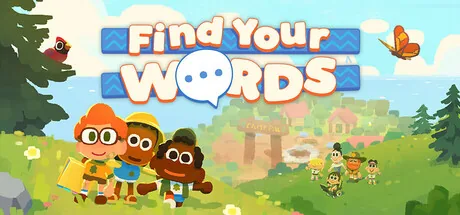
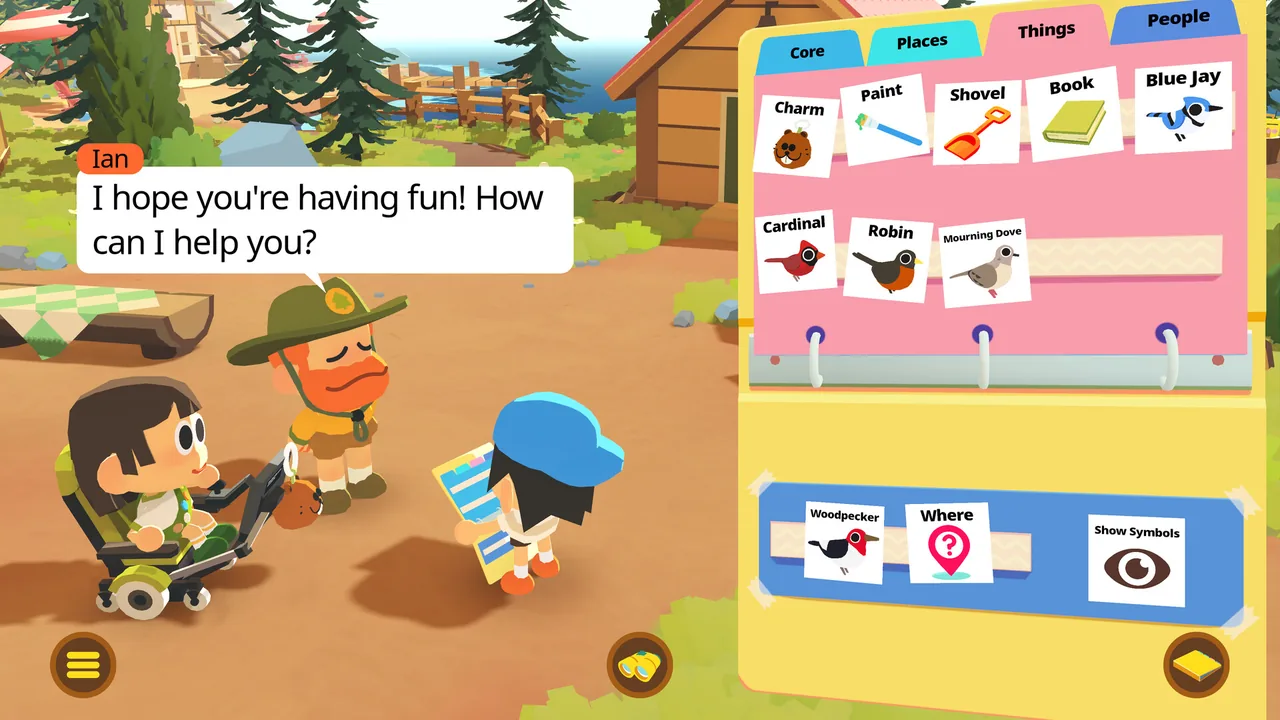
Find Your Words, released free on April 8, 2026 by Capybara Games, puts you in the shoes of a non-verbal kid arriving at Camp Pals for the first time. Instead of dialogue trees or spoken lines, you communicate entirely through a binder of symbols and pictures, gradually unlocking new words by exploring, joining activities, and getting to know a small cast of fellow campers. It's a small, quiet game — most reviewers finish it, achievements included, in under an hour — but it landed to a Very Positive reception (235 reviews, roughly 98% positive) that reads less like typical enthusiasm and more like genuine, repeated gratitude.
A communication system built with real care
The symbol-binder mechanic is the game's entire identity, and the review sample treats it as a rare success. Reviewers describe finding new words through play and conversation, then using them to express feelings, answer questions, and build friendships without ever speaking a line of dialogue themselves. Several reviewers who work with non-verbal or neurodivergent children specifically call out the system as an accurate, respectful reflection of how augmentative and alternative communication actually works, rather than a simplified or exoticized stand-in for it — a distinction that clearly matters to a meaningful slice of the audience this game was built for.
Representation that lands as sincere
What separates Find Your Words from a well-meaning message game is how consistently reviewers describe it as moving rather than didactic. Comments across English, German, Spanish, Portuguese, and Chinese reviews describe the game bringing them to tears, praising it for portraying non-verbal and differently-communicating kids with warmth and normalcy rather than treating their difference as a plot device to be resolved. The game's origin story — built by two fathers drawing on their own children's real experiences — comes up unprompted in reviews repeatedly, and clearly shapes how much good faith players extend to a project this small and unpolished in places.
Cozy, colorful, and easy to love
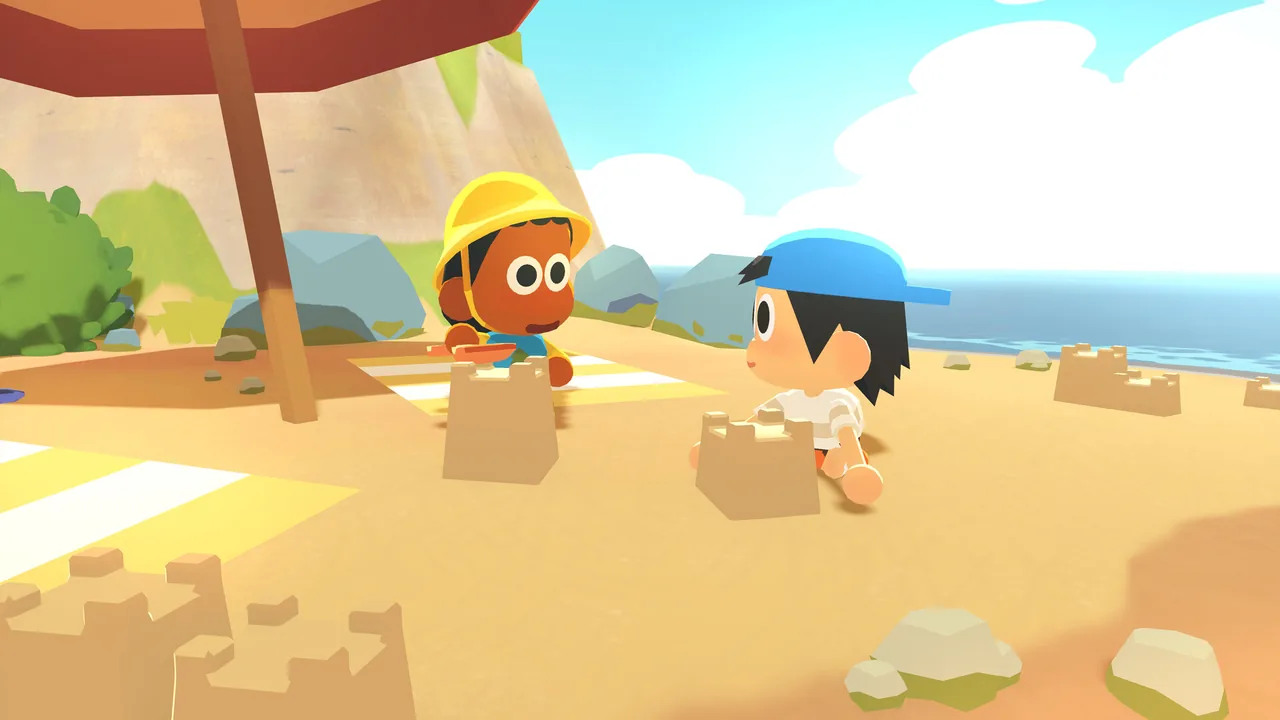
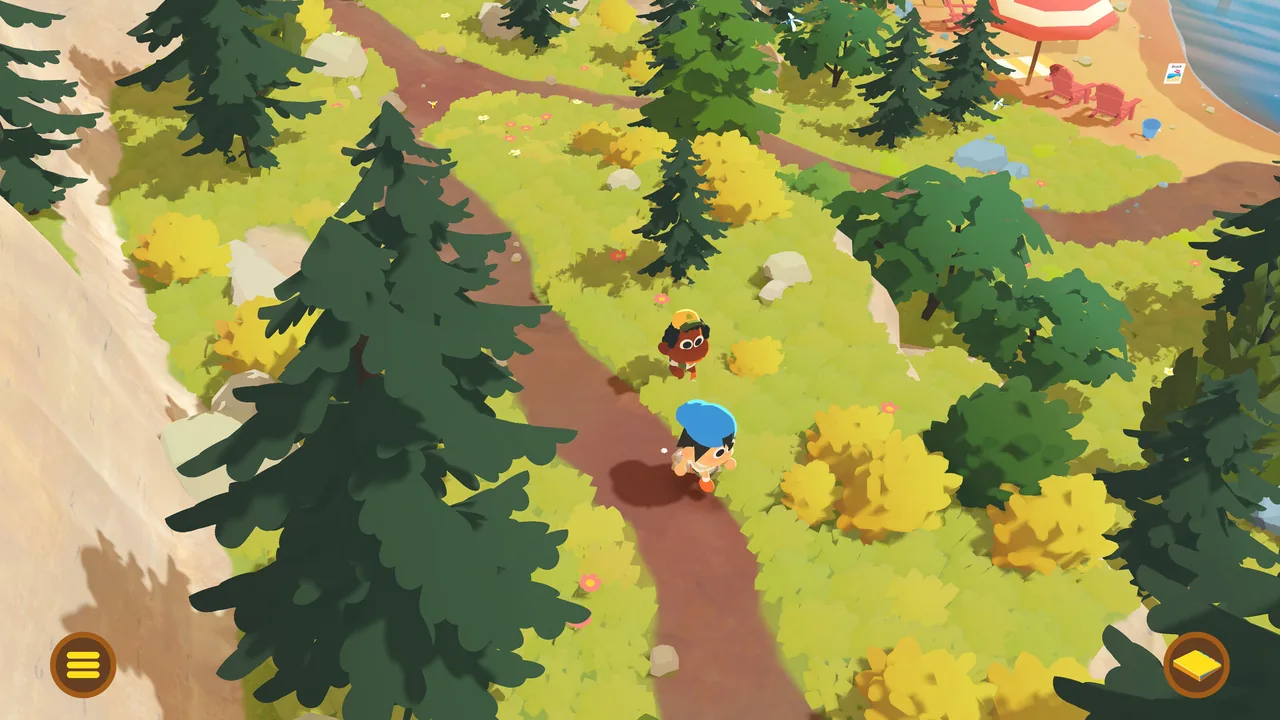
Beyond its central theme, Find Your Words is a gentle, low-stakes hangout game: wandering a sunlit summer camp, joining activities like birdwatching, dancing, and sandcastle-building, and slowly befriending a small, charming cast. Reviewers consistently praise the art style and soundtrack as disproportionately polished for a free release, and the whole experience reads as intentionally undemanding — there's little here to challenge a player mechanically, and that's clearly by design rather than by accident.
Short, and a little rough around the edges
The most common critical note, even among five-star reviews, is that the game is simply very short, with several reviewers explicitly wishing Capybara had built the concept out into something longer or mechanically deeper rather than a single brief vignette. One reviewer goes further, arguing the concept had real potential as a full puzzle game built entirely around the communication system rather than a light collection of side activities, though they're quick to add that the game's price makes it hard to hold that against it too strongly. A smaller handful report real technical issues, including one detailed account of a repeatable crash when opening the in-game notebook near the story's end that persisted even after reinstalling, plus scattered reports of visual glitches in animations. A few reviewers also find the symbol-based interaction itself a little fiddly in practice, and the game's birdwatching activity draws specific frustration for target birds that are hard to spot from most in-game camera angles, with at least one player needing outside help to finish it.
A Capybara Games release that's easy to overlook
Because Find Your Words is free and modest in scope, it's a genuine outlier in Capybara Games' catalogue alongside better-known, more mechanically ambitious titles like Below and Grindstone, and the review sample includes at least one dissenting voice questioning why the studio put its name behind something this small. That reaction is understandable if you're judging the game purely against the studio's back catalogue, but it also somewhat misses the point: this reads less like a commercial release competing for attention in Capybara's usual lineup and more like a personal project the studio chose to support and put a wider spotlight behind, and the review sample's overwhelming warmth suggests most players are happy to meet it on those terms rather than hold it to a AAA-adjacent bar. A few reviewers also note the option to support the project with an optional purchasable DLC pack, framed as a way to give back to the developers without changing anything about the free base experience.
Who should visit Camp Pals
Find Your Words is easy to recommend broadly given its price and runtime — there's genuinely nothing to lose by trying a free, hour-long game this warmly received. It carries particular weight for families with non-verbal or neurodivergent kids looking for representation handled with evident care, but the review sample makes clear its appeal reaches well beyond that audience, landing with cozy-game fans, casual players, and even educators looking for a gentle way to introduce younger kids to the idea of alternative communication.
The verdict
Find Your Words is a small, free game that punches well above its modest scope, using a sincere and well-realized augmentative-communication mechanic to tell a genuinely moving story about a kid finding their voice without speaking a word. It's short and occasionally rough, but at zero cost and under an hour of your time, it's an easy, worthwhile recommendation.
Pros and cons
Pros
- A sincere, well-realized portrayal of augmentative and alternative communication (AAC) that reviewers — including several who work with non-verbal kids professionally — describe as genuinely moving rather than performative
- A charming, colorful summer-camp setting with a soundtrack and cast reviewers consistently call adorable and full of heart
- Free, short, and easy — with achievements most reviewers finish in under an hour, making it an easy recommendation regardless of genre preference
- Made with clear personal investment, created by two developers drawing on their own children's experiences finding their voices
Cons
- Very short, and multiple reviewers wish the concept had been built out into a longer or mechanically deeper game rather than a brief vignette
- A handful of reviewers report real bugs, including one describing a repeatable crash when opening the in-game notebook near the end of the story
- The symbol-based communication system, while central to the game's identity, is described by some as a little clunky or fiddly to use in practice
- A specific birdwatching activity frustrates several reviewers, who found target birds hard to spot from most camera angles
Screenshots
-
Find Your WordsImage: Capybara Games via Steam -
Find Your WordsImage: Capybara Games via Steam -
Find Your WordsImage: Capybara Games via Steam -
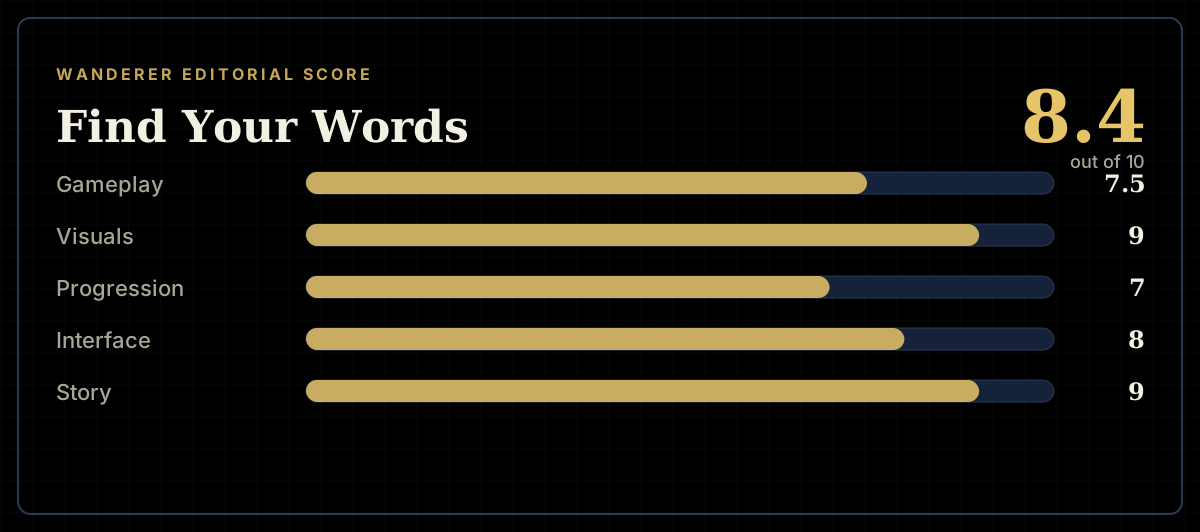
How the review scores each part of the gameWanderer Editorial -
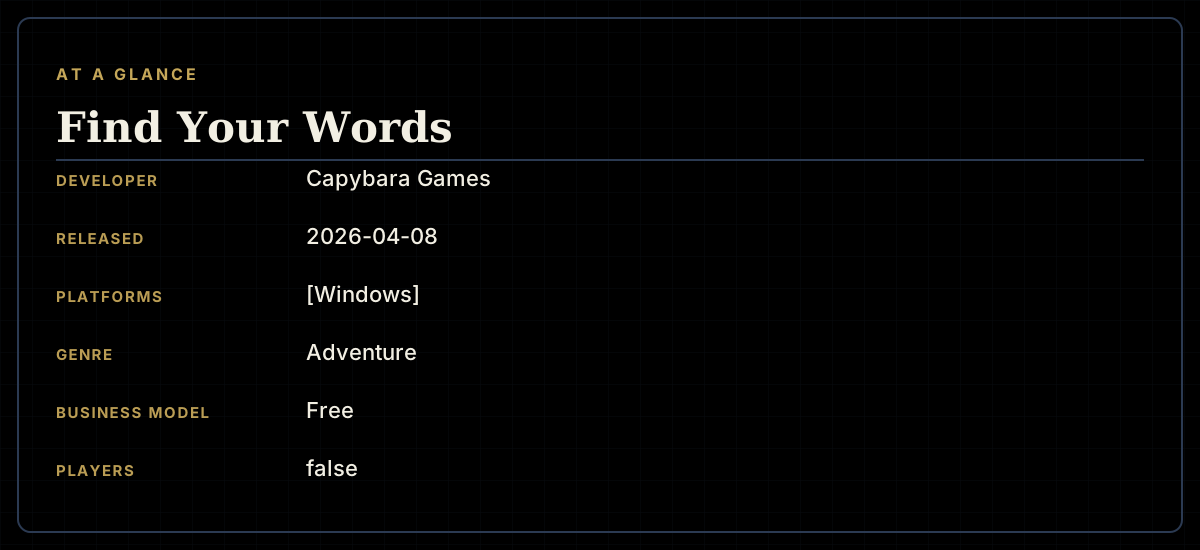
Key facts at a glanceWanderer Editorial -
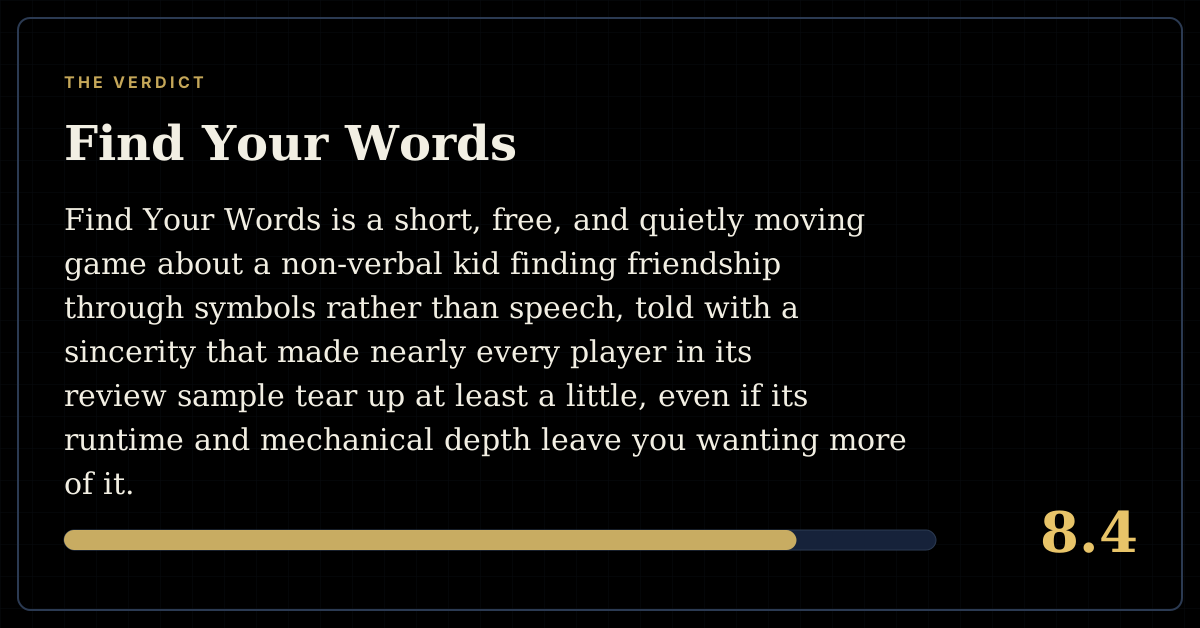
The short versionWanderer Editorial