
Game review
Exelio
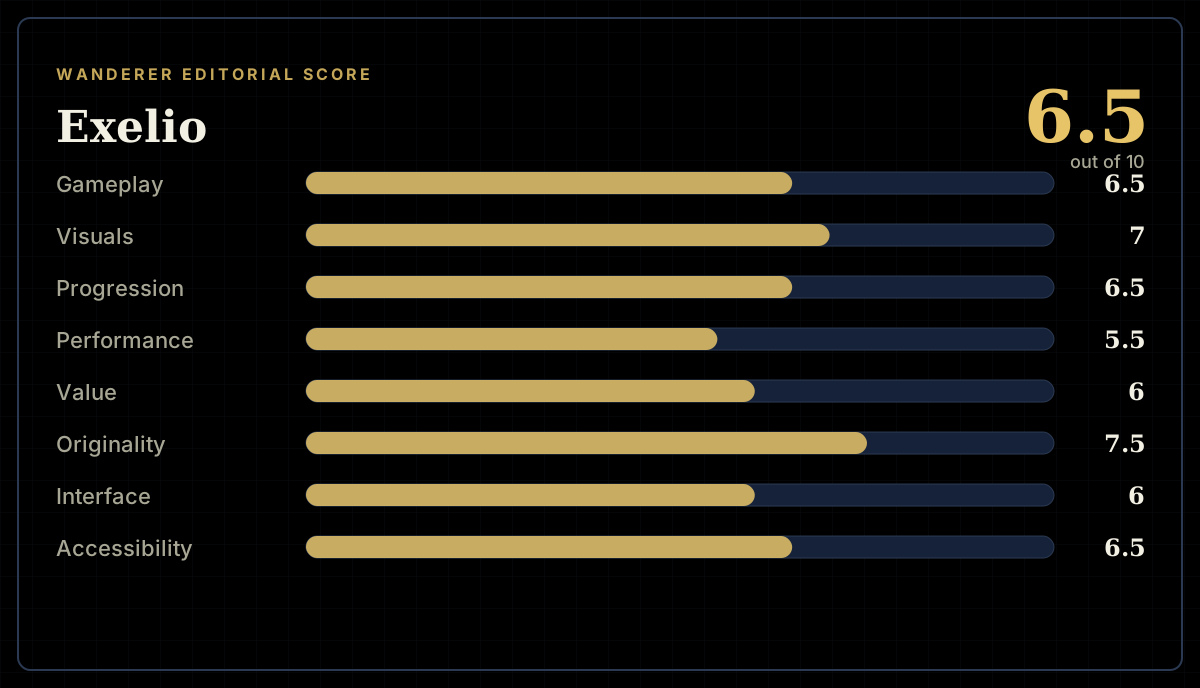
6.5 / 10
- Developer
- AI Frog Interactive, Inc.
- Publisher
- AI Frog Interactive, Inc.
- Released
- 4 March 2026
- Platforms
- Windows
- Genre
- Top-down sci-fi survival-crafting action-adventure
- Monetisation
- One-off premium purchase, no microtransactions, no battle pass, no premium currency. A free Early Access-exclusive DLC bundling two cosmetic costumes ships alongside the base game and adds nothing to progression.
- Players
- None. Exelio is a single-player game with no co-op or competitive modes.
The short version
Exelio pairs a genuinely distinctive hook — two named protagonists who swap control between a builder's day and a fighter's night — with a five-pillar ambition (exploration, survival, crafting, combat, story) that most solo-developed Early Access survival games don't attempt at once. Five months in, the idea is intact but the execution is still catching up to it: a fixed, angle-restricted camera causes real navigation problems, night combat launched punishingly hard, and a locked-in real-time deadline undercut the exploration the game is otherwise selling.
What keeps it from being a simple pass is how fast the developer has been closing those exact gaps. Five numbered updates and two hotfixes in five months have rebuilt the parkour input logic, added a difficulty option, rebalanced night raids twice, and rewritten the crafting screens after players said they couldn't tell what they needed. This is Early Access working as intended. It just isn't finished, and the asking price buys into that process rather than a completed game.
Biggest strengths
- The Leon/Serena day-night handoff gives exploration and combat genuinely different tools instead of reskinning the same character twice
- Update 5's material checklist on crafting screens and Update 4's Combo Guide UI show a developer directly answering specific, repeated player complaints rather than issuing vague "quality of life" patches
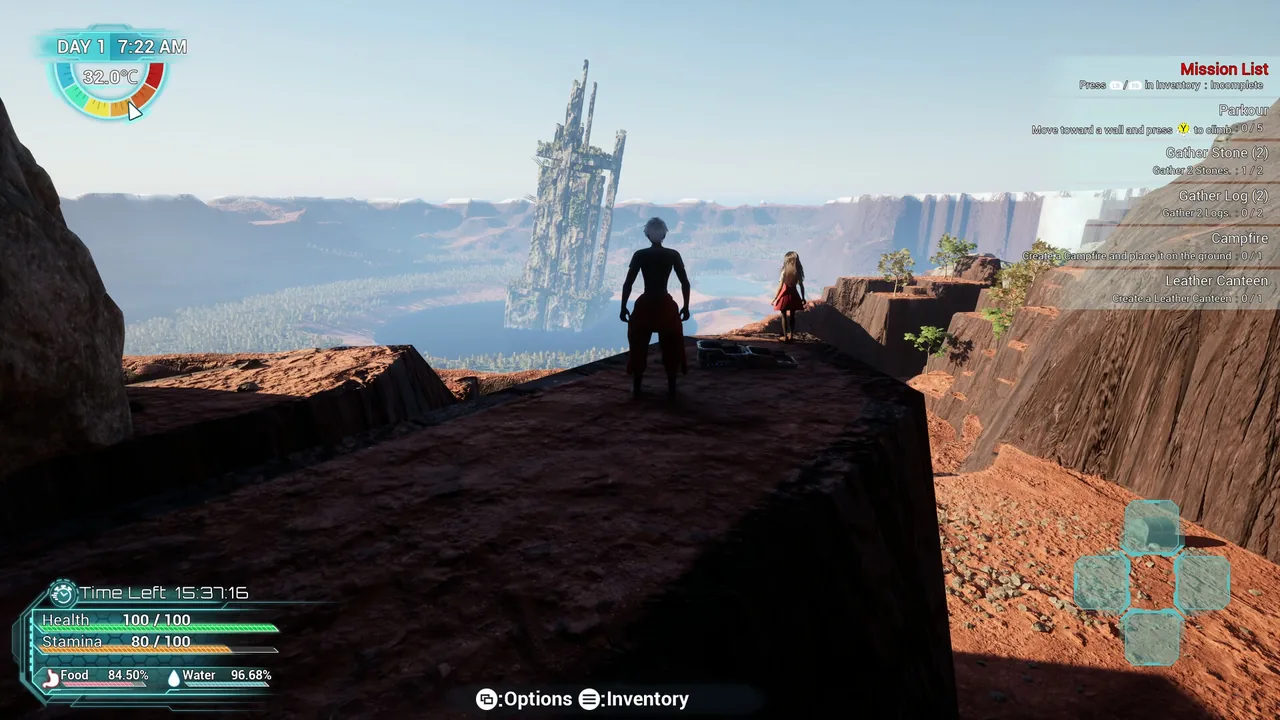
- Environmental variety across mountains, snowfields, jungles, caves and ruins gives exploration a real sense of place, and multiple reviewers single out the sound design when entering new areas
Biggest weaknesses
- The fixed, angle-restricted 2.5D camera makes judging drops and navigating tight spaces genuinely difficult, and several early reviewers cite frequent fall deaths as a result
- Night combat launched with weapon durability so low and enemy damage so high that early reviewers compared the death rate unfavourably to Dark Souls, and while later patches added a difficulty option and buffed dodging, the base tuning is still a real barrier
- A real-time survival deadline pushing players toward objectives works against the unhurried exploration and crafting the game's own pitch leads with
Who it's for: Survival-crafting players who want something with a genuine narrative hook and don't mind a locked camera angle, plus anyone specifically curious about the day/night dual-character structure. A poor first Early Access purchase for anyone allergic to unfinished UI or punishing, still-being-tuned combat.
Our recommendation: Worth a look now only if you're comfortable being an active part of a small, responsive Early Access community and can tolerate real friction in exchange for watching a distinctive idea get built in front of you. Everyone else should wait for a difficulty pass that's had more time to settle and for the camera and parkour complaints to fully resolve.
6.5 / 10
Most survival-crafting games hand you one character and ask you to become good at everything — foraging, fighting, building, and whatever puzzle-box progression system sits on top. Exelio's pitch is to split that workload between two people instead of one skill tree. By day you play as Leon, gathering resources, building a base, and picking through mountains, snowfields, jungles, caves and ruins for whatever the world's mysteries turn out to be. When night falls, control passes to Serena, built specifically to fight off whatever comes crawling out of the dark. It's a clean, legible answer to a problem most games in this genre never solve cleanly — what do you do with a character build that's good at gathering but bad at fighting, or the other way around — and it's the single best reason to pay attention to a game that, five months into Early Access, is still visibly under construction everywhere else.
Two characters, one save file
The day/night split isn't just a difficulty toggle or a cosmetic skin change. Leon and Serena have their own equipment loadouts and action slots, and Update 5 specifically added the ability to manage your currently-inactive partner's gear without switching control first — a fix aimed squarely at players who'd walk into a night fight only to discover their off-duty character had the wrong weapon equipped. That's a small interface change, but it says something useful about the design: the developer is treating the two-character structure as a real system worth protecting, not a novelty bolted onto a single-character game.
The tradeoff is that you're learning two skillsets instead of one, on top of a fixed top-down camera that doesn't rotate freely. Several early reviewers, playing in the game's dominant Japanese-language community, flagged exactly this combination as their biggest source of frustration: locked camera angles make it hard to judge ledges and gaps during Leon's exploration sections, and the same rigid perspective becomes a liability at night when Serena needs to track fast, dangerous enemies in low light. It's a defensible art and readability choice on its own — a controlled camera keeps combat legible in a way a fully free one might not — but it's clearly cost the game some of its first impression.
Night raids were brutal, and the developer knows it
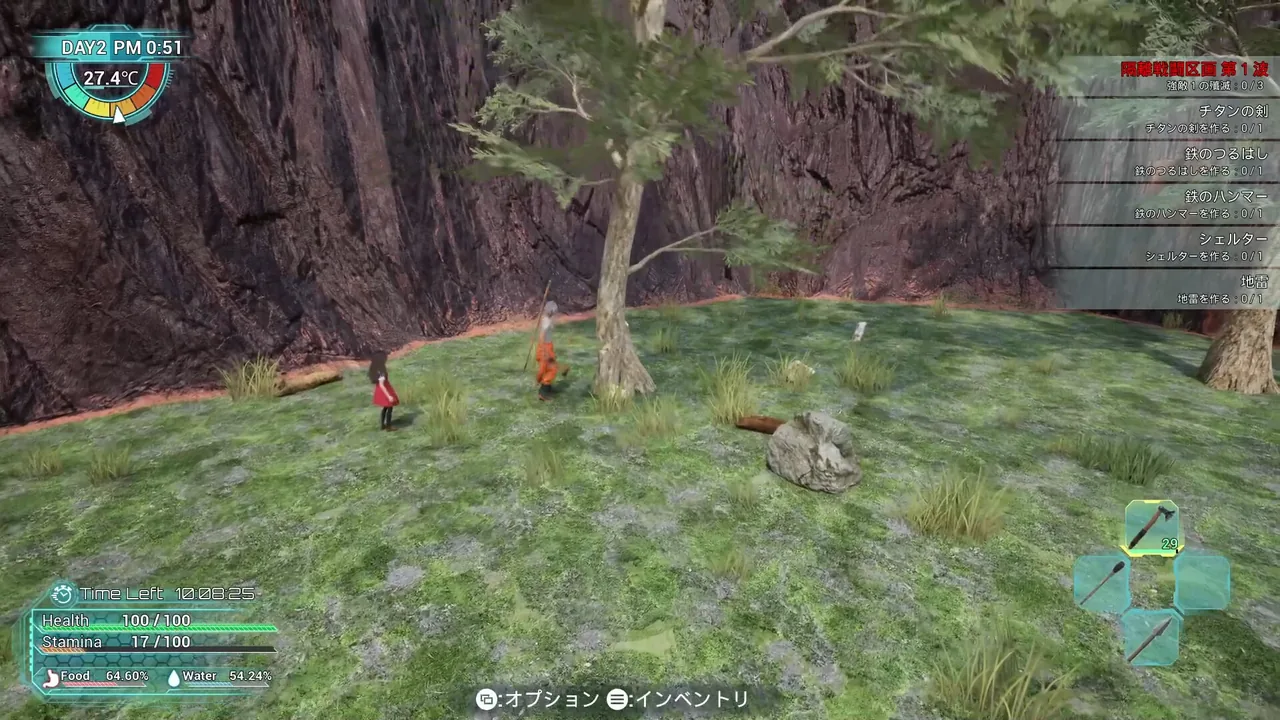
Combat is where Exelio's Early Access growing pains have been loudest. At launch, Serena's night encounters paired low weapon durability with enemies capable of killing in one or two hits, and reviewers weren't shy about the comparison to Soulslike difficulty — except without the deliberate telegraphing that makes those games' punishment feel earned. One early reviewer described dying more than fifty times to a single switch-activation puzzle guarded by giant scorpion-type enemies before giving up; another described the same enemy type appearing in groups as the point where the fun evaporated.
To the developer's credit, this is exactly the kind of complaint Early Access exists to surface, and the patch history backs that up. Update 2 rebalanced night raids directly. Update 3 addressed the teleportation network that some players found linked waypoints in confusing, backtrack-heavy ways. Update 4 — titled "Re:Start" — rebuilt the parkour input logic after unintended wall-climbs and side-runs were, in the developer's own words, the single most-reported issue in Early Access reviews, and added a difficulty option alongside a full Combo Guide UI so players could actually see a weapon's combo tree instead of discovering it by trial and error. Update 5 tightened night-raid pacing again and added a screen brightness slider, a direct response to complaints about visibility in the game's many dark scenes. Several Japanese-language reviews explicitly flip from a negative rating to a positive one mid-review once these patches landed, which is about as clean a signal of an Early Access build actually improving as you'll find. The base tuning that greeted launch, though, is still the tuning most of the existing review sample is reacting to.
A deadline that fights the exploration pitch
The other recurring complaint is structural rather than mechanical: an in-game deadline pressuring players toward story objectives, on top of ordinary hunger and thirst management. Exelio's own marketing leads with exploration and discovery — mountains, snowfields, jungles, caves, ruins — but a countdown clock pushing you toward the next checkpoint sits awkwardly against a game that wants you to enjoy poking around a beautiful, dangerous world. More than one reviewer specifically called out wanting to slow down and enjoy the crafting loop, only to be yanked back toward an urgent task by a ticking timer. It's not a broken system, but it's a values conflict inside the design that hasn't been resolved yet, and it's the kind of thing a difficulty or pacing option could address without touching the survival mechanics that are working.
What's actually working
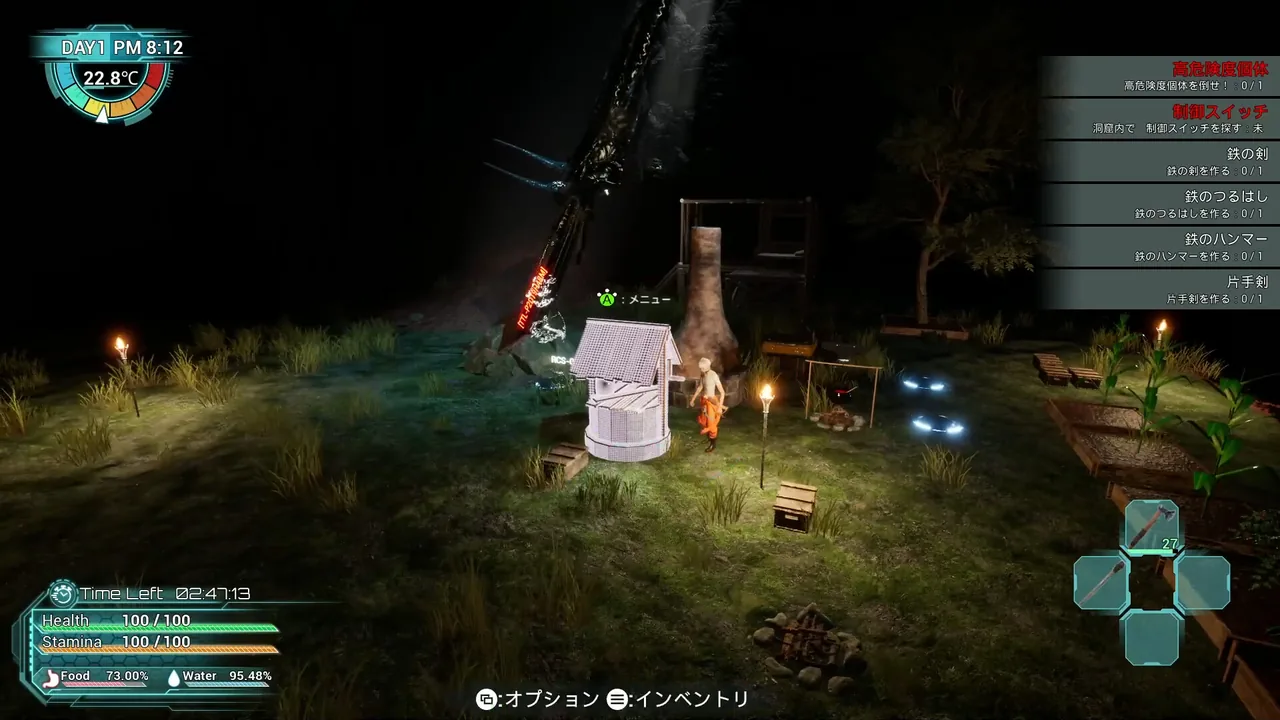
It would be easy for all of this to read as a rough build not worth anyone's time yet, and that isn't quite fair either. The crafting system spans eight distinct stations — Handcraft, Workbench, Machine Tool, Kiln, Blast Furnace, Smithy, Cooking Pot and Cauldron — and Update 5's addition of a required-materials checklist to every one of them fixed a real, specific complaint about not knowing what you'd actually gathered enough of. Update 4 loosened placement restrictions on high-tier facilities and traps, opening up genuine tactical variety in how you defend a base against night raids rather than forcing everyone into the same fixed layout. Positive reviews consistently praise the sheer density of interacting systems — one described the game as testing "your overall ability" in a way that rewards knowledge carried over from other survival games, which is a fair description of what a five-pillar design is actually trying to do when it works.
The presentation holds up its end too. Full controller support, adjustable text size, and now an adjustable brightness slider all suggest a team paying attention to how the game is actually played rather than just how it looks in a trailer, and the environmental variety across biomes gives exploration a real sense of place rather than reused corridors with different paint. Ten supported languages, full voice audio in Japanese, is a reasonable spread for a small studio's first Early Access release.
Performance and platform reality
Exelio is Windows-only five months into Early Access, and the developer's own store page states an intention to optimise for Steam Deck — a promise that hasn't landed yet. One player review specifically logged roughly 24-27 fps on Deck hardware, with visible artifacts even when using third-party frame generation to compensate. That's a fair data point rather than a condemnation of a young build, but anyone buying specifically for handheld play should treat that ambition as a future feature, not a current one. A freeze bug tied to real-time graphics-setting changes was fixed in Hotfix 2, which is at least evidence the small technical issues are getting caught and resolved quickly.
The review sample problem
One honest caveat: five months into Early Access, Exelio's Steam review count sits at just seventeen total reviews, split roughly twelve positive to five negative. That's a small enough sample that Steam's own "Mixed" badge is doing some of the same work a "Mostly Positive" tag would on a larger pool — the raw ratio reads better than the headline classification suggests, but there simply isn't enough volume yet to call either read definitive. It's a useful signal about where this game currently sits in terms of visibility rather than a verdict on its quality, and it's worth knowing before treating any single review, positive or negative, as representative.
Verdict
Exelio has a genuinely good idea at its centre — two protagonists with clearly different jobs, changing at a fixed and meaningful point in the day-night cycle — wrapped around an ambitious five-system structure that most solo survival-crafting games don't even attempt. The problem is that the ambition currently outpaces the execution: a restrictive camera, night combat that launched too punishing, and a pacing conflict between the deadline system and the exploration the game is actually selling. What earns this a passing grade rather than a wait-and-see is the patch record. Five updates and two hotfixes in five months, most of them answering specific, named player complaints rather than vague promises, is exactly the kind of Early Access behaviour that turns a rough launch into a finished game worth the asking price — eventually. It just isn't there yet, and $19.99 currently buys a front-row seat to that process rather than the destination.
Players who enjoy watching a distinctive idea get built in public, and who don't mind real friction along the way, will get more out of Exelio right now than anyone looking for a polished weekend. If persistent progression that respects your time while you're away is more your speed than day-one survival grind, Wanderer's own gathering and crafting loop is worth a look too — a much gentler cousin of the same instinct to keep building even when you're not actively fighting for your life.
Price and platform details checked 4 August 2026.
Pros and cons
Pros
- The Leon/Serena day-night handoff gives exploration and combat genuinely different tools instead of reskinning the same character twice
- Update 5's material checklist on crafting screens and Update 4's Combo Guide UI show a developer directly answering specific, repeated player complaints rather than issuing vague "quality of life" patches
- Environmental variety across mountains, snowfields, jungles, caves and ruins gives exploration a real sense of place, and multiple reviewers single out the sound design when entering new areas
- A one-off $19.99 purchase with no microtransactions, premium currency or battle pass to worry about while the game is still being built
Cons
- The fixed, angle-restricted 2.5D camera makes judging drops and navigating tight spaces genuinely difficult, and several early reviewers cite frequent fall deaths as a result
- Night combat launched with weapon durability so low and enemy damage so high that early reviewers compared the death rate unfavourably to Dark Souls, and while later patches added a difficulty option and buffed dodging, the base tuning is still a real barrier
- A real-time survival deadline pushing players toward objectives works against the unhurried exploration and crafting the game's own pitch leads with
- Windows-only five months into Early Access, with the developer's own stated Steam Deck ambitions still unmet — one player-reported test found roughly 24-27 fps with visible artifacts even using third-party frame generation
Screenshots
-
EXELIOImage: AI Frog Interactive, Inc. via Steam -
EXELIOImage: AI Frog Interactive, Inc. via Steam -
EXELIOImage: AI Frog Interactive, Inc. via Steam -
How the review scores each part of the gameWanderer Editorial -
The short versionWanderer Editorial