
Game review
Dreamcore: Rabbit Hole
7 / 10
- Developer
- Ankoku
- Publisher
- Ankoku
- Released
- 24 April 2026
- Platforms
- [Windows]
- Genre
- Adventure
- Monetisation
- $5.99
- Players
- false
The short version
Dreamcore: Rabbit Hole is at its best in Relax Mode, letting players drift through gorgeous, genuinely uncanny dreamcore environments at their own pace — the bolted-on story mode and rocky optimization are the parts most worth tempering expectations around.
Biggest strengths
- Genuinely stunning, uncanny dreamcore visuals across a growing roster of distinct levels
- Relax Mode lets you explore at your own pace with no pressure, widely praised as the ideal way to play
- No jump scares or hostile entities — a deliberately gentler take on the liminal-space genre
Biggest weaknesses
- Noticeable stuttering and heavy GPU demand reported across many systems, including some high-end setups
- Story Mode is widely described as thin, rushed, and at odds with the game's stated relaxing intent
- A couple of puzzles (notably a basketball-throwing sequence) give no clear feedback on what the game wants from the player
Who it's for: Fans of liminal-space and backrooms-style walking sims who want a purely atmospheric, low-stakes experience without horror elements.
Our recommendation: Try it on sale
7 / 10
A dream you've been in before
Dreamcore: Rabbit Hole does exactly what its title promises: it drops you into a sequence of cozy, faintly unsettling liminal spaces — sun-drenched beaches, glowing pink coastlines, endless sunflower fields, an empty 1980s-styled town at dusk — and asks nothing more of you than to walk through them and take it in. Solo developer Ankoku launched the game on April 24 with a handful of levels and has kept adding to it steadily since, with two entirely new locations (Highway and Dreampools) arriving as free content months after release. That ongoing support has clearly bought the developer real goodwill; several reviewers explicitly note returning to check the changelog and re-rate the game more favorably as new levels land.
Relax Mode versus Story Mode
The single most consistent piece of advice across the review base, repeated almost word-for-word by dozens of players, is to skip Story Mode and go straight to Relax Mode. Story Mode wraps the exploration in a loose narrative and a time-pressured framing that reviewers say actively works against the game's core appeal — one detailed review calls the added urgency "at complete odds with the stated intent of the game." Relax Mode strips all of that away, letting you wander each level at your own pace with no objectives, and it's overwhelmingly the mode reviewers say delivers on the dreamcore promise. This is an unusually clear case of a game's two headline modes pulling in opposite directions, and worth knowing before you dive in.
Visuals that earn the genre comparisons
Where Dreamcore: Rabbit Hole clearly succeeds is presentation. Reviewers repeatedly place it alongside genre touchstones like Dreamcore (by Montraluz) and Liminal Shift, praising its sound design, lighting, and the specific choice to avoid hostile "entities" or jump scares entirely in favor of a quieter, more melancholic strangeness. The Dreampools level in particular draws consistent praise, compared by one reviewer to "swimming in the Barbie Malibu mansion." A brief controversy around AI-generated voice acting in an earlier build is worth noting for full context: several reviewers confirm the developer used AI voices at launch but removed them shortly after in response to feedback, and no other AI-generated assets have been reported in the game since.
Performance problems undercut the calm
The most widely reported technical complaint is stuttering and heavy GPU load while new sections of each map stream in, an issue flagged by both casual and very technically detailed reviewers, including at least one running a high-end RTX 5090 who still reported disappointing frame rates at max settings. A smaller number of reviewers report outright crashes, particularly around the game's water/swimming levels. For a game explicitly designed to be meditative and unhurried, stutter and pop-in are a particularly disruptive kind of bug, and it's a recurring enough complaint that anyone on older or mid-range hardware should check current patch notes before buying.
Puzzles without enough guidance
A handful of light puzzles are scattered through the levels, and the general consensus is that they're the game's weakest mechanical element. The most frequently cited offender is a basketball-throwing puzzle in the game's second level, which multiple reviewers say gives no usable feedback on how hard or from where to throw, turning a few minutes of intended light interaction into frustrating trial and error. A sunflower-field level drew similar complaints about unclear interaction prompts. These moments stand out precisely because they're rare — most of the game asks nothing more demanding of the player than walking and looking, so the few sections that do demand precision feel undercooked by comparison.
Length and value for money
At $5.99, most reviewers frame Dreamcore: Rabbit Hole as fair value for what's currently on offer, while being upfront that "currently" is doing real work in that sentence — full playthroughs across all levels typically run one and a half to two hours, and several reviewers explicitly wish there were more content before recommending it at full price. The developer's visible, ongoing commitment to adding new free levels based on community voting (conducted openly via Discord) has clearly earned patience from much of the existing audience, but anyone buying today should expect a short, if beautiful, experience rather than a lengthy one.
Who this is for
Dreamcore: Rabbit Hole is squarely aimed at fans of the liminal-space and backrooms subgenre who specifically want the "unsettling but not scary" end of that spectrum, and reviewers who came in with that expectation are consistently the happiest with what they got. One reviewer points out directly that a large share of the negative reviews seem to come from players expecting horror elements or more traditional game mechanics, when the store page is fairly explicit that this is a walking simulator built around vibes rather than threat. If you're drawn to the genre for its uncanny, dreamlike photography-adjacent appeal rather than for scares or systems, this delivers about as purely as anything currently on Steam; if you need mechanical depth or narrative substance to stay engaged, the short runtime and thin Story Mode will likely leave you wanting.
The verdict
Dreamcore: Rabbit Hole is a genuinely lovely entry in the liminal-space walking-sim genre when played the way its own fans recommend — in Relax Mode, without expectations of a deep story or challenging puzzles. Its stuttering performance, an underbaked Story Mode, and thin puzzle design are real, frequently repeated complaints that keep it from greatness, but the atmosphere, the low price, and a developer who's visibly still building the game out make it an easy recommendation for genre fans willing to wait for a sale or a few more content updates.
Pros and cons
Pros
- Genuinely stunning, uncanny dreamcore visuals across a growing roster of distinct levels
- Relax Mode lets you explore at your own pace with no pressure, widely praised as the ideal way to play
- No jump scares or hostile entities — a deliberately gentler take on the liminal-space genre
- Actively supported post-launch, with new free levels (Highway, Dreampools) added months after release
- Cheap entry price that most reviewers feel matches the (admittedly short) amount of content on offer
Cons
- Noticeable stuttering and heavy GPU demand reported across many systems, including some high-end setups
- Story Mode is widely described as thin, rushed, and at odds with the game's stated relaxing intent
- A couple of puzzles (notably a basketball-throwing sequence) give no clear feedback on what the game wants from the player
- Very short — most players finish all current content in one to two hours
Screenshots
-

Dreamcore: Rabbit HoleImage: Ankoku via Steam -

Dreamcore: Rabbit HoleImage: Ankoku via Steam -

Dreamcore: Rabbit HoleImage: Ankoku via Steam -
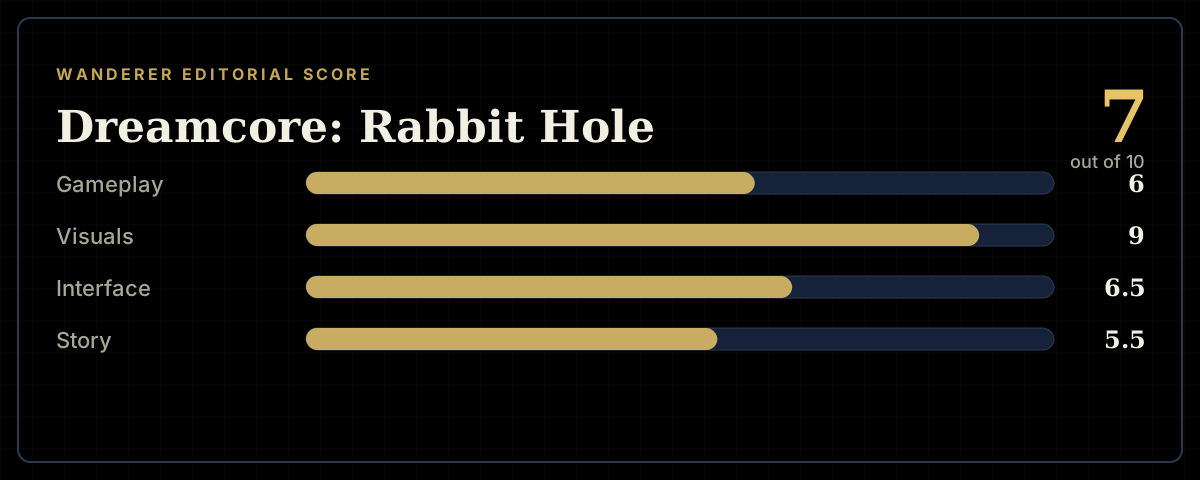
How the review scores each part of the gameWanderer Editorial -

Key facts at a glanceWanderer Editorial -
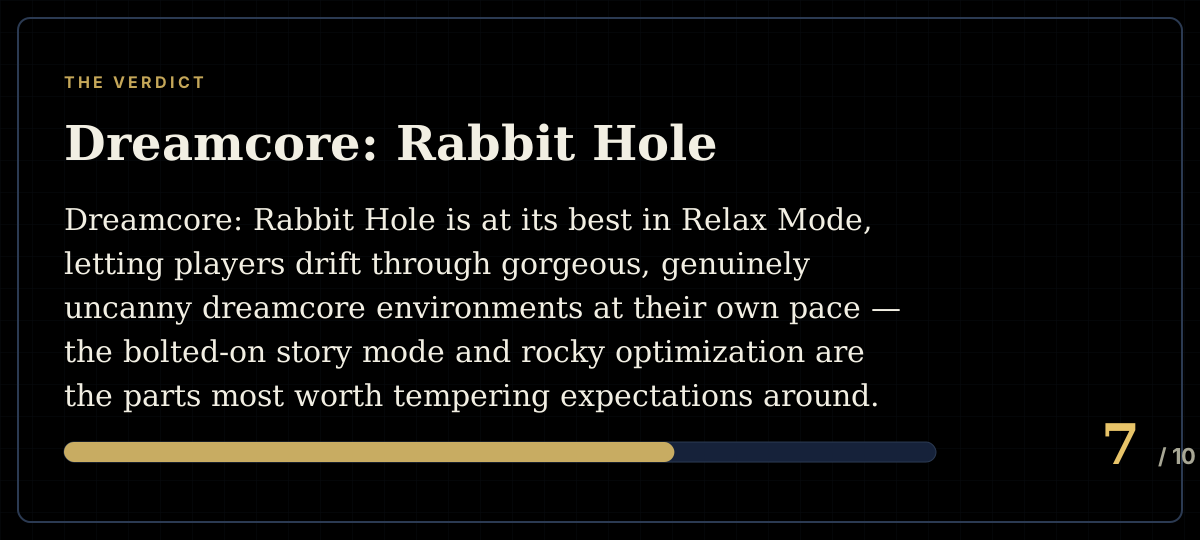
The short versionWanderer Editorial