Game review
Don't Lose Aggro
7.4 / 10
- Developer
- Oren Koren
- Publisher
- Oren Koren
- Released
- 15 April 2026
- Platforms
- [Windows]
- Genre
- Action RPG
- Monetisation
- $9.99
- Players
- false
The short version
Don't Lose Aggro takes a narrow, oddly specific idea, that holding aggro is the whole game, and builds a genuinely satisfying roguelite around it; it's thin on content and rough around the edges right now, but the tanking fantasy at its core already works.
Biggest strengths
- A genuinely novel hook: the entire game is built around threat management and taunting, the part of MMO tanking most games treat as a footnote
- Combat that reviewers, including many self-described longtime MMO tank mains, describe as capturing that specific pull-and-hold rhythm with real satisfaction
- An actively engaged solo developer who reviewers repeatedly praise for shipping frequent patches and responding directly to feedback, including accessibility requests
Biggest weaknesses
- Very short content as of this review, roughly two hours to see everything on offer, with only two dungeons and a narrow handful of viable builds
- Companion AI pathing is a recurring complaint, with allies and enemies alike sometimes ignoring terrain or getting stuck rather than behaving convincingly
- Framerate stuttering and a hard 60fps cap on higher settings reported by multiple reviewers, an odd performance ceiling for a game this visually modest
Who it's for: Former or current MMO tank mains who want that specific playstyle distilled into a solo roguelite, and anyone curious about an unusually novel combat hook.
Our recommendation: Wait for a sale
7.4 / 10
The tank's game, finally
Don't Lose Aggro entered Early Access on April 15, 2026, built entirely around a role most games treat as an afterthought: holding a monster's attention while someone squishier does the real work. Here, that job is the entire game. Solo developer Oren Koren's $9.99 action roguelite drops the player into procedurally structured dungeon runs where the whole point is taunting enemies onto yourself, keeping a fragile AI companion alive, and building out a shield-and-talent kit to survive doing it. It launched to a Very Positive reception, 137 reviews and roughly 84% positive, an unusually strong debut for a first Early Access build from a single developer.
A hook this specific shouldn't work this well
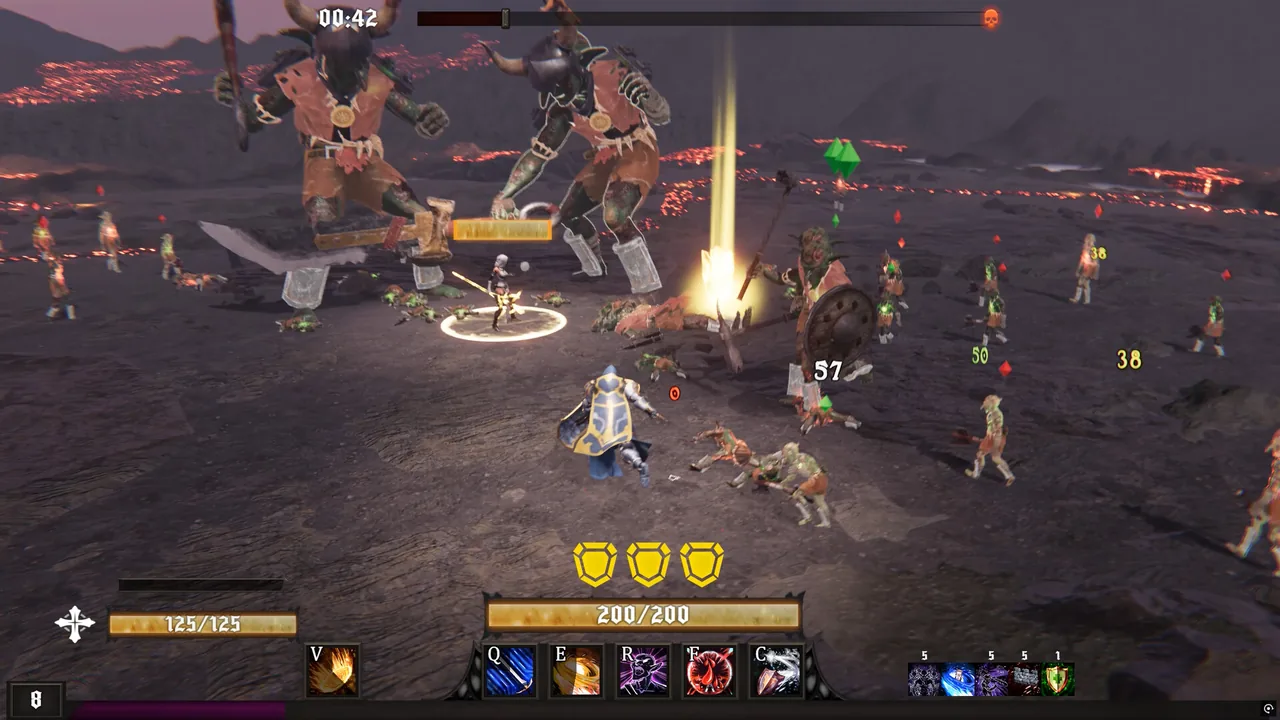
The premise sounds almost like a joke: an entire roguelite about being the tank. But the review sample is full of former and current MMO players, many explicitly naming World of Warcraft, Final Fantasy XIV, or Star Wars: The Old Republic, saying the game captures that exact pull-and-hold rhythm better than they expected from a solo project. Landing a taunt, watching a room of enemies pivot toward you, and then managing cooldowns to survive the pile-up is the loop, and reviewers describe it as surprisingly tense and satisfying even stripped of the other eight players a real raid would normally involve. One detail comes up constantly and clearly delights people: the AI companion, whether a healer or a DPS character, verbally complains when the player loses aggro, giving the whole systems-heavy premise a running joke that reviewers say makes solo tanking feel less lonely than it has any right to.
A real, if narrow, build system
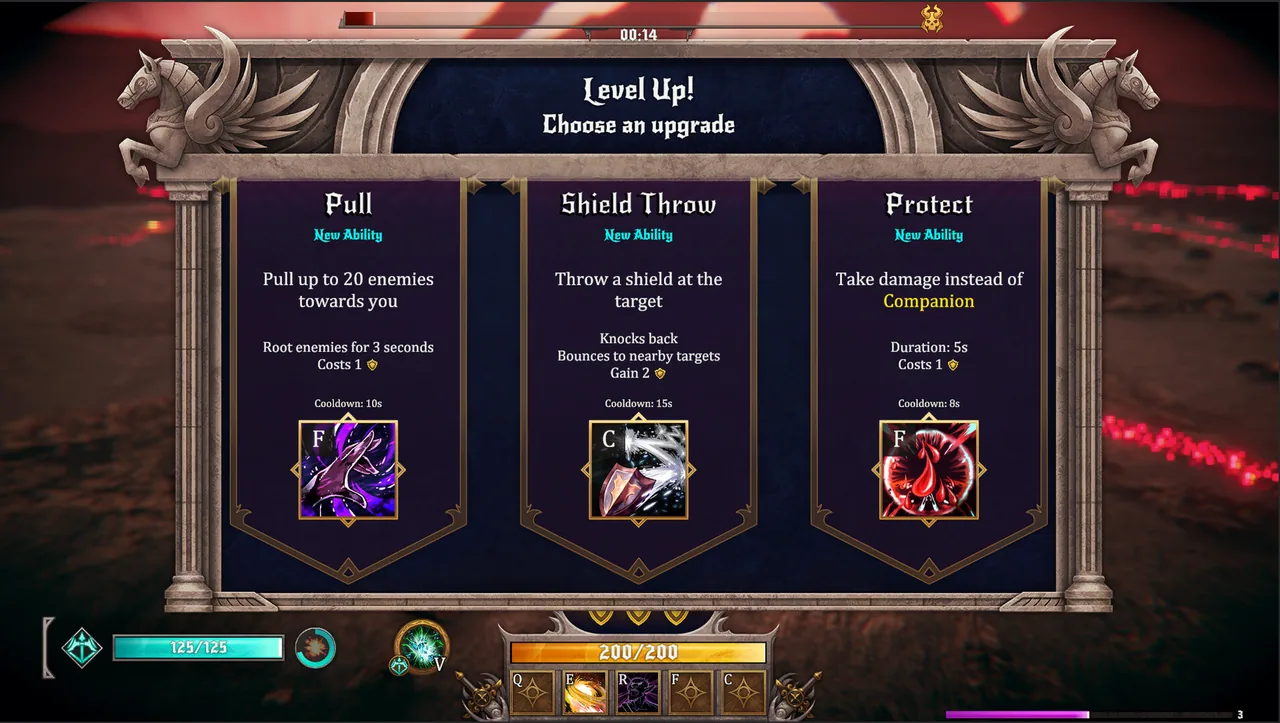
Runs are structured as roguelite dungeon dives, choosing from a handful of ability and talent options between fights to build out a shield-focused kit. Reviewers who've spent real time with it point to specific standout tools, a shield-throw ability that combines damage, healing, and cooldown reduction draws particular praise, as evidence there's real design thought behind the systems even at this early stage. The catch, echoed by a large share of the review sample, is that build variety is currently thin: most reviewers land on the same one or two genuinely strong specs, and the pool of weapons and talents isn't yet deep enough to support the kind of build diversity a roguelite normally thrives on. That's a fair EA-stage complaint rather than a fundamental flaw, but it does mean repeat runs can start to feel similar faster than the genre usually allows.
Two hours today, more tomorrow
The most consistent criticism in the review sample isn't about what the game does badly, it's about how little of it currently exists. Multiple reviewers report reaching full completion, including achievement clears, in around two hours, with only two dungeon layouts plus wave-defense and boss-rush modes to extend that. For a $9.99 entry price that's a reasonable value proposition by EA standards, and most reviewers frame the thinness as expected rather than disappointing given the label, but anyone expecting a full game's worth of content on day one should recalibrate that expectation.
Companions that don't always cooperate
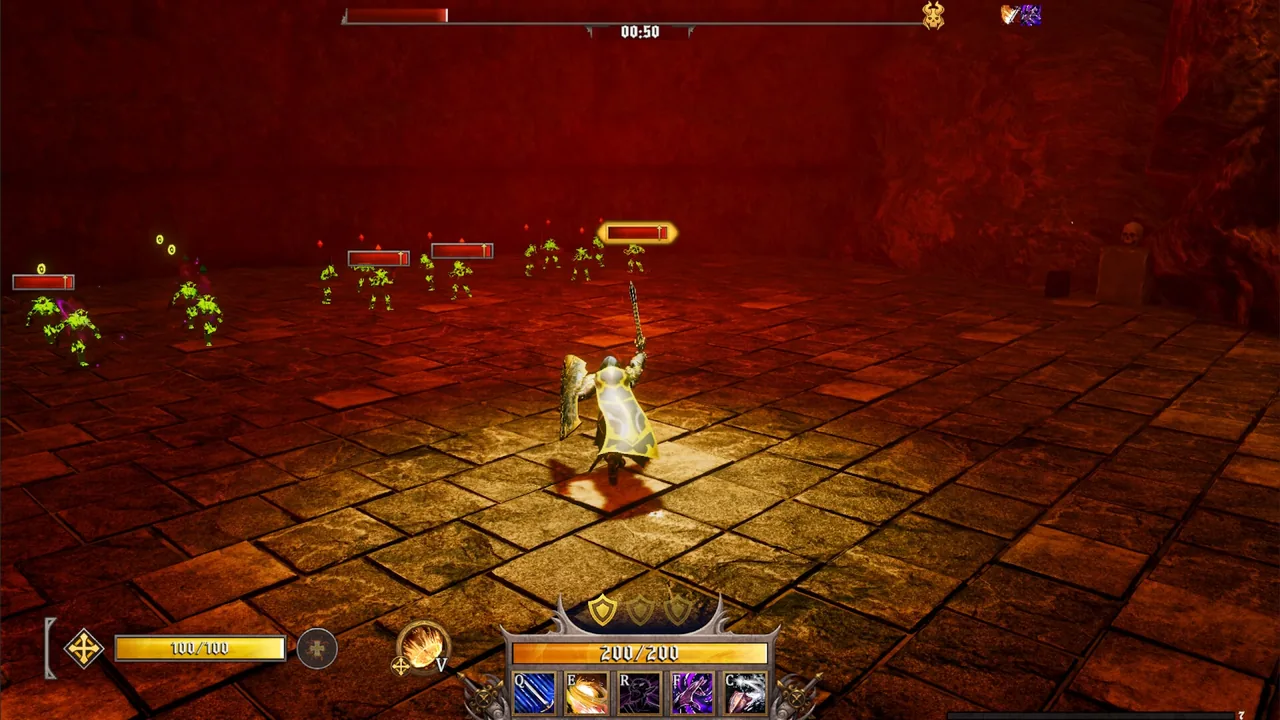
The AI systems supporting the tanking fantasy aren't fully reliable yet. Several reviewers describe enemies and companions alike ignoring terrain, getting stuck behind obstacles, or beelining in straight lines rather than pathing convincingly, which undercuts the tactical positioning the taunt-and-kite loop depends on. A companion healer that simply stands still rather than reacting to the fight is a specific complaint that comes up more than once, and it's the kind of issue that can break immersion in a game whose entire appeal rests on convincingly simulating the rest of a raid party.
Rough technical edges
A handful of reviewers report a hard 60fps cap even on higher settings, alongside stuttering and slow-motion-like frame pacing issues that only clear up at lower settings, an odd ceiling for a game this visually restrained. The developer has been responsive to this kind of feedback historically, shipping mouse-movement support and other accessibility requests directly off player suggestions, so there's reasonable optimism these specific performance issues get addressed, but they're a real rough edge as the game stands today.
A developer who's clearly listening
What comes through most strongly across the review sample, more than any single system, is trust in the solo developer. Patch history since the April 15 EA launch shows a steady cadence, hotfixes within days of launch, a major systems update in May, cloud save support, and a full playtest-and-major-update cycle running through August and September. Reviewers repeatedly cite that responsiveness, including specific stories of requested features shipping within a week, as the main reason they're comfortable recommending a game this early and this thin on content.
Who should tank in
This is an easy recommendation for anyone who has ever mained a tank in an MMO and wished that specific skill set were its own game; the novelty and the responsive development alone are worth the price for that audience. Everyone else should treat this as a promising but genuinely early build: two hours of content, a narrow build pool, and some real performance rough edges mean it's worth a wishlist and a wait rather than an immediate buy unless the concept itself is the draw.
The verdict
Don't Lose Aggro succeeds at the hardest part of any Early Access pitch: proving the core idea works before the content catches up. The tanking fantasy is already fun, the developer is clearly invested, and the foundation is sound; what's missing is simply more of it.
Pros and cons
Pros
- A genuinely novel hook: the entire game is built around threat management and taunting, the part of MMO tanking most games treat as a footnote
- Combat that reviewers, including many self-described longtime MMO tank mains, describe as capturing that specific pull-and-hold rhythm with real satisfaction
- An actively engaged solo developer who reviewers repeatedly praise for shipping frequent patches and responding directly to feedback, including accessibility requests
- Solid Steam Deck performance reported by multiple reviewers, useful for a game built around quick, session-sized runs
Cons
- Very short content as of this review, roughly two hours to see everything on offer, with only two dungeons and a narrow handful of viable builds
- Companion AI pathing is a recurring complaint, with allies and enemies alike sometimes ignoring terrain or getting stuck rather than behaving convincingly
- Framerate stuttering and a hard 60fps cap on higher settings reported by multiple reviewers, an odd performance ceiling for a game this visually modest
- Skill-slot and UI customization are minimal, and at least one reviewer flags the inability to rearrange ability positions as a real usability gap for a game about split-second reactions
Screenshots
-
Don't Lose AggroImage: Oren Koren via Steam -
Don't Lose AggroImage: Oren Koren via Steam -
Don't Lose AggroImage: Oren Koren via Steam -
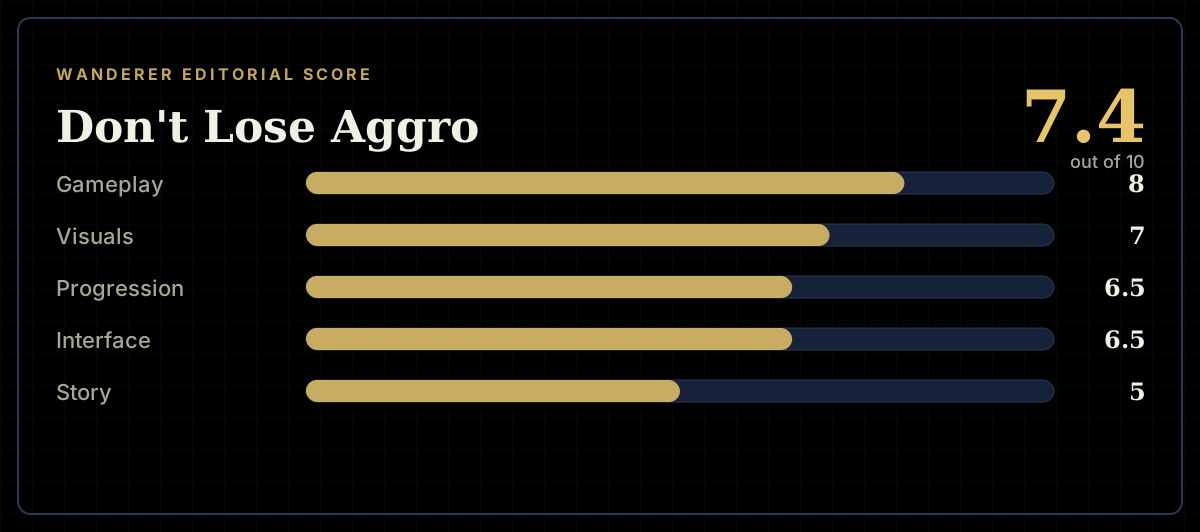
How the review scores each part of the gameWanderer Editorial -
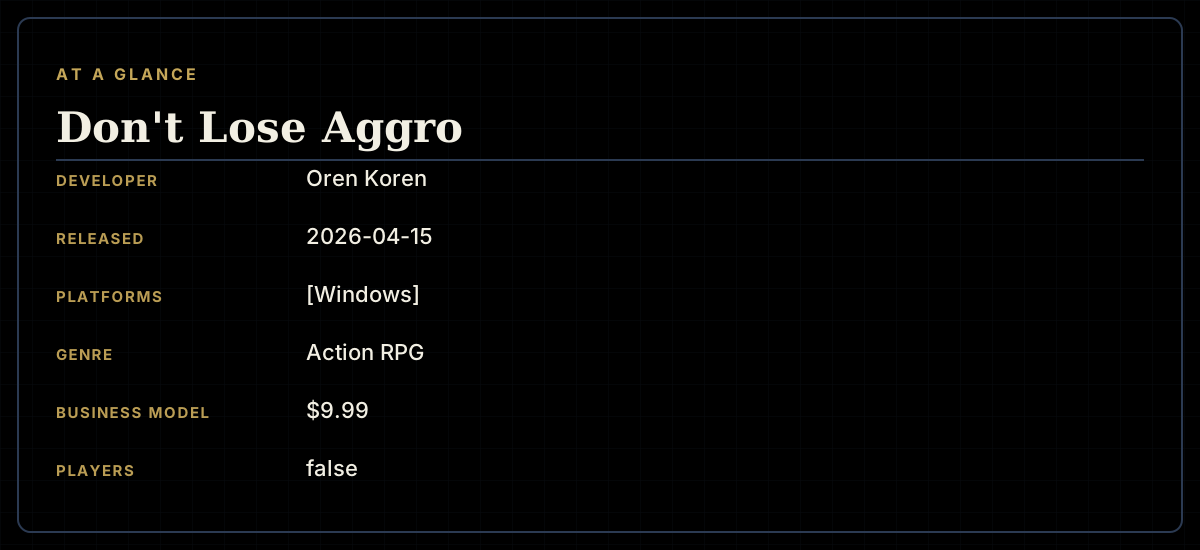
Key facts at a glanceWanderer Editorial -
The short versionWanderer Editorial