
Game review
DO NOT FEED THE VIRUS
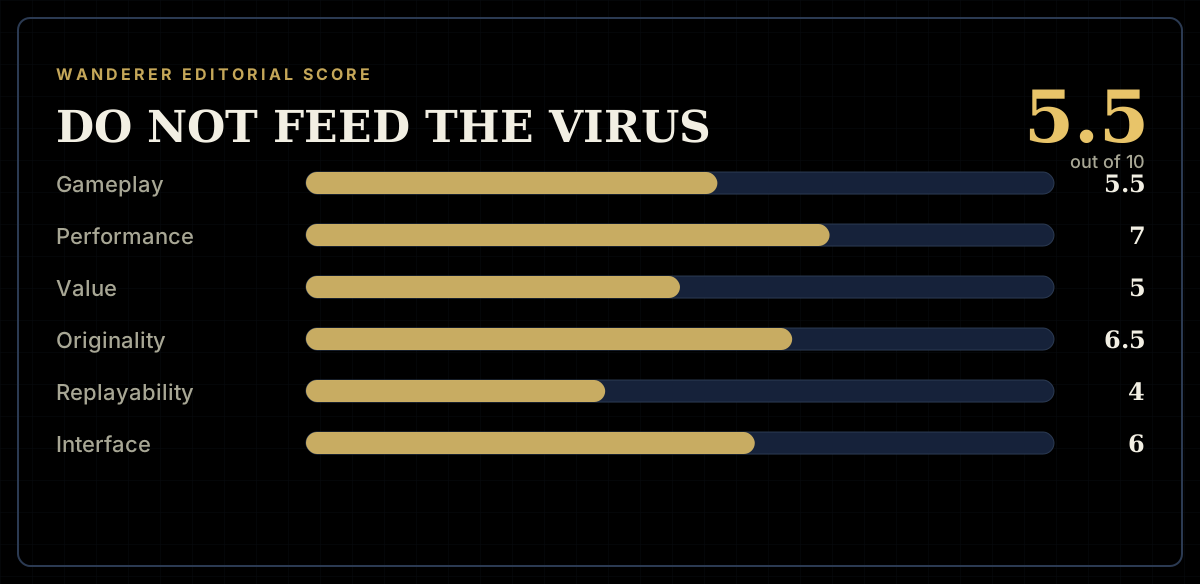
5.5 / 10
- Developer
- NimbleGames
- Publisher
- NimbleGames
- Released
- 14 May 2026
- Platforms
- Windows
- Genre
- Simulation
- Monetisation
- Paid, one-time purchase.
- Players
- Single-player only.
The short version
DO NOT FEED THE VIRUS is a short, mouse-driven incremental game from NimbleGames, tasking players with growing an organism's colony across five distinct stages of biological escalation. Its Mixed rating across a small English review sample reflects genuine appreciation for its varied, well-designed per-stage mechanics, with this review finding a fair, widely repeated complaint that resetting all upgrades and progress between stages undercuts the sense of growth the genre is normally built around.
Biggest strengths
- Widely praised for genuinely varied mechanics across its five stages, with reviewers repeatedly noting each stage feels meaningfully distinct rather than a reskin of the last.
- Praised for polished visuals, sound design, and an overall sense of coherent, deliberate craft for its price point.
- Several reviewers specifically credit the game's charm, small creature animations and emotes, as an unexpected highlight.
Biggest weaknesses
- A fair, widely repeated complaint reports that resetting all upgrades and progress at the start of each new stage removes a meaningful sense of growth central to the incremental genre.
- A fair complaint reports the game is grindy and requires active, hands-on attention rather than the passive idling some players expected from the genre.
- A specific complaint reports post-launch speedrun achievements were added after a meaningful share of players had already reached 100% completion, frustrating completionists.
Who it's for: Fans of short, structured incremental games who enjoy learning new mechanics rather than pure numbers-go-up progression; players who specifically want persistent, carrying-over upgrades across a full playthrough should look elsewhere.
Our recommendation: A well-designed, visually polished incremental game whose mechanical variety across five stages is undercut by a structural choice to reset all progress between them, frustrating exactly the players its genre normally rewards.
5.5 / 10
Genuinely varied mechanics across five distinct stages
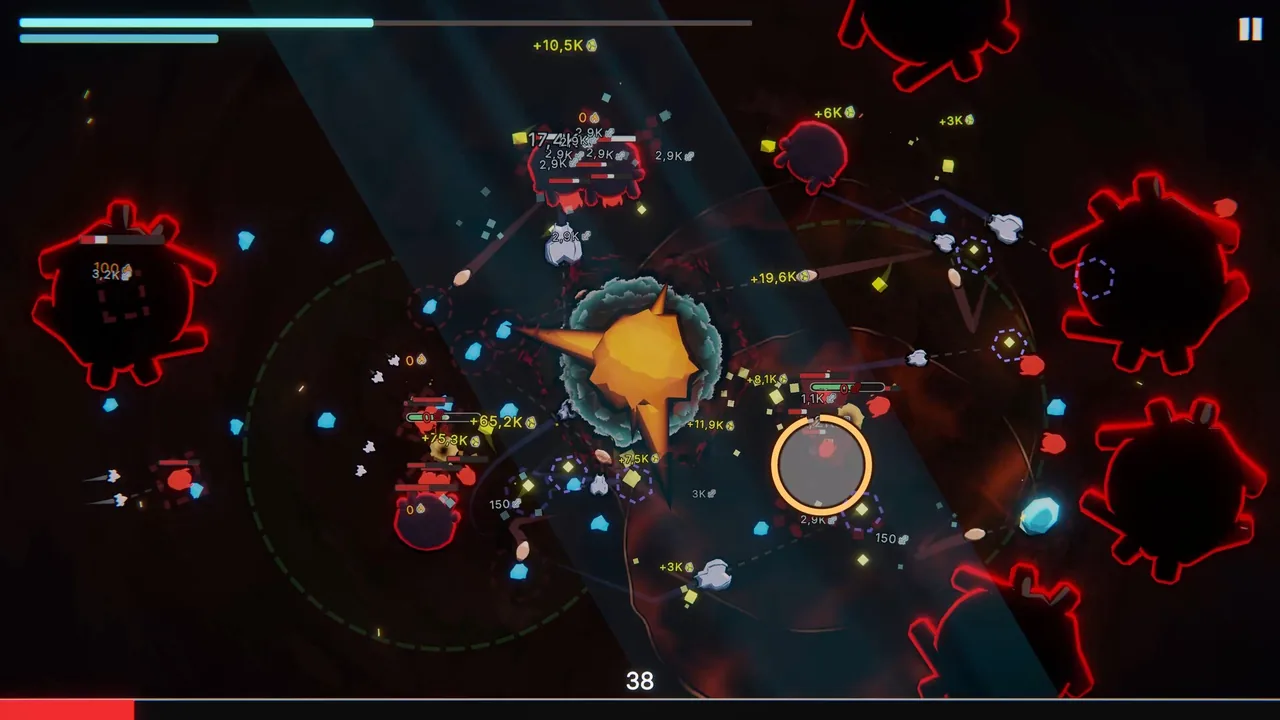
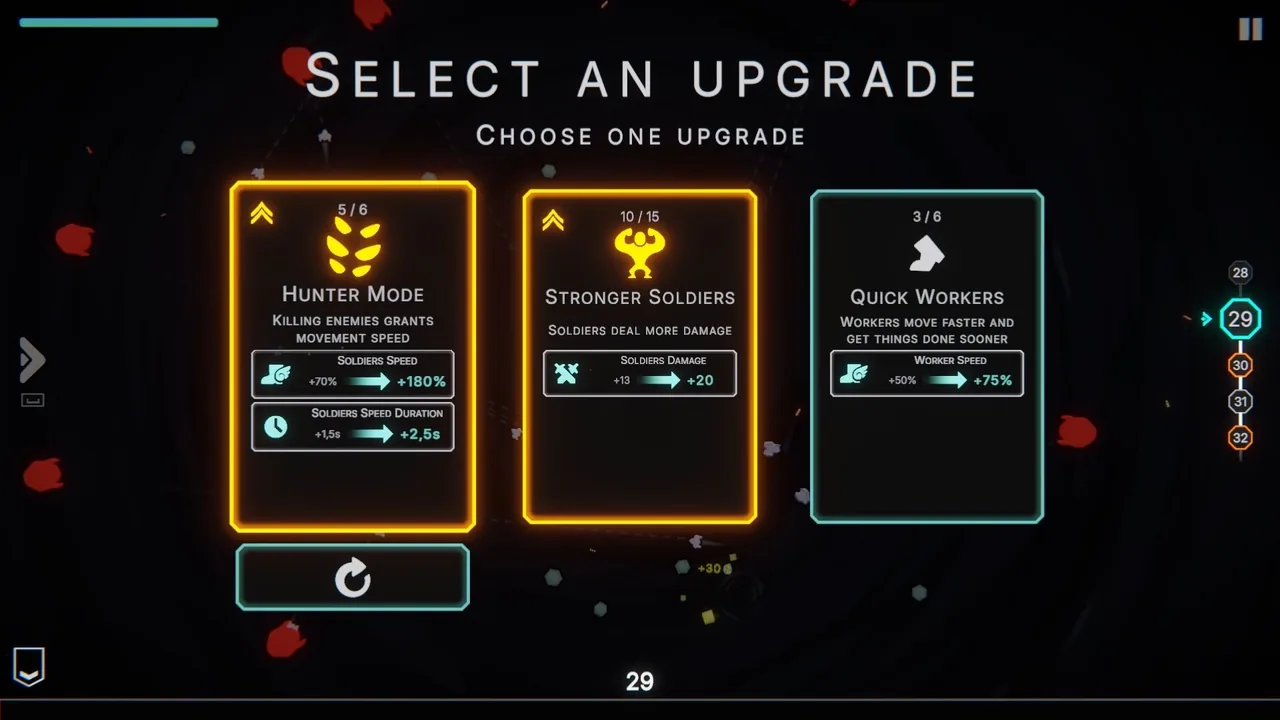
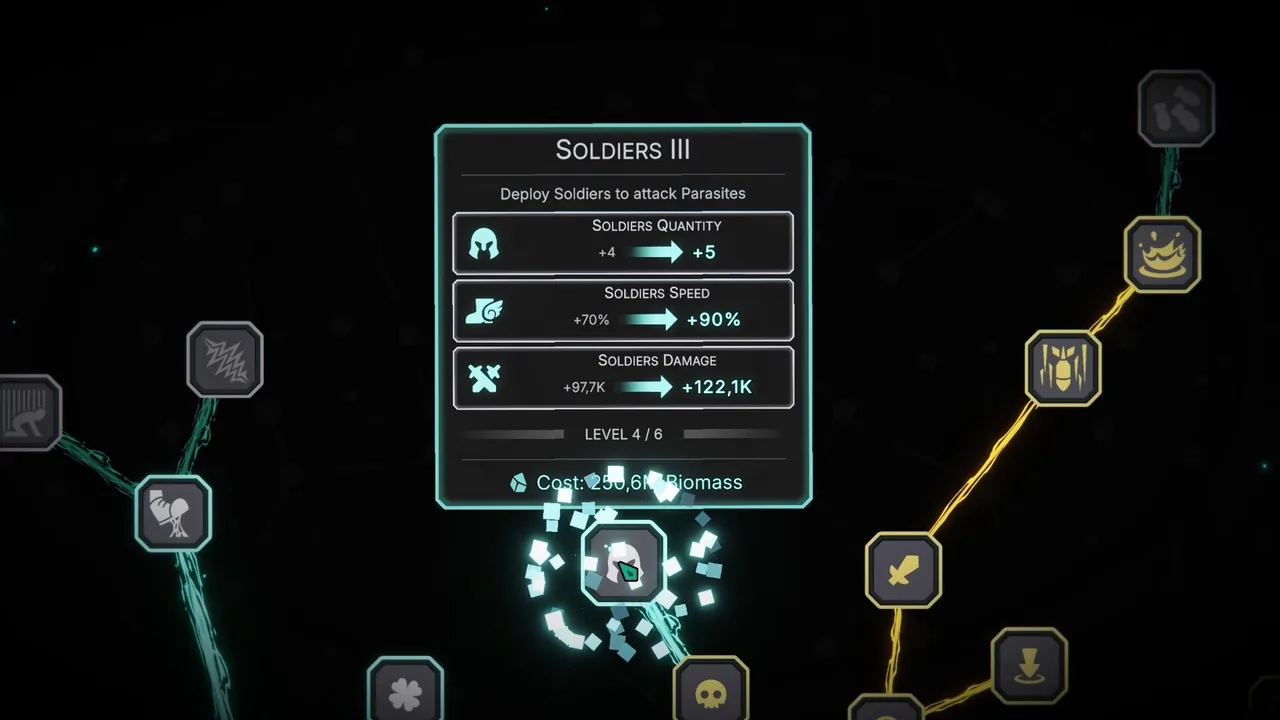
DO NOT FEED THE VIRUS earns its Mixed rating first through real praise for its structural variety. "The game does as it advertises. It's not terribly long like some incremental / idle games can be, the upgrade tree doesn't feel too easy or hard to progress through, and the different mechanics on each stage feel great to learn," reads one detailed review. A separate reviewer echoes the same point from a different angle: "I really like the game. It's your typical incremental game with upgrades. I like the mechanics with the little creatures... every level has a different mechanic and I really like the third level." A third, more critical overall, still credits the same strength: "The gameplay was decent and varied for an incremental game." This review treats that praise as fair and consistent: reviewers across both positive and negative reviews agree the individual stage mechanics are well-designed, even when they disagree sharply about the game's overall structure.
Polished presentation and unexpected charm
Beyond its mechanics, this review found reviewers praising the game's presentation as punching above its price point. "Slick visuals, good soundtrack, coherent design. $5 price point makes sense for the polish," reads one review. A separate, shorter review simply notes the appeal of its small-creature animations: "Dopamine hit + cute pets." This review treats that praise as fair: for a short, focused incremental game, reviewers consistently describing its audiovisual presentation as a genuine strength, rather than an afterthought, speaks well of the studio's craft within a tight scope.
A fair, widely repeated complaint about resetting progress between stages
Set against that praise, this review found a fair, extensively repeated complaint about the game's central structural decision: progress does not carry over between its five stages. "I didn't like this game at all, you are being forced to reset every time the moment the 'fun' begins... FIVE TIMES! Then you start over with different mechanics, nothing overlaps, just boring different mechanics," reads one detailed negative review. A separate, more measured reviewer captures the same tension from the positive side: "It isn't really a game, but a series of games. Nothing carries over from one stage to the next. As long as you understand this, it is a fun game with good visuals and a neat premise. If it had actual persistent upgrades, this would be an instant classic... This game was close to perfect, but where it is lacking it is severely lacking." This review treats that complaint as fair and central: for a genre whose core appeal is normally the accumulation of persistent growth, deliberately resetting everything five separate times is a real design gamble, and reviewers on both sides of the recommendation line agree it's the single biggest factor shaping their experience.
A fair complaint about active, hands-on grind
This review also found a fair, related complaint that the game demands more active attention than some players expected from an incremental game. "Full version is grindy, requires a lot of active babysitting to play levels and that's not fun. Wanted to refund the game but got no luck," reads one review, contrasting the finished game unfavourably with an earlier demo. This review treats that complaint as fair: players drawn to the incremental genre specifically for its passive, idle-friendly pacing may find this game's more hands-on stage structure a genuine mismatch with expectations set by its genre and marketing.
A specific complaint about post-launch achievements
Beyond design, this review found a specific, pointed complaint about a post-launch change to the game's achievement list. "Adding speedrun achievements after I got the 100% a few days ago is really bad... this game is not even early access, so why would anyone think you would add more achievements to it. I really feel like people are... purposely doing things to annoy the player bases of indie games," reads one detailed negative review. This review treats that complaint as fair, if narrow: for completionist-minded players, retroactively adding achievements to a fully released, non-Early-Access game is a legitimate frustration distinct from the game's core design.
A fair, split complaint about length versus price
This review also found a genuine split among reviewers over whether the game's roughly three-to-four-hour runtime justifies its price. "6€ for 3 hours (with some afk time) is just too expensive," reads one review. A separate reviewer who bought at a discount reaches the opposite conclusion: "You may think 3-4 hours is not worth the price. I got the game at 50% discount and it was worth it. But I do feel like the end game could be expanded." This review treats that split as fair to report plainly: value judgments here appear to hinge heavily on whether the game is bought at full price or on sale.
Achievement data confirms a short, largely completable game
This review's own check of Steam's global achievement data shows steep but steady attrition, from 97.8% of players earning an early upgrade milestone down to 47.8% completing the full game and clearing its fifth and final stage. That nearly-half completion rate is notably high for the incremental genre, corroborating reviewer accounts of a short, clearly bounded experience that a motivated player can realistically finish in a single sitting or two, for better or worse depending on how much they value that brevity.
Final verdict
DO NOT FEED THE VIRUS succeeds as a well-crafted, mechanically varied incremental game whose five distinct stages each offer something genuinely different to learn. Its clearest weakness is a fair, widely repeated complaint that resetting all progress between those stages removes the sense of persistent growth the genre is normally built around, a deliberate design choice that splits its audience sharply rather than a technical failing. For players who enjoy learning new short-form systems over pure accumulation, this is a reasonable pick, especially at a discount; players seeking classic, ever-growing incremental progression should look elsewhere.
Pros and cons
Pros
- Widely praised for genuinely varied mechanics across its five stages, with reviewers repeatedly noting each stage feels meaningfully distinct rather than a reskin of the last.
- Praised for polished visuals, sound design, and an overall sense of coherent, deliberate craft for its price point.
- Several reviewers specifically credit the game's charm, small creature animations and emotes, as an unexpected highlight.
- This review's own check of achievement data shows a notably high completion rate, with nearly half of all players finishing the full game, consistent with reviewer accounts of a short, achievable playthrough.
Cons
- A fair, widely repeated complaint reports that resetting all upgrades and progress at the start of each new stage removes a meaningful sense of growth central to the incremental genre.
- A fair complaint reports the game is grindy and requires active, hands-on attention rather than the passive idling some players expected from the genre.
- A specific complaint reports post-launch speedrun achievements were added after a meaningful share of players had already reached 100% completion, frustrating completionists.
- A fair complaint from some reviewers reports the roughly three-to-four-hour runtime feels thin relative to its full asking price, even as others found the same length appropriate at a discount.
Screenshots
-
DO NOT FEED THE VIRUSImage: NimbleGames via Steam -
DO NOT FEED THE VIRUSImage: NimbleGames via Steam -
DO NOT FEED THE VIRUSImage: NimbleGames via Steam -
How the review scores each part of the gameWanderer Editorial -
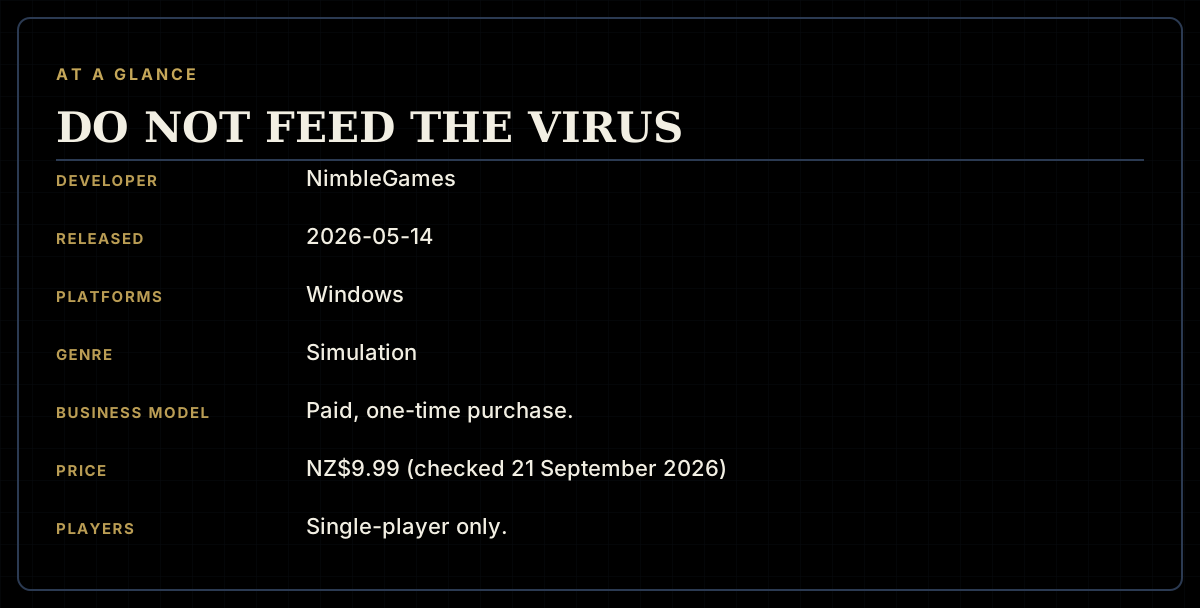
The specs at a glanceWanderer Editorial -
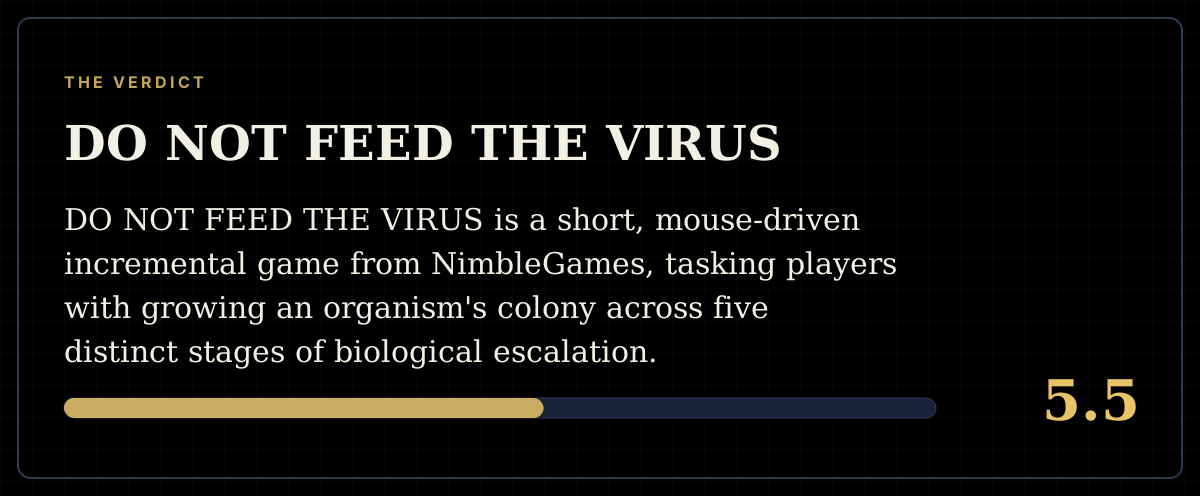
The short versionWanderer Editorial