
Game review
Deluge
8 / 10
- Developer
- Riggy2k3
- Publisher
- Riggy2k3
- Released
- 25 June 2026
- Platforms
- Windows
- Genre
- RPG, Indie, Strategy
- Monetisation
- paid
- Players
- false
The short version
Biggest strengths
- A genuinely well-written, morally ambiguous story about regret and redemption, carried by strong worldbuilding for such a short game
- Meaningful choices, including in combat, that ripple outward into multiple distinct endings and reward replaying
- Strong atmosphere, with reviewers repeatedly praising its music, pixel art, and overall polish for an RPG Maker title
Biggest weaknesses
- Combat is simple and largely a vehicle for the story rather than a deep system in its own right
- A handful of players hit an obscure late-game puzzle that required looking up the answer in the Steam Discussions
- Built in RPG Maker, and a couple of reviewers felt a more robust engine would have better served the ambition on display
Who it's for: Fans of narrative-driven, RPG Maker-style horror JRPGs (Fear & Hunger, Cthulhu Saves the World, Off) looking for a short, replayable, choice-driven playthrough rather than a lengthy campaign
Our recommendation: recommended
8 / 10
Deluge released in full on Steam on June 25, 2026, from solo developer Riggy2k3, a horror-tinged turn-based JRPG built in RPG Maker in which you play Hudson, a silent warrior risen from the soil with almost no memory of his past, deciding whether to help or destroy the small, battered town of Figaro. It's the latest, most polished form of a project with a long history behind it, several reviewers reference earlier versions dating back to a 2021 release and a prior game jam build, and this version lands with a unanimous review pool: 39 up, 0 down, a flawless 100% Positive across 39 English reviews.
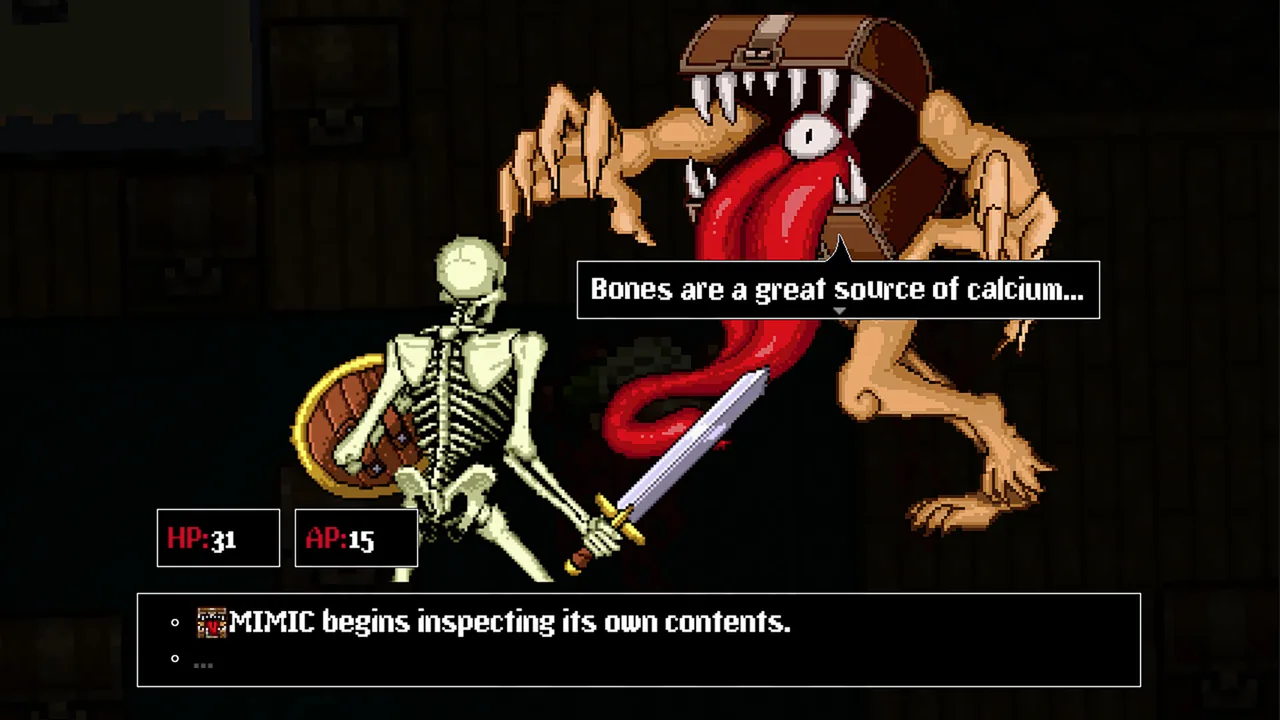
The premise is simple but the execution is what earns the praise. One reviewer summarized the setup well: "as a silent undead risen with almost no memory of your past, you must decide your role in a small town's fate. Will you join the demon's march to crush the living? Or can and will you oppose your fate as a monster?" That framing of choice runs through the whole game, not just in dialogue but in combat, where reviewers noted that "some battles double as a moral decision, and those choices ripple outward into the larger story, so be careful who you spare and who you don't." Multiple reviewers explicitly praised the consequence system as the game's strongest hook, with one writing that "there's more depth beneath the surface than you'd expect, and it practically begs for a replay," and another describing Hudson himself as compellingly drawn: "He was a good man. He was a bad man. He was a cowardly man. But his skeleton has a chance to redeem it all. Or burn it all to the ground."
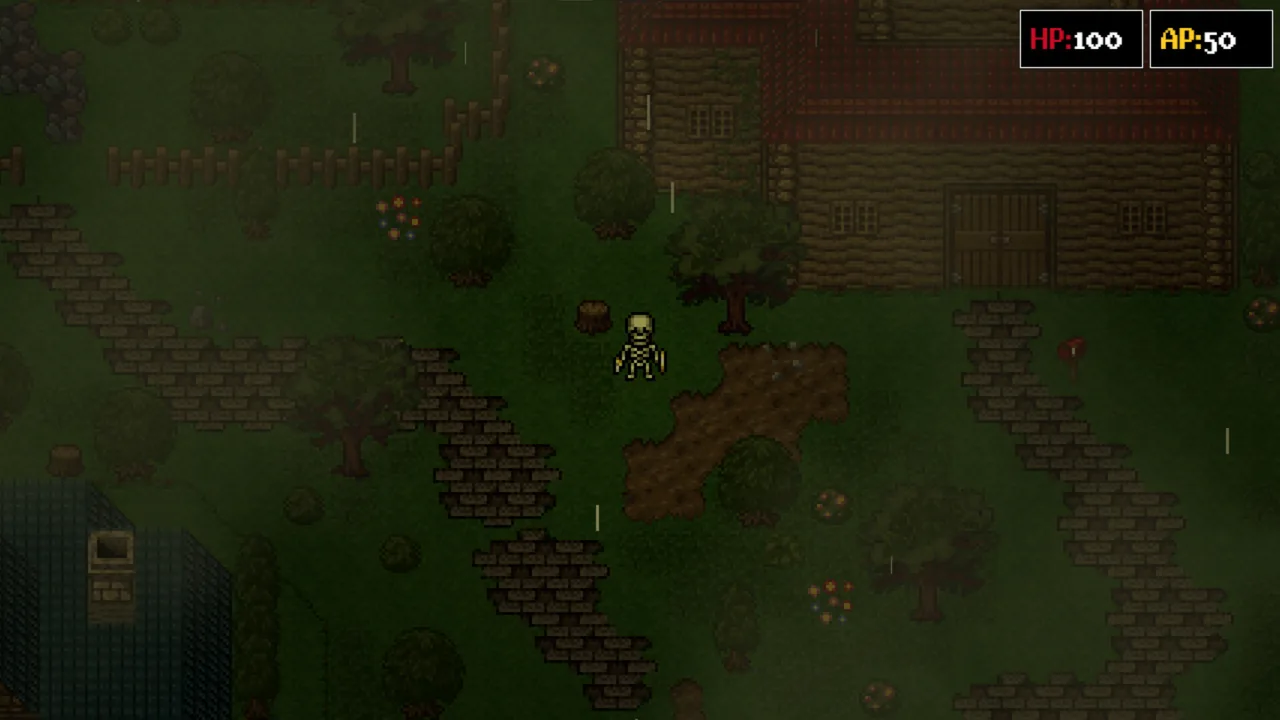
Atmosphere and presentation are the other consistent throughline in the pool. Reviewers repeatedly singled out the music and sound design ("the soundtrack sings and matches the mood the entire time," "one of those games that cleverly reuses some tracks in very different ways to create a really immersive experience"), the pixel art and small production touches (a skeleton hand as the mouse cursor, Zelda-style NPC voice blips, camera effects), and an overall sense of polish that several reviewers said exceeded their expectations for an RPG Maker title. One reviewer, who described trying the earlier 2003-styled build before waiting for this version, wrote that "the nonlinear nature of the narrative means the story is patched together in a way that matches how our skeletal protagonist begins to remember his own past: fragmented," calling out the structural choice to mirror Hudson's fractured memory in how the story itself is delivered.
Length is treated as a feature rather than a shortfall across the pool. Most reviewers clocked a single playthrough at somewhere between two and six hours, and the consistent message is that Deluge uses that time well rather than padding it. "It feels compact without feeling thin," one reviewer wrote, while another called it "the perfect game to pick up as a busy adult," praising how Riggy gave even minor enemies and townsfolk pre-combat and mid-combat dialogue to make the world of Figaro feel lived-in rather than disposable. Multiple endings are the game's main pull toward replaying, and several reviewers said they went in planning one playthrough and immediately started planning a second, contrasting pacifist and violent routes through the same handful of hours.
The criticism in the pool is genuine but narrow. A few reviewers flagged the combat itself as fairly simple, a single-character, AP/HP-driven turn-based system that "mainly serves to propel the narrative forward" rather than offering deep tactical decision-making on its own terms, and one reviewer said plainly it was "good but a little barebones." Another described hitting a wall on a late puzzle that wasn't solvable through the game's own clues alone: "I had to look up how to solve certain puzzle toward the end of the game. Thankfully someone posted the answer in Steam Discussions." A couple of reviewers also noted the limits of the engine itself, with one writing that RPG Maker "is a fairly limited engine and the game could benefit from being built in a more robust one," even while conceding the game does about as much with it as could reasonably be asked.
One thing worth flagging plainly for context: a meaningful slice of this review pool comes from people who disclosed a direct connection to the developer, former playtesters going back to the 2021 build, a collaborator who helped produce a physical PC-ROM release and its soundtrack, and at least one reviewer who received a beta key directly from Riggy. Each of those reviewers was upfront about the relationship rather than hiding it, which is worth crediting, and their praise (heavy on worldbuilding, replayability, and production polish) lines up closely with reviews from players with no disclosed connection to the project at all, so the score doesn't appear to be propped up by insider goodwill alone. It's simply useful context for reading a 100% Positive pool at face value.
Taken together, Deluge earns its acclaim: a tightly scoped, atmospheric horror JRPG that leans on strong writing, meaningful choices, and unusual production polish for its genre and engine rather than on length or combat depth. It won't satisfy players looking for a deep tactical RPG or a lengthy campaign, and the RPG Maker foundation shows through in a couple of rough edges, but as a moody, replayable few hours about regret and the chance at redemption, it's an easy recommendation for genre fans.
Pros and cons
Pros
- A genuinely well-written, morally ambiguous story about regret and redemption, carried by strong worldbuilding for such a short game
- Meaningful choices, including in combat, that ripple outward into multiple distinct endings and reward replaying
- Strong atmosphere, with reviewers repeatedly praising its music, pixel art, and overall polish for an RPG Maker title
- Approachable length (roughly 2-6 hours per playthrough) that respects the player's time without feeling thin
Cons
- Combat is simple and largely a vehicle for the story rather than a deep system in its own right
- A handful of players hit an obscure late-game puzzle that required looking up the answer in the Steam Discussions
- Built in RPG Maker, and a couple of reviewers felt a more robust engine would have better served the ambition on display
- A number of reviews in the pool disclose ties to the developer as former playtesters or collaborators, which is worth factoring into how the review pool reads
Screenshots
-
DelugeImage: Riggy2k3 via Steam -
DelugeImage: Riggy2k3 via Steam -
DelugeImage: Riggy2k3 via Steam