Game review
Crypto Mining Simulator
4.5 / 10
- Developer
- Satosha Nakamoti
- Publisher
- Satosha Nakamoti
- Released
- 24 April 2021
- Platforms
- Windows
- Genre
- Business Simulation
- Monetisation
- Premium, one-time purchase. No microtransactions, no loot boxes, and — despite the title — no real-money cryptocurrency trading of any kind
- Players
- Single-player
The short version
Crypto Mining Simulator has a hook nothing else on Steam's mining-idle shelf does: instead of tapping a shaft to make numbers go up, you physically assemble a rig — motherboard, CPU, GPUs, fans, power cables run by hand — before ever mining anything, then gamble the coin you produce against a fluctuating in-game market. Players have been saying since launch week that the building itself is the best five minutes the game has to offer.
It's also the only five minutes that got finished. CPU, RAM and motherboard choice have had no measurable effect on hash rate since the earliest reviews in April 2021, the promised real-time multi-coin trading and online mode never shipped, and reviewers are still reporting the exact same crashes, vanishing parts and dead market five years later. This is a one-person game whose developer stopped meaningfully updating it within about a year of release, and the store page's own "coming soon" list is now a time capsule.
Biggest strengths
- Building a rig by hand — motherboard in, CPU seated, GPUs racked, PSU cables run one at a time with the right-mouse-button wiring tool — is a genuinely distinct hook among Steam's mining idlers, and it's the single most consistently praised thing in five years of reviews
- A cheap, one-time purchase with no in-app purchases, no ads and, despite the title, no real-money crypto trading mechanic of any kind
- Runs comfortably on modest hardware, several reviewers note, which reads as a small joke given the subject matter
Biggest weaknesses
- No meaningful update since roughly a year after launch; the store page still lists real-time multi-coin trading, VR and an online mode as "coming features" that never arrived
- CPU, RAM and motherboard choice have had no effect on mining performance since the earliest reviews in April 2021 — there's rarely a reason to buy anything but the cheapest of each part
- Persistent, years-old bugs: PC parts vanishing from inventory after a reload, characters pathing themselves around the shop floor, and a coin market reviewers describe going flat and unsellable, reported as recently as 2025
Who it's for: Players curious about the PC-building half of the pitch who can accept it as a short, cheap novelty rather than a system to master, and anyone specifically hunting for the rare mining sim that isn't a click-and-wait idler.
Our recommendation: Only at the current NZ$7.39 asking price and only for the three-to-twenty-hour novelty of building rigs by hand. Do not buy it expecting the trading, algorithm-switching or online features the store page still advertises — none of them arrived, and nothing suggests they will.
4.5 / 10
A different idea, for a while
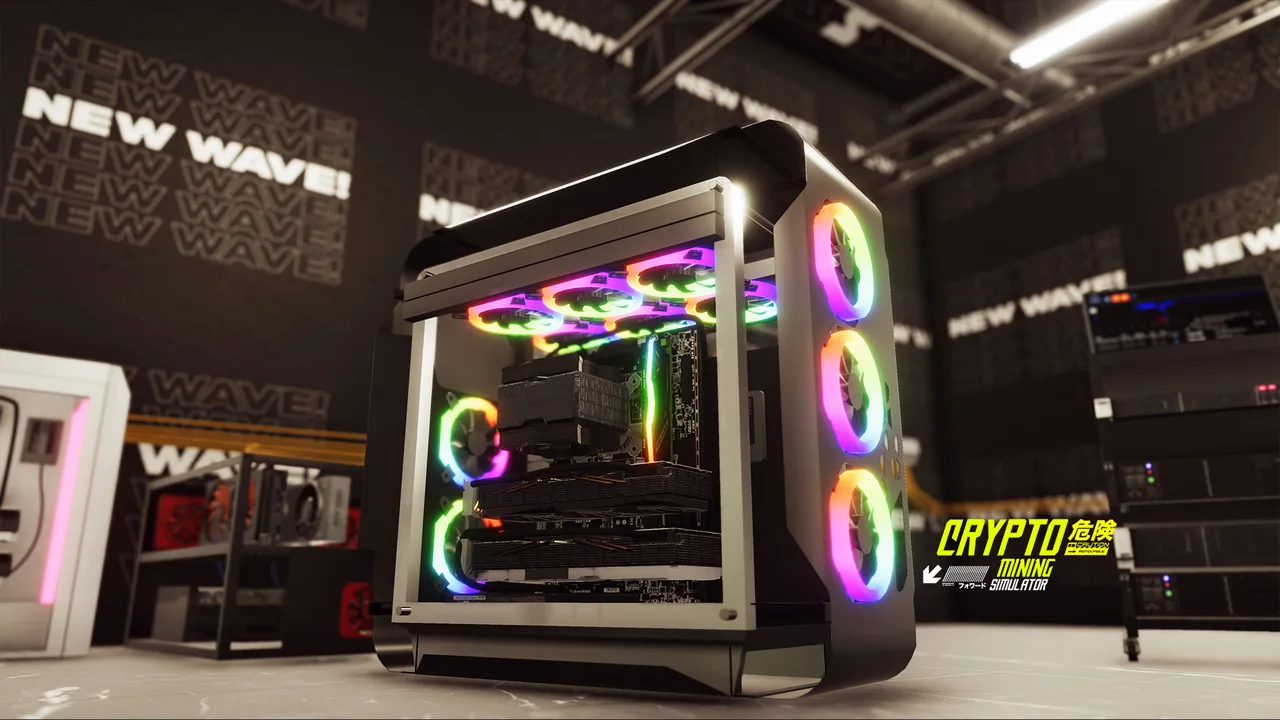
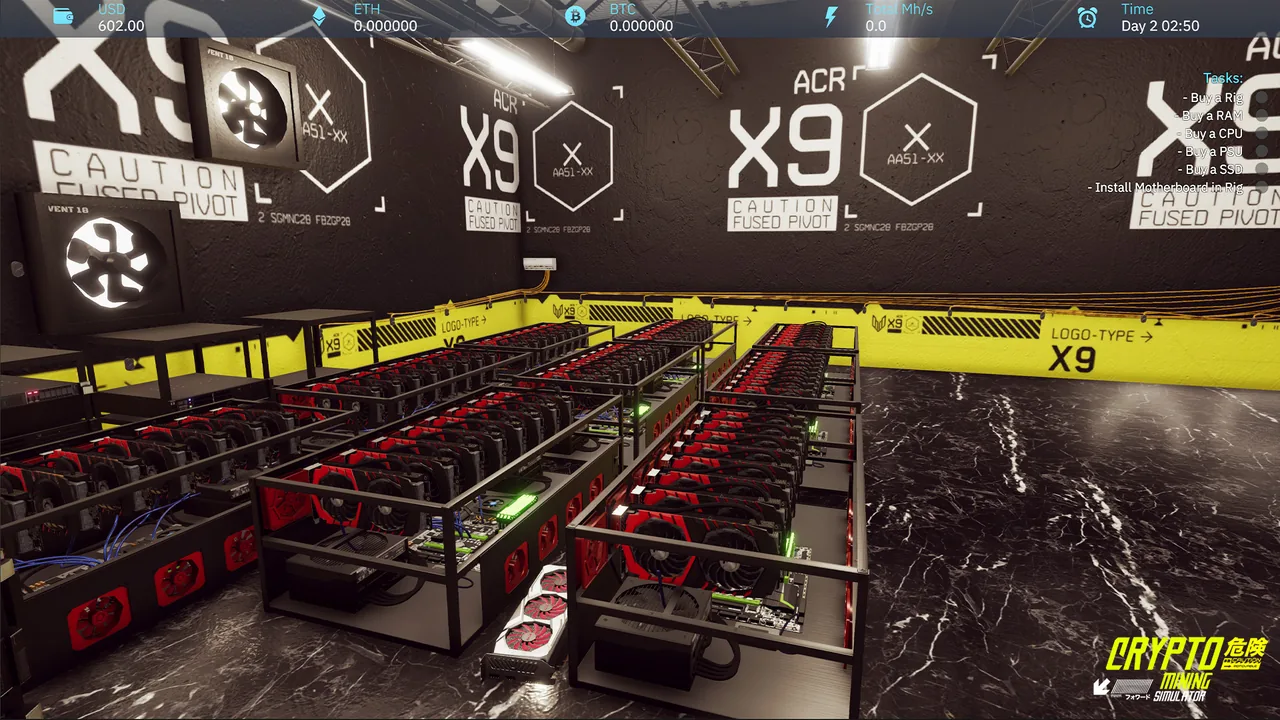
Steam has no shortage of crypto-themed idles, and almost all of them run the same click-and-wait loop as every other mining incremental with a coin icon swapped in. Crypto Mining Simulator, from solo Steam developer Satosha Nakamoti (credited on the store page under the handle @Stanislaw_Dev), tried something else: you walk a first-person character around a room, physically install a motherboard, seat a CPU, rack GPUs, connect a power supply and run cables one at a time with a dedicated wiring tool, before any of it produces a single unit of hash rate. Only once a rig is actually built does the mining and, separately, the buying and selling of the coin it produces begin.
That build-first structure is the game's whole identity, and it's the one part of the pitch reviewers consistently credit. The highest-voted review on the store page — written days after the 24 April 2021 launch and still sitting at 227 helpful votes five years later — calls the assembly "a lot of detail in certain things" and singles out rig-building as "genuinely fun." That sentiment repeats through 2022, 2024 and into 2026: reviewers who otherwise recommend against buying the game still stop to say the five or ten minutes spent screwing a rig together were the best part of their session. It's a rare, physical alternative to tapping a shaft icon, and on the strength of that loop alone it's easy to see why the game found an audience at a NZ$7.39 asking price.
Where the systems stop
The trouble starts as soon as a player looks past the build screen at what the parts are actually doing. The same 227-vote review that praises the assembly opens its list of problems with the game's central mechanical flaw: CPU choice, RAM choice, motherboard choice and RAM quantity "have no effect on hash rate." There's rarely a reason to buy anything above the cheapest tier of any part, aside from the separate PC-building-for-customers side job — which most reviewers report dropping once its novelty wears off. A game whose entire premise is realistic rig construction turning out not to model the one variable that construction is supposed to control is the kind of gap that would normally get patched in an early-access update. This one launched already out of Early Access, with that flaw present from week one and still present in reviews written in 2026.
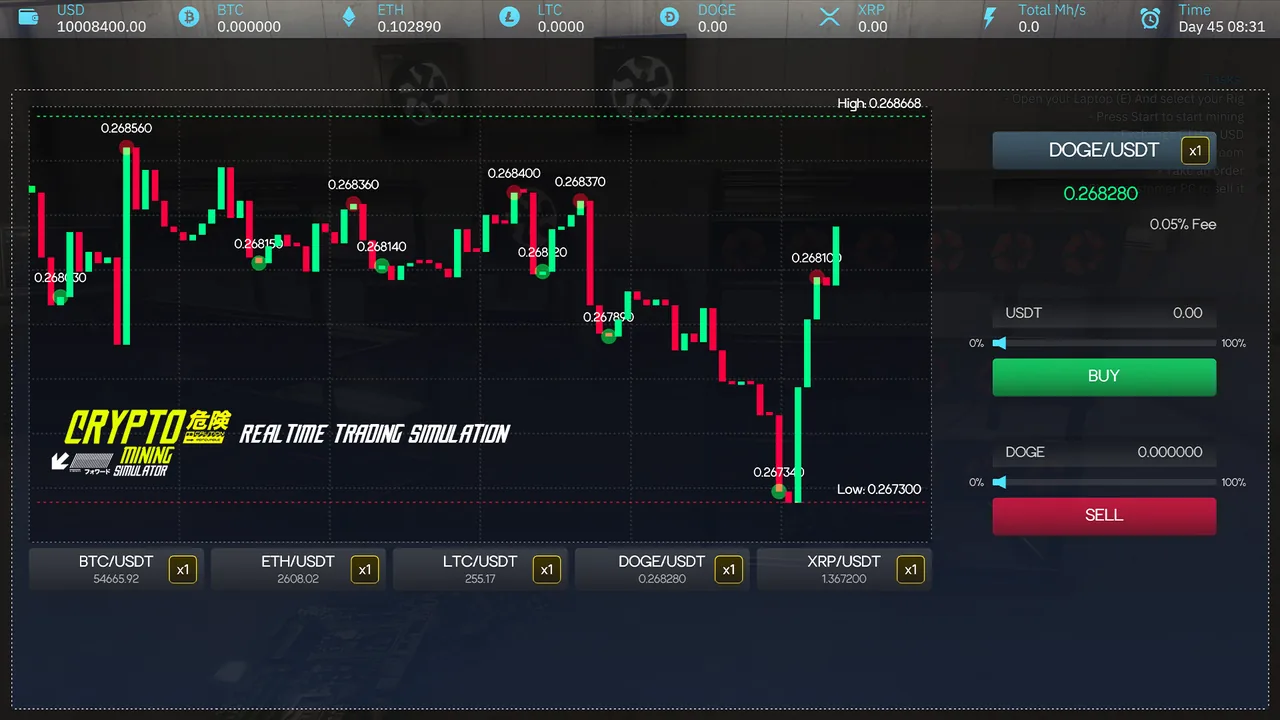
The market side fares worse. Several reviewers, including one writing in September 2025, describe the in-game coin market going flat — a price that stops fluctuating entirely, making a mined coin un-sellable at any figure — which breaks the other half of the core loop outright. A 2022 review put the buy-low-sell-high cycle's actual depth bluntly: "Build a PC and wait for a good price to buy Crypto. Wait for a good price to sell Crypto... Buy a graphic card. Wait for a good price to buy Crypto." There is no algorithm-switching, no multi-coin trading beyond a single asset, and none of the "Realistic Trading with multiple coins: BTC, ETH, LTC, DOGE, XRP" the store page still lists under Coming Features. Reviewers also report PC parts vanishing from a player's inventory after a reload without refund, and a character that occasionally paths itself around the shop rather than going where it's placed — bugs reported at launch and still reported five years on.
A developer who left
None of this reads as a game that shipped broken and got abandoned quietly. Reviewers have watched it happen in real time. A review from the game's first month already asks for Early Access status given how unfinished the systems felt. By late 2021 a review flags no updates since May of that year. By 2022, one-star reviews describe "half assed updates, fixing next to nothing." Reviews written across 2023, 2024 and 2025 use the word "abandonware" outright, and as recently as March 2026 a review states plainly that "devs refuse to make any updates since 2021." The store page's own Coming Features list — real-time multi-coin trading, VR support, a full online mode — has now sat unfulfilled for five years, next to a "detailed graphics" pitch that never got the promised follow-through either.
That trajectory shows up cleanly in the numbers. Across all 1,412 reviews in every language, the game sits at roughly 65% positive — Steam's "Mixed" band. Restricted to the 766 English-language reviews, it's about 61.7%, the same band. But the most recent 100 English reviews, spanning January 2024 through July 2026, run only 28% positive. A game that launched to a reasonably warm reception is being rediscovered by a colder audience every year, and the reviews explain why in their own words: newer arrivals expect a finished product, find a five-year-old one, and mark it down accordingly. That's a meaningfully worse read on where the game stands today than its lifetime score alone would suggest.
What it's actually not
Given the title, it's worth stating plainly what this game does not do: there is no real-money cryptocurrency mechanic anywhere in it. The coin mined and traded is entirely simulated, priced by an in-game market rather than a live feed, and never leaves the game or touches an actual wallet. The purchase itself is a single one-time payment with no microtransactions, no ads and no loot-box-style monetisation layered on top — on that front, at least, the "crypto" branding is just theme, not a mechanic to be wary of.
Verdict
Most players who leave a review for Crypto Mining Simulator report finishing everything it has to offer in somewhere between three and twenty hours, and that arc matches the mechanics: a genuinely novel building sequence, a shallow and occasionally broken economic layer behind it, and no late-game system that was ever added to give the loop somewhere to go. At its current NZ$7.39 price, that's a defensible novelty purchase for someone specifically curious about the rig-assembly half of the idea — the part every reviewer from 2021 through 2026 agrees is the game's best moment. It's a much worse purchase for anyone expecting the "detailed" simulation, the multi-coin trading or the online mode the store page still promises, because none of it arrived, and a developer who has gone quiet for five years gives no real reason to expect it now.
Pros and cons
Pros
- Building a rig by hand — motherboard in, CPU seated, GPUs racked, PSU cables run one at a time with the right-mouse-button wiring tool — is a genuinely distinct hook among Steam's mining idlers, and it's the single most consistently praised thing in five years of reviews
- A cheap, one-time purchase with no in-app purchases, no ads and, despite the title, no real-money crypto trading mechanic of any kind
- Runs comfortably on modest hardware, several reviewers note, which reads as a small joke given the subject matter
- Steam's Family Sharing support means one household purchase covers everyone in it
Cons
- No meaningful update since roughly a year after launch; the store page still lists real-time multi-coin trading, VR and an online mode as "coming features" that never arrived
- CPU, RAM and motherboard choice have had no effect on mining performance since the earliest reviews in April 2021 — there's rarely a reason to buy anything but the cheapest of each part
- Persistent, years-old bugs: PC parts vanishing from inventory after a reload, characters pathing themselves around the shop floor, and a coin market reviewers describe going flat and unsellable, reported as recently as 2025
- Most players report seeing everything the game has to offer in three to twenty hours, after which there is nothing left to chase — no late-game system was ever added to replace the early-game novelty
- Recent English-language sentiment has fallen well below the game's lifetime score, as more reviewers arrive expecting a finished product and instead find a five-year-old unfinished one
Screenshots
-
Crypto Mining SimulatorImage: Satosha Nakamoti via Steam -
Crypto Mining SimulatorImage: Satosha Nakamoti via Steam -
Crypto Mining SimulatorImage: Satosha Nakamoti via Steam -
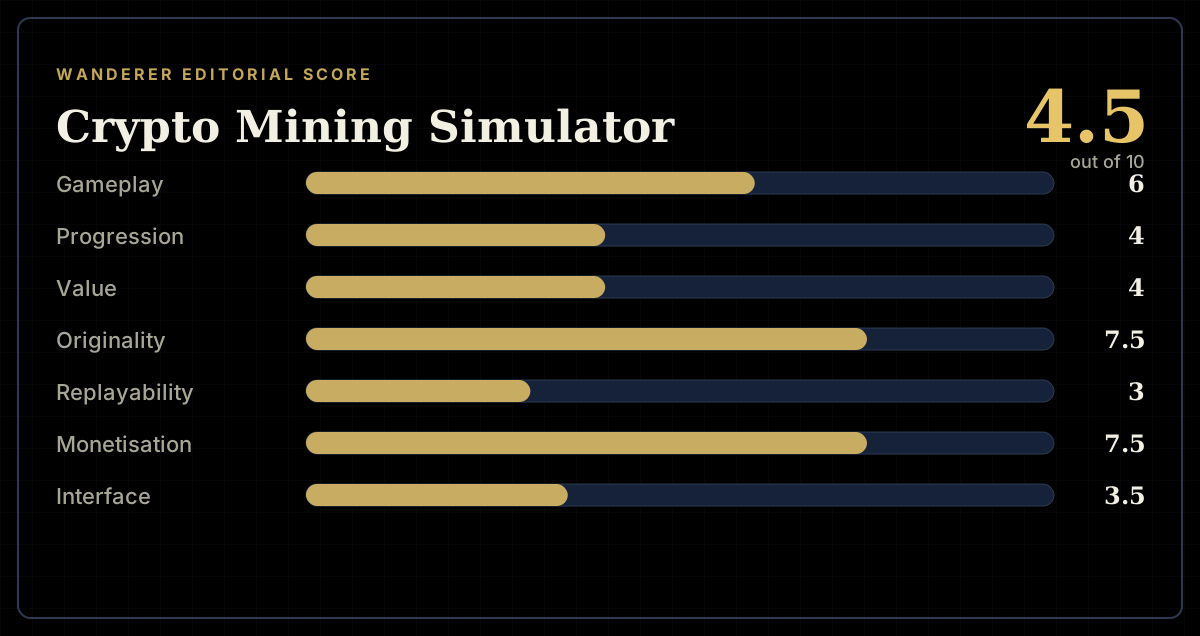
How the review scores each part of the gameWanderer Editorial -
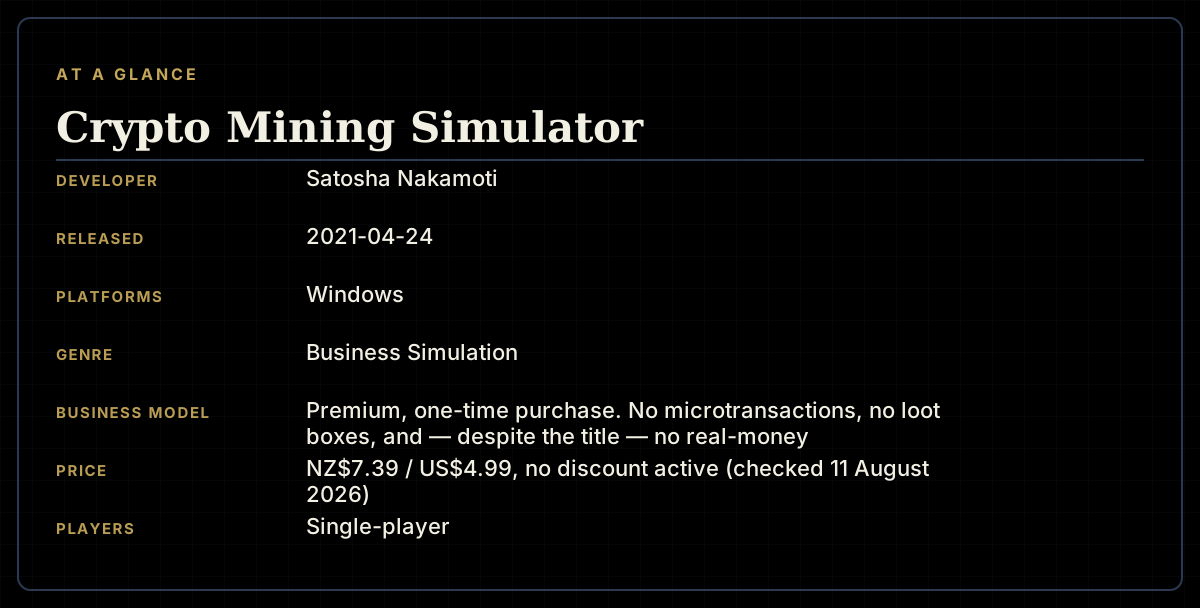
The facts at a glanceWanderer Editorial -
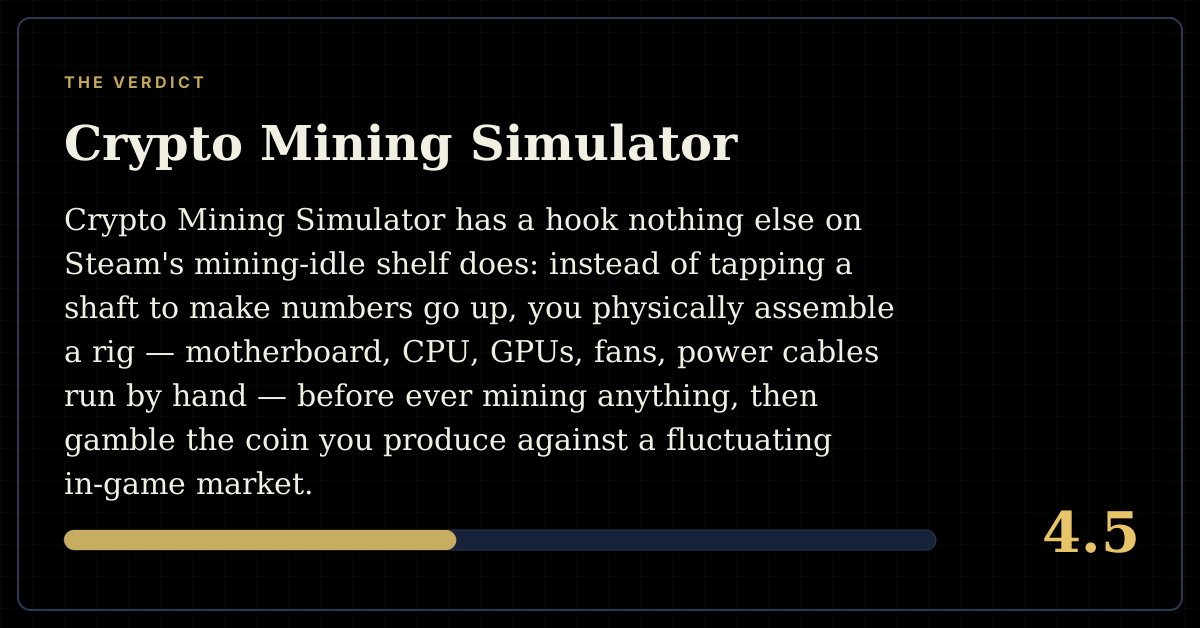
The short versionWanderer Editorial