Game review
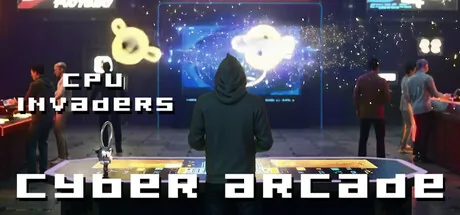
CPU Invaders - Cyber Arcade
5.6 / 10
- Developer
- Microblast Games
- Publisher
- Microblast Games
- Released
- 6 March 2026
- Platforms
- Windows
- Genre
- Action, Casual
- Monetisation
- Premium
- Players
- Single-player only
The short version
CPU Invaders - Cyber Arcade is a $0.99 arcade shooter from Microblast Games, released 6 March 2026 as a sequel to the developer's earlier Steam Awards finalist. Rather than confining play to a fullscreen window, the game overlays classic arcade mini-games directly on top of the desktop, turning open windows, icons, and whatever else is on screen into part of the battlefield while players keep browsing, watching videos, or working. This review draws on a sample of 31 lifetime reviews, overwhelmingly Positive with 30 positive against a single negative, and reads the full sample in detail. Reviewers consistently praised the novelty and price, while the sample's one detailed critical voice pointed to a specific broken mini-game and a repetitive soundtrack as real, concrete shortcomings.
Biggest strengths
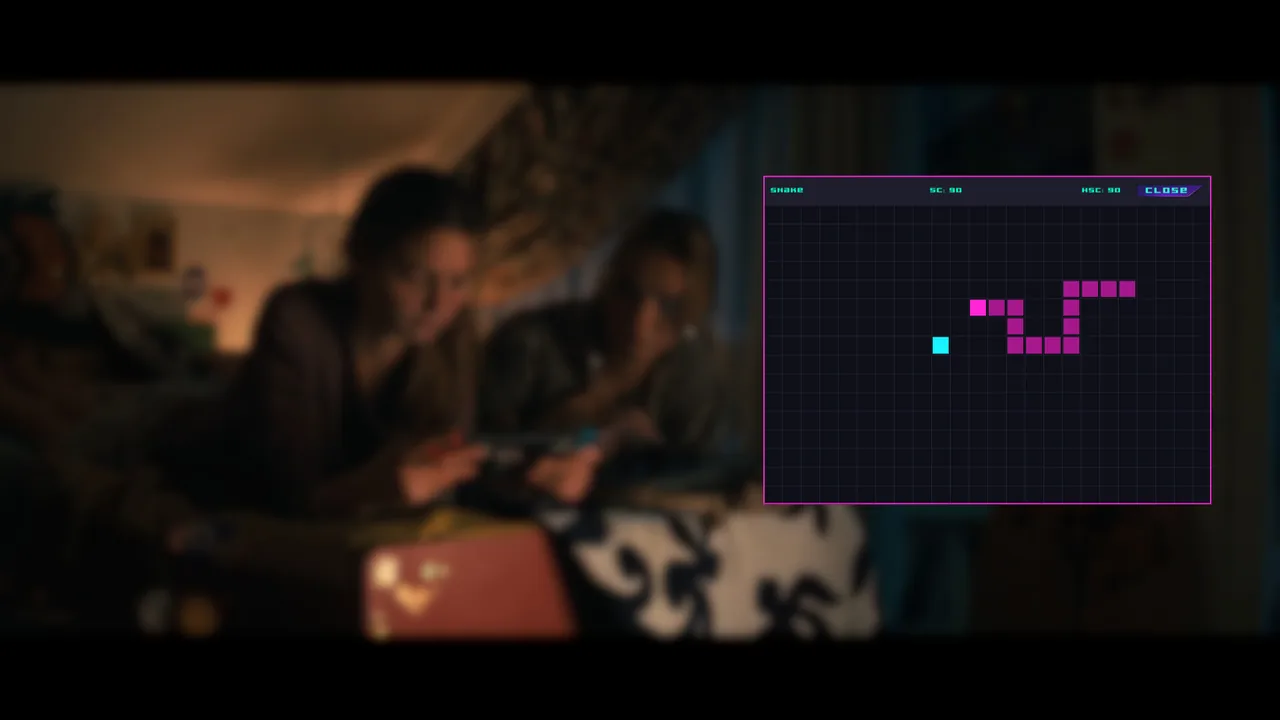
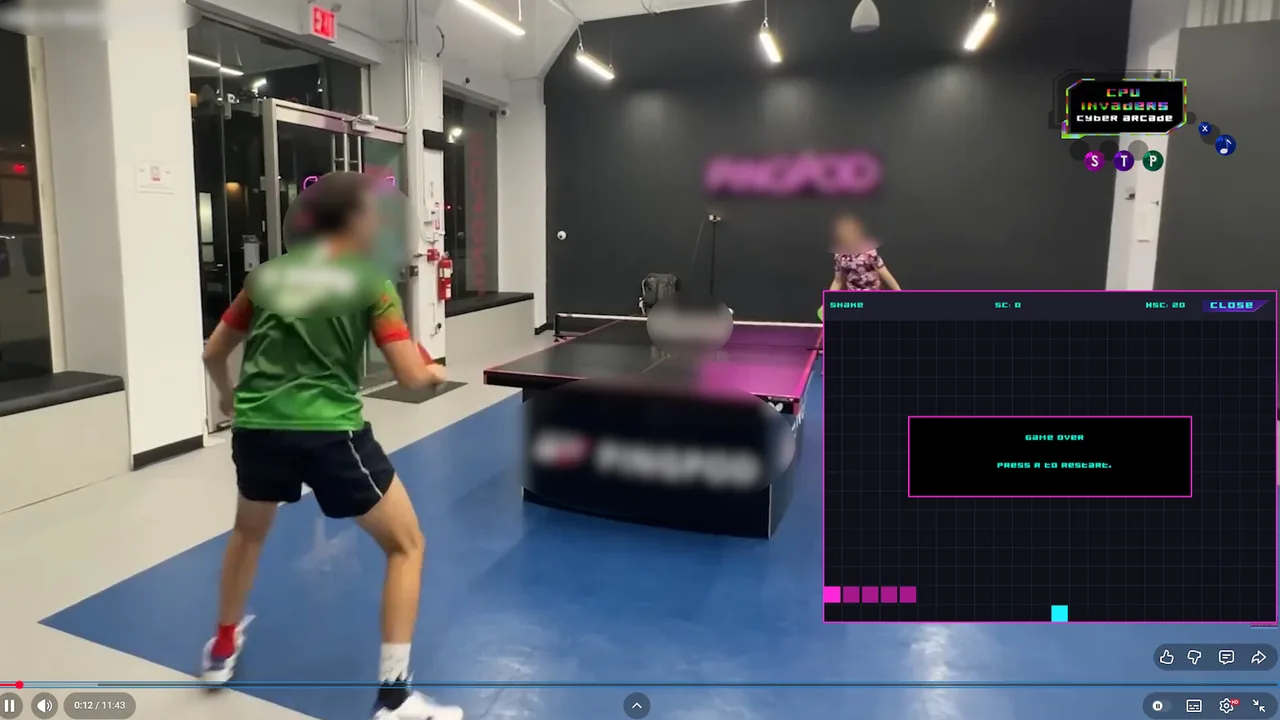
- This review checked the store's own detailed description and confirmed the core novelty directly: the game overlays itself on top of the desktop rather than requiring a fullscreen window, letting players keep emails, browser windows, and other apps visible while digital enemies invade around them, a design this review's sample repeatedly singled out as genuinely distinctive
- This review's sample included one especially thorough, structured review that praised the variety of included retro-style mini-modes, each introducing 'slight variations in enemy behavior, objectives, or scoring mechanics,' concluding the game 'succeeds by embracing its identity as a quirky experimental project' rather than trying to compete with larger action titles
- This review's sample repeatedly praised the value proposition at this price, with reviewers independently calling it 'a great little game that's definitely worth its small price' and 'a solid arcade experience,' consistent with a near-unanimous 30 positive to 1 negative reception
Biggest weaknesses
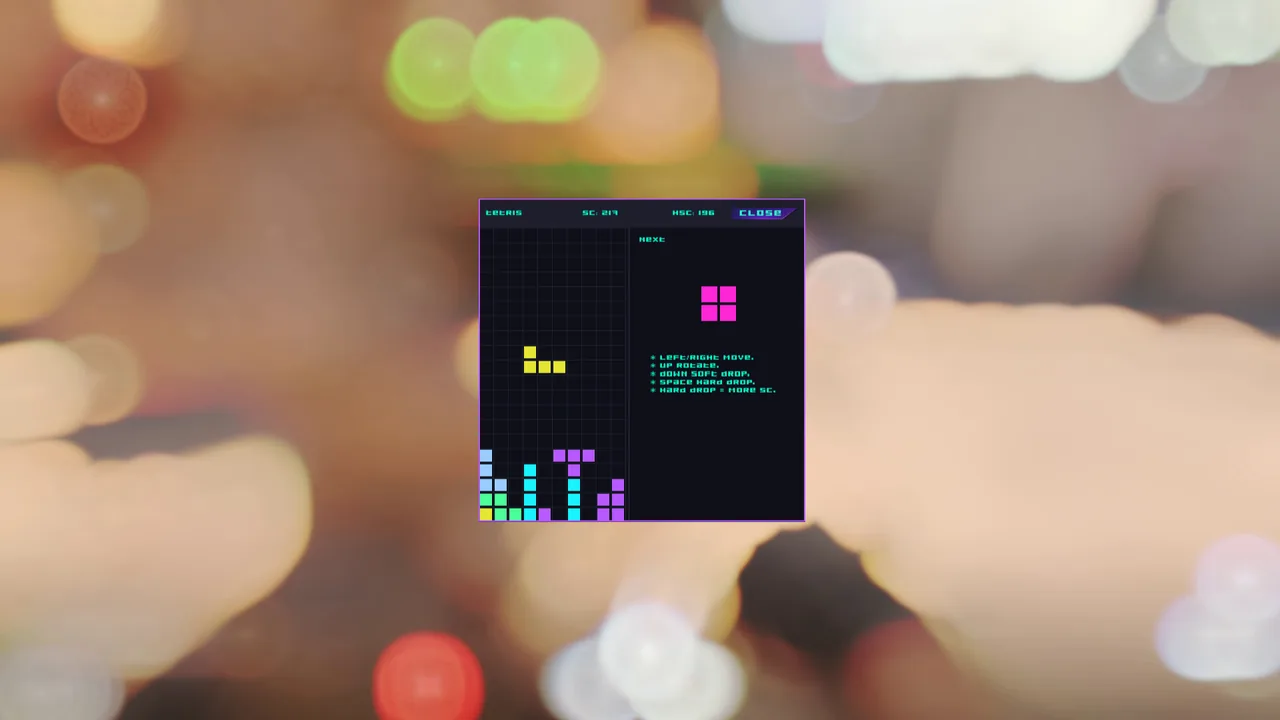
- This review's sample included a specific, detailed complaint that one of the included retro mini-games is broken relative to its source material, with the reviewer noting it 'doesn't follow standard Tetris rules,' a concrete quality issue rather than a vague dismissal
- This review's sample included a specific audio complaint about 'an annoying short music loop,' consistent with the same detailed critical review that otherwise praised the game's electronic soundtrack for setting the cyber-themed atmosphere in isolated bursts of play
- This review's sample raised a specific legal concern about the closeness of the included mini-games to their classic arcade inspirations, with one reviewer flagging 'potential copyright infringement' as an open question rather than a settled fact
Who it's for: Players who want a cheap, disposable score-chasing distraction to run alongside other computer use, not anyone looking for a substantial standalone arcade game with real progression.
Our recommendation: An easy recommendation at a dollar for the novelty alone, though this review's own sample makes clear it's a lightweight, short-session experiment rather than a game meant to be played on its own for long stretches.
5.6 / 10
Your desktop, browser tabs and all, becomes the battlefield in CPU Invaders - Cyber Arcade, a $0.99 arcade shooter from Microblast Games released 6 March 2026 as a sequel to the developer's earlier Steam Awards finalist. This review draws on a sample of 31 lifetime reviews, overwhelmingly Positive with 30 positive against a single negative, and reads the full sample in detail.
A genuinely distinctive core idea
This review checked the store's own detailed description and confirmed the game's defining feature directly: rather than confining play to a fullscreen window, CPU Invaders overlays itself on top of the desktop, letting windows, icons, and open apps remain visible as digital enemies invade around them. This review's sample consistently singled that concept out as the game's real hook, with one reviewer describing it plainly as "a pretty useful app" for staying engaged during otherwise tedious computer tasks, a genuine, if unusual, use case tied directly to the overlay design.
A varied set of retro mini-games, reviewed in detail
This review's sample included one especially thorough, structured review that walked through the game's design point by point, praising the variety of included retro-style mini-modes, each introducing "slight variations in enemy behavior, objectives, or scoring mechanics" to keep runs from feeling identical. That same reviewer concluded the game "succeeds by embracing its identity as a quirky experimental project," deliberately not trying to compete with larger, more elaborate indie shooters, and assigned it a self-scored 7 out of 10 in their own written breakdown.
A near-unanimous vote of confidence on value
This review's sample was consistent in treating the price as an easy sell, with reviewers independently calling it "a great little game that's definitely worth its small price" and "a solid arcade experience." That reception lines up with the sample's overall balance, 30 positive against a single negative among 31 lifetime reviews, an unusually lopsided ratio even accounting for the very low price point.
A specific complaint about a broken mini-game
Set against that praise, this review's sample included one detailed critical review raising concrete, specific problems rather than a vague dismissal. That reviewer noted one of the included mini-games "doesn't follow standard Tetris rules," a direct quality complaint about a specific mode rather than the overlay concept as a whole, alongside a note about "an annoying short music loop" during extended play.
An open question about the mini-games' originality
The same critical review also raised a specific legal concern this review considers worth flagging transparently rather than dismissing outright: "potential copyright infringement" regarding how closely some of the included retro mini-games mirror their classic arcade inspirations. This review treats that as an open question raised by a single reviewer rather than a settled conclusion, since it wasn't echoed elsewhere in the sample, but notes it alongside the broken-Tetris-rules complaint as evidence that at least one specific mini-game wasn't fully polished at launch.
Real depth limits once the novelty settles
This review's own most detailed reviewer was candid about the game's ceiling even while recommending it: once the desktop-overlay novelty wears off, the core gameplay "remains fairly traditional and simple," with "no deep progression systems, story campaigns, or complex upgrade mechanics" underneath the concept. This review reads that as an honest, self-aware limitation rather than a fatal flaw, consistent with a $0.99 game explicitly built for short bursts of play rather than extended sessions.
A real difficulty curve across nine achievements
This review checked the Steam global achievement API directly and found a meaningful spread across the game's 9 tracked achievements, from 62.7 percent for the most commonly earned down to 30.3 percent for the least common, indicating genuine difficulty variation across the included mini-games rather than a flat, trivially-completed list. Reviewer playtimes in this review's own sample varied widely too, from 15 minutes up to over 22 hours for the most engaged player, consistent with a game whose appeal scales with how much a given player enjoys leaving it running in the background.
No accessibility features documented
This review checked the store's own category data directly and found no accessibility-specific flags listed, only the game's basic single-player and achievement support. For a fast-paced shooter built around quick reflexes, this review considers that a real, documented gap rather than a merely theoretical one.
A minimalist visual style that fits the concept
This review's own most detailed reviewer described the visual approach at length, noting the game "adopts a minimalist cyber-arcade style that emphasizes bright colors and digital effects rather than detailed graphics," with enemies rendered as "simple geometric shapes or stylized glitches" and explosions kept "intentionally flashy but lightweight so they remain visible without completely obscuring the desktop beneath them." This review reads that restraint as a deliberate, sensible design choice given the game's entire premise depends on staying legible while other windows and content remain visible underneath it, rather than a limitation born of budget alone.
A sequel building on an established identity
This review checked the store's own detailed description and confirmed this release is explicitly framed as "a sequel to the Steam Awards finalist," continuing an established series rather than launching a wholly new concept from scratch. One enthusiastic reviewer, evidently a returning fan, called it plainly their "favorite game in the CPU Invaders series," a lighthearted but genuine signal that the developer's specific desktop-overlay identity has built real, if niche, ongoing goodwill across multiple releases rather than being a one-off experiment.
Verdict
CPU Invaders - Cyber Arcade is a clever, cheap novelty that mostly delivers on its own modest ambitions, and this review's overwhelmingly Positive sample backs that up in detail. A broken Tetris-rules mini-game and a grating music loop are real, specific rough edges, and the core gameplay itself is intentionally simple once the desktop-overlay gimmick settles in. At a dollar, though, this review considers it an easy, low-risk recommendation for exactly the kind of disposable, background-friendly distraction it's trying to be.
Pros and cons
Pros
- This review checked the store's own detailed description and confirmed the core novelty directly: the game overlays itself on top of the desktop rather than requiring a fullscreen window, letting players keep emails, browser windows, and other apps visible while digital enemies invade around them, a design this review's sample repeatedly singled out as genuinely distinctive
- This review's sample included one especially thorough, structured review that praised the variety of included retro-style mini-modes, each introducing 'slight variations in enemy behavior, objectives, or scoring mechanics,' concluding the game 'succeeds by embracing its identity as a quirky experimental project' rather than trying to compete with larger action titles
- This review's sample repeatedly praised the value proposition at this price, with reviewers independently calling it 'a great little game that's definitely worth its small price' and 'a solid arcade experience,' consistent with a near-unanimous 30 positive to 1 negative reception
- This review's sample included at least one reviewer recommending the game specifically as a tool for maintaining focus, describing it as 'a pretty useful app to help alleviate your ADHD' during boring work or lectures, an unusual but genuine use case tied directly to the desktop-overlay concept
Cons
- This review's sample included a specific, detailed complaint that one of the included retro mini-games is broken relative to its source material, with the reviewer noting it 'doesn't follow standard Tetris rules,' a concrete quality issue rather than a vague dismissal
- This review's sample included a specific audio complaint about 'an annoying short music loop,' consistent with the same detailed critical review that otherwise praised the game's electronic soundtrack for setting the cyber-themed atmosphere in isolated bursts of play
- This review's sample raised a specific legal concern about the closeness of the included mini-games to their classic arcade inspirations, with one reviewer flagging 'potential copyright infringement' as an open question rather than a settled fact
- This review's own most detailed reviewer, who scored the game 7 out of 10 in their own written review, explicitly noted the core gameplay 'remains fairly traditional and simple' once the desktop-overlay novelty wears off, with 'no deep progression systems, story campaigns, or complex upgrade mechanics' beneath the concept
Screenshots
-
CPU Invaders - Cyber ArcadeImage: Microblast Games via Steam -
CPU Invaders - Cyber ArcadeImage: Microblast Games via Steam -
CPU Invaders - Cyber ArcadeImage: Microblast Games via Steam