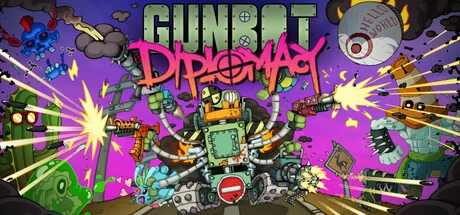
Game review
Gunbot Diplomacy
6.5 / 10
- Developer
- Sleepy Sentry
- Publisher
- GrabTheGames, Gamersky Games
- Released
- 13 May 2025
- Platforms
- Windows
- Genre
- Action, Casual, Indie
- Monetisation
- Premium, one-time purchase. No microtransactions.
- Players
- Single-player only.
The short version
Gunbot Diplomacy, developed by Sleepy Sentry and published by GrabTheGames and Gamersky Games, is a top-down arena survivor roguelite openly modeled on Brotato, swapping potato heads for customizable robots built around a distinctive hex-grid weapon and upgrade system. Much of the review sample praises that grid system as a genuinely unique, strategy-adding twist on a crowded genre, alongside a huge volume of bots, weapons, and modules for a low price. But a real, corroborated share of the sample reports weak or imperceptible feedback from upgrades, a grid system that some feel restricts experimentation rather than rewarding it, and core mechanics, like weapon evolutions, left almost entirely undocumented by the game itself.
Biggest strengths
- Praised for a genuinely distinctive build-crafting system, with one detailed reviewer stating it "adds a truly unique build crafting element that ensures no two runs are ever going to be the same," specifically highlighting how "the hex-grid upgrade system adds a layer of strategy and planning that's unique within the genre."
- Praised for substantial content volume at a low price, with one reviewer itemizing "4 difficulties," "32 unique enemy types," "10 bots, each with distinct upgrade grid layouts," and "19 weapons, 13 evolutions, and 84 upgrade modules."
- Praised for stable technical performance, with one reviewer reporting "almost 6 hours in and I haven't experienced any sort of bugs or glitches," and separately confirming it "runs great" even on a modest laptop GPU.
Biggest weaknesses
- The single most heavily corroborated complaint concerns weak or unclear feedback from upgrades, with one reviewer reporting they "never had any issue finishing runs without fail, making it feel even more mindless than the genre already is," and a separate reviewer independently confirming "I don't feel any impact/change from the upgrades."
- A second, corroborated complaint concerns the signature hex-grid system itself, with one reviewer stating it "eventually feels like it punishes experimentation" rather than rewarding it, and another separately describing it as, for them personally, "too restrictive."
- A third complaint concerns undocumented core mechanics, with one reviewer reporting the game never explains how to trigger weapon evolutions, stating "until that point its gives you zero information," and separately noting they searched online and "got nothing useful."
Who it's for: Fans of Brotato, Vampire Survivors, and the wider survivor-roguelite genre looking for a cheap, content-rich variant with a genuinely different upgrade system; anyone wanting clearer in-game guidance or immediately impactful power growth should temper expectations.
Our recommendation: A content-rich, cheap Brotato-style survivor roguelite with a genuinely distinctive hex-grid build system, held back by weak upgrade feedback and undocumented mechanics.
6.5 / 10
Brotato with robots, and a genuinely different upgrade system
Gunbot Diplomacy, released 13 May 2025 by developer Sleepy Sentry and publishers GrabTheGames and Gamersky Games, is a top-down arena survivor roguelite that wears its primary inspiration openly, with reviewer after reviewer reaching for the same comparison point. One reviewer describes it simply as "basically Brotato 2 with robots instead of potato heads," while another frames the connection more elaborately, opening a review with a mock Braveheart-style rallying cry before catching themselves: "wait, wrong game. This is Brotato from Temu, where instead of a potato, you play as a robot." A third reviewer addresses the comparison head-on with an entire review structured around the question "Do you LOVE Brotato?", concluding that fans of that genre-defining title will likely enjoy this variant despite it being "slightly worse in just about every respect."
That heavy inspiration doesn't stop several reviewers from crediting the game with a genuinely distinctive twist of its own. One detailed reviewer argues the game "expands on the gameplay style of games like Brotato and Vampire Survivors by adding a truly unique build crafting element that ensures no two runs are ever going to be the same," specifically praising how "the hex-grid upgrade system adds a layer of strategy and planning that's unique within the genre." Another reviewer frames the same system as the game's clear highlight, stating "upgrading your Gunbot is easily the best part of the game, figuring out the different interactions of the grid based upgrade system is just my kinda jam," specifically enjoying the freedom to build absurd, highly specialized loadouts like "6 gatling guns on your Gunbot for no reason."
Huge content volume for a very low price
Beyond its build system, the review sample repeatedly praises the sheer volume of content on offer relative to the game's low asking price. One especially detailed reviewer itemizes the scope precisely: "4 difficulties," "32 unique enemy types," "10 bots, each with distinct upgrade grid layouts," and "19 weapons, 13 evolutions, and 84 upgrade modules, featuring a variety of damage types and stats to build around." That level of specificity, from a reviewer who otherwise frames the game candidly as inferior to its inspiration "from both polish and replayability perspectives," suggests the raw content volume genuinely impresses even skeptical players.
Performance and stability also earn specific, corroborated praise. One reviewer reports "almost 6 hours in and I haven't experienced any sort of bugs or glitches," separately confirming the game "runs great" even on a modest 960m mobile GPU, a meaningful data point for a genre whose screen-filling enemy swarms can strain weaker hardware. Combined with a price several reviewers explicitly flag as low enough to offset rough edges, one describing it bluntly as "5/10 not much here, but its only 5$," the game's content-to-price ratio appears to be a genuine strength even among its more lukewarm reviewers.
Upgrades that several reviewers can't feel working
Set against that praise, the review sample's most heavily corroborated complaint concerns how little several reviewers report actually feeling from the game's core progression systems. One reviewer states plainly they "never had any issue finishing runs without fail, making it feel even more mindless than the genre already is," specifically criticizing that "upgrades are hard to discern their actual power." A separate, independent reviewer corroborates the identical underlying complaint almost verbatim, reporting "I don't feel any impact/change from the upgrades," despite trying "most weapons and characters," which they separately describe as feeling "boring and/or weak."
That complaint extends to the signature hex-grid system itself for a meaningful share of the sample, with one reviewer noting the grid "eventually feels like it punishes experimentation" rather than rewarding it, specifically suggesting "the ability to move nodes around might help" address the issue. A separate reviewer frames the same friction more personally, describing the grid as, in their case, "too restrictive," concluding despite acknowledging "overall quality is there," that "the game just doesn't click with me." A third reviewer raises a related balance concern, noting "some weapons seem way way better than others" and criticizing the meta-progression system's "rerolls for meta currency" as "not great balancing."
Core mechanics left largely unexplained
A third, corroborated complaint concerns the game's documentation and onboarding, particularly around its weapon evolution system. One detailed reviewer reports genuine enthusiasm for the game overall, "very fun game," but states they "cant give it a good review until they add detailed explanations of how the game mechanics work," specifically asking "how do you" evolve weapons, since "nobody knows." That reviewer reports trying to research the mechanic externally, stating "I tried to google it and got nothing useful," and that the one time they triggered an evolution accidentally, they have "yet to manage to repeat it since I have no f'n clue how to trigger" it again.
This complaint is notable for how it's voiced by an otherwise enthusiastic player rather than a critic looking to tear the game down, suggesting the documentation gap actively undermines enjoyment for players who would otherwise recommend the game without reservation. A separate reviewer raises a related, if more isolated, frustration about a specific mission design choice involving an "indestructible turret" at high difficulty, describing it as disproportionately frustrating against already screen-filling enemy hordes, concluding "I deleted the game because of it," a specific data point suggesting difficulty-tuning communication issues extend beyond just the upgrade and evolution systems.
Verdict
Gunbot Diplomacy is, by its own review sample's account, a content-rich, cheap Brotato-style survivor roguelite that succeeds at carving out a genuinely distinctive identity through its hex-grid build system and an unusually large roster of bots, weapons, and modules for the price. But a real, corroborated pool of complaints around weak or imperceptible upgrade feedback, a grid system some feel restricts rather than rewards experimentation, and core mechanics like weapon evolution left almost entirely unexplained, mean the experience falls short of its full potential for a meaningful share of players. Fans of the genre looking for a cheap, content-dense variant with a real structural twist should find plenty to enjoy; anyone wanting immediately satisfying power growth or clear in-game guidance should go in with tempered expectations.
Pros and cons
Pros
- Praised for a genuinely distinctive build-crafting system, with one detailed reviewer stating it "adds a truly unique build crafting element that ensures no two runs are ever going to be the same," specifically highlighting how "the hex-grid upgrade system adds a layer of strategy and planning that's unique within the genre."
- Praised for substantial content volume at a low price, with one reviewer itemizing "4 difficulties," "32 unique enemy types," "10 bots, each with distinct upgrade grid layouts," and "19 weapons, 13 evolutions, and 84 upgrade modules."
- Praised for stable technical performance, with one reviewer reporting "almost 6 hours in and I haven't experienced any sort of bugs or glitches," and separately confirming it "runs great" even on a modest laptop GPU.
Cons
- The single most heavily corroborated complaint concerns weak or unclear feedback from upgrades, with one reviewer reporting they "never had any issue finishing runs without fail, making it feel even more mindless than the genre already is," and a separate reviewer independently confirming "I don't feel any impact/change from the upgrades."
- A second, corroborated complaint concerns the signature hex-grid system itself, with one reviewer stating it "eventually feels like it punishes experimentation" rather than rewarding it, and another separately describing it as, for them personally, "too restrictive."
- A third complaint concerns undocumented core mechanics, with one reviewer reporting the game never explains how to trigger weapon evolutions, stating "until that point its gives you zero information," and separately noting they searched online and "got nothing useful."
Screenshots
-
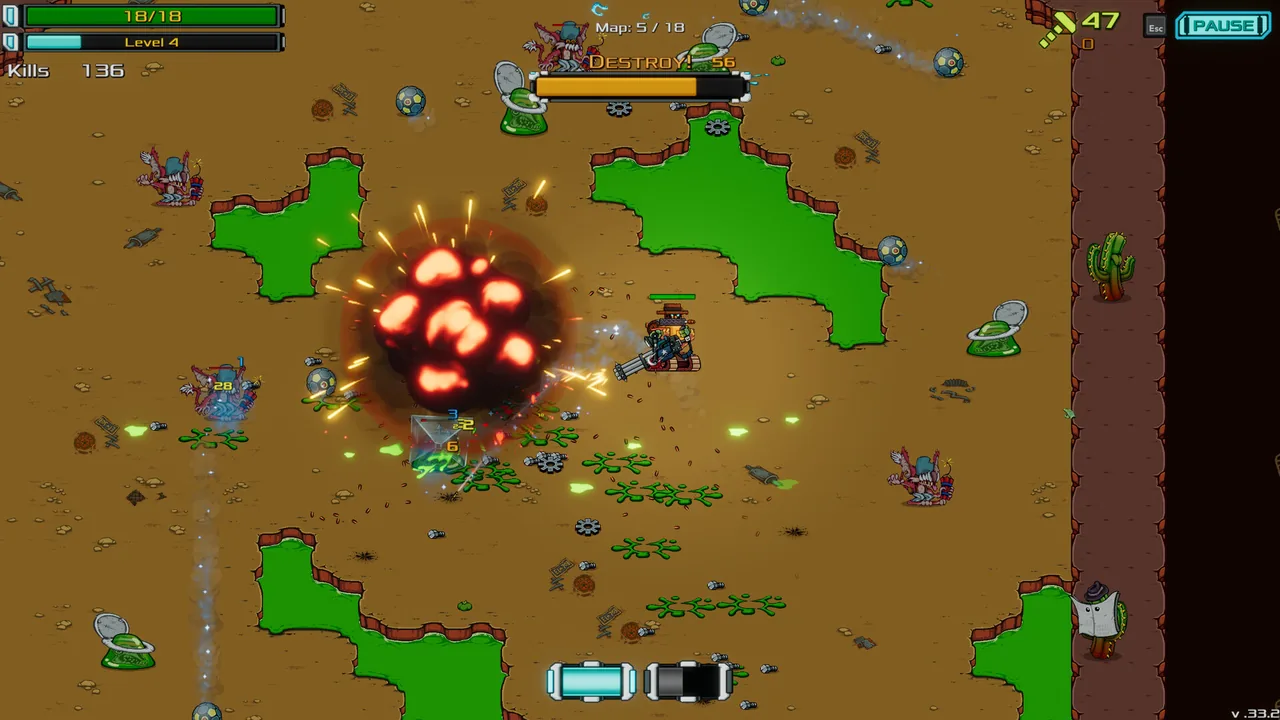
Gunbot DiplomacyImage: GrabTheGames via Steam -
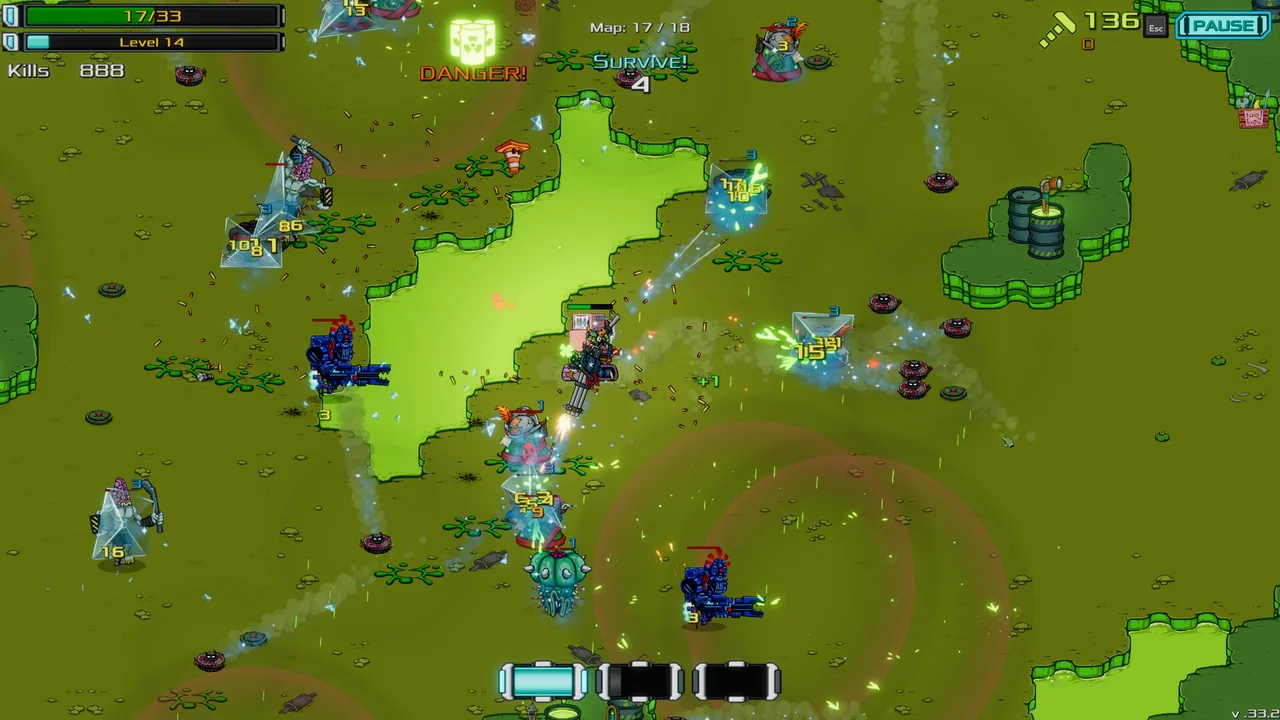
Gunbot DiplomacyImage: GrabTheGames via Steam -
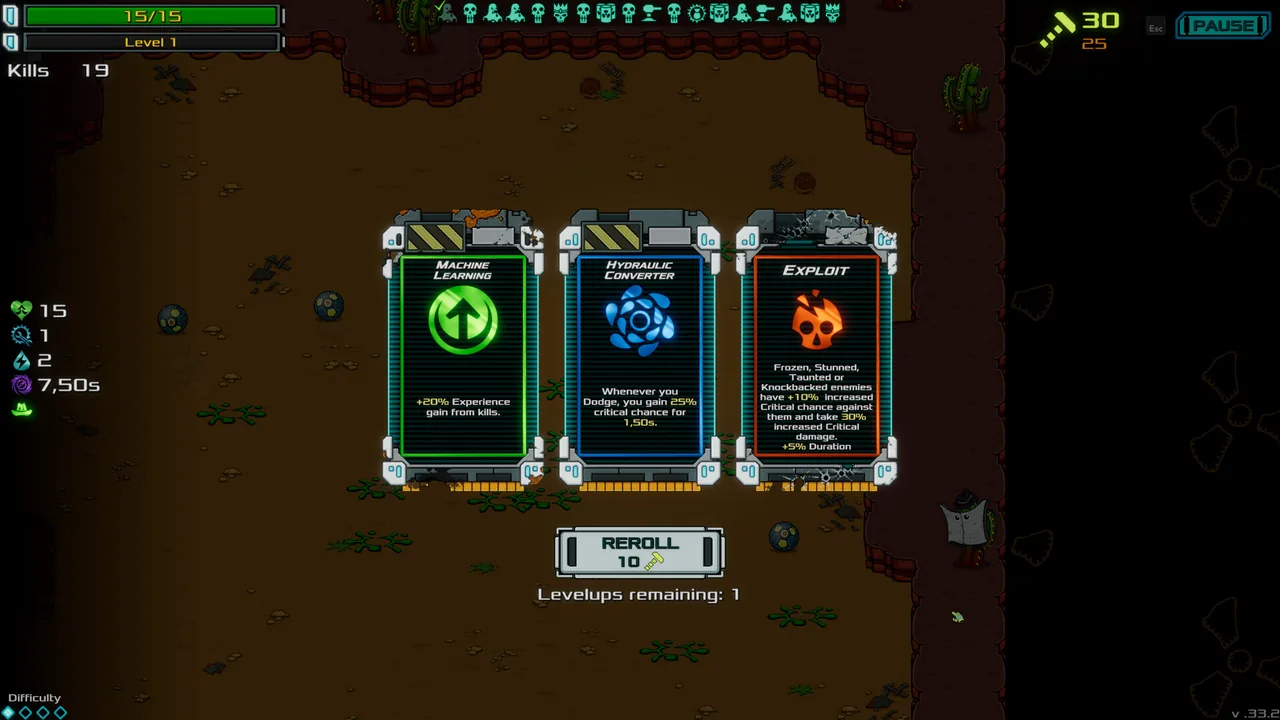
Gunbot DiplomacyImage: GrabTheGames via Steam -
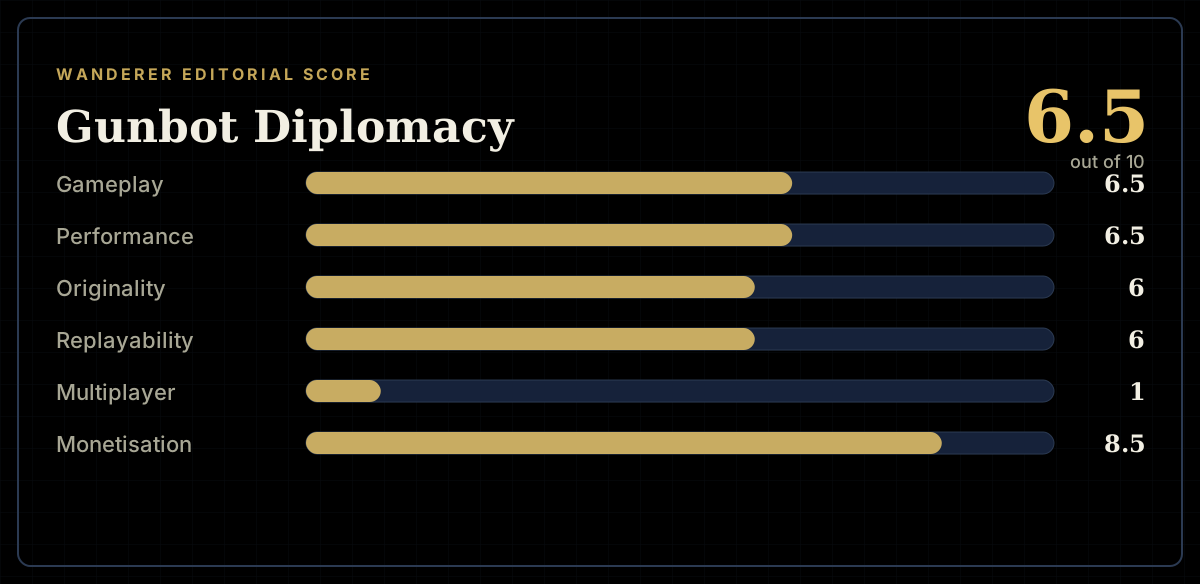
How the review scores each part of the gameWanderer Editorial -
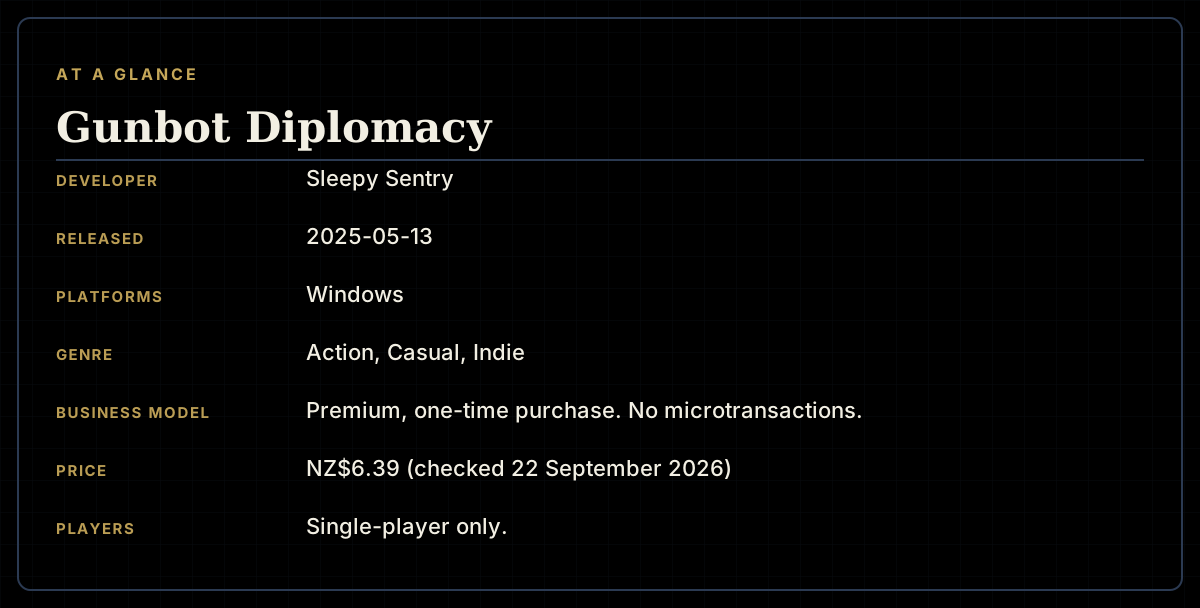
Key facts at a glanceWanderer Editorial -
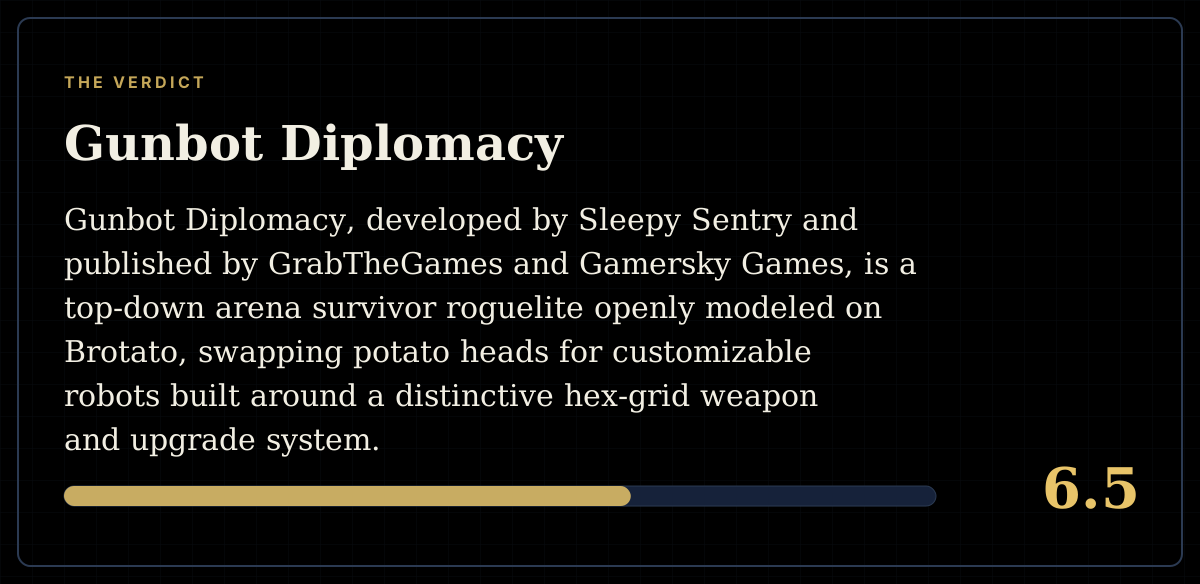
The short versionWanderer Editorial