Game review
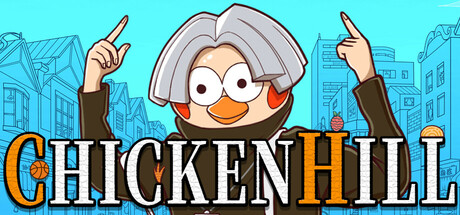
Chicken Hill
5.7 / 10
- Developer
- 梗立游戏
- Publisher
- 梗立游戏
- Released
- 15 January 2025
- Platforms
- Windows
- Genre
- Hidden Object / Comedy Adventure
- Monetisation
- Premium
- Players
- Single-player only
The short version
Chicken Hill is a short, hand-drawn hidden-object game wrapped so tightly around Chinese internet meme culture that its developer openly admits it can't be meaningfully translated. The chicken-hunting is competent and occasionally clever, and the multiple endings give it more shape than its brief runtime suggests, but the total absence of English support turns the experience into a guessing game for anyone outside its target audience.
Biggest strengths
- 250 hidden chickens and a pile of secondary collectibles spread across five well-drawn scenes
- Multiple hidden endings, a harder boss mode, and an optional horror-themed alternate route add real replay incentive
- Extremely cheap for the amount of content packed in
Biggest weaknesses
- No English localisation, and the developer has said none is planned
- Story, jokes, and item names are built on references that simply don't survive translation
- Core hidden-object loop is functional rather than inventive on its own merits
Who it's for: Fans of hidden-object games who are fluent in Chinese internet culture, or curious players happy to explore a game they can only half-understand
Our recommendation: Conditional Recommend
5.7 / 10
A Meme-Powered Hidden Object Hunt
Chicken Hill doesn't waste time explaining itself. You are dropped into a hub scene and set loose across four hand-drawn sub-levels with one job: find the chickens. Lots of them — 250 in total, tucked into corners, disguised as background objects, or hidden behind visual gags that only reveal themselves once you know to look. Alongside the chickens, each scene hides secondary collectibles too — pinecones, chicken feet, basketballs, and other oddities that rarely explain their own purpose but usually pay off with a joke, an animation, or a small narrative beat later on.
The thin story thread that holds this together involves rescuing a character referred to as "brother KUN" from something called "the KUN space," delivered with the kind of gleeful, self-aware absurdity that suggests the developer, 梗立游戏, was never trying to build a coherent plot in the first place. What it was trying to build is a vehicle for as many memes, in-jokes, and tonal left turns as a five-scene hidden-object game can hold, and on that count it succeeds completely.
Finding Chickens, Losing the Plot
Mechanically, Chicken Hill sticks close to the hidden-object genre's established shape. Each of the four sub-levels opens with a short conversation with a specific character before the hunt begins, and on-screen counters in the corner track your progress against both the chicken total and whatever secondary item that level is built around. Clear a level and you eventually unlock a boss stage — a tight, timed sequence where the objective shifts from searching to reflexes, clicking bombs before they detonate.
None of this reinvents the hidden-object formula, and reviewers who've spent time with a lot of games in the genre are quick to point out that the searching itself is competent rather than groundbreaking. What elevates it is presentation and pacing: scenes are dense enough to reward a second and third pass, item placement leans on genuine visual wit rather than pixel-hunting frustration, and the boss stages arrive often enough to break up the searching before it grows repetitive. It's a short game — most players finish the main path in an hour or so — but it rarely feels padded within that runtime.
The Language Wall
This is where Chicken Hill becomes a genuinely difficult game to recommend broadly, and it's worth being direct about it: the game is Chinese-only, and the developer has been upfront that an English localisation isn't planned. That's not a minor omission. The jokes, item names, character dialogue, and narrative beats are all built from Chinese internet slang, memes, and cultural references so specific that even a careful translation wouldn't reliably land them for an outside audience. One English-language reviewer who worked through the whole game leaning on a phone translation app put it plainly: you can finish Chicken Hill without understanding a word of Chinese, but you'll finish it without understanding what actually happened in it.
That doesn't make the game unplayable for non-Chinese speakers — the hidden-object hunting itself needs no language at all, and the counters, item icons, and scene layouts are all legible regardless of what language you read. But it does mean a large part of what the game is actually offering — the humour, the cultural commentary, the sense of being in on the joke — is simply unavailable to anyone outside its intended audience. Reviews from players fluent in the material describe an experience that's "unhinged," hilarious, and dense with references; reviews from everyone else describe something closer to an atmospheric curiosity they enjoyed despite not following it. Both can be true at once, and the gap between those two experiences is the single biggest factor in whether this game is worth your time.
Secrets, Endings, and a Sudden Horror Twist
Chicken Hill's structure gives it more longevity than its short main campaign suggests. Completing the story unlocks additional hidden endings, each requiring a return trip to earlier scenes to find and trigger a small extra task that wasn't obvious the first time through. There's a harder difficulty tier for the boss stages, a basketball-themed arcade minigame tucked away as an optional diversion, and — the sharpest tonal swerve in the whole package — an optional, entirely unflagged horror-themed alternate route where the hidden objects shift from cheerful nonsense to pills and cigarettes. It's a genuinely jarring shift, and one that several reviewers single out as the moment the game's commitment to chaos stops being cute and starts being unsettling in a way that feels deliberate.
None of this adds real mechanical depth — you're still searching scenes and clicking items — but it does turn a one-hour curiosity into something closer to a three-or-four-hour scavenger hunt for players motivated to see everything. Given the asking price, that's a reasonable trade.
A Hand-Drawn, Deliberately Messy Look
Visually, Chicken Hill leans into a rough, sketchbook-style aesthetic that suits its tone far better than a polished art style would. Scenes are cluttered on purpose, packed with visual puns and exaggerated character designs that reward close inspection, and the loose, unfussy linework reinforces the sense that you're picking through someone's stream-of-consciousness in-jokes rather than a carefully art-directed world. It's not a technically impressive game, and it isn't trying to be — the presentation exists purely to serve the humour, and on that narrow brief it works.
Who This Is Actually For
Chicken Hill is a hard game to score cleanly, because its two audiences will walk away with wildly different experiences from the same five scenes. Players fluent in Chinese internet culture get a dense, funny, confidently weird hidden-object game that knows exactly what it is. Everyone else gets a well-made but largely opaque scavenger hunt, missing most of the jokes that justify the game's existence in the first place. At under five New Zealand dollars, the risk of trying it is low, and the mechanical foundation underneath the memes is solid enough to be worth an hour even without the cultural context. But going in expecting a fully legible experience, in any language other than Chinese, would be a mistake.
Pros and cons
Pros
- 250 hidden chickens and a pile of secondary collectibles spread across five well-drawn scenes
- Multiple hidden endings, a harder boss mode, and an optional horror-themed alternate route add real replay incentive
- Extremely cheap for the amount of content packed in
- Confidently, unapologetically weird — it never pretends to be anything other than what it is
Cons
- No English localisation, and the developer has said none is planned
- Story, jokes, and item names are built on references that simply don't survive translation
- Core hidden-object loop is functional rather than inventive on its own merits
- Very short main campaign for players who aren't chasing every ending
Screenshots
-
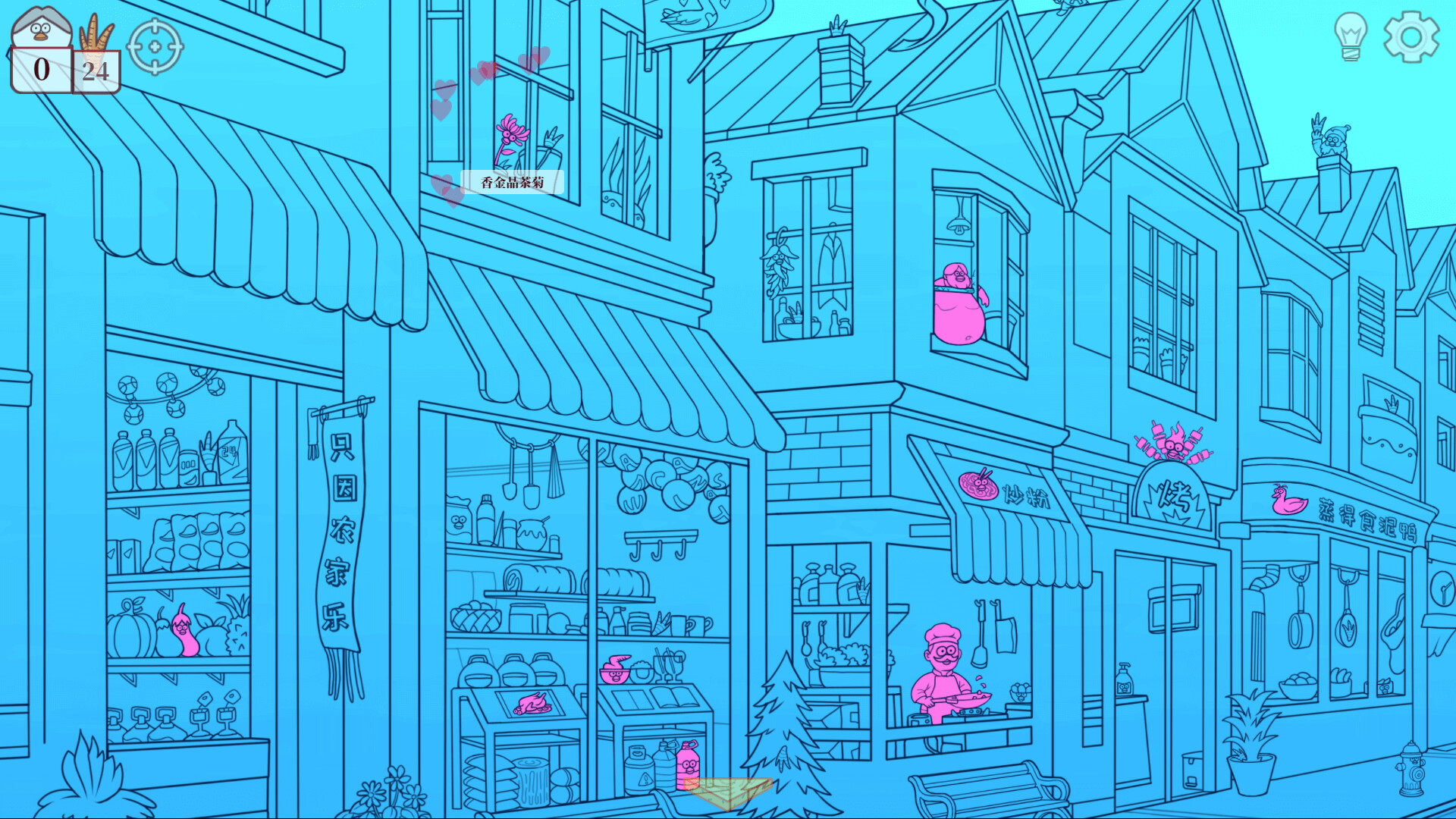
Every scene is a dense hand-drawn storefront street, packed with items and text you'll need a translator to fully parse梗立游戏 -
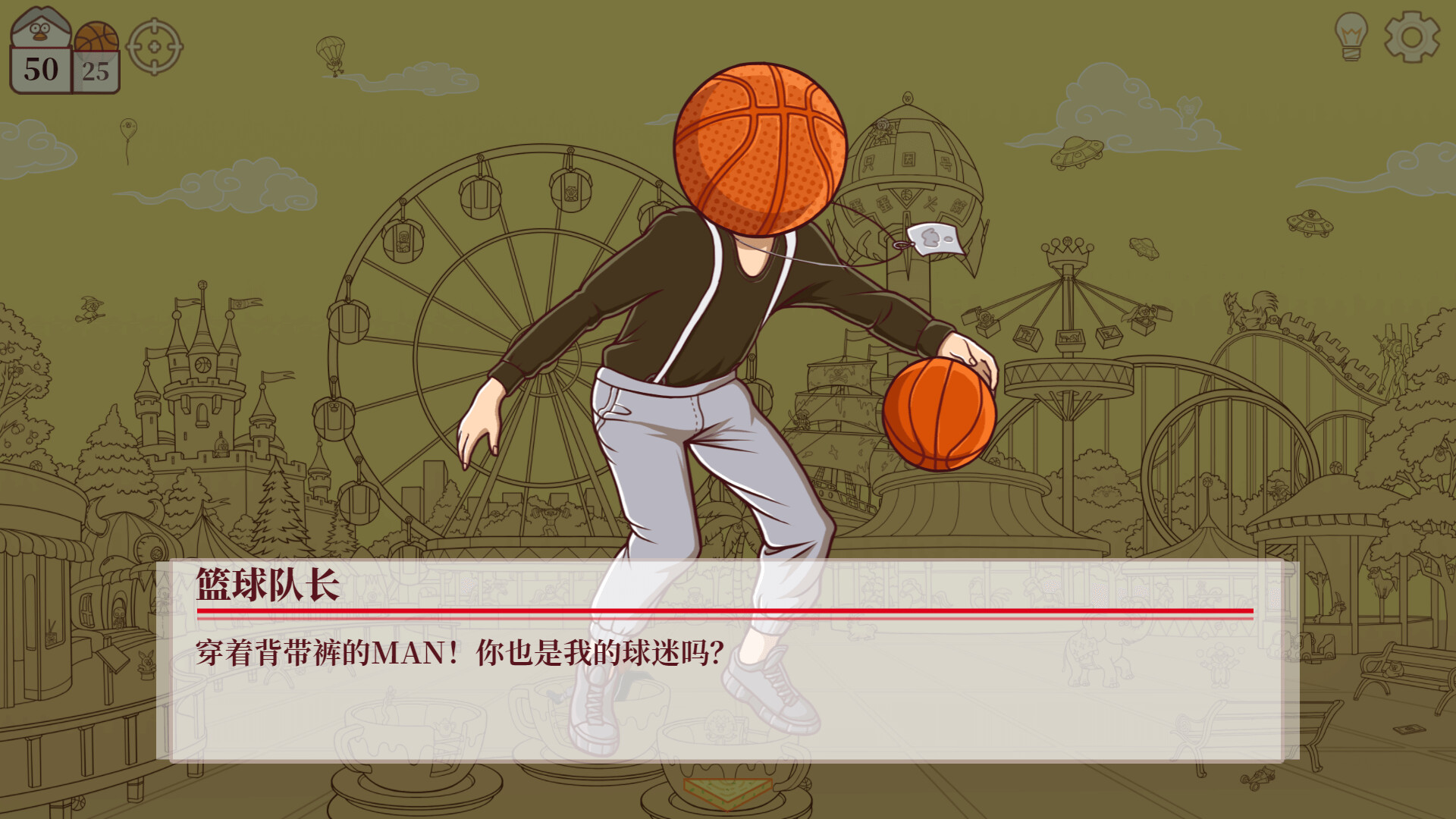
The game's absurdist character designs, like this basketball-headed rival, carry much of its humour梗立游戏 -
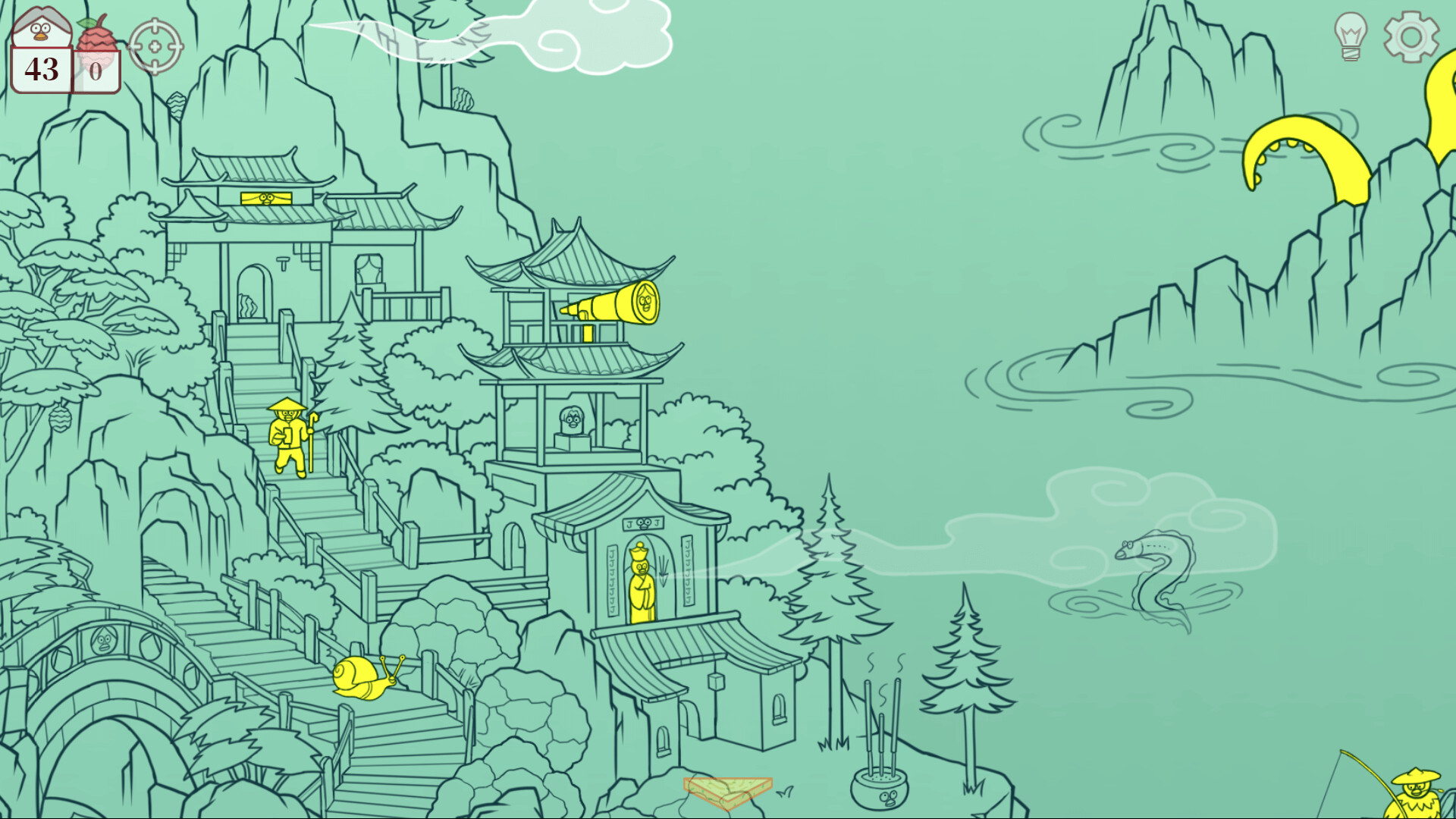
A quieter mountain-temple scene, complete with a lurking sea monster in the background梗立游戏 -
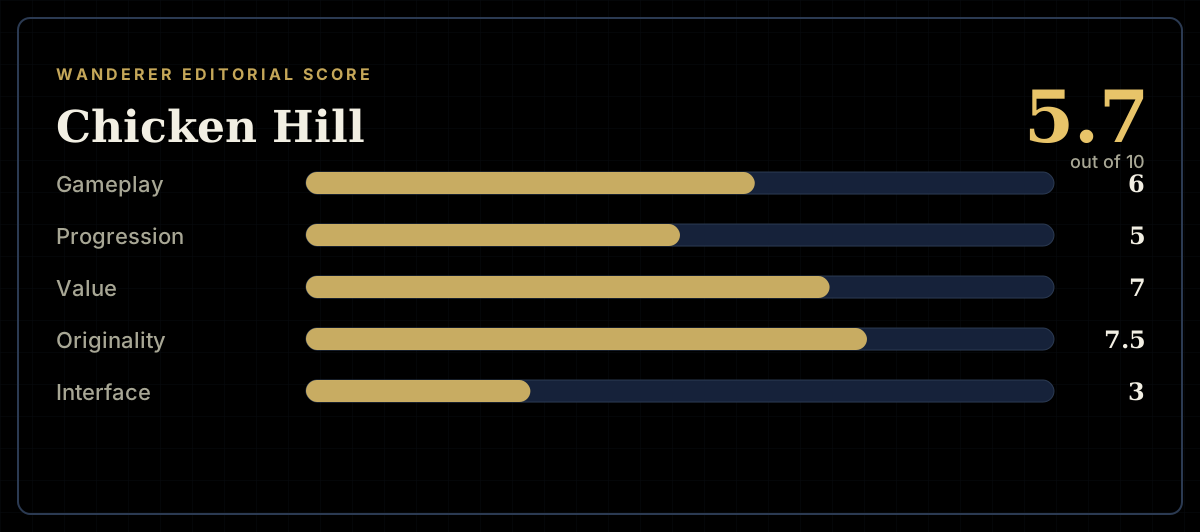
How the review scores each part of the gameWanderer Editorial -
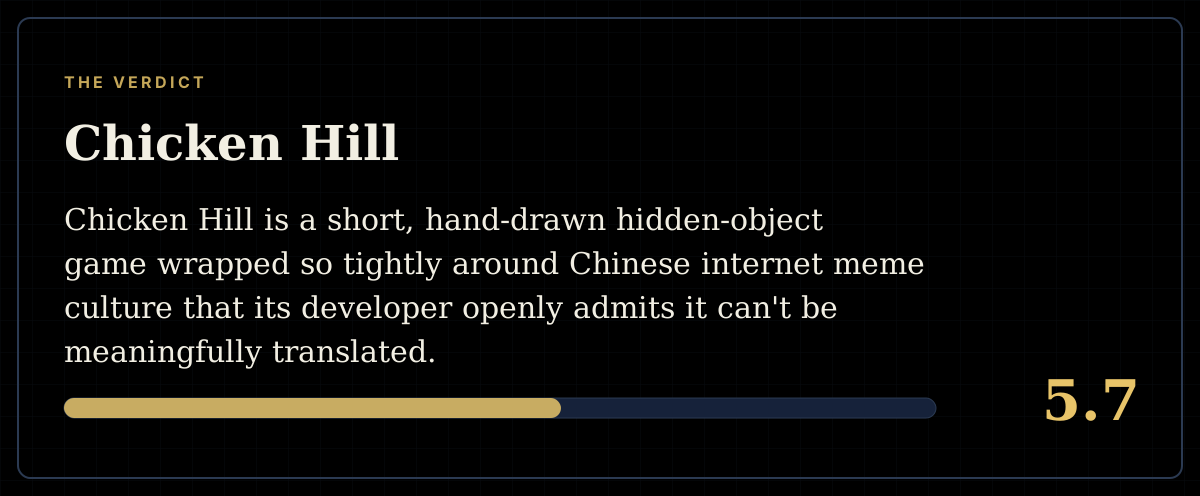
The short versionWanderer Editorial