Game review
Bittersweet Blossoms
8 / 10
- Developer
- ebi-hime
- Publisher
- ebi-hime
- Released
- 25 June 2026
- Platforms
- Windows, macOS, Linux
- Genre
- Visual Novel, Casual, Indie
- Monetisation
- paid
- Players
- false
The short version
Biggest strengths
- Writing that reviewers repeatedly called a genuine step up from its predecessor, praised for its period-specific voice, characterization, and emotional restraint
- A well-liked, jazz-inflected soundtrack that several reviewers singled out as strong enough on its own to bring them to tears during key scenes
- A satisfying sense of closure for returning fans, with a supporting character from the previous game, Constance, given a meaningful arc that multiple reviewers called a highlight
Biggest weaknesses
- No player choices at all; the story is entirely linear, a structural limitation at least one reviewer flagged explicitly for readers who expect branching paths from a visual novel
- A complicated power dynamic between the two leads that one reviewer described candidly as bordering on toxic, even while judging it ultimately forgivable given the characters' youth and circumstances
- Period-appropriate prejudice voiced by side characters, including anti-Romani sentiment one reviewer flagged directly as an authentic but uncomfortable historical detail
Who it's for: Readers of narrative-driven yuri visual novels who want an emotionally grounded, historically flavored romance over gameplay or branching choices
Our recommendation: recommended
8 / 10
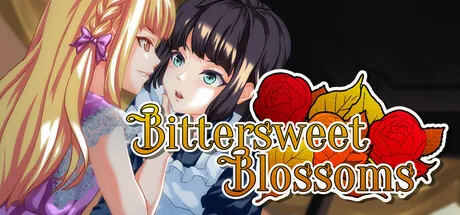
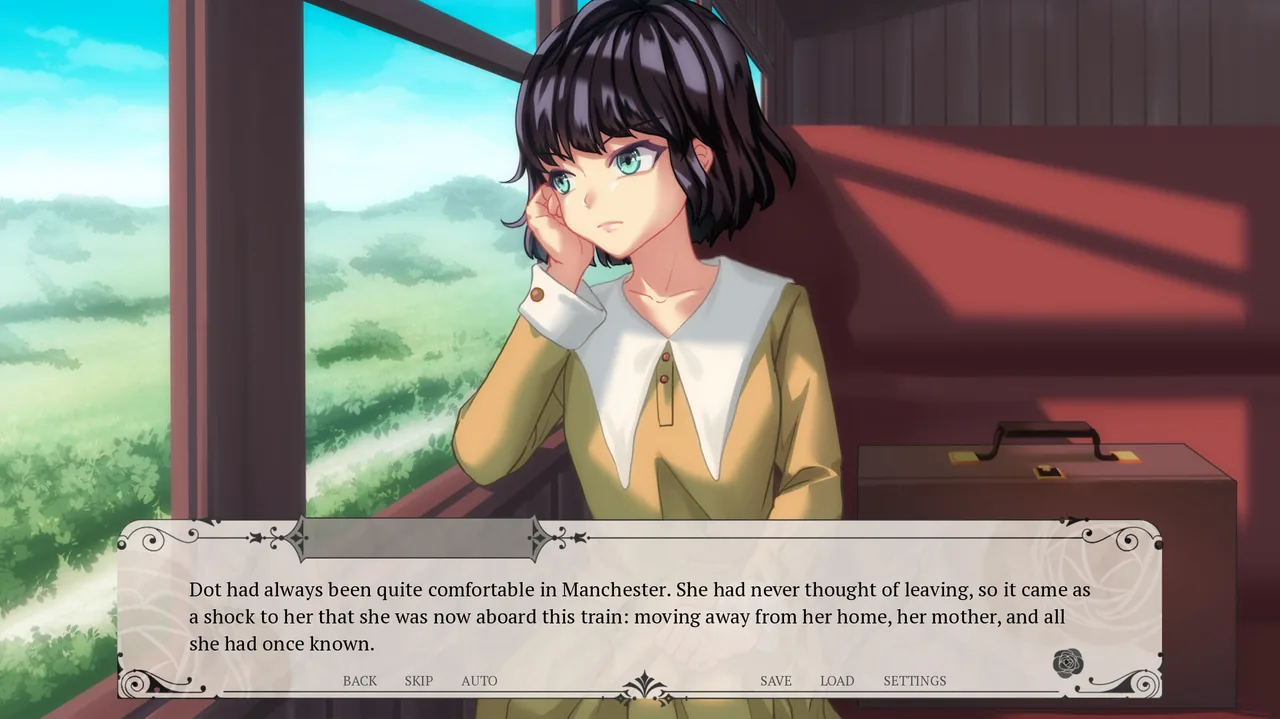
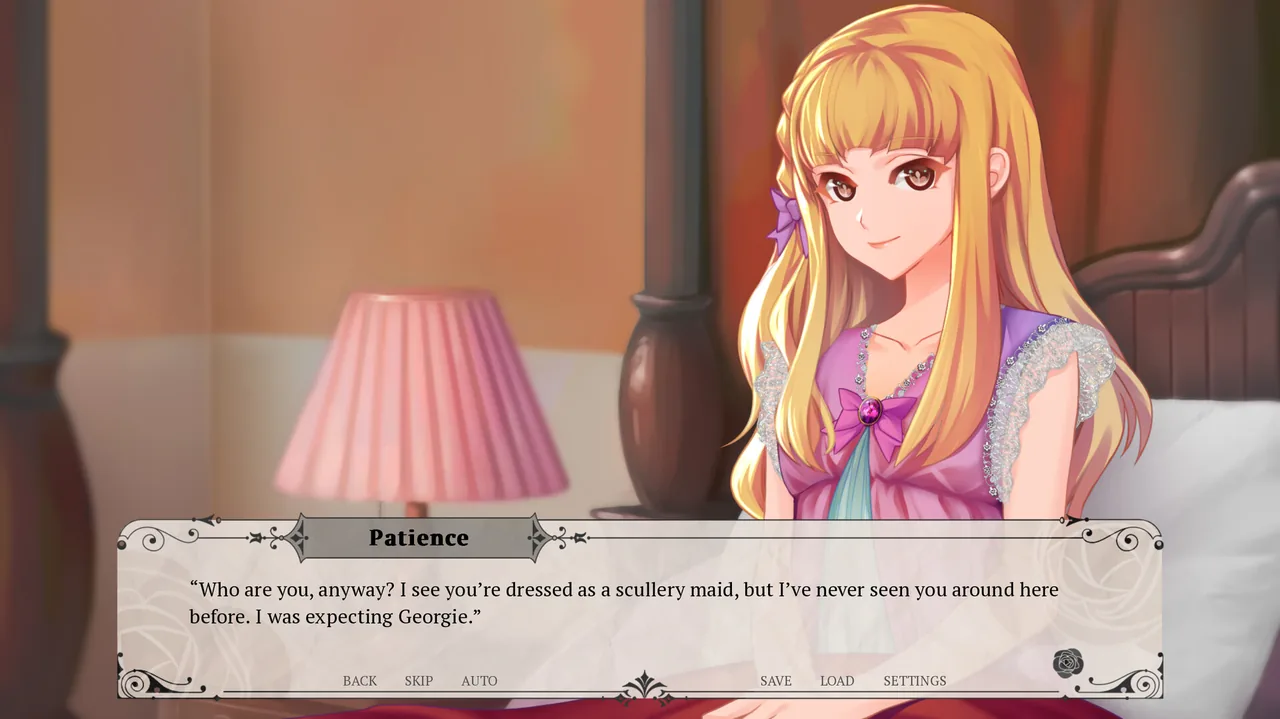
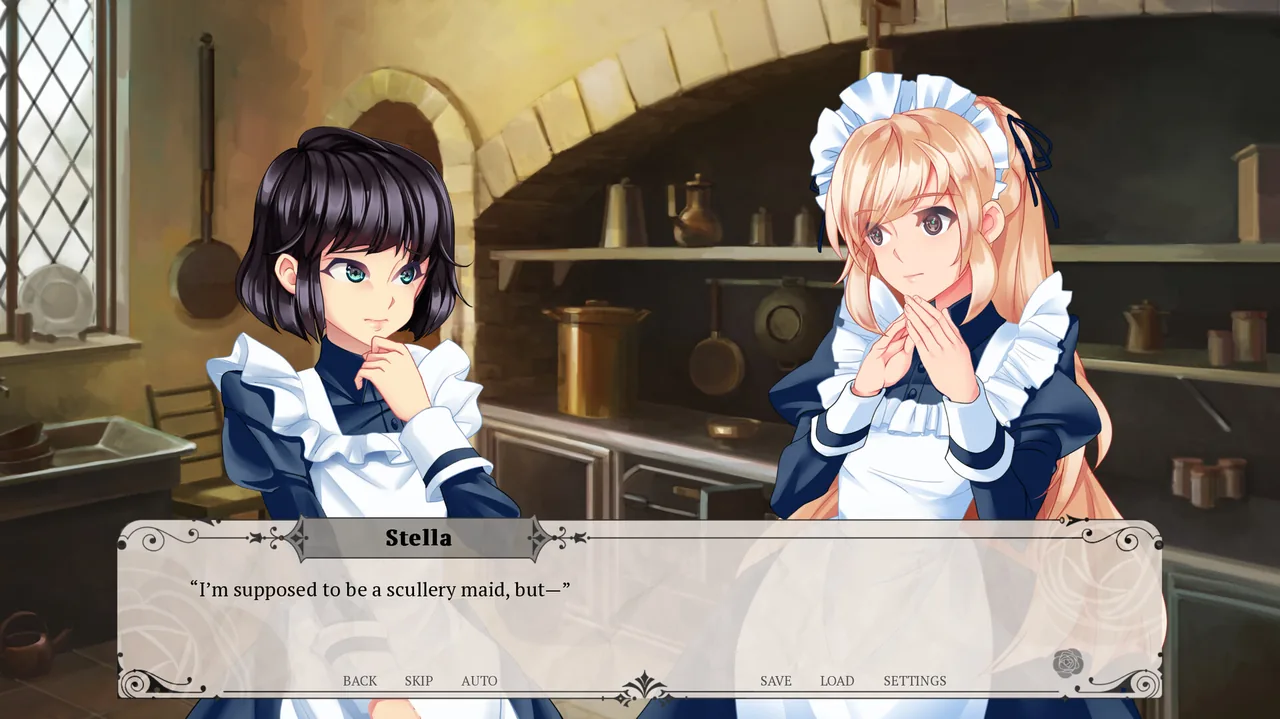
Bittersweet Blossoms released on Steam on June 25, 2026, a $12.99 kinetic visual novel from solo developer ebi-hime, who also self-published it. It's a sequel, in setting if not in cast, to the developer's earlier Blackberry Honey, following Dot, a young scullery maid who takes a job at the crumbling countryside estate of Bly in the shadow of the First World War, and her slow, complicated fall into love with Patience, the estate mistress's volatile, cruel-hearted daughter. The game's 15-review English pool is unanimously Positive, 15 up, 0 down, and the reviews describe a small, deliberately paced romance that earns its reputation on the strength of its writing rather than any mechanical ambition.
The consensus, repeated across nearly every review in the pool, is that the writing represents a genuine leap forward from its predecessor. One reviewer, who described being "scathingly critical" of Blackberry Honey on its release and hadn't touched another ebi-hime game since, wrote that Bittersweet Blossoms had "surprised" them, noting the earlier game's writing "has only gotten better" here. Another longtime fan agreed that "ebi-hime's works [are] becoming more tightly plotted over time, and Bittersweet Blossoms is no exception," praising how Dot's "grief, her desire for independence, and her compassion make her a likeable protagonist" opposite a Patience whose "cruel streak" is given real narrative room to explain, if not excuse, itself. A third reviewer, who read both games back to back, specifically credited the game with "period-specific language & characterization" strong enough to call it "one of the best VNs I've ever read, certainly in the romance category."
Music draws similarly consistent, specific praise. One reviewer wrote that the "jazzy soundtrack" gave the romance's slow-burn structure real texture, while another described getting "emotional when the 'Blackberry Honey' theme started playing in one of the more emotional songs," a callback several longtime fans singled out by name. A separate reviewer called the score simply "wonderful," adding it was "enough to make me tear up just listening to the soundtrack during certain scenes."
Returning fans of the earlier game get a specific, well-received payoff in the character of Constance, a supporting player from Blackberry Honey whose unresolved arc gets meaningful closure here. One reviewer called her return "more than just a cameo," describing her as "acting as both a closure to the loose threads of her story from the previous installment, and a support to the new couple," while another simply named her "easily the best character of the game." Multiple reviewers who had been disappointed by how her story ended in the first game specifically credited this sequel with addressing that gap.
The pool is honest, without being alarmed, about the story's harder edges. One reviewer described the central couple's dynamic candidly: "the power dynamic is complicated, but their ages make the toxicity feel like it stems from innocence and inexperience, which makes it a bit more forgivable," a nuanced read rather than a dismissal. The same reviewer flagged a specific period-appropriate detail worth knowing going in, noting "a bit of anti-Romani sentiment from characters, like a few stereotypes, typical for the time period," while also observing that no Romani characters actually appear in the story to be direct targets of it. Several reviewers who came in expecting the more overtly sensual tone of Blackberry Honey noted the shift explicitly; one wrote that the developer "has been clear that it does not feature any +18 content," and confirmed the sequel plays as "a much safer, possibly politically incorrect love story between two mourners after WWI" rather than a repeat of the earlier game's more explicit register.
Structurally, this is a kinetic novel: there are no branching choices anywhere in the roughly five-to-ten-hour story, a point one reviewer raised directly as a fair thing for prospective readers to know going in, since it means the entire experience is a straight, authored read rather than an interactive one. None of the reviewers who mentioned it treated it as a flaw exactly, several seemed to prefer the format for a story this emotionally focused, but it's a real structural limitation worth flagging plainly for readers who expect a visual novel to offer meaningful branching paths or multiple endings.
It's also worth being upfront that this is a small pool: 15 English reviews clears a reasonable bar for sourcing a review, and the consistency of the praise across readers with wildly different histories with the developer's earlier work is a real signal, but it remains a modest sample for a $12.99 title, and prospective buyers should weigh that scale honestly rather than assume a broader consensus than the numbers actually support.
A handful of reviewers also touched on the game's troubled production history, information the developer had shared publicly and that clearly colored how the pool received the finished product. One reviewer, addressing the developer directly, wrote "I'm really sorry to hear about how much of a struggle it was to finish making this game and my condolences to you for your friend," while another echoed the sentiment nearly word for word, thanking ebi-hime "for still going through this" and adding "I think your friend would be very proud of what you have achieved so far." That context doesn't factor into the game's mechanical or narrative merits on its own, but it's clearly part of why the reception reads as warm rather than merely positive: several reviewers frame their recommendation explicitly as a show of support for a personal project that nearly didn't reach completion, on top of genuine enthusiasm for the writing itself.
Taken as a whole, Bittersweet Blossoms is a carefully written, historically grounded romance that earns its near-unanimous praise through genuinely strong prose, an evocative soundtrack, and a satisfying sense of closure for fans of its predecessor, even as its linear structure and quietly difficult subject matter mean it will suit readers looking for a focused, authored emotional journey more than one wanting agency or a lighter tone. For fans of narrative-first yuri visual novels, it's an easy recommendation.
Pros and cons
Pros
- Writing that reviewers repeatedly called a genuine step up from its predecessor, praised for its period-specific voice, characterization, and emotional restraint
- A well-liked, jazz-inflected soundtrack that several reviewers singled out as strong enough on its own to bring them to tears during key scenes
- A satisfying sense of closure for returning fans, with a supporting character from the previous game, Constance, given a meaningful arc that multiple reviewers called a highlight
- A tonal shift that several reviewers who were skeptical of the first game's art and framing found to be a genuine, welcome improvement, one describing it as reading fairer to its sapphic audience
Cons
- No player choices at all; the story is entirely linear, a structural limitation at least one reviewer flagged explicitly for readers who expect branching paths from a visual novel
- A complicated power dynamic between the two leads that one reviewer described candidly as bordering on toxic, even while judging it ultimately forgivable given the characters' youth and circumstances
- Period-appropriate prejudice voiced by side characters, including anti-Romani sentiment one reviewer flagged directly as an authentic but uncomfortable historical detail
- A short 15-review English pool at review time, meaning the near-unanimous praise, while consistent and detailed, still rests on a modest sample
Screenshots
-
Bittersweet BlossomsImage: ebi-hime via Steam -
Bittersweet BlossomsImage: ebi-hime via Steam -
Bittersweet BlossomsImage: ebi-hime via Steam