Game review
BARD'S FAULT Review
5.8 / 10
- Developer
- Sunabi Studios
- Publisher
- Sunabi Studios
- Released
- 25 August 2026
- Platforms
- ["Windows"]
- Genre
- Action
A Time-Travel Bullet Heaven With Real Personality
BARD'S FAULT slots into the crowded Vampire Survivors-style genre with a co-op-first twist: friends fight back-to-back against swarming enemies, syncing class abilities and building a shared strategy across a run built around a time-loop narrative. What separates it from the genre's flood of imitators, according to the review pool, is a level of narrative and character investment most "survivor-like" games don't bother with. "The thing that stands out about this game for me, apart from the gameplay of course, is the wonderful writing, voice acting, and personalities of the characters," one reviewer writes, specifically praising how distinct and charming the cast feels compared to typical genre entries. Another reviewer calls it "uma obra de arte" (a work of art), highlighting a fully voiced Brazilian-Portuguese dub and an original soundtrack from Terra Celta, a band with Rock in Rio credits, as evidence of unusually high production values for a $9.99 indie release.
That character-driven identity extends into the class design itself. One detailed positive review breaks down how classes interlock as a team rather than functioning as isolated builds: the Bard grants attack speed to the whole party, the DPS class grants crit chance to allies, and each character brings its own quests and lore alongside its combat kit. "A lot of survivor-likes I've played seem to have an identity complex, where the characters or items seem to be doing too much, but I don't feel that with Bard's Fault," they write, calling out balanced item costs and well-paced power scaling as a particular strength of the build systems.
A Slow Start That Tests Patience
The most consistent criticism in the review pool, spanning both positive and negative reviews, is that the opening hours undersell the game. "It does start out kind of slow. I think the first three levels could have been put into a singular, tutorial level, because when you hit level four the entire game opens up," one enthusiastic reviewer writes — a sentiment echoed almost word-for-word by a more critical review describing early enemies as unthreatening and the pacing as sluggish enough that they didn't feel motivated to push through to the harder content. A separate reviewer specifically criticizes the lack of control customization as a dealbreaker "in 2026," suggesting the interface and settings menu haven't kept pace with the genre's current baseline expectations.
Where opinions genuinely diverge is on whether that slow start resolves into something worthwhile. Several reviewers describe a real turning point a few runs in, once meta-progression unlocks enough talents and upgrades to make subsequent attempts feel meaningfully different — "it starts out a little bit challenging at first but after a few runs, you will unlock enough meta progression and it won't seem like too much of a struggle," one notes, framing the climb as intentional rather than a flaw. But at least one negative review disagrees sharply with the premise that things improve, calling it "roguelite without the roguelite part" and describing runs that hand out a few upgrades before dropping the player straight into a boss fight without any real sense of escalating power.
The Full Release vs. the Demo: A Point of Real Friction
A notably specific complaint recurs in at least two negative reviews: that the full $9.99 release feels like a scaled-back version of the free demo that preceded it. One reviewer who refunded describes the shipped game as offering five waves per map instead of the demo's ten, with reduced mob density, less gold earned between waves, and more available upgrades competing for a shrinking currency pool — leaving them unable to afford power-ups they'd unlocked slots for. "This isn't an early access game s[o]..." the review trails off, but the implication is clear: they expected a fuller experience at launch than what shipped. It's worth flagging that this is a minority position in the review pool — several other reviewers explicitly praise the shipped game as an improvement over "the rougher edges of the demo" — but the contradiction itself suggests real inconsistency in how different builds or difficulty settings were experienced across testers.
Co-op Appeal, Technical Rough Edges, and a Fair Price
Reviewers who played co-op runs describe genuine enthusiasm for the format even without extensive multiplayer testing behind their write-ups — "I have not tested the co-op yet, but just the idea of playing co-op is already too cool," one Brazilian-Portuguese review notes, capturing a sense of goodwill toward the feature that outpaces actual hands-on verification in this early review pool. On the technical side, one reviewer running the game on Steam Deck reports solid performance overall with frame drops once enemy density spikes, a reasonably specific and useful data point for anyone considering handheld play. Price drew no real complaints: reviewers across the positive-to-negative spectrum treat $9.99 as a fair, low-risk entry point, with one describing it as "worth the $10 risk" even before deciding whether the core loop clicked for them long-term.
It's worth noting directly that this is a genuinely small review pool eleven days into release — eleven English-language reviews and a broader pool skewed heavily toward Brazilian Portuguese, reflecting what looks like a primarily Brazilian development and early audience base. That's a real strength for anyone specifically curious about the fully voiced Portuguese-language production values reviewers praise, but it also means the English-language sample this review draws from is thinner than ideal, and conclusions here should be read with that caveat in mind.
Verdict
BARD'S FAULT brings genuine personality to a genre that often runs on aesthetic alone, with charming character writing, a well-regarded voice cast, and class synergies that reward playing as a coordinated team rather than four isolated builds stacked side by side. Its biggest problem is a slow, undertuned opening stretch that several reviewers say tests patience before the game's real hooks kick in, compounded by scattered reports that the shipped build trimmed content relative to its demo. At $9.99, it's a low-risk pickup for bullet-heaven fans willing to push past a rocky first hour, especially with friends — just go in aware that the review pool backing this recommendation is still small and largely non-English.
Screenshots
-
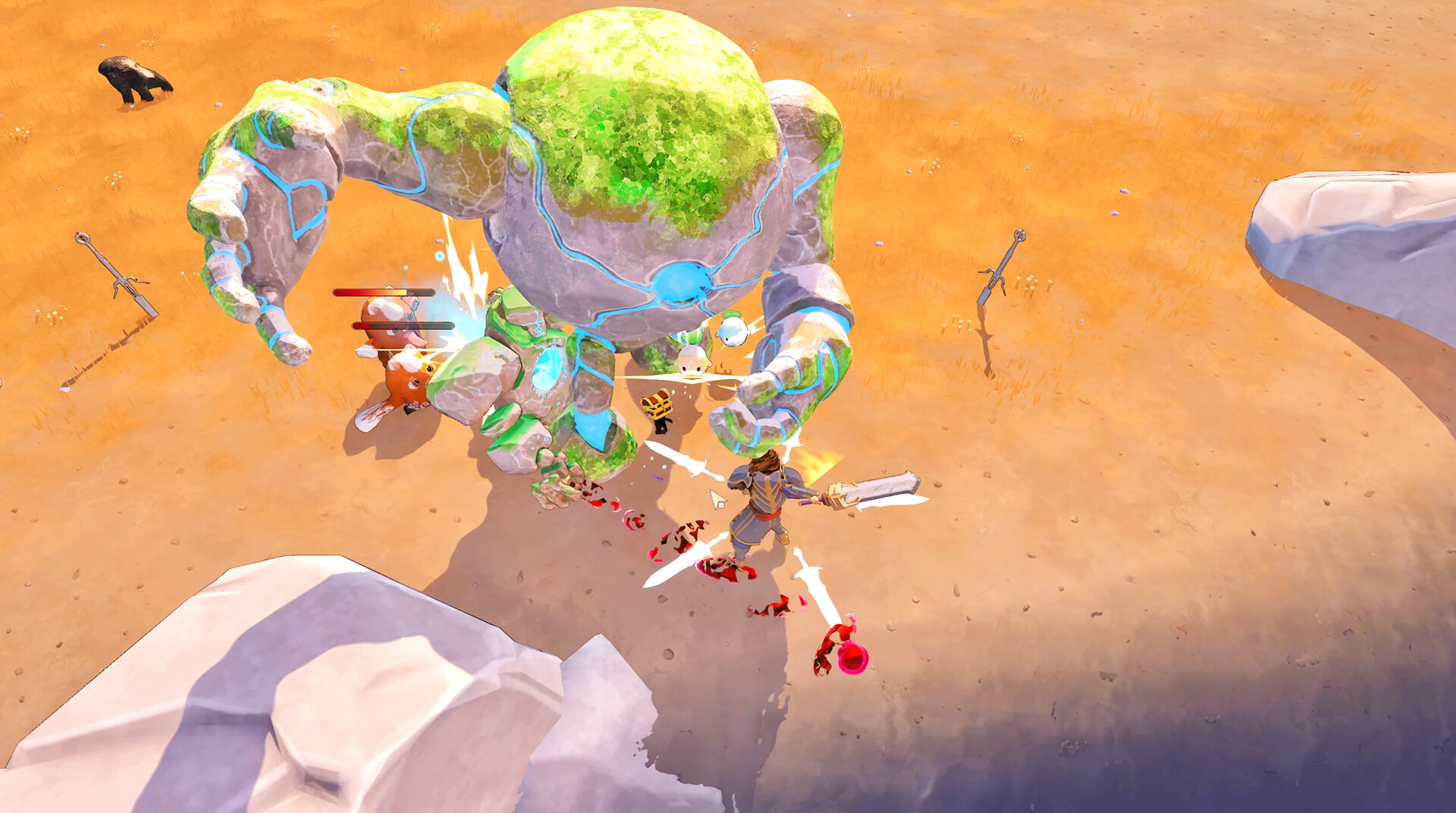
A boss encounter against a towering golem, one of the run's escalating threatsImage: Sunabi Studios via Steam -
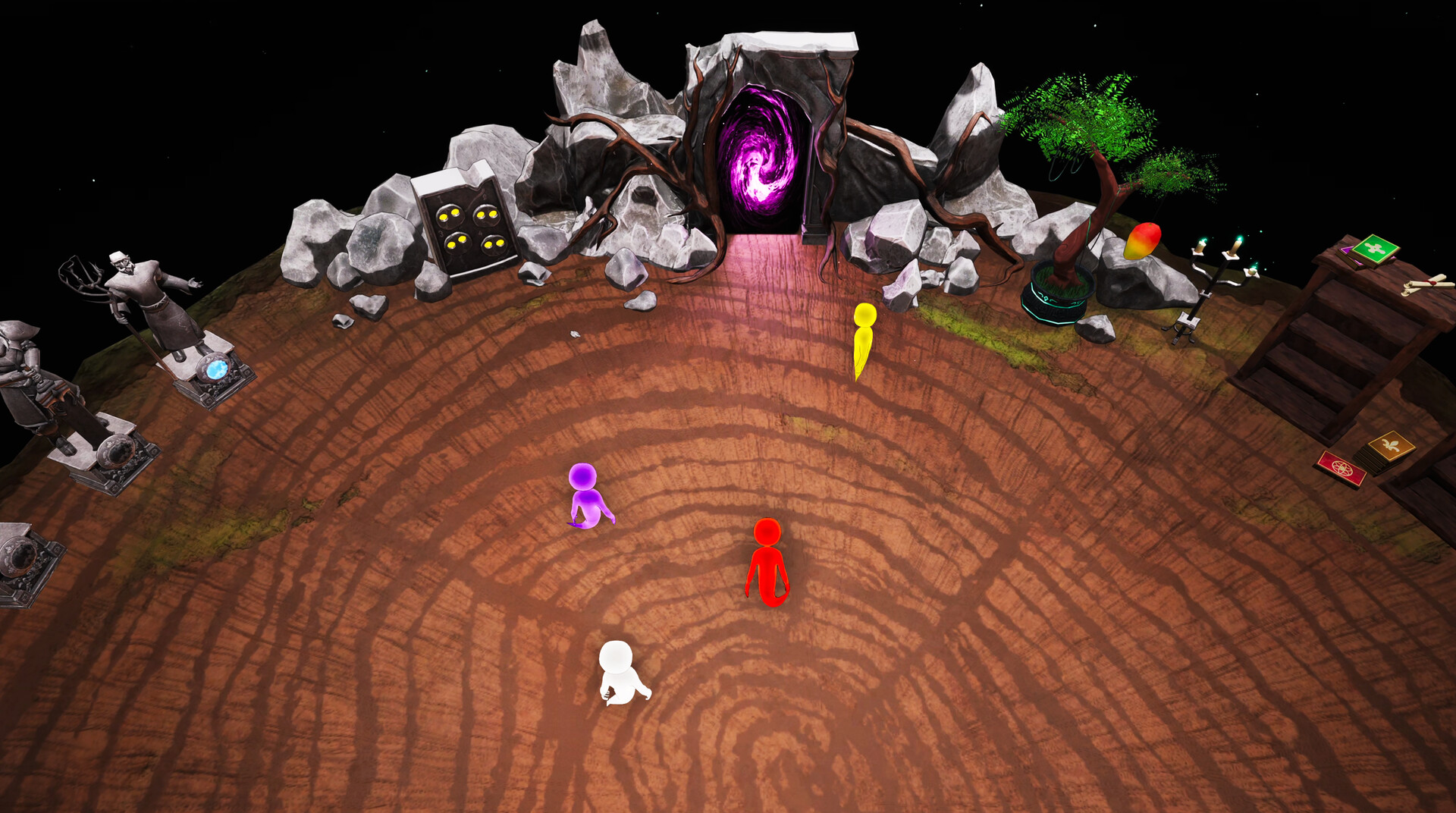
The co-op lobby, where a party gathers before stepping through the portal into a runImage: Sunabi Studios via Steam -
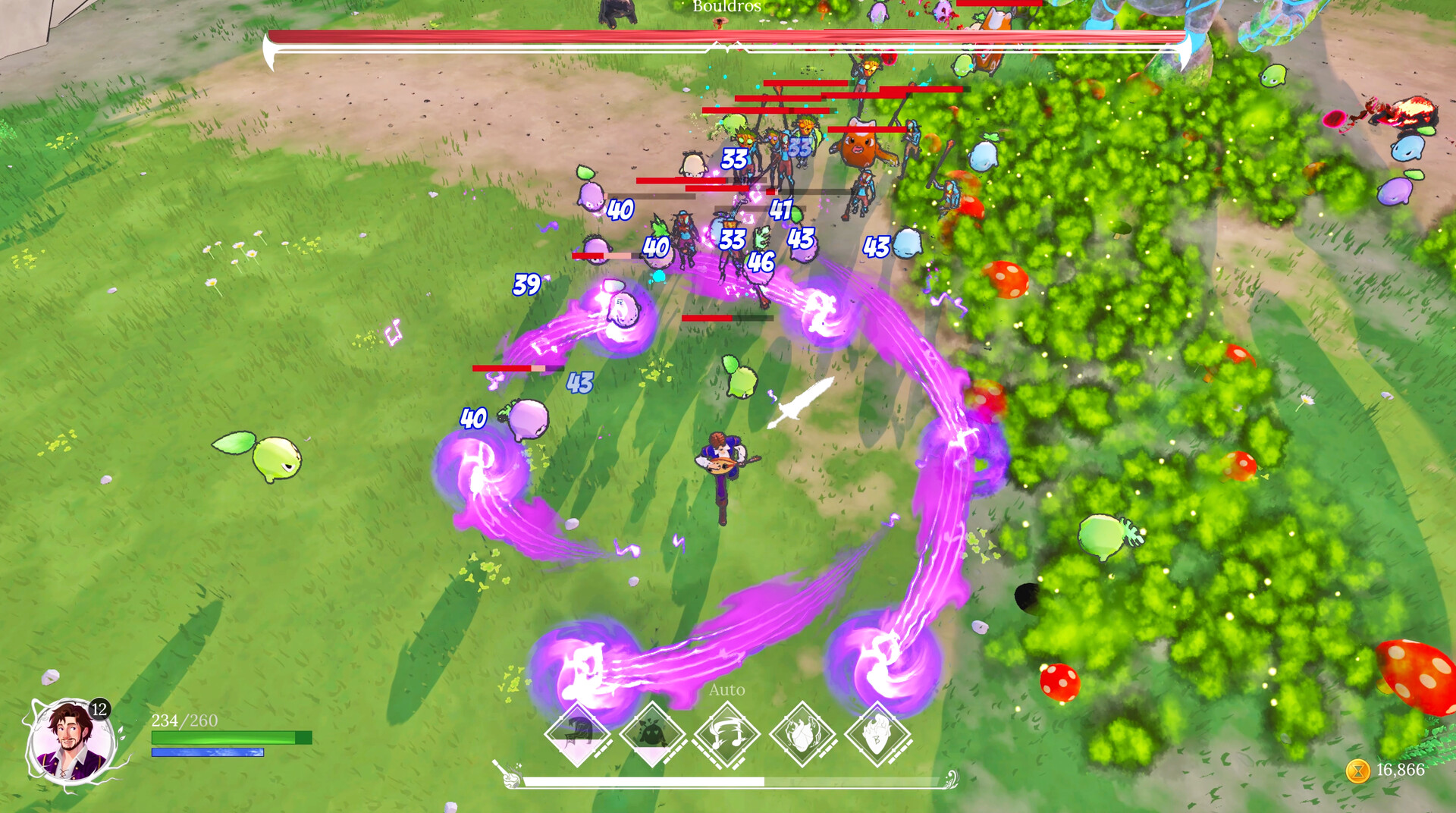
The Bard's musical abilities in action during a chaotic boss fightImage: Sunabi Studios via Steam