Game review
Akatori
7 / 10
- Developer
- Contrast Games
- Publisher
- Games Harbor and Esprit Games
- Released
- 5 August 2026
- Platforms
- Windows
- Genre
- Metroidvania, Action Platformer
- Monetisation
- One-time purchase. No DLC listed on Steam, no in-game store, no premium currency, no season pass and no content descriptors of any kind.
- Players
- Single-player only; no online or local co-op, versus or shared-progression modes of any kind
The short version
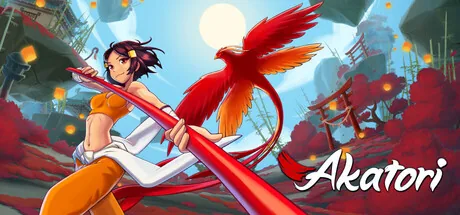
Akatori is a 2.5D metroidvania about Mako, a monk from the Firebird Temple, and a staff that doubles as her weapon and her means of getting around — vaulting, gliding and sliding through five biomes corrupted by the game's central Amber Storms. It began life in 2020 as a Kickstarter project from developer Code Wakers and publisher HypeTrain Digital, shipped a standalone prologue called Akatori: Chapter One in 2024, then changed hands to Contrast Games partway through, finishing under publishers Games Harbor and Esprit Games six years after it was first pitched. What survived the handoff is the movement: reviewers across nine languages agree the staff's traversal tricks feel good and the pixel-and-3D art direction is a highlight. What the review corpus keeps flagging, two days after launch, is that the world gives you almost nothing to find beyond health potions and the currency to buy more of them, and that combat mostly comes down to swinging until something dies.
Biggest strengths
- The staff genuinely doubles as weapon and traversal tool — gliding, sliding and vaulting are woven into both combat and platforming rather than bolted on as a separate ability
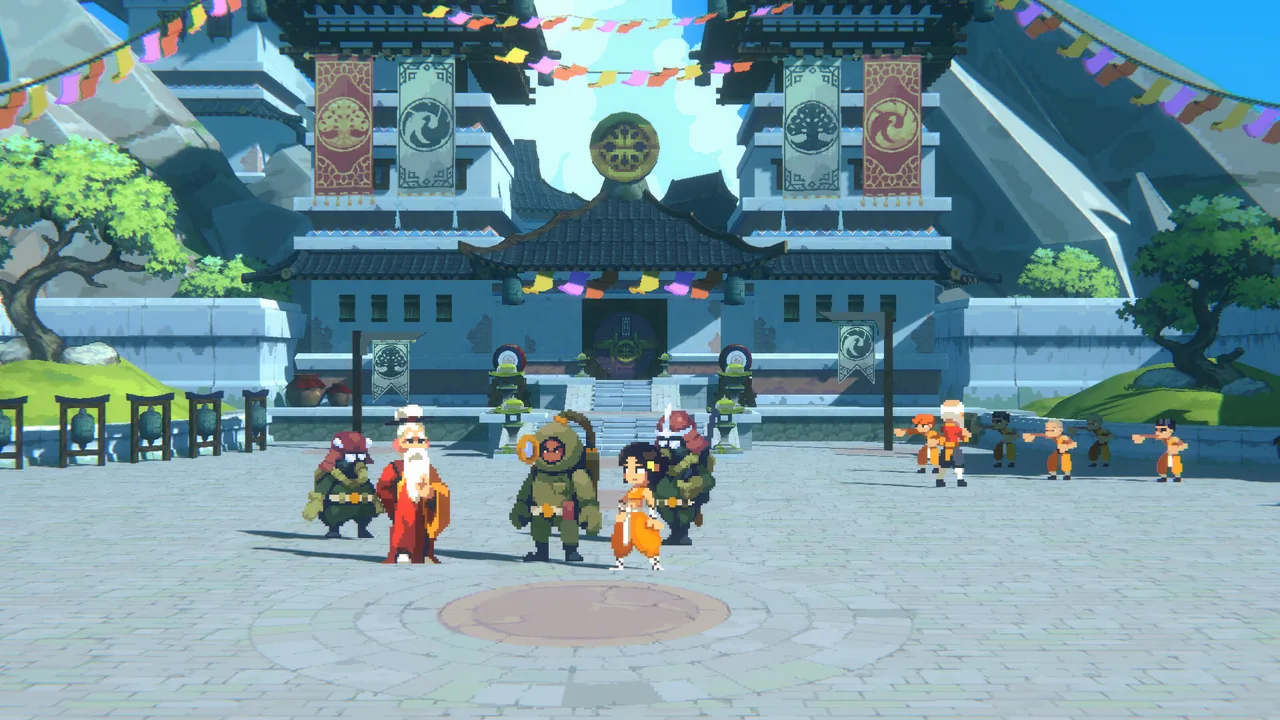
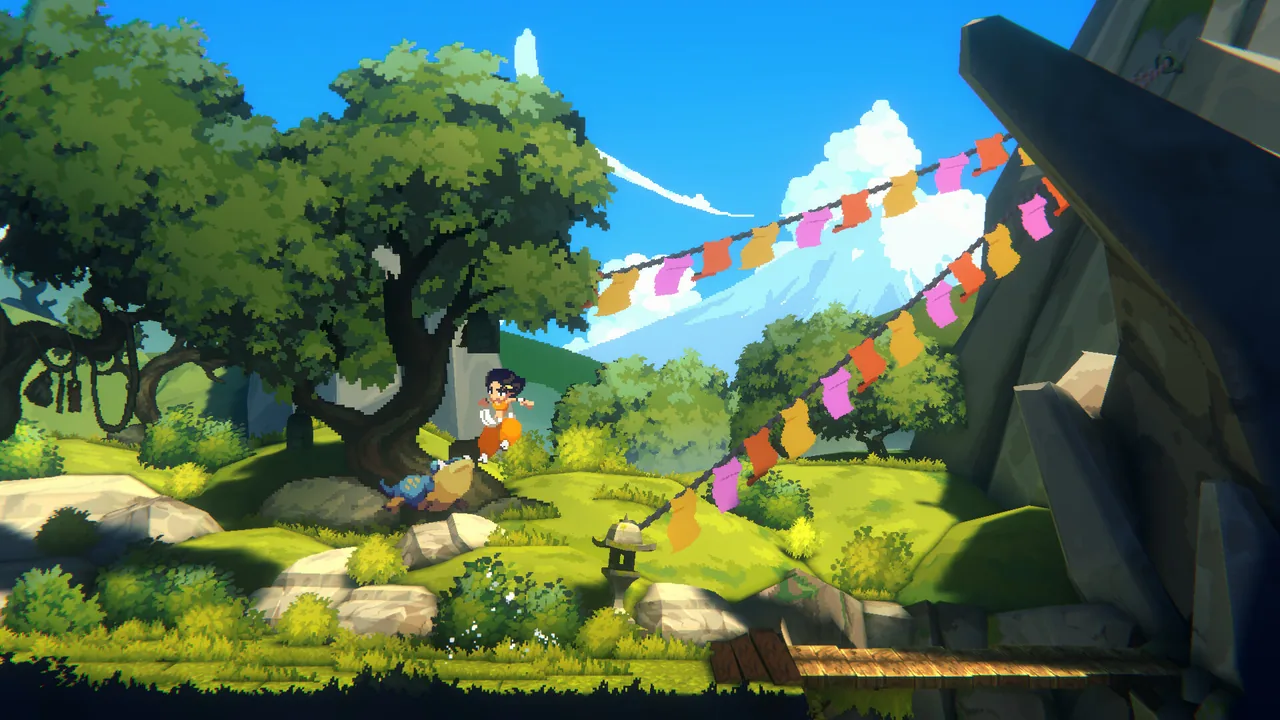
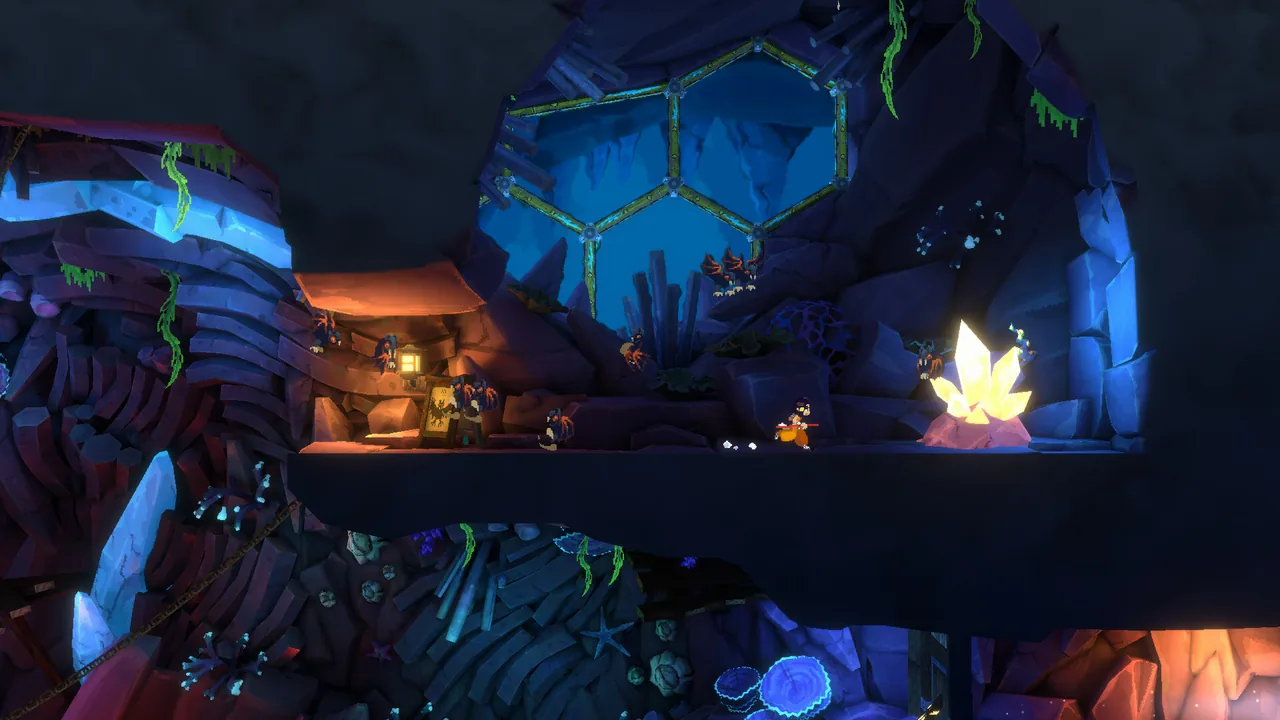
- Art direction draws close to unanimous praise across the review corpus, in English, Russian, Japanese, Chinese and Polish alike, for blending crisp pixel character work with parallaxed 3D backgrounds
- A genuinely generous accessibility list for a mid-sized indie release: adjustable difficulty, camera comfort, custom volume controls, a keyboard-only option and a "Playable without Timed Input" mode
Biggest weaknesses
- Combat is repeatedly described, by both the Steam review corpus and independent press coverage, as shallow button-mashing once the staff's handful of combos are learned, with unimpressive boss patterns
- The reward economy is thin: multiple negative reviews across three separate languages report finding little in hidden areas beyond health potions and the currency to buy them, undercutting the exploration half of "metroidvania"
- No map markers and a tight, close-in camera make it hard to read incoming attacks or navigate back to unexplored branches, a specific complaint repeated by reviewers in English, Chinese and Korean
Who it's for: Metroidvania fans who prioritise movement feel and art direction over build variety, loot and reward-driven exploration, and who are comfortable with combat that stays close to its basics throughout.
Our recommendation: At NZ$19.96 for a five-biome campaign most early reviewers are clearing in single digits of hours, Akatori is a reasonable but not exceptional buy for the traversal and the presentation alone. Players who come to metroidvanias for a growing arsenal, meaningful loot or branching exploration rewards should wait for a deeper discount or a post-launch content patch.
7 / 10
Six years is a long time for a metroidvania to travel from Kickstarter pitch to Steam release, and Akatori didn't even make that trip with the same developer. It started in 2020 as a project from Code Wakers, published by HypeTrain Digital, promising a staff-wielding heroine who could fight and traverse with the same tool across a world split by mysterious storms. A standalone prologue, Akatori: Chapter One, shipped in April 2024 to let people try the idea for free. Then, sometime before this year, the project changed hands entirely: Contrast Games took over development, Games Harbor and Esprit Games became the publishers of record, and the full game finally launched on 5 August 2026. That's an unusual amount of institutional turnover for a single-player indie platformer, and it shows up in the finished product as a split verdict — the parts that depend on feel are strong, and the parts that depend on systems design feel comparatively undercooked.
What actually survived the handoff
The core pitch reads the same as it did in 2020: Mako, a young monk raised in the Firebird Temple, carries a staff possessed by a bird spirit that can crush enemies in melee, glide her across long gaps, and slide her under obstacles. Five biomes make up the campaign, each themed around a different corner of the world the Amber Storms have twisted, and the staff's traversal abilities unlock gradually in the usual metroidvania rhythm — new tool, new places it opens up, work backward through old areas to see what you missed. None of that structure is unusual for the genre, and Akatori doesn't pretend otherwise; its own marketing calls it a game "openly built in service to the long tradition of metroidvania games" rather than a genre reinvention.
What's easy to verify, and worth verifying given how many hands this project has passed through, is that the finished game matches the shape that was pitched. Five biomes, a staff that's simultaneously weapon and traversal tool, an amber-corruption plot — all of it is present and accounted for. The Kickstarter-era promise wasn't abandoned in the handoff between studios. What changed, based on how both the demo-era feedback and the launch-week review corpus read, is how thoroughly the systems around that core idea got built out.
The staff makes the movement, not the fights
Nearly every enthusiastic review in the corpus — and there are a lot of them, in Russian, English, Polish and Japanese alike — leads with how the staff feels to move with. Gliding from height, sliding down slopes, chaining jumps into staff-vaults: reviewers consistently call the platforming responsive and the level layouts built to make good use of it. That's the game working as intended, and it's the strongest thing about it.
Combat is where the praise gets thinner. An independent review scored the game 7.5 out of 10 and described standard combat as largely "button-mashing with minimal need for strategy," with bosses providing the only real pattern-recognition challenge in the game. The Steam corpus backs that up from several directions: the single most-upvoted negative review on the store page, from a 6.2-hour player, calls the combat and most enemies "pretty average and uninspired" and most of the bosses "bad." A separate English-language negative specifically complains that regular enemy combat feels "weird" once you've learned the handful of options available. None of this reads as a game that's broken — the same reviewer who called the combat uninspired still finished the campaign in around six hours rather than abandoning it — but the staff that makes traversal distinctive doesn't translate into a combat system with the same depth.
A world that looks worth exploring and mostly isn't
This is the sharpest and most consistent complaint in the corpus, and it cuts against the genre label Akatori has chosen for itself. A Korean-language negative review lays it out plainly: explore the corners of the map and what you typically find is a health potion, or currency that buys more health potions, occasionally a lore-only cat statue collectible. A Chinese-language reviewer who refunded within Steam's two-hour window makes the same point about the shop specifically only ever selling potions. A Traditional Chinese review goes further, noting there's no equippable gear or passive ability system to spend currency on at all, which means fighting optional enemies barely matters once you've worked out you can usually just run past them.
For a genre whose entire appeal is built on the promise that thorough exploration pays off, an economy that resolves to "more potions" is a real structural gap, not a matter of taste. It also explains why so many of the positive reviews focus on movement and presentation rather than build variety or loot — there's very little of either to talk about. Layered on top of that: no map markers exist to help you retrace your steps once new traversal tools open old areas back up, and the camera sits close enough to the action that several reviewers, independently, report taking damage from attacks or hazards they never saw coming.
Story and a translation gap worth knowing about
English-language reviewers are broadly positive on Akatori's writing — several call the dialogue witty and the world's amber-corruption premise compelling enough to want to see through. That enthusiasm doesn't travel evenly. Simplified Chinese, Traditional Chinese and Korean reviews specifically flag stiff or unnatural translation undermining story beats, and one English-language negative review describes the cast as unlikeable enough that it stopped playing after twenty minutes over the writing alone rather than the mechanics. Akatori ships in ten languages, including English, Russian, French, German, Spanish, both Chinese scripts, Korean, Brazilian Portuguese and Japanese, so this isn't a niche complaint about an afterthought localisation — it's a gap between how the writing lands in English and how it lands in several of the other nine.
Accessibility and money, both handled cleanly
Whatever else the launch-week corpus argues about, two things are close to settled. First, Akatori's accessibility feature list is genuinely broad for a release of this size: adjustable difficulty, camera comfort options, custom volume controls, a keyboard-only control scheme and a "Playable without Timed Input" mode that removes reflex pressure from the parts of the game that would otherwise require it. That's a meaningfully deeper accessibility commitment than most mid-budget action platformers ship with.
Second, the money side of Akatori is as uncomplicated as it gets. NZ$19.96 at the current 15% launch discount off a NZ$23.49 list price, one purchase, no DLC on Steam, no in-game store, no premium currency and no season pass. Whatever a buyer thinks of the combat or the reward economy, there's nothing further to budget for or be pressured into once the purchase is made.
Where it stands two days in
Akatori launched on 5 August 2026 and sits at 91 positive against 14 negative reviews — Steam's "Very Positive" tag — with every single review in that sample dated within 48 hours of launch. That's worth being precise about: this isn't a lifetime score carrying old baggage or a recent-sentiment split worth untangling, it's simply everyone who's played it so far, all telling roughly the same story about the parts they liked and the parts they didn't. The global achievement data reads the way you'd expect for a two-day-old release rather than as a verdict on where players stop: the first tutorial-adjacent achievement sits at 90.9%, three early achievements cluster in the upper 60s and 70s, and completion falls off steeply after that into single digits — evidence of how far into the game the current playerbase has gotten, not evidence that people are quitting on purpose. Give that curve a few more weeks before reading anything into where it flattens out.
Final verdict
Akatori delivers on the specific promise its 2020 Kickstarter made — a staff that's genuinely both weapon and traversal tool, across five distinct biomes, wrapped in art direction that's drawn praise in every language represented in its review corpus. What it doesn't deliver, based on a remarkably consistent set of independent complaints from Chinese, Korean, Traditional Chinese and English reviewers alike, is the sense of a world worth digging into: the reward economy amounts to potions, there's no gear or ability tree to chase, and a tight camera with no map markers makes exploring feel more frustrating than rewarding. Combat holds up as functional rather than distinctive. None of that makes Akatori a bad game — the movement is genuinely good, the price is fair and the monetisation is as clean as Steam allows — but after six years and a change of developer, it lands as a competent, good-looking metroidvania rather than the genre standout its longest-waiting backers may have hoped for.
Pros and cons
Pros
- The staff genuinely doubles as weapon and traversal tool — gliding, sliding and vaulting are woven into both combat and platforming rather than bolted on as a separate ability
- Art direction draws close to unanimous praise across the review corpus, in English, Russian, Japanese, Chinese and Polish alike, for blending crisp pixel character work with parallaxed 3D backgrounds
- A genuinely generous accessibility list for a mid-sized indie release: adjustable difficulty, camera comfort, custom volume controls, a keyboard-only option and a "Playable without Timed Input" mode
- One-time purchase at NZ$19.96 with no DLC, no in-game store and nothing else to weigh up financially
Cons
- Combat is repeatedly described, by both the Steam review corpus and independent press coverage, as shallow button-mashing once the staff's handful of combos are learned, with unimpressive boss patterns
- The reward economy is thin: multiple negative reviews across three separate languages report finding little in hidden areas beyond health potions and the currency to buy them, undercutting the exploration half of "metroidvania"
- No map markers and a tight, close-in camera make it hard to read incoming attacks or navigate back to unexplored branches, a specific complaint repeated by reviewers in English, Chinese and Korean
- Localisation quality varies sharply by language — Simplified Chinese, Traditional Chinese and Korean reviewers specifically call out stiff or unnatural translation undercutting story beats English-language reviewers responded to more warmly
- The prologue that let early adopters test the mechanics for free, Akatori: Chapter One, was deliberately pulled from Steam on 22 July ahead of launch, so there's no remaining free way to try the traversal before buying
Screenshots
-
AkatoriImage: Games Harbor via Steam -
AkatoriImage: Games Harbor via Steam -
AkatoriImage: Games Harbor via Steam -
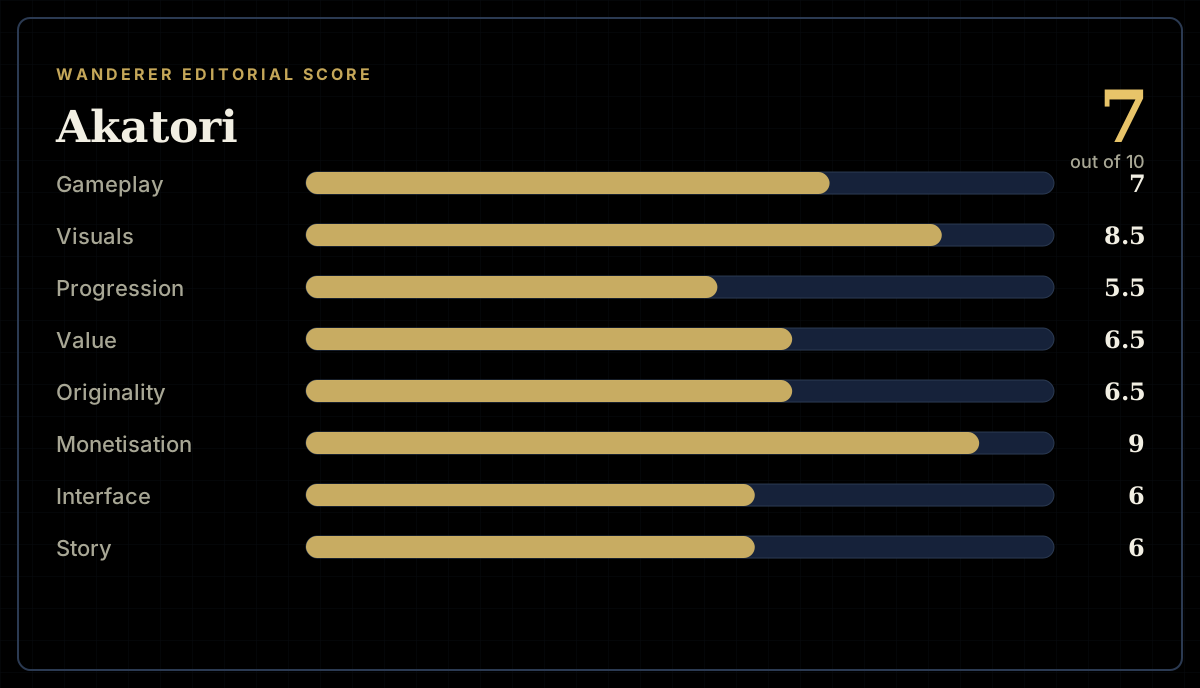
How the review scores each part of the gameWanderer Editorial -

The game at a glanceWanderer Editorial -
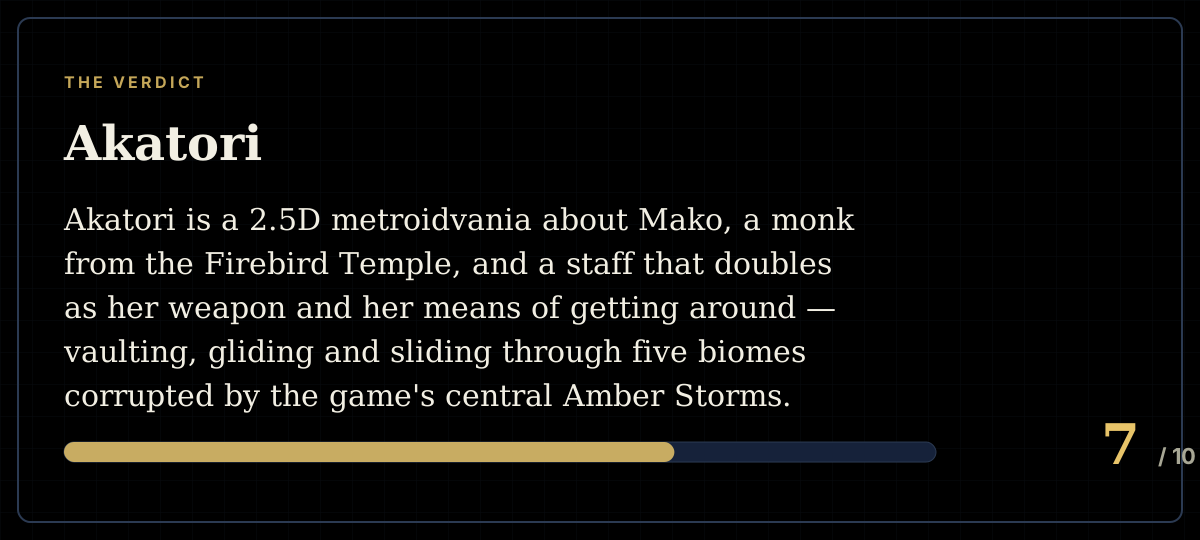
The short versionWanderer Editorial