Game review
Wizard Disaster Review
6.5 / 10
- Developer
- Slimboy M.
- Publisher
- Slimboy M.
- Released
- 25 August 2026
- Platforms
- ["Windows"]
- Genre
- Action
A One-Person Boss Rush With Something to Prove
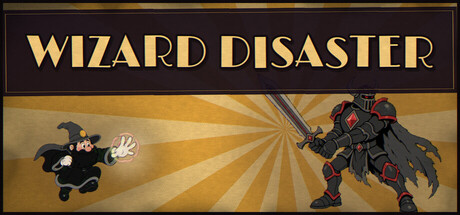
Wizard Disaster is a solo project from developer Slimboy M., released August 25, 2026 for $4.99. Its own pitch is refreshingly blunt: "twelve bosses, three spells, and nothing in between them but the next fight." You play a wizard who fumbled a banishment ritual the first time around and now has to work through a gauntlet of cartoon bosses, stealing their seals as you go, to finish the job. It's a small game with a small review pool, just eight English-language reviews, every one of them positive, and right at the floor where a review pool stops being statistically meaningless and starts being a genuine, if limited, signal. Read together with the store's own description of the format, they paint a consistent picture of a scrappy, focused boss-rush that knows exactly what it is.
The Cuphead Comparison Is Everywhere, and It's a Compliment
Nearly every reviewer in the pool reaches for the same reference point, unprompted. One called it "wonderful game like cuphead," another described it as "simplified cuphead," and a third, more self-deprecatingly, labeled it "bootleg cuphed" while adding, "game about me so ofc i like it." That the comparison shows up independently across multiple reviewers rather than being seeded by the store page itself suggests it's an honest read of the game's DNA: a 2D, boss-focused, run-and-dodge structure with a cartoon aesthetic and a wizard theme standing in for Cuphead's inkwell one. None of the reviewers treat the resemblance as a strike against the game; if anything, invoking one of the genre's most beloved touchstones by name, repeatedly, functions as their shorthand for recommending it.
Learnable Patterns Over Random Chance
One reviewer offered a more specific, structural observation worth taking at face value: that the boss encounters are "not rng based and reproducible," meaning each fight's pattern can be studied, memorized, and mastered rather than fought differently every attempt due to randomized attack selection. That's a meaningful design choice for a boss-rush built around exactly twelve encounters and three spells; a smaller moveset per boss puts more pressure on those patterns being fair and legible, and a fixed, learnable structure is generally how skill-based boss games earn replay value out of a short roster. The same reviewer called it a "hella fun little indie game" with real care behind it, and another, framing the value proposition directly, wrote that for "5 euro its a very good deal" once you've put in the time to actually learn what each of the twelve bosses is doing.
Presentation and Humor Carry Real Weight Here
Several reviewers singled out the art direction and comedic tone as punching well above the asking price. One called the art style "completely insane in the best possible way" and said the humor "fits the wizaard perfectly," praising a game built around "a very specific stupid idea" that the developer "actually committed 100% to making it work." Another reviewer's regional storefront happened to display the price as "21.37," and took genuine, specific delight in the coincidence, joking about it adding measurably to their enjoyment of the purchase, the kind of small, unplanned detail that only lands because the rest of the game had already put them in a goofy enough mood to appreciate it. One reviewer went further still, writing simply, "This game completely changed my life," a hyperbolic but clearly affectionate reaction to a cheap, committed little passion project.
Short by Design, and It Shows
The flip side of a tightly scoped, twelve-boss structure is that it doesn't take long to see everything on offer, and at least one reviewer's reaction reflects that directly: despite calling it "Pretty good," they immediately added, "I'm considering a refund," a comment that reads less like dissatisfaction with quality and more like a player weighing a short runtime against Steam's refund window. With only eight reviews total, it would be a mistake to treat any single reaction as representative, but a boss-rush with a dozen fights and three spells is, by design, not built to fill dozens of hours, and buyers going in expecting a long campaign rather than a tight, focused challenge run should adjust expectations accordingly.
Verdict
Wizard Disaster is a small, cheap, genuinely funny boss-rush that earns its Cuphead comparisons rather than merely inviting them, built on fair, learnable fights rather than random-chance difficulty spikes. Every review it has collected so far is positive, and while eight reviews is a thin sample to lean on heavily, the consistency of what those reviewers praise, specifically the humor, the art direction, and the fairness of the boss patterns, lines up cleanly with what the game promises on its own store page. At $4.99 for twelve bosses and three spells, it isn't trying to be anything more than a tight, funny afternoon of skill-based combat, and on that narrow promise, it delivers.
What holds it back from a stronger recommendation isn't the humor or the fights themselves, it's scope. Twelve bosses and three spells is a real structure, but it's not a deep one, and nothing in the review pool suggests hidden layers of build variety, alternate spell loadouts, or meaningfully different runs waiting to be discovered underneath the surface. That's a fair trade for a solo developer's five-dollar project, and it explains why even an enthusiastic reviewer can end up weighing a refund purely on runtime rather than quality. Buyers who go in treating this as a short, focused challenge run rather than a full campaign, and who are already fond of Cuphead's boss-rush formula, are the ones this game is built for, and by every account in its small but unanimous review pool, they're the ones it satisfies.
Screenshots
-
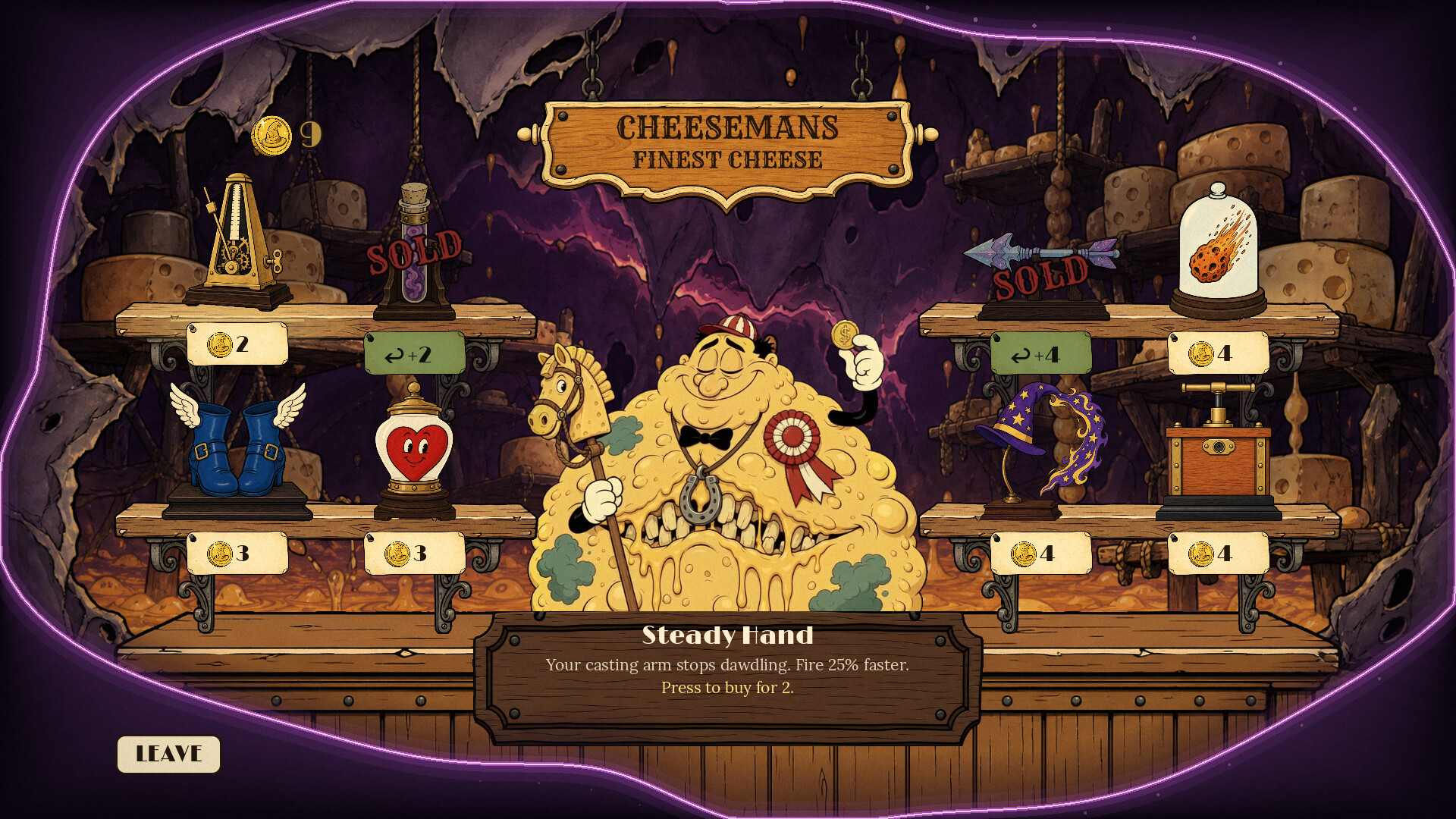
The shop between runs, where coins earned from bosses buy permanent-feeling buffs like faster casting, part of the loop reviewers describe as short but replayable.Image: Slimboy M. via Steam -
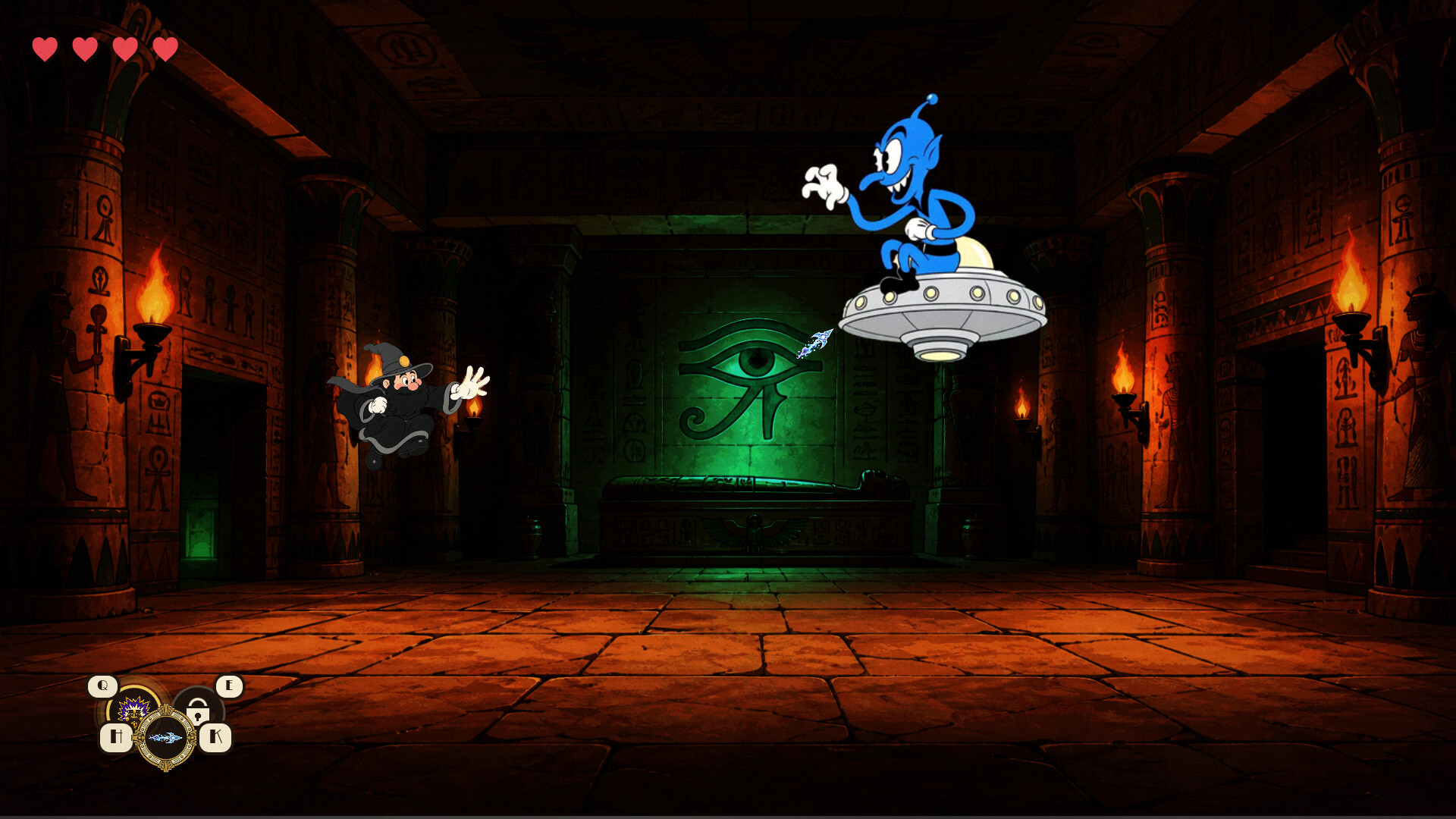
One of the twelve boss encounters, a UFO-riding alien inside an Egyptian tomb, an example of the loose, anything-goes cartoon logic reviewers compare to Cuphead.Image: Slimboy M. via Steam -
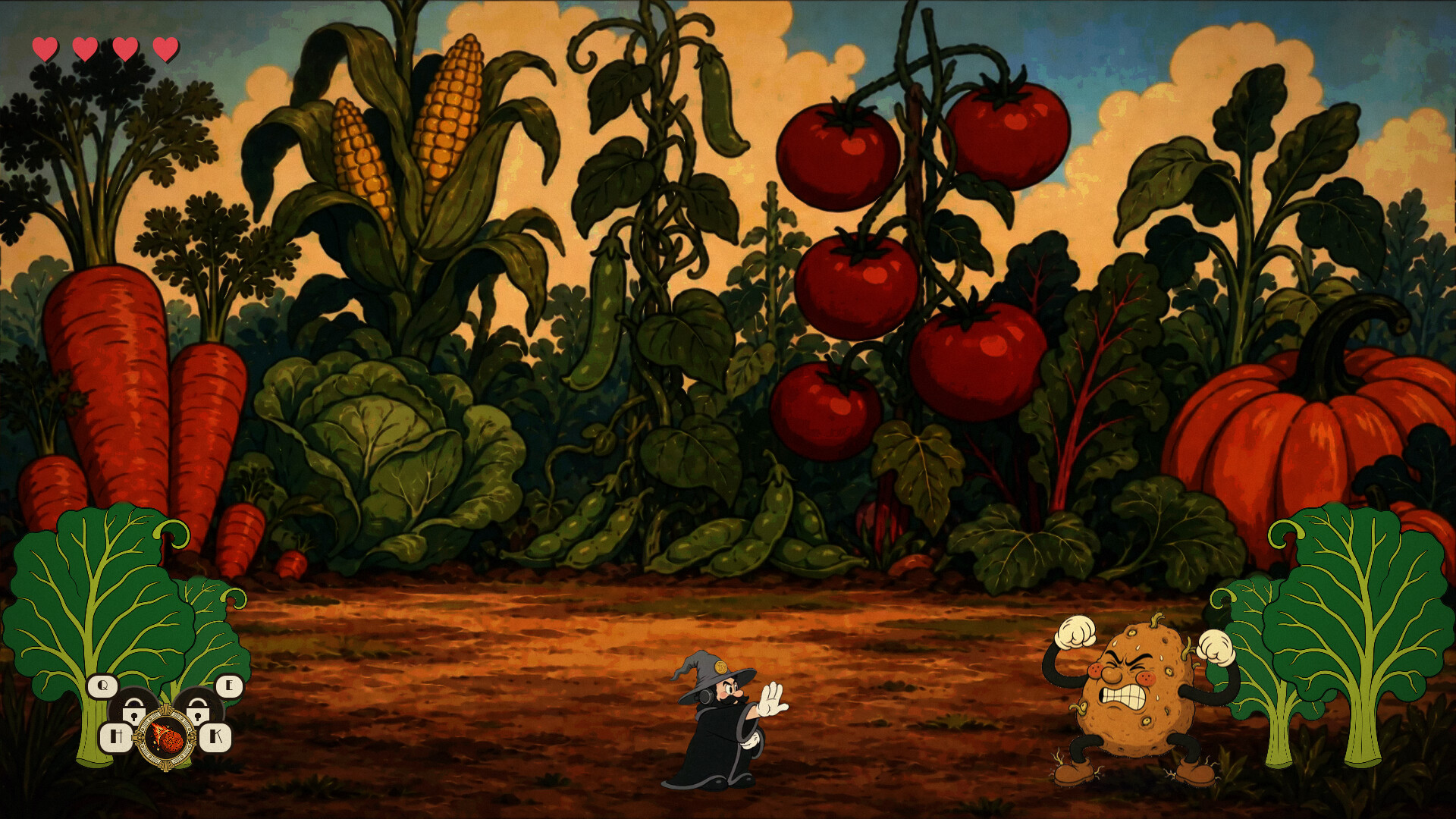
A giant potato boss squares up in an oversized vegetable patch, one of the game's more purely absurd fights.Image: Slimboy M. via Steam