Game review
The Odyssey Simulator Review
4.5 / 10
- Developer
- HistoryAccurateDevelopers
- Publisher
- HistoryAccurateDevelopers
- Released
- 26 August 2026
- Platforms
- ["Windows"]
- Genre
- Action-Adventure
A Satirical Reskin, Not A New Game
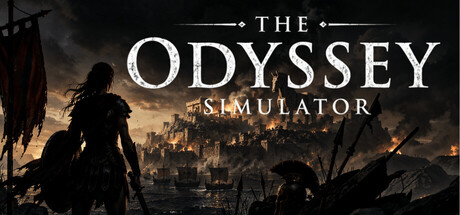
The Odyssey Simulator, released August 26, 2026 by a developer calling itself HistoryAccurateDevelopers, casts you as Achilles fighting through a deliberately, gleefully unhistorical Trojan War, complete with jeeps, bicycles, and modern firearms scattered across the battlefield. It's a direct follow-up in spirit and structure to an earlier game from the same studio, "Yasuke Simulator," and reading through the ten English reviews it's collected, that lineage is inseparable from how people are receiving it. Nine of those ten reviews are positive, but almost every one of them, positive or not, frames the game explicitly as more of the same rather than something new, and at $6.99 for what several reviewers describe as a very short, mechanically identical follow-up, that framing matters more than the headline score suggests.
The Joke Lands, At Least Once
Where the game succeeds, it succeeds as a joke rather than as a game, and reviewers are having fun with the bit. One wrote, "Sir, a second historically accurate game has hit the AAA gaming industry," while another joked that "the oracles say Christopher Nolan cries himself to sleep at night for being unable to capture the historical accuracy in his Odyssey as can be found in this game," a clear jab at prestige historical filmmaking and, by extension, at the broader discourse around historical accuracy in games and media that both this title and its predecessor are riffing on. One reviewer appreciated that the game "did stick somewhat close to the narrative of the Trojan War, even adapting sources beyond the Iliad," and found real, if modest, satisfaction in that unexpected effort. If deliberately absurd anachronism, guns and jeeps dropped into the Bronze Age alongside a straight-faced narrator, is your sense of humor, several reviewers confirm the joke does land, at least on a first playthrough.
Multiple Reviewers Confirm: It's The Same Game Again
The most consistently repeated observation in the review pool, appearing across both positive and negative reviews, is that this is barely a new game at all. One reviewer stated it flatly: "it's a Yasuke Simulator reskin with zero new mechanics or weapons, recycling a lot of the same jokes." A second, more critical reviewer reached a harsher version of the same conclusion, writing "I cannot recommend this game, sadly. In general, this game is a worse product than the Yasuke Simulator," specifically citing worse controls and movement than the earlier release. That two independent reviewers separately describe the exact same relationship to the same prior title, one shrugging it off and one actively marking it down for it, is a strong, corroborated signal that whatever new content exists here is thin. This isn't a sequel with a fresh coat of paint over new systems; by the reviewers' own accounts, it's close to the same systems with a different historical backdrop pasted over them.
Rough, Unfinished-Feeling Mechanics
Beyond the recycling complaint, the more critical review in the pool details specific, concrete mechanical problems rather than vague dissatisfaction. It notes "there is autoaim in the game and i haven't figured out how to turn it off," a real functionality gap for a third-person action game, and describes vehicle controls that regressed from the previous title: "You have to hold the fire button to drive the Bicycle," an awkward, unintuitive control scheme for basic locomotion. The same reviewer states outright that "the controls and movements got worse from previous game," which, combined with the autoaim complaint, paints a picture of a project that didn't meaningfully iterate on its own foundation so much as ship a variant of it with some regressions attached. None of the positive reviews directly contest these specific claims; they simply don't dwell on the mechanics at all, focusing instead on the humor.
A Short Joke At A Real Price
Nearly every reviewer's recorded playtime sits under two hours, several well under one, which lines up with a game built primarily to deliver its central joke once rather than to sustain repeat engagement. That's a reasonable design choice for a satire piece, but it puts real pressure on the $6.99 asking price when the core mechanical loop is, by multiple accounts, borrowed wholesale from an earlier, cheaper-feeling release rather than built fresh for this one. A single-player-only game with no stated replay incentives and a joke that several reviewers explicitly compare unfavorably to its own predecessor's version of the same joke is a hard sell as a standalone purchase, however many laughs it gets out of you on the first run.
Verdict
The Odyssey Simulator is a real, purchasable game with a legitimate laugh or two in it, and the reviewers enjoying it for what it is aren't wrong that the historical-accuracy satire angle can be funny when it connects. But the review pool's own words describe something closer to a licensed reskin of an existing product than a new game: recycled mechanics, recycled jokes, and in at least one detailed account, worse controls than the game it's following up on. Nine positive reviews out of ten is a genuinely strong ratio, but it's a ratio built on people who already wanted more of exactly what came before, not evidence of meaningful new craft.
If you played and enjoyed Yasuke Simulator and specifically want the Trojan War flavor of the same joke, this will likely deliver exactly what you're expecting, in roughly the same amount of playtime. If you're coming in fresh hoping for a distinct game rather than a reskin, the reviewers' own comparisons suggest tempering your expectations considerably, and possibly waiting for a sale given how directly the pool frames this as more of the same rather than something built to stand on its own.
Screenshots
-
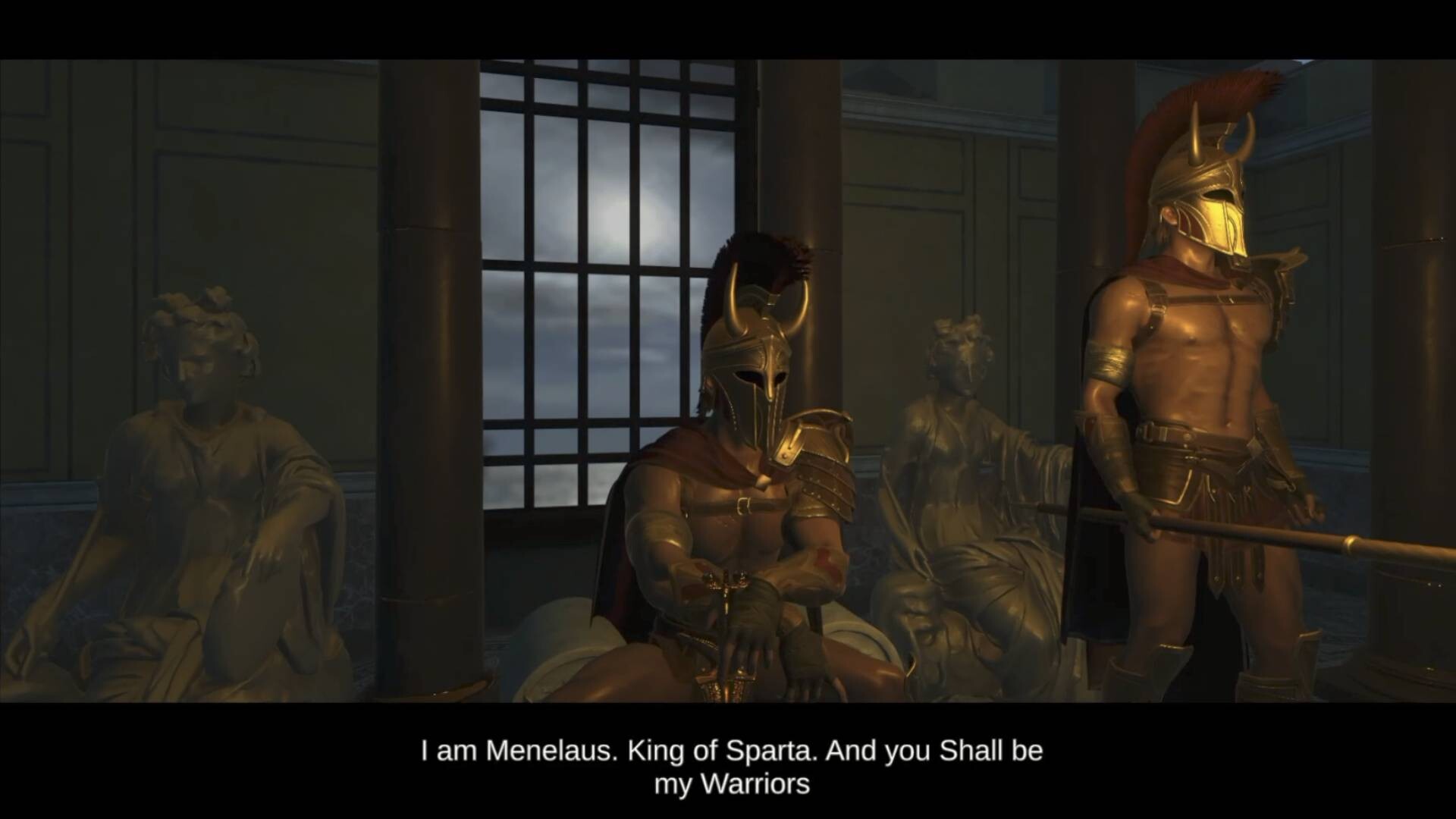
One of the game's straight-faced narrative cutscenes; several reviewers say the historical framing and dialogue are played for satire against genuinely anachronistic gameplay.Image: HistoryAccurateDevelopers via Steam -
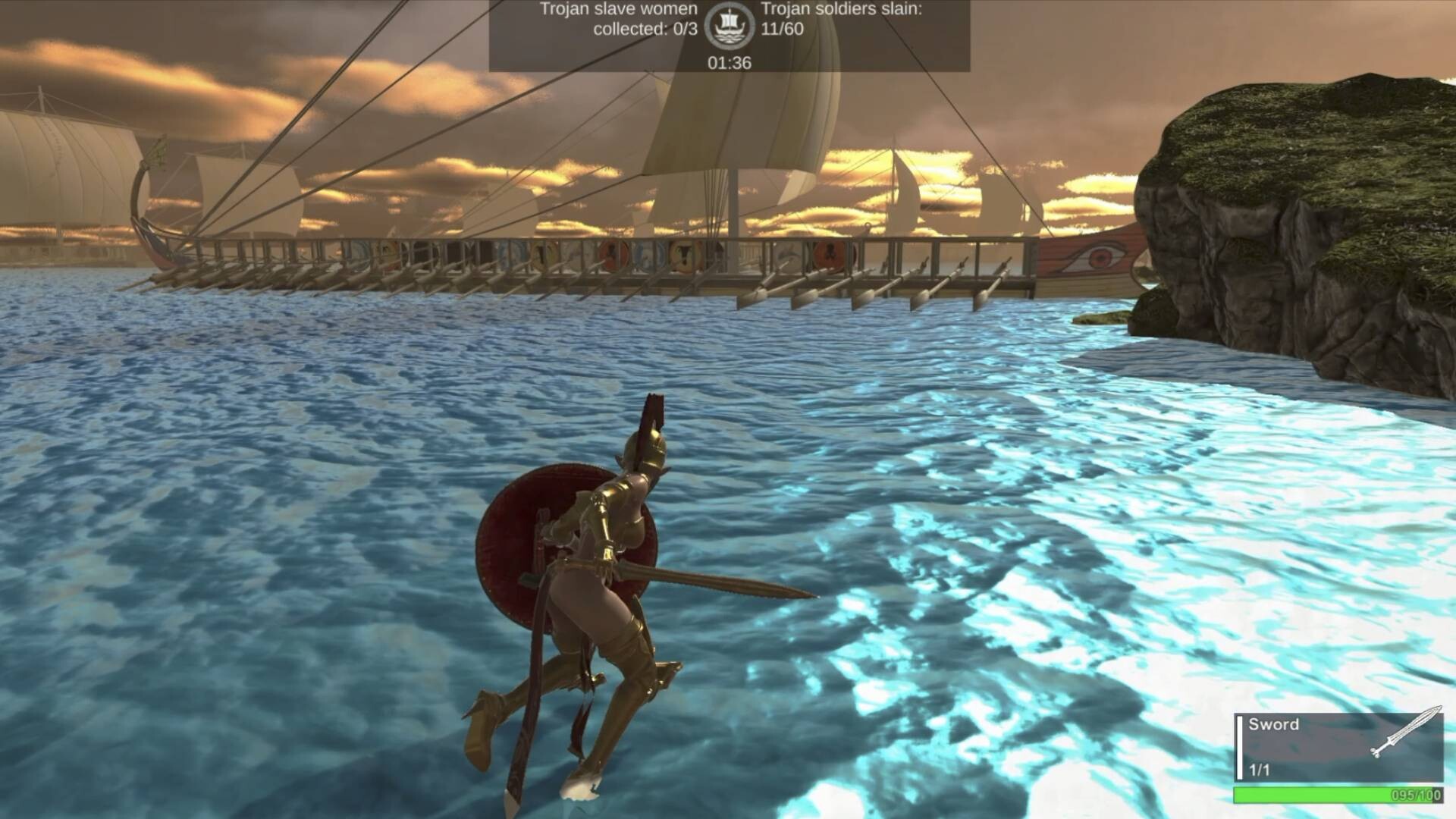
Objective trackers for 'Trojan soldiers slain' and 'Trojan slave women collected' during a beach assault, the kind of bare-bones mission structure the reviews describe as recycled from the developer's earlier game.Image: HistoryAccurateDevelopers via Steam -
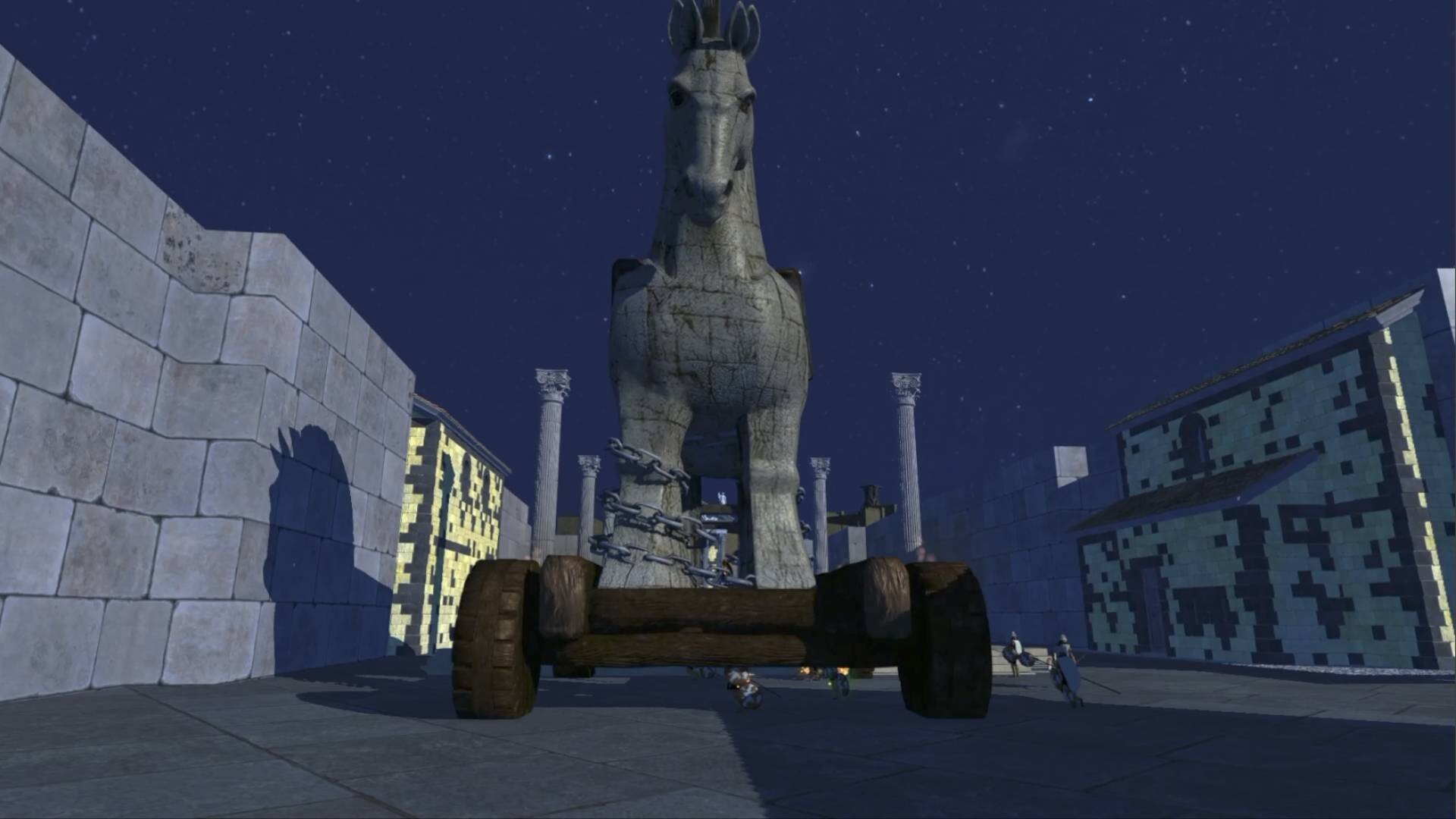
The Trojan Horse being wheeled through the city gates, one of the setpieces built on top of the same engine and systems reviewers compare directly to the studio's previous release.Image: HistoryAccurateDevelopers via Steam