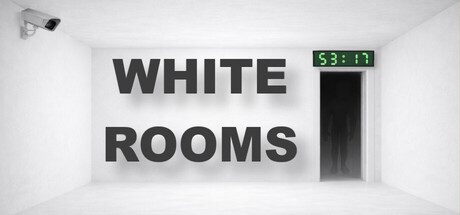
Game review
White Rooms Review
6 / 10
- Developer
- Simblend
- Publisher
- Simblend
- Released
- 26 August 2026
- Platforms
- ["Windows", "macOS", "Linux"]
- Genre
- Puzzle
A Rule for Every Room, and a Punishment for Believing It
White Rooms builds its entire identity around a single, mean little trick: every stark, minimalist room teaches the player a rule, lets them trust it, and then punishes them the moment they do. There's no combat and no reflex-testing platforming challenge in the traditional sense — solo developer Simblend instead builds tension purely out of expectation and betrayal, using the genre shorthand of a first-person "walking puzzle" to set players up again and again. Reviewers describe the format as devious by design, and more than one specifically calls out the two or three rooms that stumped them completely, because the actual solution required doing something the game had spent the previous several rooms training them not to do.
That structure is the whole appeal, and reviewers who click with it describe getting genuinely hooked by the escalating sense of paranoia — questioning every visual cue, every piece of environmental storytelling, every object that looks a little too helpfully placed. One reviewer flags a specific electrical switch in the game's opening settings room as a detail worth paying close attention to, a small nod to how much the game rewards players who read its spaces carefully rather than rushing through on instinct.
Diabolical by Design, and Built for an Audience That Wants That
White Rooms sits squarely inside the "rage game" tradition, and its review pool treats that label as a selling point rather than a warning. Multiple reviewers explicitly recommend it as streaming material, with one calling it must-play content for anyone who broadcasts to a community, betting on the format's natural appeal as something to watch a player get repeatedly, spectacularly outsmarted by a room. The praise leans heavily on the game's cruelty being purposeful rather than cheap: reviewers describe frustration that stays fun rather than punishing, and credit the design with knowing exactly how long to let a player sit with a problem before the "aha" moment lands.
It's a narrow lane, and White Rooms doesn't pretend otherwise. This isn't a puzzle game built around elegant logic chains or mechanical depth; it's built around psychological misdirection, delivered in short, self-contained bursts. For the audience that specifically wants that experience, the reviews are close to unanimous in their enthusiasm, several going as far as calling it the best entry they've played in the rage-game subgenre. For anyone hoping for a more traditional, fair-play puzzle structure, this is worth flagging clearly up front, since it is very much not that kind of game.
Surprisingly Meaty for the Price
Given the minimalist premise, White Rooms turns out to be more substantial than its stripped-down aesthetic suggests. Reported playtimes in the review pool run well past what a small, cheap indie puzzle game typically delivers, with several reviewers logging multiple hours working through the full set of rooms, and at least one mentioning optional "special content" beyond the main sequence of puzzles without spoiling what it involves. At well under ten dollars, reviewers are consistent in calling it a strong value, one bluntly summarizing it as "worth the money" and another simply thanking the developer for what they got out of it.
The game also benefited from a public demo that ran through several iterations in the months before its August 2026 launch, giving the developer a chance to gather feedback and tune difficulty ahead of the full release — a normal, transparent pre-launch process distinct from a paid early-access program, and one reflected in a full-release news history that shows no early-access period at any point.
Where the Trick Wears Thin
The complaints in White Rooms' review pool are few, but they're specific. One reviewer flags a stretch of tedious platforming sitting alongside the otherwise clever puzzle design, arguing it doesn't fit the game's own strengths as well as its trickery does. A negative review reports getting stuck on a possible bug involving an interactable object that refused to register clicks, a frustrating way to lose progress in a game that is, by its nature, already asking a lot of a player's patience. Another dissenting reviewer found the whole experience simply didn't land for them, describing the puzzles as neither especially challenging nor particularly engaging and the game's narration as unremarkable — a useful reminder that a "rage game" built on misdirection isn't going to convert every kind of puzzle fan, even when the majority response is enthusiastic.
None of these complaints suggest a fundamentally broken game, but they do suggest a title whose highs depend heavily on being exactly the kind of experience a given player is looking for, with less of a safety net for anyone who isn't already on board with its premise.
Verdict
White Rooms is a small, cheap, cleverly mean puzzle game that knows precisely what kind of player it's built for, and largely delivers on that promise: rooms that teach a rule specifically so they can break it, a genuinely surprising amount of content for the price, and a design sensibility reviewers consistently describe as diabolical in the best sense. It won't convert players looking for a fair, traditional puzzle structure, and a handful of reports around a progression-blocking bug and some tedious platforming stretches keep it from a clean sweep. For rage-game fans and anyone who enjoys being outsmarted by a room full of nothing, it's an easy recommendation at its price; everyone else should go in with clear eyes about exactly what they're buying.
Pros:
- Distinctive "teach then betray" puzzle structure that reviewers describe as genuinely clever
- Solo-developer craftsmanship that punches above the minimalist white-room aesthetic
- Surprisingly substantial playtime and optional bonus content for the low price
- Purpose-built for streaming and shared, spectator-friendly frustration
- A transparent public demo period ahead of launch rather than a paid early-access program
Cons:
- A reported bug involving an unresponsive interactable object can block progress
- A stretch of platforming feels tedious next to the sharper puzzle design
- Narrow appeal by design — not for players who want a fair, traditional puzzle structure
- At least one reviewer found the puzzles and narration unengaging
- Thin review pool at review time makes broader trends harder to confirm
Screenshots
-
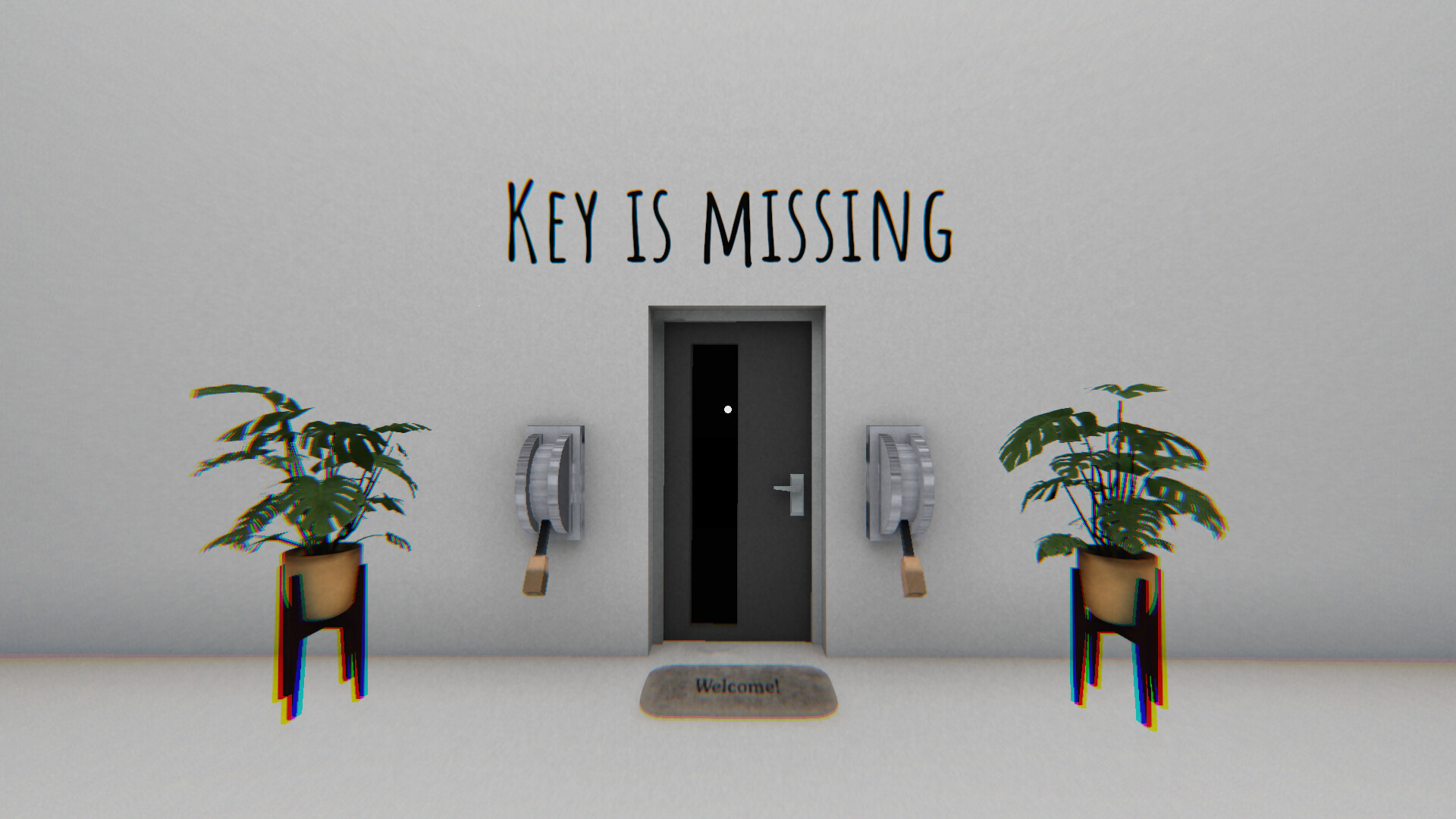
A door that won't open until its rule is figured outImage: Simblend -
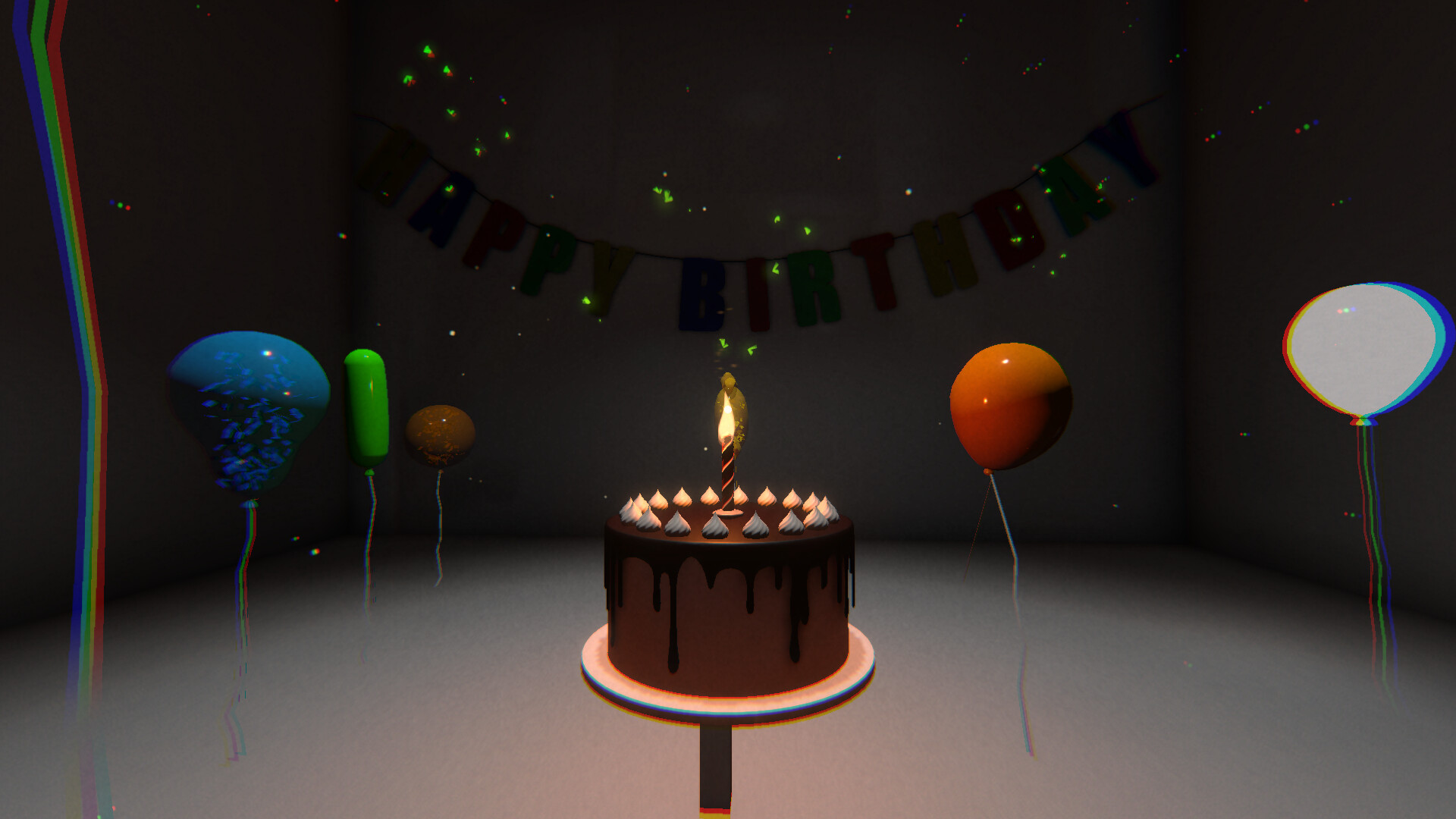
A birthday-themed room, one of the game's stranger set piecesImage: Simblend -
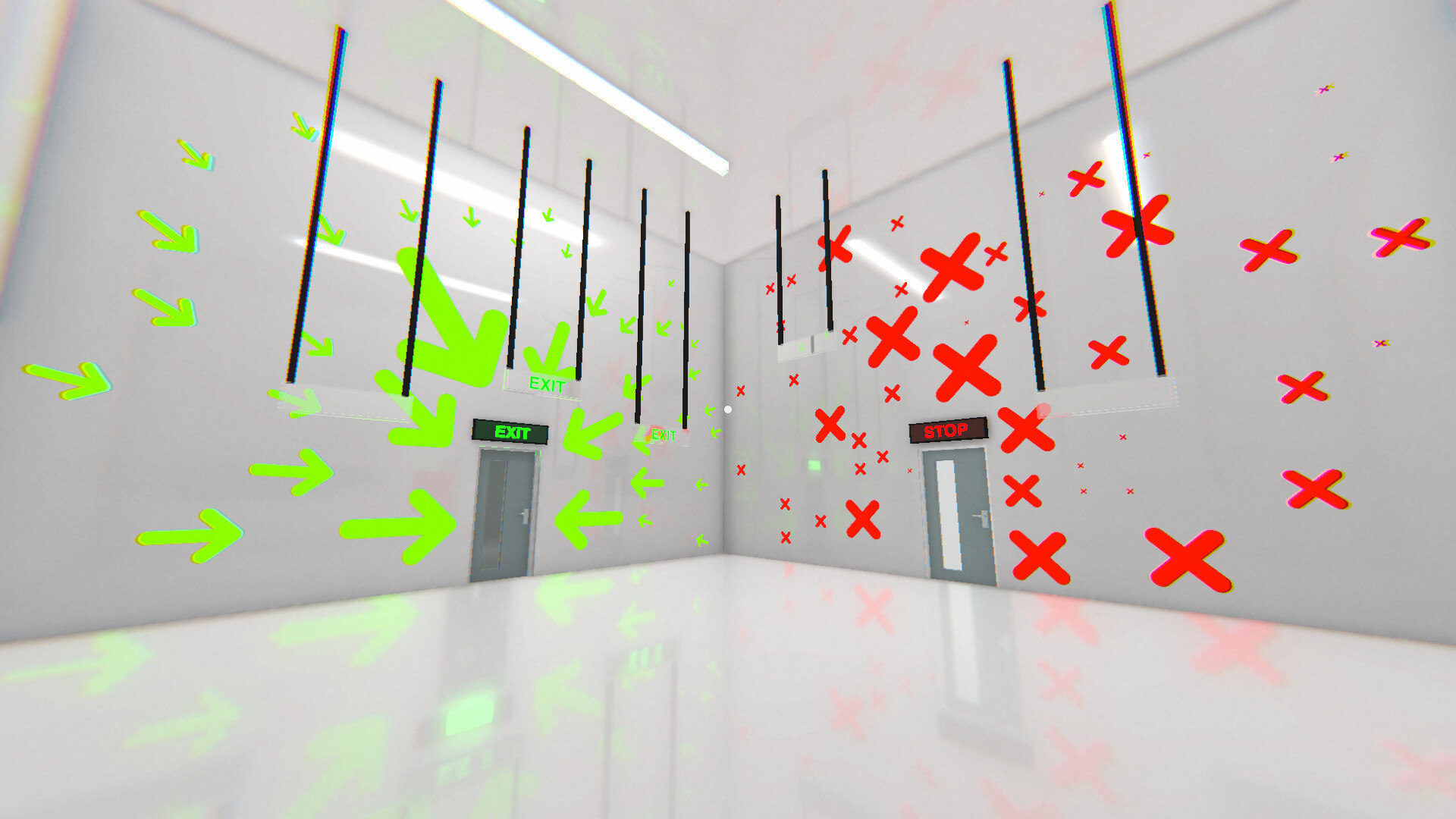
The game's rule-then-betrayal trick, laid out in a single roomImage: Simblend -
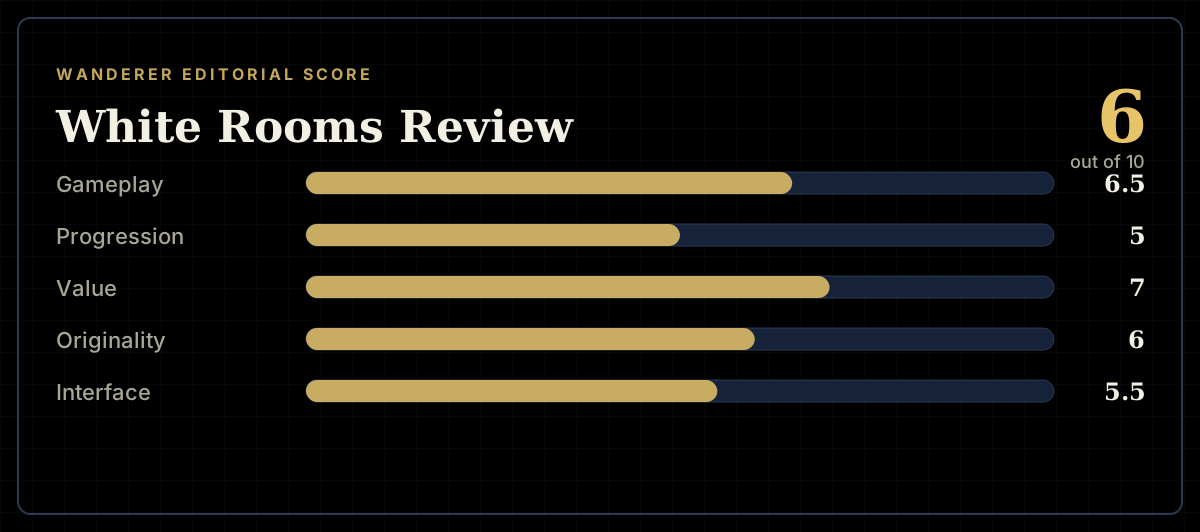
How the review scores each part of the gameWanderer Editorial -
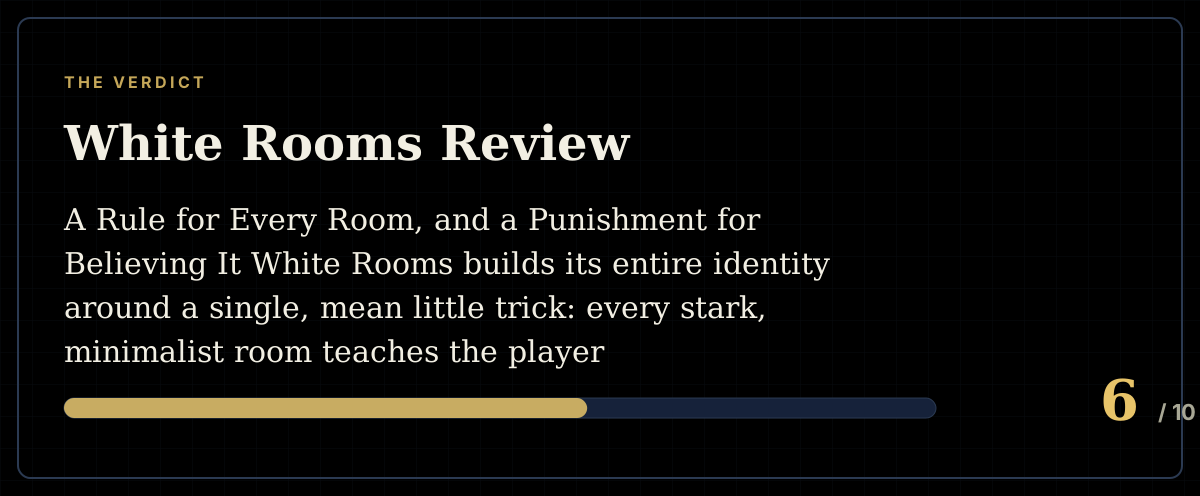
The short versionWanderer Editorial