Game review
The Dreams in the Peacock House
7.5 / 10
- Developer
- Harlequin Diver
- Publisher
- Harlequin Diver
- Released
- 10 June 2026
- Platforms
- Windows
- Genre
- Adventure, Indie
- Monetisation
- paid
- Players
- false
The short version
Biggest strengths
- A genuinely distinctive blend of old-school text-parser exploration, visual novel dream sequences, and light point-and-click puzzles that reviewers repeatedly described as working seamlessly together
- Strong, evocative pixel art and a well-regarded soundtrack that multiple reviewers singled out as elevating the game's surreal, dreamlike atmosphere
- A thoughtful, introspective narrative about awakening, isolation, and creative burnout that several reviewers found unexpectedly personal and resonant, while still leaving plenty of room for individual interpretation
Biggest weaknesses
- Corroborated across nearly the entire pool as very short, most reviewers finished in under an hour, with the game itself offering no Steam achievements to extend engagement
- Puzzles are consistently described as simple to the point of being closer to environmental invitations than genuine challenges, with more than one reviewer explicitly wishing for more difficulty
- One reviewer specifically wanted more focus on the text-parser mechanics that first drew them in, feeling the puzzle segments felt obligatory rather than fully embraced
Who it's for: Fans of short, surreal, introspective interactive fiction who enjoy Zork-style text parsers mixed with visual novel segments, not recommended for players wanting complex puzzles or more than an hour of content
Our recommendation: recommended
7.5 / 10
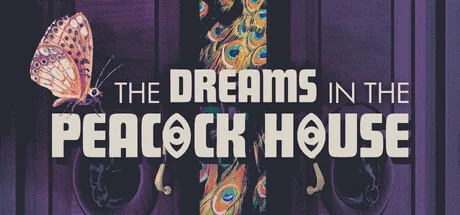
The Dreams in the Peacock House released in full on Steam on June 10, 2026, from solo developer Harlequin Diver, a short narrative game following Angus, a comatose artist trying to wake from a long isolation by exploring his own dreams, told through a mix of old-school text-parser adventure, visual novel dream sequences, and light point-and-click puzzles. Its 27-review English pool sits at a unanimous Positive (27 up, 0 down, 100%), and the reviews describe an unusually well-loved, tightly-scoped piece of interactive fiction whose only real weakness is how quickly it ends.
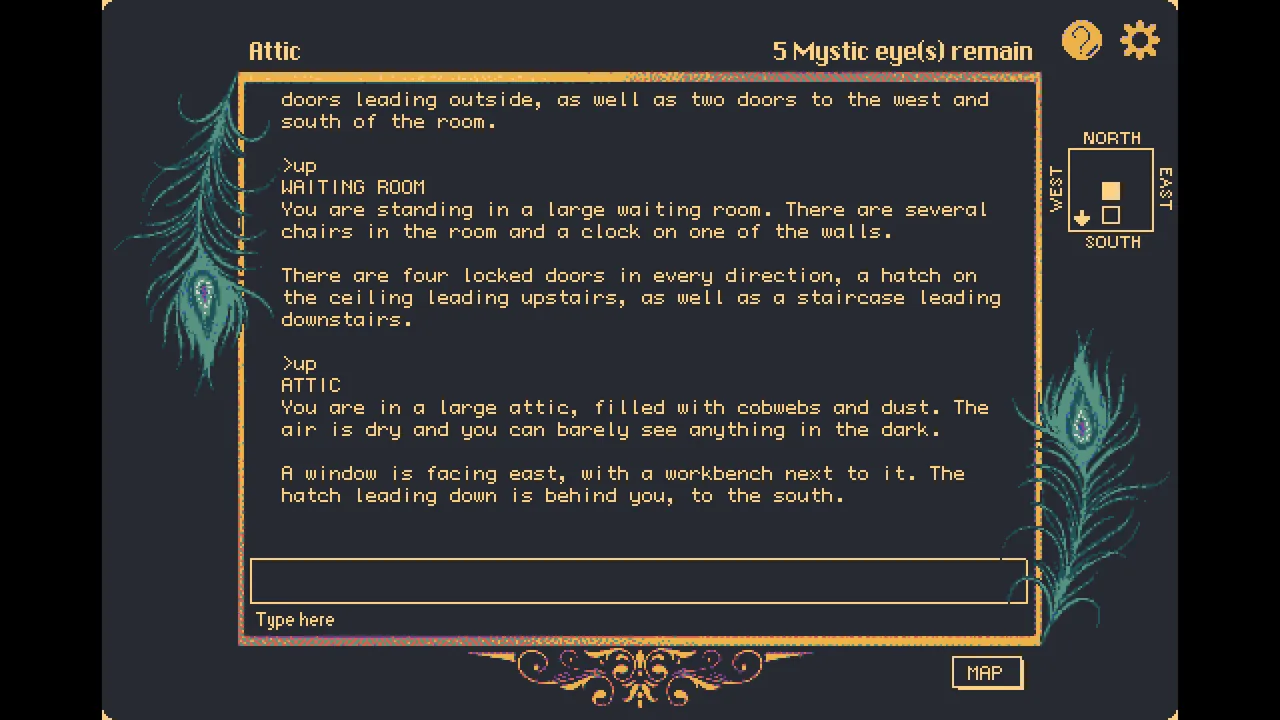
The genre-blending structure draws the pool's most consistent praise as a piece of design. One reviewer described navigating an old text interface again as feeling like being "briefly taken back to a time when gaming required a different sort of visualization and creative thinking," before each discovered "magic eye" opens into a dream sequence "formatted like a visual novel with some animation and conversation." A separate reviewer called the combination of "text adventure, visual novel, and point and click gameplay features" simply "amazing," adding that "they all work extremely well together." A third reviewer, drawing a more pointed comparison, wrote plainly: "do you like Zork? This is improved Zork," praising how it "does some cool stuff with the genre" within a very short, inexpensive package.
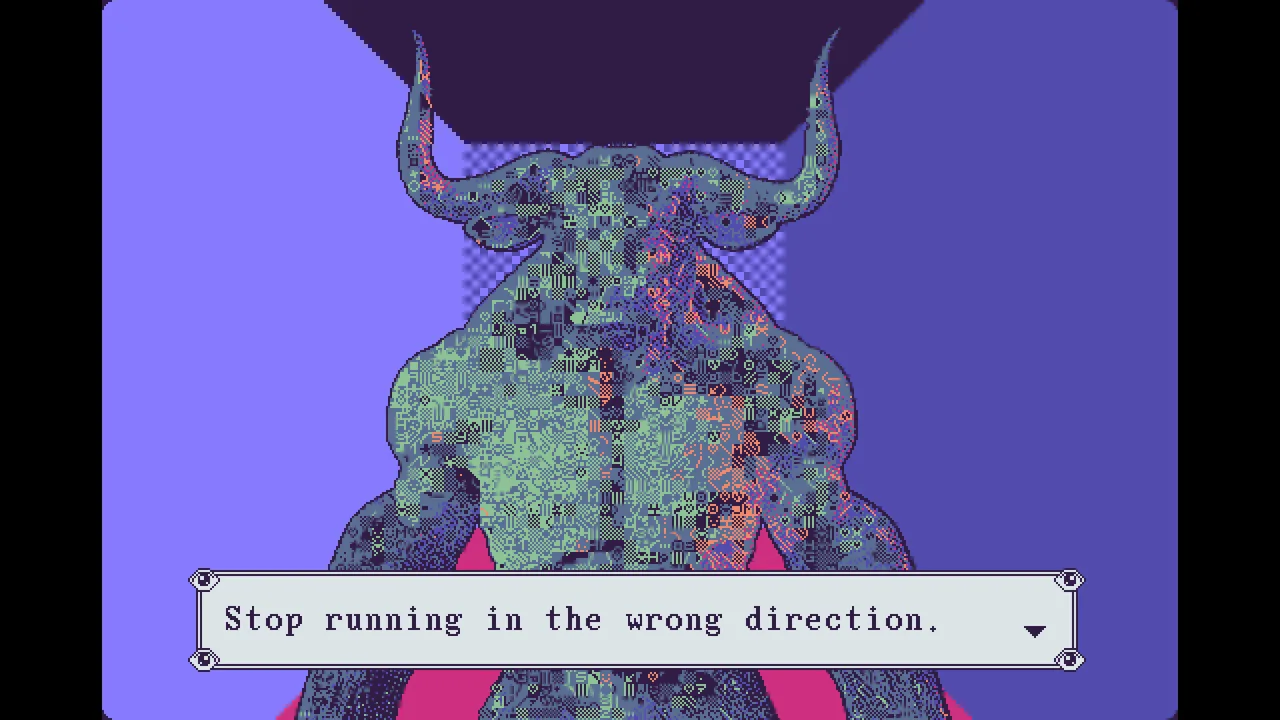
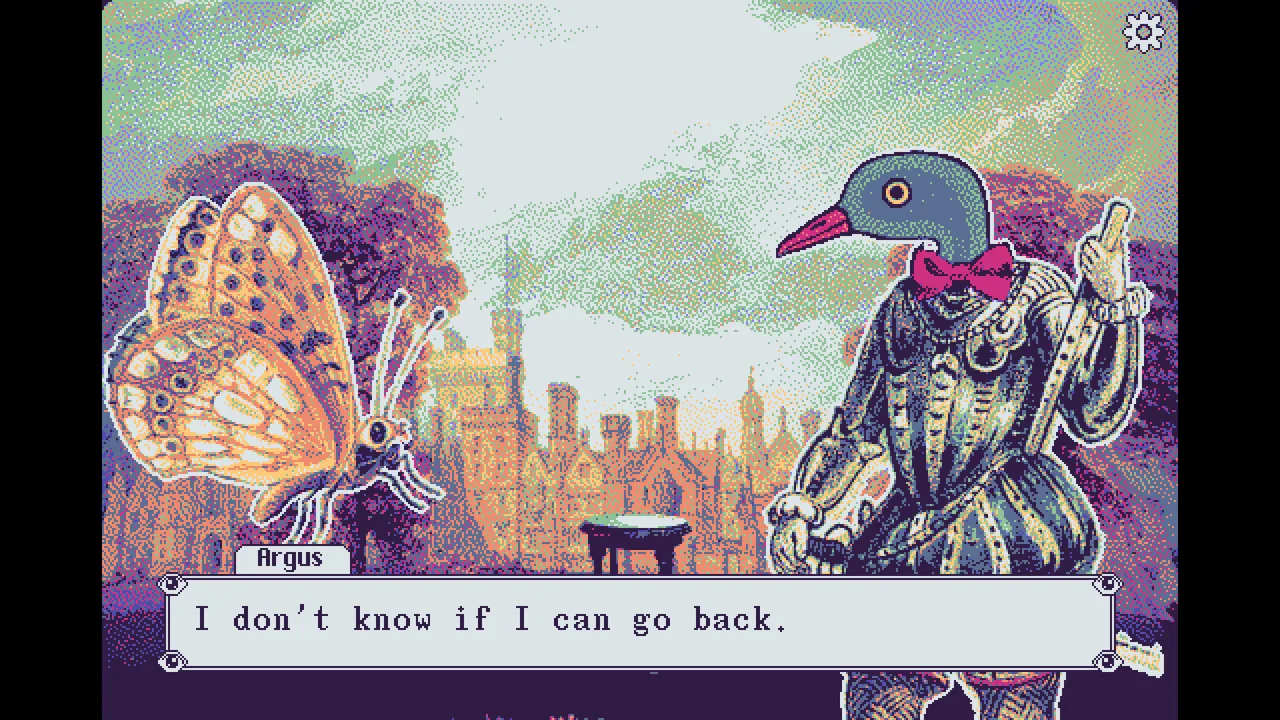
Presentation and mood draw equally strong, specific praise throughout the pool. One reviewer called it "a delightful burst of vibrant surrealism and old-school charm," while another praised the "surreal and constrained visual style" for creating "a stylish atmosphere that I haven't experienced elsewhere." A third reviewer specifically credited the "lovely pixel art, good music" for making the whole thing feel like "a great dream to wake up from." The writing itself drew unusually personal responses: one reviewer described it as "a somewhat introspective and deeply personal experience" that, despite its surreal aesthetics, "covers much more real, personal and intimate topics," while another connected its themes of "awakening, acceptance, and inner conflict" directly to "how lost many of us feel in life."
One specific design choice, telling players exactly what they missed once the credits roll rather than leaving them to wander an open-ended text parser indefinitely, drew direct, repeated praise as a smart, player-respecting touch. One reviewer called it their "BIGGEST compliment," explaining that "instead of wandering around with an infinite amount of things to type into the text prompt, the game tells you what you missed when the credits roll so you can go back and experience what you missed." A separate reviewer confirmed the same appreciation independently, writing that they "loved how the game told me what I missed" and planned to "play it all over again to find everything this time."
Length is the pool's one recurring, well-corroborated limitation, though almost universally framed as an acceptable tradeoff rather than a flaw. One reviewer clocked "about an hour to reach the Sanctum Sanctorum," while another reported finishing "in one sitting, took exactly 1 hour but it felt a lot longer" in a complimentary sense. A third reviewer put it succinctly: "it is not a long game but games do not need to be long. It is good!" That framing, brevity as a deliberate, well-executed choice rather than a shortfall, runs consistently enough through the pool that it reads as the reviewers' collective verdict rather than a lone opinion.
Puzzle difficulty draws the pool's clearest area of mixed feeling, still landing well inside "recommended" territory but worth flagging directly. One detailed reviewer admitted wishing "the puzzles were more complex or harder," calling out "the inner puzzle game fan in me," while a separate reviewer who came in "looking for a game with more parser action" found they "didn't enjoy the puzzles in the game, which felt placed in necessity as opposed to in love." A third reviewer summarized the puzzles as feeling "less like challenges and more like invitations to thoroughly explore the environments," a description that seems to capture the intended design even for reviewers who wanted something more demanding. One further reviewer noted the gameplay segments could go "a bit quiet" without music or ambience at points, a small contrast to the otherwise well-liked soundtrack.
Interestingly, this near-universal goodwill doesn't come from reviewers who all read the game's ambiguous ending the same way. One reviewer described forming "my own personal idea of what the story means and what exactly is happening that may or may not be what the dev intended," calling that ambiguity "the fun and uniqueness of art," while a separate reviewer noted "the mystery remains intact more or less at the ending" and that "most of the game can be described as pure dream logic." A third reviewer wondered openly whether secrets existed beyond what the ending's missed-content summary mentioned, or whether a different ending was achievable given how many plot threads seemed to gesture at one without confirming it. Rather than treating this openness as a weakness, the pool consistently frames it as an invitation to revisit the game and compare interpretations, several reviewers explicitly said they planned to play it again for exactly that reason.
Reviewers were also consistently enthusiastic about what Harlequin Diver might make next, a pattern worth noting as its own signal of goodwill. Multiple reviewers independently said they'd be following the developer's future work, with one specifically planning to check out their existing projects on itch.io in the meantime, and another hoping a follow-up game might lean further into the text-parser mechanics that first drew them in. That kind of unprompted interest in a solo developer's next project, appearing repeatedly across an otherwise unanimous review pool, is a meaningful vote of confidence beyond the specific game being reviewed here.
Taken together, The Dreams in the Peacock House is a small, confident, unusually well-realized piece of interactive fiction that clearly knows exactly what it wants to be and executes that vision with real craft, striking visuals, evocative music, and a genre-blending structure reviewers found consistently satisfying rather than gimmicky. Its puzzles won't challenge anyone looking for real difficulty, and its runtime is short enough that most players will finish in a single evening, but for the modest price and the hour it asks for, it's a very easy recommendation for anyone drawn to short, surreal, personal storytelling.
Pros and cons
Pros
- A genuinely distinctive blend of old-school text-parser exploration, visual novel dream sequences, and light point-and-click puzzles that reviewers repeatedly described as working seamlessly together
- Strong, evocative pixel art and a well-regarded soundtrack that multiple reviewers singled out as elevating the game's surreal, dreamlike atmosphere
- A thoughtful, introspective narrative about awakening, isolation, and creative burnout that several reviewers found unexpectedly personal and resonant, while still leaving plenty of room for individual interpretation
- A well-liked design touch that tells players exactly what they missed once the credits roll, letting them return for a second pass rather than wandering blindly
Cons
- Corroborated across nearly the entire pool as very short, most reviewers finished in under an hour, with the game itself offering no Steam achievements to extend engagement
- Puzzles are consistently described as simple to the point of being closer to environmental invitations than genuine challenges, with more than one reviewer explicitly wishing for more difficulty
- One reviewer specifically wanted more focus on the text-parser mechanics that first drew them in, feeling the puzzle segments felt obligatory rather than fully embraced
- A separate reviewer noted gameplay sections could go conspicuously quiet without music or ambience at points, a contrast to the otherwise well-praised soundtrack
Screenshots
-
The Dreams in the Peacock HouseImage: Harlequin Diver via Steam -
The Dreams in the Peacock HouseImage: Harlequin Diver via Steam -
The Dreams in the Peacock HouseImage: Harlequin Diver via Steam