Game review
Sovereign's End Review
7.5 / 10
- Developer
- NQR Games Inc.
- Publisher
- NQR Games Inc.
- Released
- 23 June 2026
- Platforms
- ["Windows"]
- Genre
- Action
A Bullet Heaven That Went 3D and Stuck the Landing
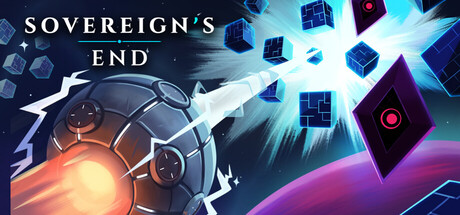
Sovereign's End launched June 23, 2026 from small studio NQR Games Inc., taking the "survivors-like" bullet-heaven formula popularized by Vampire Survivors and pushing it into a third-person, fully three-dimensional arena, where the player auto-fires an ever-expanding loadout of abilities at swelling waves of enemies while chasing the promise of eventually facing down the title's Sovereign. Priced at $14.99 with no active sale at review time, it emerged from an earlier public demo to a small but strikingly one-sided reception: 17 English reviews, every single one positive, "Positive" on Steam's own scale, all read in full for this review, out of an all-language pool of 19 reviews (18 positive).
The Build-Crafting Reviewers Keep Coming Back For
The single most consistent theme across the entire pool is how much depth reviewers found in the meta-progression and build-crafting systems layered underneath a deceptively simple core loop. "There's a lot to work toward and unlock. Lots of meta progression to slowly evolve from Sputnik to a Deathball," one reviewer wrote, while another who logged over 20 hours praised how "runs will end up feeling very different from each other because of the skill variety," adding that "the unlock system also highly incentivizes trying out different things." A reviewer who put in well over 130 hours called it "a well crafted bullet heaven with a huge amount of depth," and several others independently reached for the same comparison points: DRG Survivor, Megabonk, and Geometry Wars all came up unprompted as the games Sovereign's End most closely earns comparison to, with one writing "the inspiration from Megabonk is felt in the best ways. Gets its hooks in fast and doesn't let go." That's an unusually tight consensus for a genre this crowded, and it's the throughline the entire review pool keeps returning to regardless of how much time any individual reviewer put into the game.
That same reviewer went on to note that while the game does let committed players "'force' builds eventually with enough meta currency," most runs still end up feeling distinct from one another because of how the ability pool interacts with the character roster, a detail worth flagging for anyone worried that a deep unlock tree might eventually collapse into a single optimal strategy. Another reviewer, describing well over 130 hours of play, framed the appeal in almost the same terms from the opposite direction: "I have been having a great time slowly working my way through the characters and meta tree," suggesting the game's long-tail structure is built around steadily widening what's available to the player rather than front-loading everything at once. For a $14.99 release with no roadmap promises baked into its store page, that's a meaningful amount of structural ambition, and it shows up in review after review regardless of whether the writer is describing a ten-minute first session or a multi-hundred-hour habit.
An Auto-Fire Loop With Room to Breathe
Because the genre's core hook is auto-firing rather than aimed combat, the skill ceiling in a survivors-like almost always comes down to positioning, timing, and build choice rather than reflexes, and Sovereign's End's reviewers consistently credit it with getting that balance right. "Gameplay is simple to start but rewards knowledge and insight as you push into harder modes," one wrote, echoing a sentiment repeated by several others who described an approachable early game giving way to a much more demanding late game once the difficulty curve ramps up against the Sovereign itself. One reviewer summed up the loop's addictive quality bluntly: "Fun and addicting. Kind of plays like Geometry Wars," while another, describing the enemy design specifically, praised how "enemy types feel distinct from each other," a detail that matters more than it might sound in a genre where screen-filling swarms can easily blur into visual noise if the underlying enemy variety isn't there to support them.
Abstract Visuals: A Style Choice That Splits Even Its Fans
Not every note in the pool is unqualified praise. The game's abstract, geometric art direction, all sharp-edged shapes and glowing particle effects rather than legible character models, drew a specific and repeated caveat even from reviewers who otherwise recommended the game enthusiastically: "the abstract graphics can be a little disorienting at times," one wrote, sandwiching the complaint between calling it "a fun bullet heaven to turn the brain off to" and praising the meta-progression underneath. It's a minor knock relative to everything else in the pool, but it's notable that this exact wording, "disorienting," shows up as the review pool's only recurring reservation about a game that otherwise reads as close to unanimous.
A Small Studio With a Track Record
Several reviewers wrote as though this wasn't NQR Games Inc.'s first outing. "Great Game. Excellent follow-up to his original masterpiece, performance DKP," one reviewer wrote, framing Sovereign's End as a step up from an earlier project by the same developer, while a separate reviewer noted the "Dev is highly responsive on their discord," a small but recurring detail that surfaces in a handful of reviews as a reason players felt comfortable recommending the game this early in its life. Whatever the studio's history, the review pool treats Sovereign's End as a confident, well-supported release rather than a rough first attempt, and the consistency of the praise across very different playtime brackets, from ten-minute first impressions to multi-hundred-hour veterans, backs that up.
Verdict
Sovereign's End is a tightly-built entry in an oversaturated genre that earns its comparisons to DRG Survivor and Megabonk rather than just borrowing their trappings, offering enough build variety and meta-progression depth to keep both brief sessions and hundred-hour binges feeling purposeful. Its abstract 3D presentation is a genuine style choice rather than a technical shortcut, and while a few reviewers found it disorienting in the moment, that's the closest thing to a real complaint anywhere in an otherwise unanimous review pool. At $14.99, with no early access asterisk and a developer reviewers describe as actively engaged with the community, it's an easy recommendation for anyone who has ever lost an evening to a bullet-heaven roguelite and wants to see the formula rendered in three dimensions.
Screenshots
-
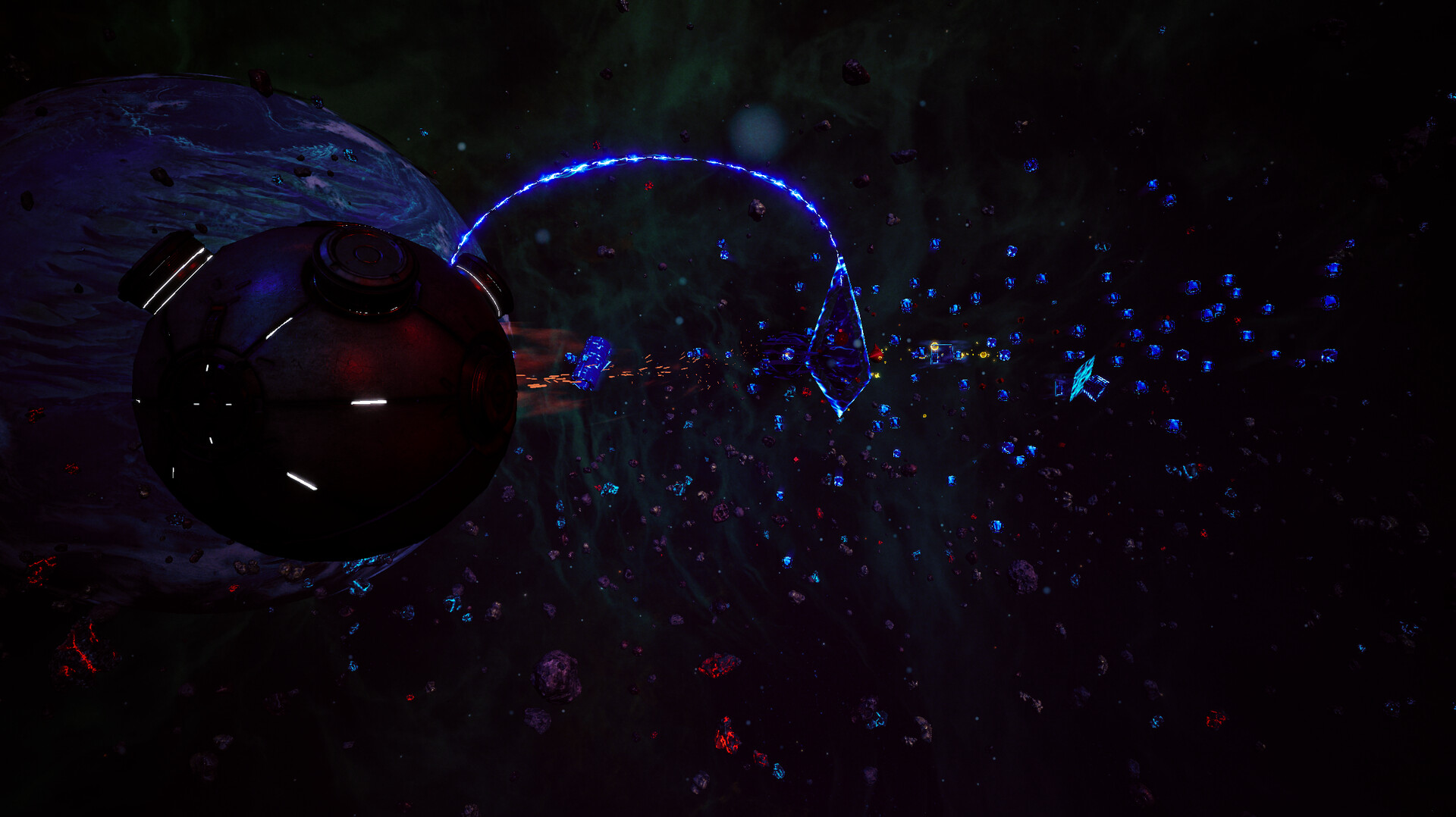
A calmer early moment: the player's ship channels a lightning-arc attack toward a distant crystal structure while a field of small cube enemies waits in the distance.Image: NQR Games Inc. via Steam -
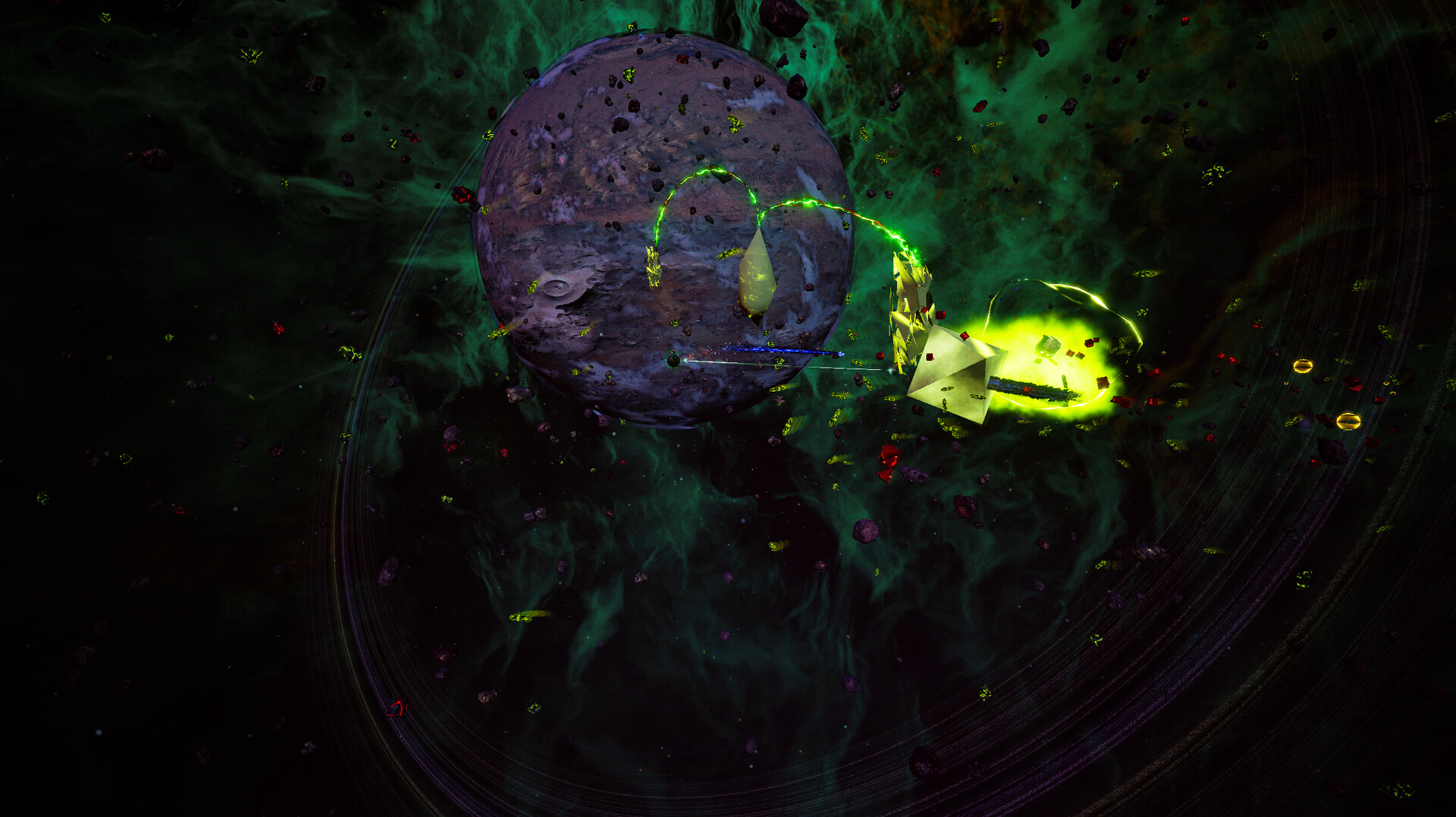
One of the game's more elaborate enemy or boss encounters, wrapped in the abstract, glowing geometry reviewers singled out as distinctive, if occasionally disorienting.Image: NQR Games Inc. via Steam -
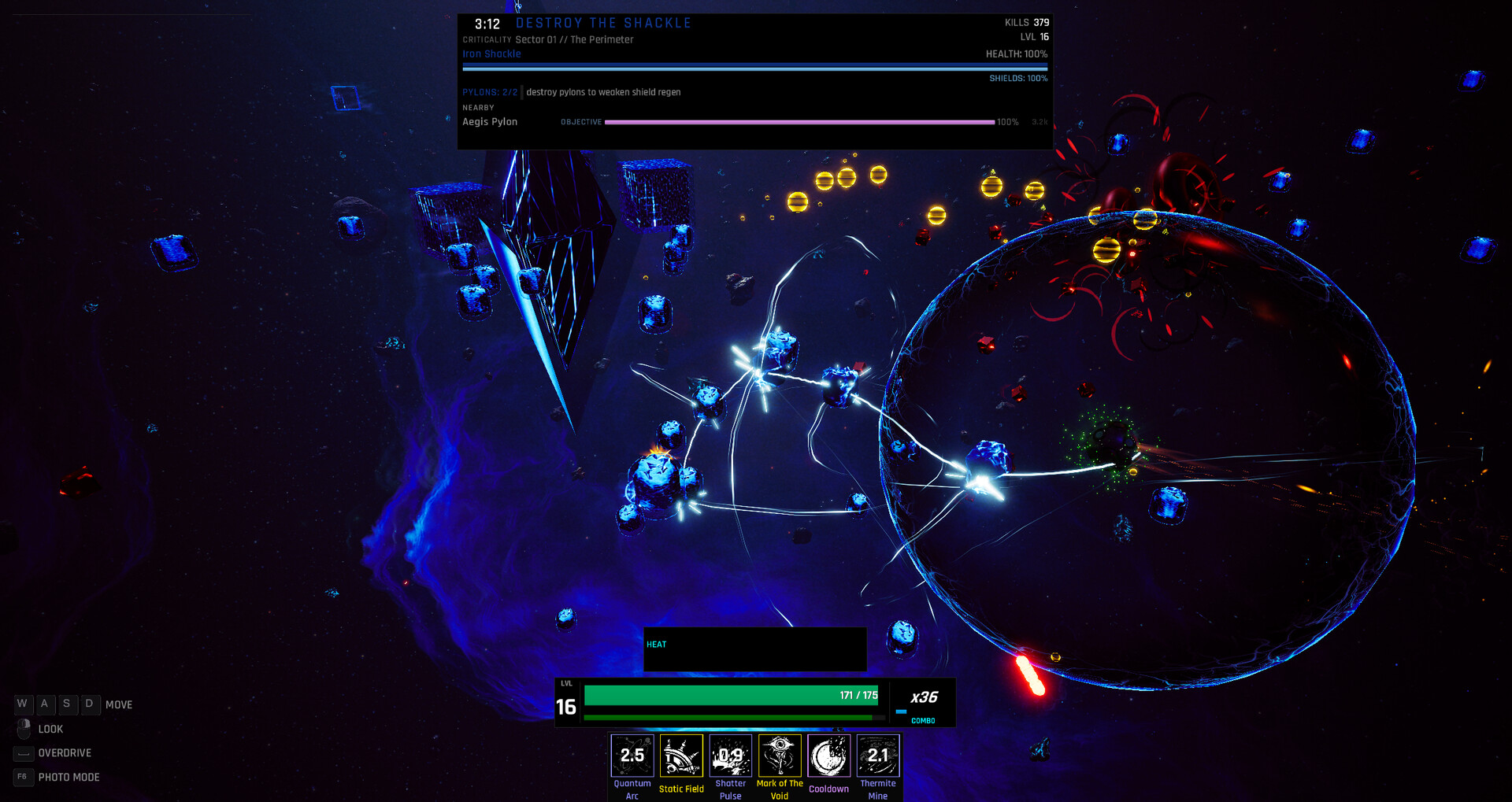
The build-crafting reviewers praised laid bare: six simultaneously active abilities, a boss health and shield bar, and a combo counter climbing past x36 deep into a run.Image: NQR Games Inc. via Steam