Game review
Snack Escort
6 / 10
- Developer
- JuTek Pixel
- Publisher
- JuTek Pixel
- Released
- 9 March 2026
- Platforms
- Windows
- Genre
- Indie / Strategy / Adventure
- Monetisation
- One-time purchase
- Players
- Single-player
The short version
Snack Escort is a roguelike deckbuilding tower defense from solo developer JuTek Pixel, released 9 March 2026 at $5.99, tasking players with escorting an anthropomorphized basket of food through fantasy lands full of hungry creatures using a deck of unit and support cards. Its 14-review, Mostly Positive sample praises real depth across 12 starting decks and 7 artifacts, while just as consistently flagging RNG-heavy balance problems and at least one specific, reported game-breaking bug.
Biggest strengths
- This review's sample repeatedly praises the sheer variety on offer, with one detailed reviewer counting 12 distinct starting decks, each built around a themed icon like archers or ninjas, plus seven artifacts that reshape a run's strategy from the outset
- This review's sample includes specific, enthusiastic praise for the game's synergy hunting, with one reviewer calling it 'really cool to try and test different synergies' across 'a lot of different heroes, spells and enemies'
- This review's sample is consistent on the game's pixel art and music, with multiple independent reviewers across English, Polish, and Spanish all specifically calling out its 'lovely visual' presentation and 'nice music'
Biggest weaknesses
- This review's sample includes a specific, detailed complaint that the game is simultaneously 'too easy and too hard,' with one reviewer describing a desperate early-game struggle to draw the right units in time, followed by runs that 'stop being about tactics' once a fast-cycling combo takes over
- This review's sample includes a direct report of at least one game-breaking bug, a hero-drawing failure, alongside a separate game-breaking infinite-draw combo the same reviewer says 'take all the fun out of the game'
- This review's sample includes repeated, independent complaints about RNG dominating outcomes, with one reviewer asking directly for added metaprogression and another writing bluntly that players 'can just lose because of RNG, not enough cards in hand, bad starting hand'
Who it's for: Deckbuilder and tower defense fans who enjoy hunting for synergies across a genuinely large pool of starting decks, and who can tolerate a rough, still-unbalanced early life for the game; a weaker fit for anyone who wants a tightly tuned, low-RNG strategy experience out of the gate.
Our recommendation: A cautious recommendation for genre fans drawn specifically to its deck variety, best approached knowing this review's sample documents real balance and stability problems that don't appear to have been patched since launch.
6 / 10
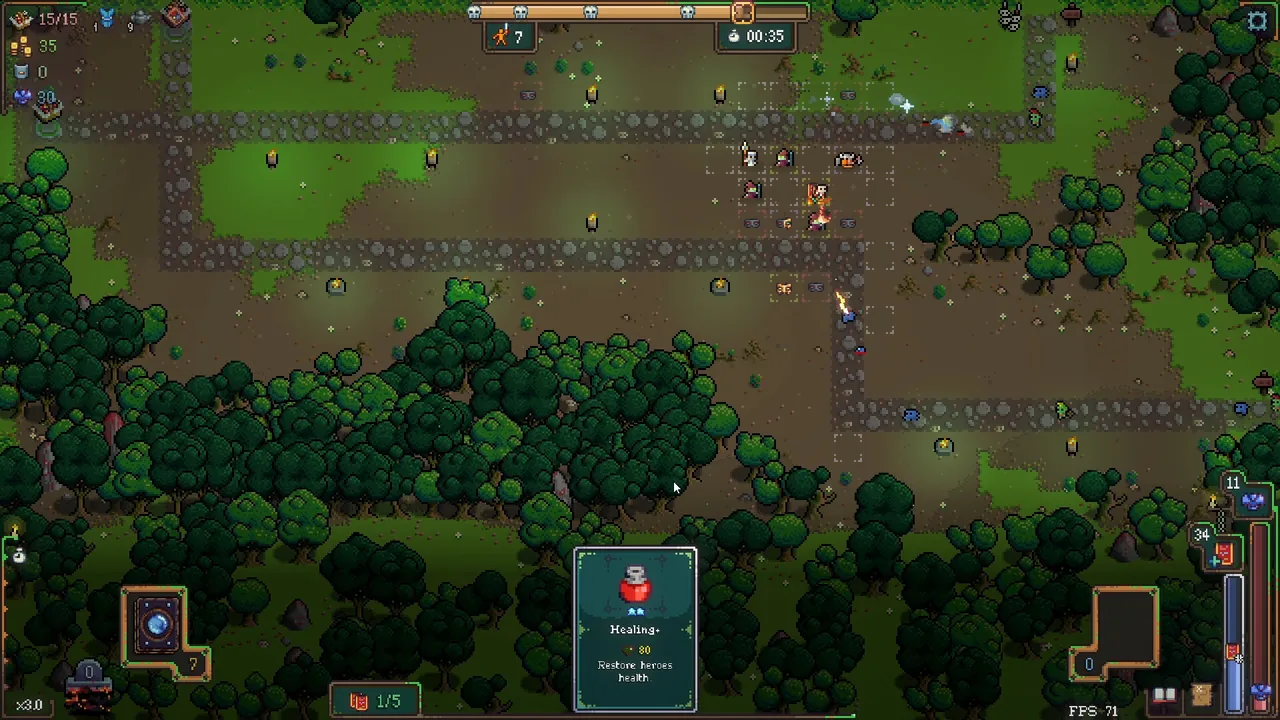
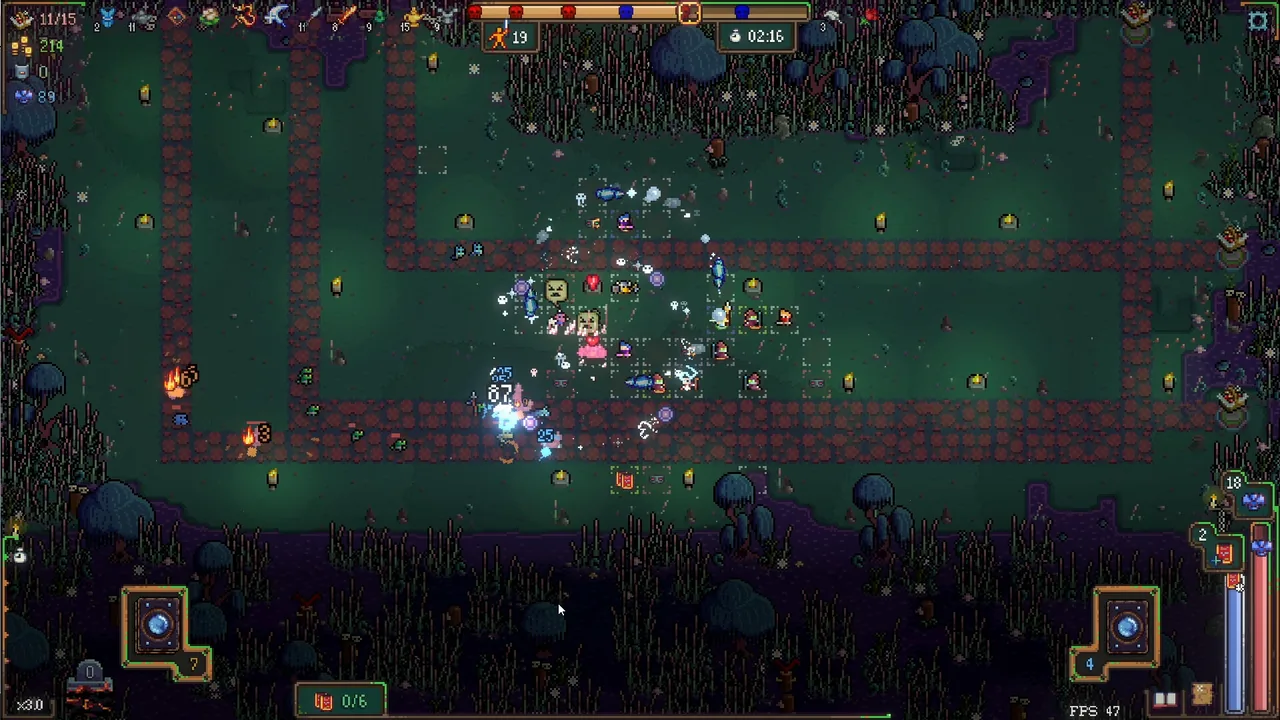
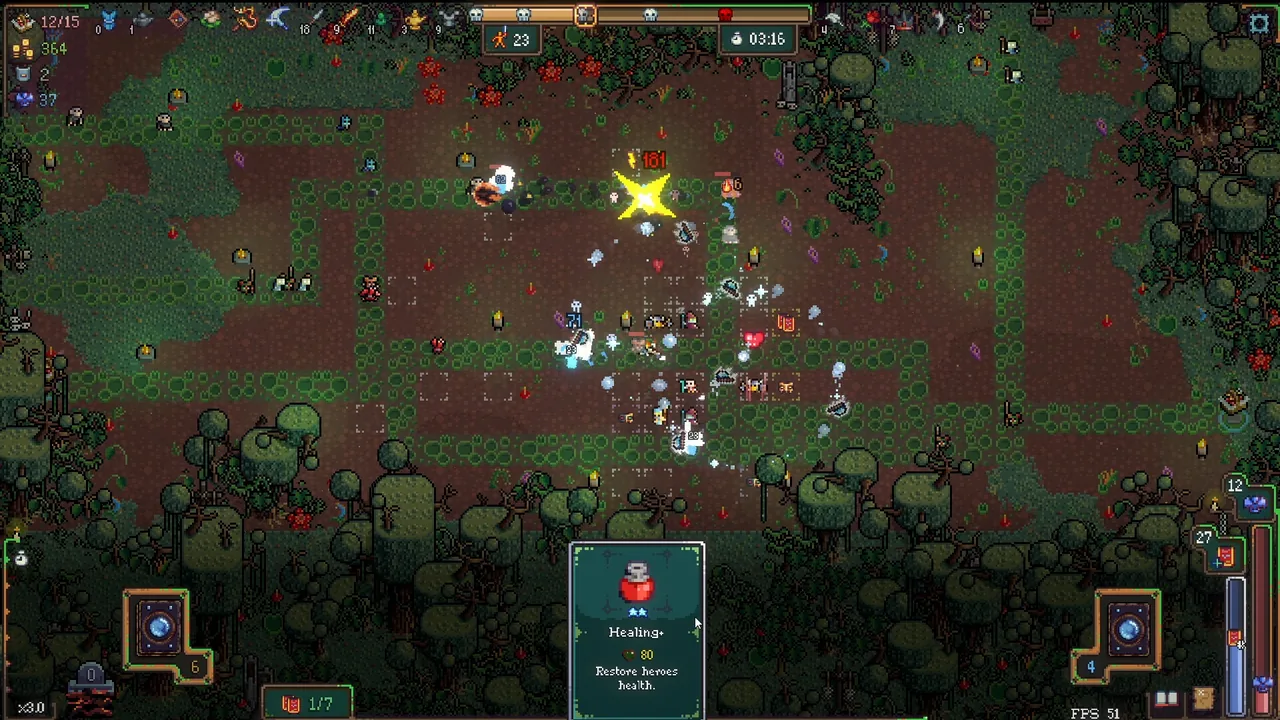
Snack Escort casts players as the protector of an anthropomorphized food basket, picking a themed deck of unit and support cards, then defending it wave by wave against hungry creatures across a fantasy roguelike map, one part card game, one part tower defense. It's built and published solo by JuTek Pixel, released 9 March 2026 at $5.99. This review draws on all 14 reviews in the game's full review total, alongside its global achievement data and the developer's announcement history.
A genre mashup this sample finds genuinely intriguing
Reviewers consistently frame the game's core pitch, roguelike deckbuilder meets tower defense meets card battler, as its most interesting quality on paper. One detailed review breaks down the structure directly: pick one of twelve starting decks, each built around a themed icon like archers or ninjas and containing four unit cards plus two support cards, then choose one of seven artifacts before heading into a run. That's a genuinely large amount of starting variety for a $5.99 release from a solo developer, and this sample credits it as the foundation for real replay value even among reviewers who otherwise have complaints.
Praise for synergy hunting and presentation
Beyond the structural variety, reviewers specifically enjoy chasing build synergies within that framework. One calls it "really cool to try and test different synergies" across "a lot of different heroes, spells and enemies," while a separate reviewer credits the game's storyline and character roster directly. Presentation draws consistent, independent praise too: reviewers across English, Polish, and Spanish reviews all specifically single out the pixel art and music as highlights, with one calling the visuals "charming" and another "delightful."
"Too easy and too hard at the same time"
Set against that praise, this sample's most detailed negative reviews target the same core balance problem from different angles. One reviewer describes the early game as "a desperate struggle to get the right units in the right places in time," since cards arrive only once every sixty seconds, but says that once a player clears that hurdle and builds a fast-cycling deck, "the game stops being about tactics and more about slowing down" an unstoppable engine. A separate reviewer agrees the game currently provides "an extremely unbalanced gameplay experience," citing bad starting hands and empty map slots as ways a run can be lost before it meaningfully begins.
A reported game-breaking bug alongside the balance complaints
This sample includes a specific, direct bug report from a reviewer with over eight and a half hours logged: a failure where heroes stop being drawable entirely, paired with a separate, exploitable infinite-draw combo. That reviewer states plainly that both problems "take all the fun out of the game," and frames the underlying concept as sound even while concluding the current balance and player agency "doesn't seem to land." This isn't a vague performance complaint; it's a specific, reproducible-sounding failure state reported by an engaged player.
No metaprogression, a deliberate choice that splits opinion
One structural decision draws mixed reactions on its own: Snack Escort has no meta-progression system carrying anything between runs. One detailed reviewer calls this acceptable but flags it as a real limit on replayability for some players, while a separate Polish-language reviewer asks directly for it to be added, tying the request explicitly to frustration with the game's RNG. It's a legitimate design choice for a roguelike, but this sample suggests it's compounding, rather than offsetting, the balance concerns raised elsewhere.
What 32 tracked achievements say about the progression curve
This review checked the global achievement data directly and found a smooth, steadily declining spread across all 32 tracked achievements, from 85.5% for an early milestone down to 7.6% for the hardest tracked goal. That's a genuinely well-structured curve, evidence that the underlying systems support real long-term engagement for players who push past the early balance friction this sample describes.
A quiet developer history around a rocky launch
This review checked the developer's partner-events feed directly and found only two posts on record, both from November 2025 and both covering the pre-release demo period. There is no announcement covering the March 2026 launch itself, and no visible patch notes addressing the specific, dated bug and balance complaints raised in this sample. For a solo developer, a quiet feed isn't unusual on its own, but combined with the reported hero-drawing bug and infinite-draw exploit above, it leaves those complaints looking unaddressed as of review time.
Narrow language support and light accessibility coverage
This review checked the store's accessibility feature-flag block and found two of nineteen tracked flags true, camera comfort and background volume controls. The game also currently supports only English and Polish, consistent with the notable concentration of Polish-language reviews in this sample and likely reflecting the developer's own background, but a limiting factor for reach beyond those two languages.
Verdict
Snack Escort has a real, interesting idea at its center, twelve decks' worth of starting variety wrapped around a genuine three-genre hybrid, and its achievement curve backs up that there's enough depth here to reward players who stick with it. What holds it back is a review sample that's just as specific and consistent about its problems as its strengths: an RNG-heavy balance that swings between punishing and trivial, at least one reported game-breaking bug, and a developer history that shows no visible response to either since launch. Worth a look for deckbuilder fans with patience, not yet a confident recommendation for anyone else.
Pros and cons
Pros
- This review's sample repeatedly praises the sheer variety on offer, with one detailed reviewer counting 12 distinct starting decks, each built around a themed icon like archers or ninjas, plus seven artifacts that reshape a run's strategy from the outset
- This review's sample includes specific, enthusiastic praise for the game's synergy hunting, with one reviewer calling it 'really cool to try and test different synergies' across 'a lot of different heroes, spells and enemies'
- This review's sample is consistent on the game's pixel art and music, with multiple independent reviewers across English, Polish, and Spanish all specifically calling out its 'lovely visual' presentation and 'nice music'
- This review checked the global achievement data and found a smooth, gradual decline across all 32 tracked achievements, from 85.5% down to 7.6%, evidence of a real, structured progression curve rather than a shallow, front-loaded design
Cons
- This review's sample includes a specific, detailed complaint that the game is simultaneously 'too easy and too hard,' with one reviewer describing a desperate early-game struggle to draw the right units in time, followed by runs that 'stop being about tactics' once a fast-cycling combo takes over
- This review's sample includes a direct report of at least one game-breaking bug, a hero-drawing failure, alongside a separate game-breaking infinite-draw combo the same reviewer says 'take all the fun out of the game'
- This review's sample includes repeated, independent complaints about RNG dominating outcomes, with one reviewer asking directly for added metaprogression and another writing bluntly that players 'can just lose because of RNG, not enough cards in hand, bad starting hand'
- This review checked the developer's partner-events feed and found just two posts total, both from the November 2025 demo period, with no announcement or patch notes found covering the March 2026 launch itself or any point since, despite this sample's specific, dated bug and balance reports
Screenshots
-
Snack EscortImage: JuTek Pixel via Steam -
Snack EscortImage: JuTek Pixel via Steam -
Snack EscortImage: JuTek Pixel via Steam