Game review
ShantyTown
8.2 / 10
- Developer
- Erik Rempen
- Publisher
- Kinephantom Games
- Released
- 16 April 2026
- Platforms
- [Windows, Mac]
- Genre
- Simulation
- Monetisation
- $14.99
- Players
- false
The short version
ShantyTown turns the simple act of stacking buildings into something genuinely meditative, backed by gorgeous dioramas and a light puzzle layer that never overstays its welcome — just don't expect a huge campaign, and play it with a mouse if you can.
Biggest strengths
- Striking, painterly diorama art style that makes every stacked neighborhood look like a postcard
- Clever middle ground between free-form sandbox building and light, achievable puzzle objectives
- Excellent, relaxing soundtrack that fits the cozy-but-clever tone perfectly
Biggest weaknesses
- Controller and Steam Deck support is inconsistent, with several reported dead inputs and menu navigation issues
- Mouse cursor sensitivity and lag complaints recur across multiple regions and languages
- Campaign is short — most players finish the story content in roughly six hours
Who it's for: Fans of Townscaper, Islanders, and other low-stakes diorama builders looking for a few hours of pure, pretty relaxation.
Our recommendation: Buy it
8.2 / 10
A dystopian-cozy diorama, one building at a time
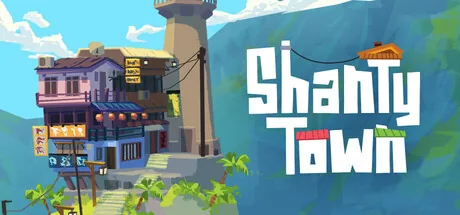
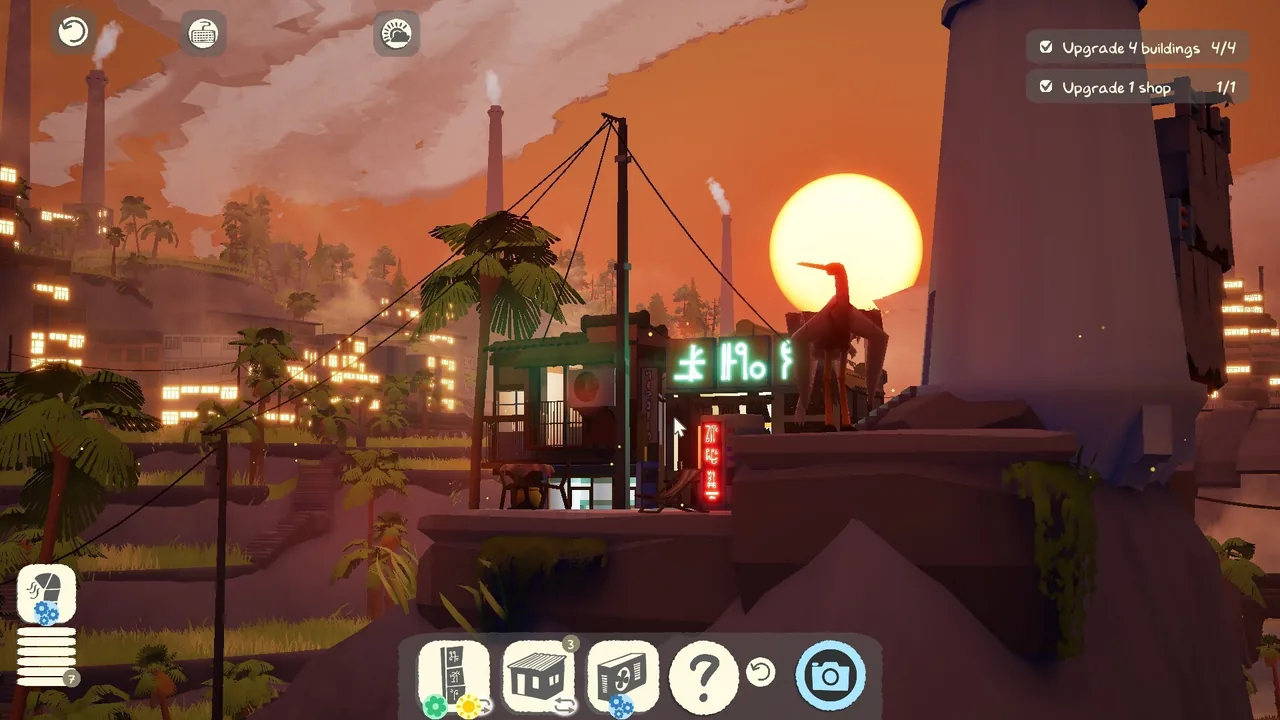
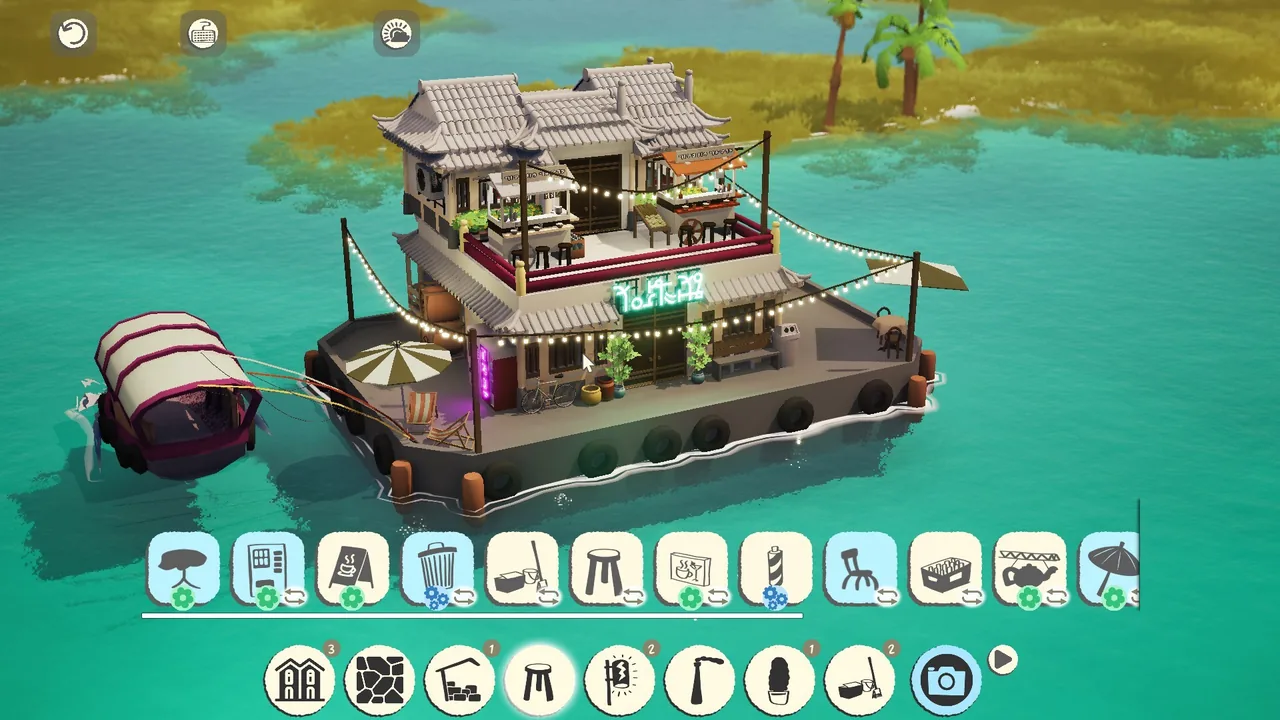
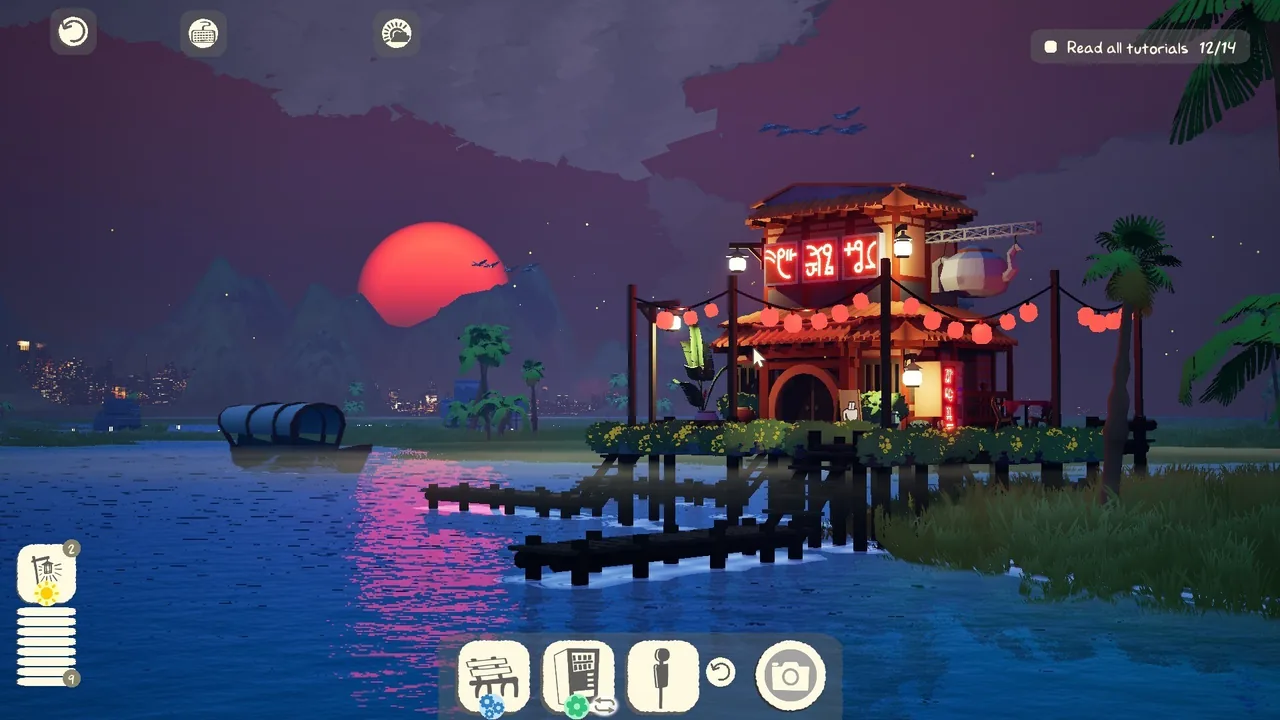
ShantyTown drops you onto a tiny pier and asks you to grow it into a dense, tangled little neighborhood, one stacked building at a time. Solo developer Erik Rempen, working with publisher Kinephantom Games, has landed on a genre that's crowded — Townscaper, Islanders, Dorfromantik, and a dozen other "cute low-stakes builders" have all staked their claim over the past few years — but ShantyTown carves out its own identity by leaning into a slightly dystopian, cyberpunk-tinged art direction rather than the twee cottagecore look so many of its peers reach for. Concrete slums grow into lit-up towers, rickety piers sprout onto marshland, and the whole thing is filmed through a soft, painterly lens that makes almost every screenshot worth framing.
The core loop: cards, stacking, and upgrades
Mechanically, ShantyTown hands you a shuffled deck of buildable pieces and asks you to slot them into a small plot of land, Tetris-adjacent but without any real time pressure. Place enough of the right items near a building and it upgrades in place, turning bare concrete into a proper structure with lights, signage, and personality. Reviewers repeatedly single out this system as the game's smartest idea: it's structured enough to feel like you're solving something, but loose enough that no two towns come out looking alike. One widely echoed sentiment across dozens of reviews is that the randomized card order is what keeps builds feeling organic rather than optimized — you're reacting and improvising rather than following a checklist.
Story, sandbox, and a heartwarming throughline
A light narrative threads through the eight or so major locations, following the growth of your shantytowns and letting player choices nudge the tone of the unfolding story. It's not a heavy narrative lift — most players describe it as a gentle backdrop rather than a driving force — but several reviewers called it unexpectedly heartwarming by the time the credits roll. Once the campaign wraps, a full sandbox/creative mode unlocks, letting you rebuild any location from scratch with no objectives at all, which several players noted as the mode they actually spent the most time in.
Controls: the one real sticking point
The most consistent complaint across ShantyTown's review base, spanning English, Korean, and Steam Deck-specific feedback, is control quality. Multiple players report that mouse cursor sensitivity feels laggy or disconnected from actual pointer movement, to the point of describing it as unusable at times; a Korean-language reviewer flagged the same mouse-feel issue on a laptop setup, unable to find a fix in the settings menu. Steam Deck and controller users fare worse still — despite the game carrying Deck Verified status, several reviewers describe the D-pad and left stick failing to scroll menus at all, forcing them to fall back on the touchscreen, and one review describes needing to force-quit the game entirely because a controller was left connected. If you have the choice, play ShantyTown with a mouse and keyboard; the diorama-placement logic is clearly built around precise pointer input first.
Bugs and rough edges
Beyond the control complaints, a smaller cluster of reviews flags outright bugs: a couple of players describe specific levels refusing to register "completely legitimate" item placements as valid, blocking task completion until a patch arrived, and one long-time player reports the game crashing roughly twenty times over twelve hours, including a repeatable crash on the final episode. These reports sit alongside a much larger body of trouble-free playtime, but they're frequent enough, and specific enough, that anyone especially averse to save-interrupting crashes should watch patch notes before diving in on day one.
Content length and value
At $14.99, ShantyTown is priced like a tight, focused experience rather than a sprawling city-builder, and most reviewers treat it that way — completion times cluster around five to six hours for the full campaign. That's enough for the eight main locations and their associated challenges, but more than one player explicitly wished for additional campaign levels, expansion areas, or Workshop support to extend the game's life, and a couple of reviews frame the asking price as a touch steep given how quickly the story content runs out. The unlockable sandbox mode helps soften this, giving dedicated diorama-builders a reason to keep returning even after the objectives are exhausted, but this is fundamentally a short, focused game rather than a long-term time sink.
Who ShantyTown is for
If you've enjoyed Townscaper's pure sandbox freedom but wanted just a little more structure and payoff, or if Islanders' puzzle-of-placement hook appealed to you but its aesthetic didn't, ShantyTown sits almost exactly between the two. It's an easy recommendation for anyone chasing a short, gorgeous, low-stress building game to unwind with over a handful of evenings — just go in expecting a tight campaign rather than an endless project, and lean on mouse controls rather than a gamepad if you want the smoothest experience the game has to offer.
The verdict
ShantyTown earns its Very Positive standing on the strength of its art direction and its clever, low-friction take on the building-game formula, and the near-unanimous praise for its soundtrack and atmosphere is well deserved. The control jankiness on controller and Steam Deck, combined with a handful of real bugs and a campaign that ends sooner than some players would like, keep it from being a flawless recommendation — but for the specific mood it's chasing, few recent games nail it this precisely.
Pros and cons
Pros
- Striking, painterly diorama art style that makes every stacked neighborhood look like a postcard
- Clever middle ground between free-form sandbox building and light, achievable puzzle objectives
- Excellent, relaxing soundtrack that fits the cozy-but-clever tone perfectly
- Unlockable sandbox/creative mode extends play well past the story campaign
- Runs lightly even on modest hardware, so the focus stays on building, not fighting performance
Cons
- Controller and Steam Deck support is inconsistent, with several reported dead inputs and menu navigation issues
- Mouse cursor sensitivity and lag complaints recur across multiple regions and languages
- Campaign is short — most players finish the story content in roughly six hours
- A handful of players report crashes or bugged placement logic in specific levels and in creative mode
Screenshots
-
ShantyTownImage: Kinephantom Games via Steam -
ShantyTownImage: Kinephantom Games via Steam -
ShantyTownImage: Kinephantom Games via Steam -
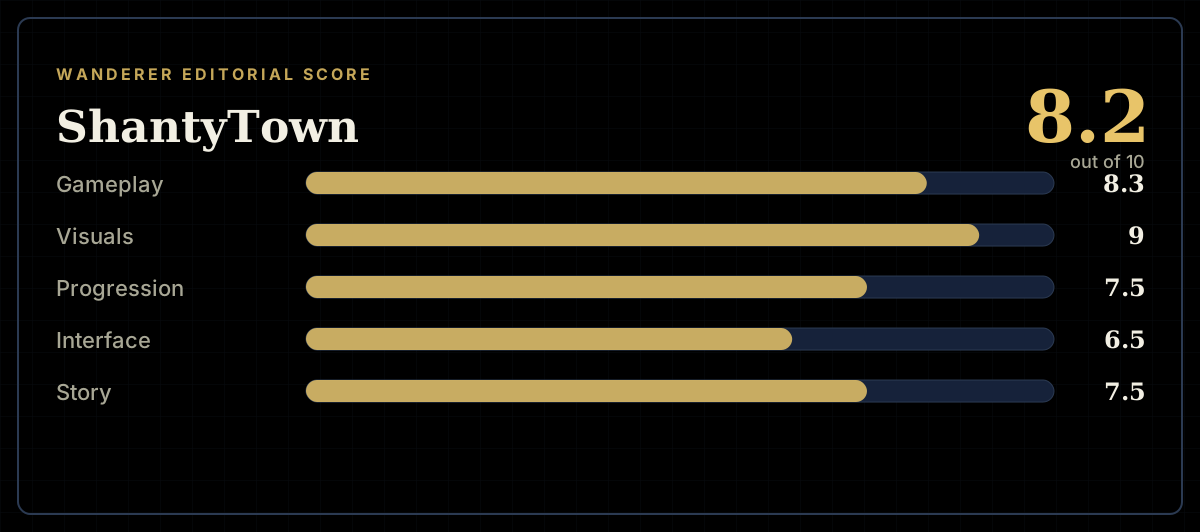
How the review scores each part of the gameWanderer Editorial -
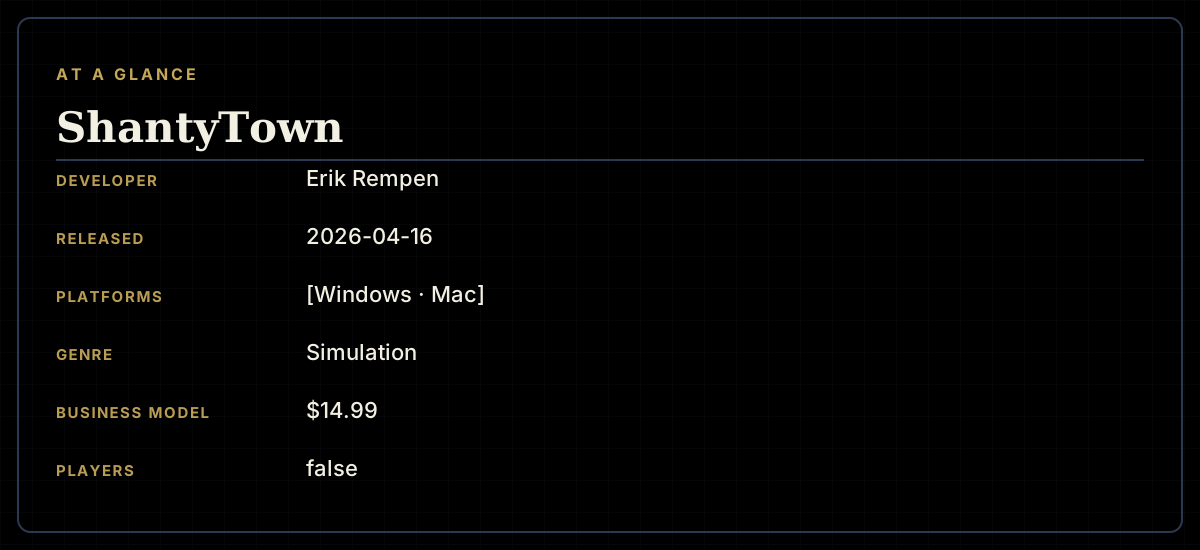
Key facts at a glanceWanderer Editorial -
The short versionWanderer Editorial