
Game review
Senpie
5.8 / 10
- Developer
- StudioGrok
- Publisher
- StudioGrok
- Released
- 6 March 2026
- Platforms
- Windows
- Genre
- Casual
- Monetisation
- Premium
- Players
- Single-player
The short version
Senpie is a $4.99 game from developer StudioGrok, released 6 March 2026, casting players as a granny running a small bakeshop, matching falling ingredients to bake pies for customers. This review's sample consists of a single, detailed, largely positive review, scoring the game 7 out of 10, alongside a genuinely extensive pre-launch developer devlog history revealing a yokai-inspired "spirit bakery" concept the store page itself barely hints at.
Biggest strengths
- This review's sample includes its lone reviewer praising the game for running well on lower-end PCs, calling the art direction 'creative,' the characters 'memorable,' and the core matching mechanics 'unique'
- That same reviewer specifically credited the developers as 'helpful' and actively 'looking for feedback,' a claim this review's check of the developer's devlog history and a subsequent controls update directly supports
- This review checked the developer's public devlog history and found an unusually rich pre-launch creative arc, tracing the game's origins as a Yoshi-inspired matching prototype through a deliberate pivot toward Japanese yokai folklore and anime influences to build a 'spirit bakery' concept, complete with hidden easter eggs referencing that lore
Biggest weaknesses
- This review's full sample is a single public review, an extremely thin base for any verdict, however detailed and structured that one account is
- This review's sample includes its lone reviewer's own struggle with the core mechanic, writing 'it's really hard to make a pie, I'm struggling' during their initial hours, and suggesting the game needs smoother controls and a more in-depth tutorial
- This review checked the store's accessibility feature-flag block directly and found only five of nineteen tracked flags true, with no subtitle support and no confirmed save-anytime option
Who it's for: Fans of cozy, low-stakes management and matching games who don't mind a very small existing community, and who might appreciate discovering hidden lore and anime/yokai influences the marketing doesn't foreground.
Our recommendation: Worth a cautious look for cozy-game fans at its low price, with the caveat that this review's sample is extremely thin, resting on a single public review.
5.8 / 10
A cute granny, a struggling bakery, and, buried underneath, an entire yokai folklore the store page never quite mentions. Senpie is a $4.99 game from developer StudioGrok, released 6 March 2026. This review draws on the game's single public review and the developer's own public devlog history.
What the store page tells you
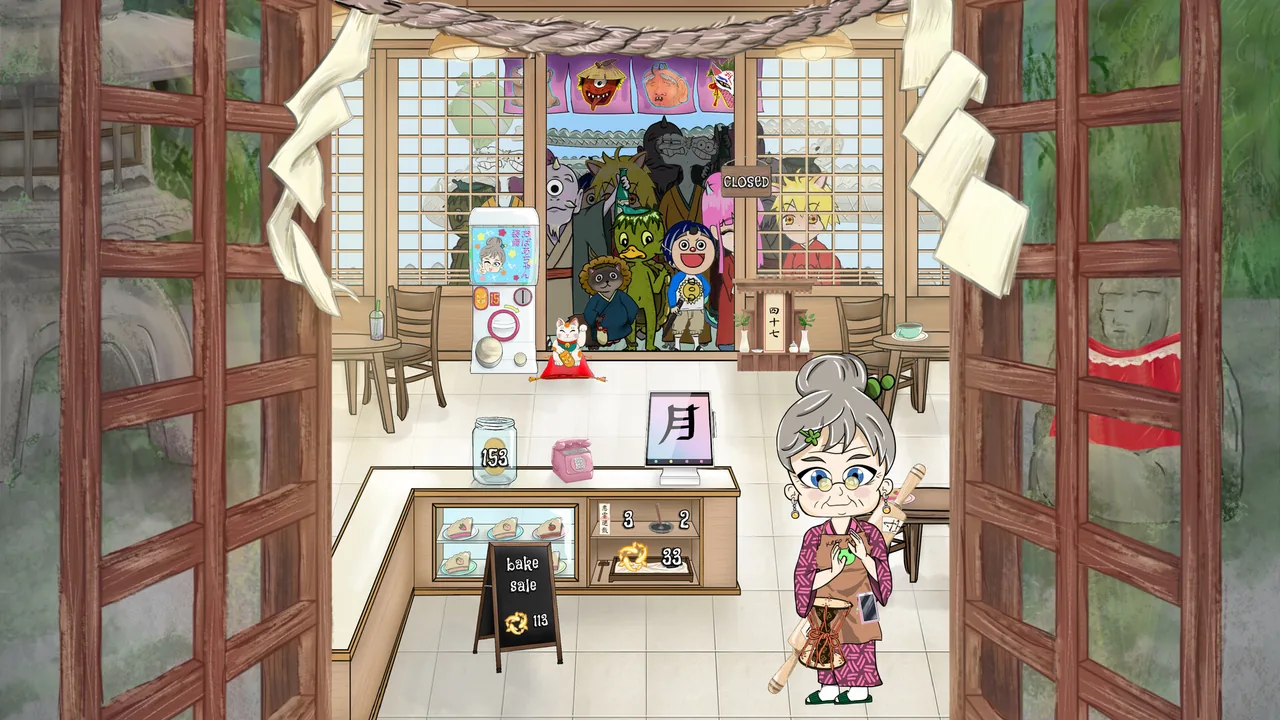
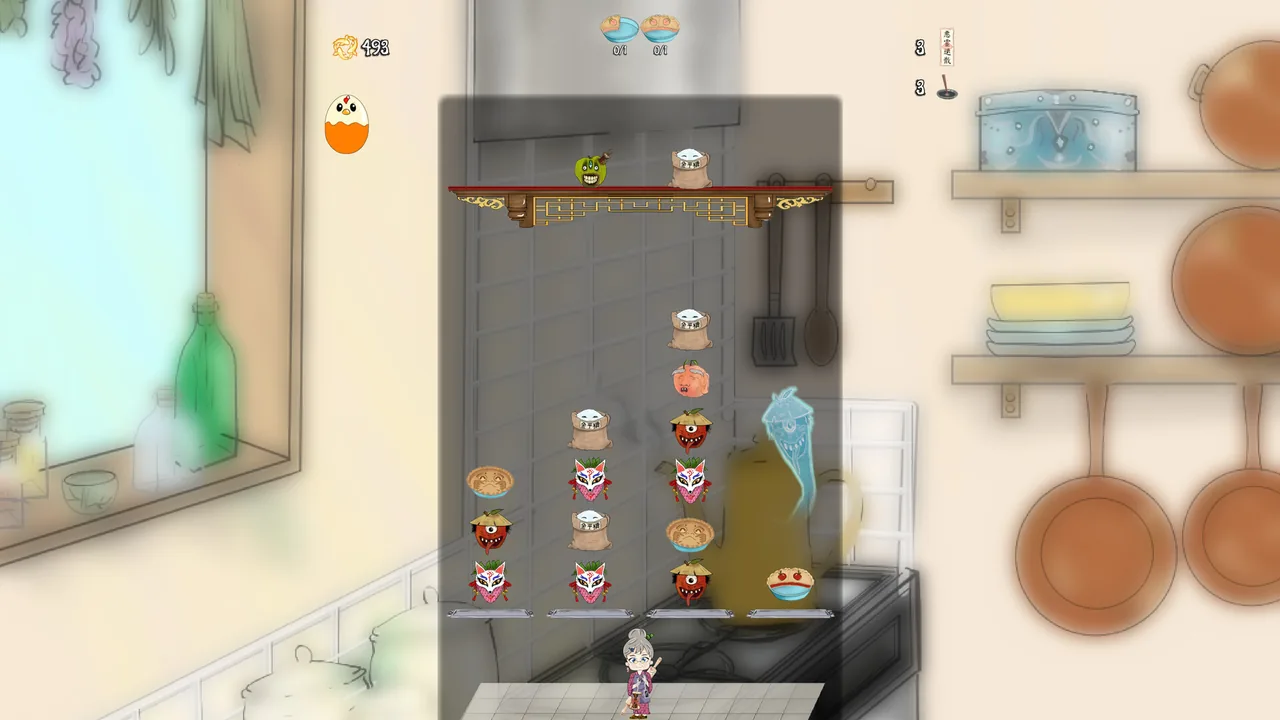
Senpie's official description is modest almost to a fault: help Granny run a successful bakeshop in a "puzzle matching adventure." This review's lone reviewer described the core loop plainly, building pies from falling ingredients in a matching mini-game, then spending earned money to customize Granny herself, and called the resulting mix "super fun" once its updated tutorial made the controls click. They specifically praised the game's "creative art direction," "memorable characters," and what they called "unique mechanics," while noting the game runs comfortably on lower-end PCs thanks to hand-drawn, low-overhead visuals.
The story the devlogs tell
What the store page doesn't foreground, this review found squarely in the developer's own words. StudioGrok's public devlog history traces Senpie's origins back to a prototype directly inspired by the NES game Yoshi, where matching falling enemies destroys them in pairs. From there, the developer describes a deliberate creative pivot: researching Japanese yokai folklore and anime influences to reframe the concept as a "spirit bakery," a world players are meant to feel they're peering "beyond the veil" into, built through direct interaction with the shop rather than menu-driven systems. The devlogs go further still, describing intentionally hidden easter eggs woven into the game's world specifically for attentive players to discover, tying the project's lighthearted pie-baking surface to a considerably deeper thematic well than its marketing lets on.
A single voice, but a detailed one
It's worth being direct about the scale of evidence here: this review's full sample is exactly one public review. That reviewer structured their account unusually thoroughly for a single write-up, covering beginner-friendliness, replayability, community size, and a checklist of feature flags, before landing on a 7-out-of-10 score and the verdict that the game "is easy to fall in love with." That level of detail offers real, if narrow, insight, but any prospective buyer should understand that no meaningful volume of public feedback yet exists to corroborate or challenge it.
Growing pains the developer responded to
That same lone reviewer flagged real friction, admitting "it's really hard to make a pie, I'm struggling" in their early hours, and suggesting the game needed smoother controls and a more in-depth tutorial to reach its full potential. This review checked the developer's partner-events feed and found a controls update roughly a week after launch that directly addressed exactly that kind of complaint, reworking the tutorial to properly explain keyboard controls (A and D to move, spacebar to swap or drop ingredients) after players reported the mouse-only approach felt unintuitive, a concrete, dated instance of a small developer responding to real friction shortly after release.
Hidden depths in the achievement list
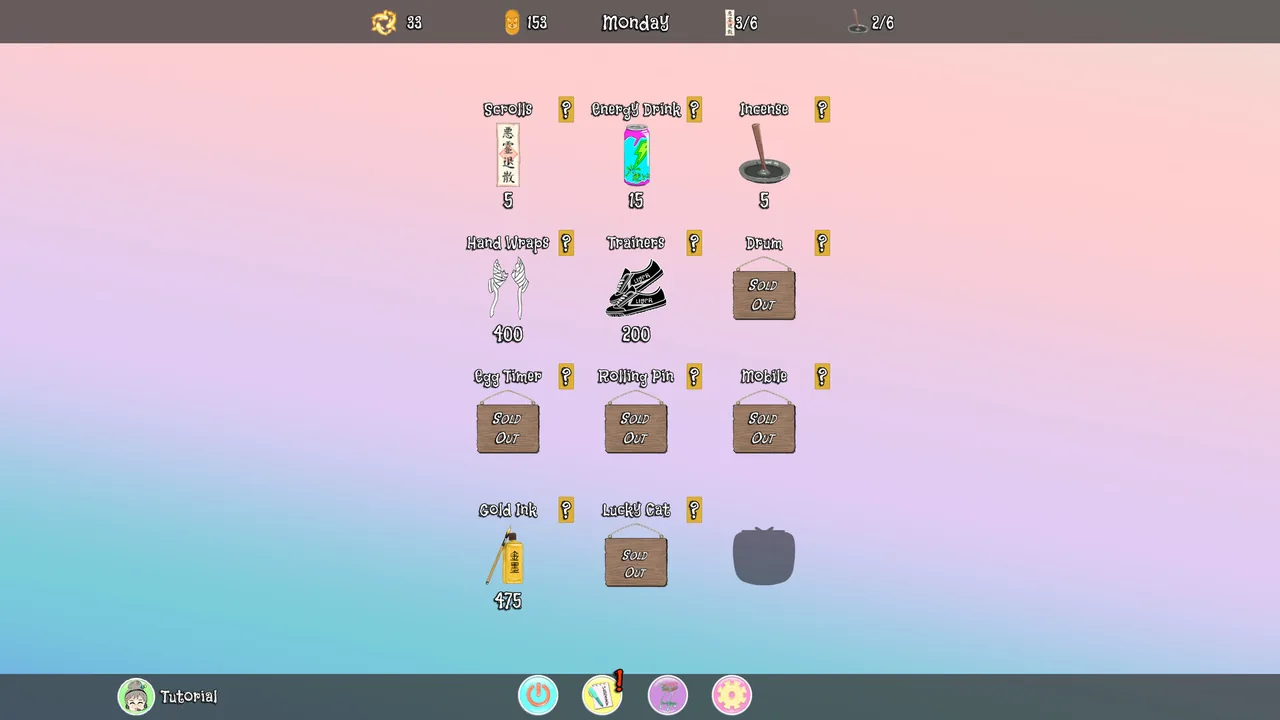
This review checked the Steam global achievement API and found seventeen tracked achievements, with several basic actions sitting at exactly 100% while a cluster of items, ones named for objects like a gold ink pot, scrolls, sneakers, and an energy drink, sit at or near 0%. Read alongside the developer's own devlog description of deliberately buried easter eggs, that steep drop-off reads less like a difficulty wall and more like confirmation that most of the game's secret content remains genuinely undiscovered by its small early playerbase.
Thin accessibility support
This review checked the store's accessibility feature-flag block directly and found five of nineteen tracked flags true: background volume controls, playability without quicktime events, mouse-only and touch-only control options, and difficulty levels. No subtitle support and no confirmed save-anytime option stand out as gaps, though the latter matters less in a shop-management loop built around short, replayable sessions than it would in a longer narrative game.
A checklist that says more than a star rating
Beyond the numeric score, this review's lone reviewer also filled out a feature checklist common to curator-style write-ups on Steam, marking Senpie as family-friendly, playable solo, and controller-compatible, while noting it has no active online multiplayer, no cross-platform play with consoles, and, notably, no in-app purchases of any kind, a detail worth underlining given how common microtransactions have become even in small, low-priced management games. That absence lines up with the flat, one-time $4.99 asking price and the store's own tag list, which mixes conventional "Time Management" and "Shop Keeper" labels with less expected ones like "Anime" and "Supernatural," a quieter echo of the yokai-inspired concept the developer's devlogs describe in far more detail than the storefront's short pitch does.
Verdict
Senpie is difficult to score with real confidence: its only public review is a detailed, mostly positive 7-out-of-10 account of a cute, replayable pie-matching game with real early-game friction, but the developer's own extensive pre-launch devlog history reveals a considerably richer yokai-and-anime creative concept than the store page or that lone review fully convey. For cozy-game fans willing to take a low-priced chance on a game whose community, and whose public track record, is still just getting started, there's a genuinely thoughtful project here worth a closer look.
That gap between a plain storefront pitch and a much more considered creative process behind the scenes is, in its own way, the most interesting thing this review found. A single glowing review and a near-empty community page tell a prospective buyer very little on their own, but read together with a developer visibly documenting research into folklore, deliberately hidden content, and a same-week response to a specific player complaint about controls, they paint the picture of a small, attentive team that simply hasn't been discovered yet, rather than one that's stopped caring the moment the game shipped.
Pros and cons
Pros
- This review's sample includes its lone reviewer praising the game for running well on lower-end PCs, calling the art direction 'creative,' the characters 'memorable,' and the core matching mechanics 'unique'
- That same reviewer specifically credited the developers as 'helpful' and actively 'looking for feedback,' a claim this review's check of the developer's devlog history and a subsequent controls update directly supports
- This review checked the developer's public devlog history and found an unusually rich pre-launch creative arc, tracing the game's origins as a Yoshi-inspired matching prototype through a deliberate pivot toward Japanese yokai folklore and anime influences to build a 'spirit bakery' concept, complete with hidden easter eggs referencing that lore
- This review checked the Steam global achievement API and found several achievements themed around hidden, hard-to-find collectibles sitting at or near 0%, consistent with the developer's own devlog description of intentionally buried easter eggs still waiting to be found
Cons
- This review's full sample is a single public review, an extremely thin base for any verdict, however detailed and structured that one account is
- This review's sample includes its lone reviewer's own struggle with the core mechanic, writing 'it's really hard to make a pie, I'm struggling' during their initial hours, and suggesting the game needs smoother controls and a more in-depth tutorial
- This review checked the store's accessibility feature-flag block directly and found only five of nineteen tracked flags true, with no subtitle support and no confirmed save-anytime option
- This review's sample includes its lone reviewer noting the community around the game is not yet very big, a claim directly supported by this review's own finding of only one public review at the time of writing
Screenshots
-
SenpieImage: StudioGrok via Steam -
SenpieImage: StudioGrok via Steam -
SenpieImage: StudioGrok via Steam