
Game review
Rushcremental Review
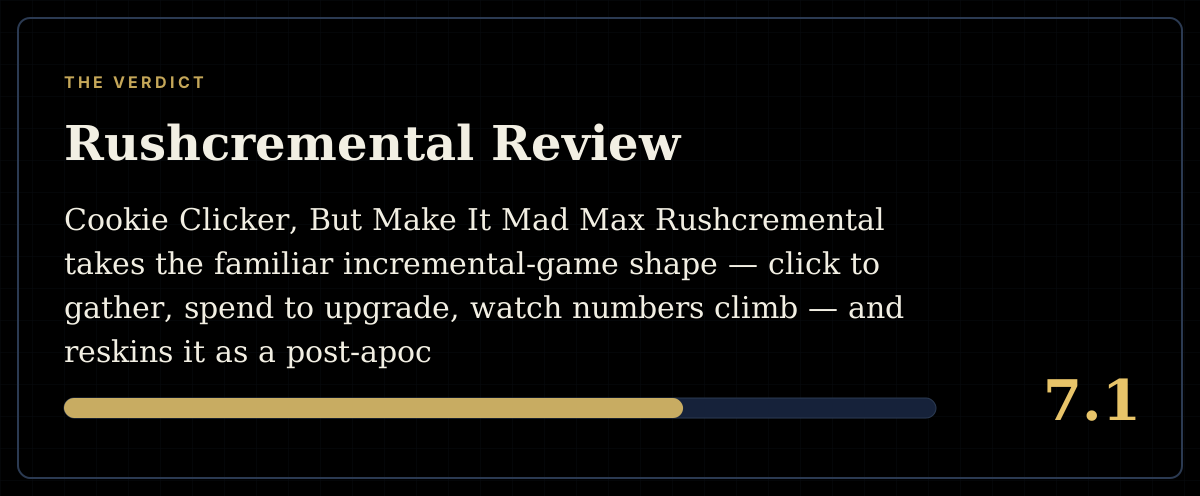
7.1 / 10
- Developer
- Tim Beaudet, Frédérik Charest
- Publisher
- Tyre Bytes LLC
- Released
- 15 September 2026
- Platforms
- ["Windows", "Mac"]
- Genre
- Simulation
Cookie Clicker, But Make It Mad Max
Rushcremental takes the familiar incremental-game shape — click to gather, spend to upgrade, watch numbers climb — and reskins it as a post-apocalyptic scrap hunt, then bolts a genuinely separate drag-racing minigame onto the side. One reviewer sums the pitch up about as efficiently as possible: "If you like Cookie Clicker games, but without cookies, and without clicking, then this is for you." The player scavenges scrap resources across a wasteland, spends it climbing a large upgrade skill tree, and periodically stops to challenge rival racers in "Rush Wars" for territory and points that feed right back into the same progression loop.
It's a small, tightly scoped game built by a two-person team, and that scope shows in a good way: several reviewers explicitly praise the game for having a "definitive ending, not infinite," which sets it apart from most of the genre. Incremental games are notorious for either running forever or fizzling out once the numbers stop feeling meaningful, and multiple players call out finishing Rushcremental as a genuine, satisfying accomplishment — one reviewer notes it's only the second game they've fully completed all year.
Scavenge, Upgrade, Race, Repeat
The core loop splits cleanly into two halves that reviewers consistently say complement each other well. The scavenging side is classic incremental fare: search the wasteland for scrap, spend it on a large skill tree of permanent upgrades, and watch your collection radius and speed grow. The racing side breaks up that rhythm with short, forgiving drag races against rivals — lose, and you can simply try again, which several reviewers appreciate given that the timing-based racing isn't universally everyone's strong suit. Later on, a community camp unlocks passive, idle scrap collection, giving the game its "left it running in the background" idle layer without making that the entire point of playing.
Reviewers describe the pacing as slow to start but genuinely rewarding once the upgrades compound — "starts a bit slow, but once things start accelerating it doesn't stop," as one puts it. The Mad Max-esque post-apocalyptic setting and the visual progression of your car and gear, moving from a rusted-out crowbar-and-scavenging start toward drones, grenades, and eventually dismantling tanks and helicopters, gives the numbers-go-up loop a sense of narrative momentum that plain incremental games often lack. Multiple players specifically praise this theme as the thing that elevated the game above other entries in a genre they already know well, with more than one describing it as scratching an itch they hadn't felt since "old flash games" or classics like Egg, Inc.
A Few Rough Numbers on the Odometer
For as consistently positive as the reception is, reviewers do flag real friction points, mostly around clarity and interface polish rather than the core design. The most common complaint is that upgrade descriptions don't always clearly explain what they actually do — one reviewer says upgrades sometimes show two numbers changing without flavor text that makes clear which stat is which, making it genuinely hard to decide between competing choices on the skill tree. Others raise UI scaling problems on large or widescreen monitors, with the upgrade tree specifically singled out as needing a clearer visual distinction between what's purchasable and what isn't.
A handful of technical hiccups round out the criticism: one player couldn't get fullscreen working properly on a 4K monitor (workable via a maximized window instead), and another reports the Mac version had issues during the demo period that appear to have since been resolved for the full release. None of these come across as dealbreakers in the reviews describing them — they read more as the kind of small, fixable friction you'd expect from a compact two-person indie team, not fundamental design failures.
A Short, Complete Trip Through the Wasteland
Length is treated as a selling point rather than a drawback here. Multiple reviewers estimate a full completion at somewhere between two and three hours, with several specifically praising that as the right amount of time for what the game is trying to do — a focused, self-contained incremental experience rather than an infinite time-sink. At a $5.49 list price (discounted to $3.29 at launch), reviewers consistently frame it as a easy value proposition regardless of how much time you ultimately spend with it, and the near-universal "Positive" reception (33 of 33 reviews positive at time of writing) reflects a game that's doing a small, well-defined thing and doing it cleanly.
Verdict
Rushcremental takes a familiar incremental-game skeleton and makes it feel fresh by giving it a real theme, a genuinely satisfying racing minigame, and — most unusually for the genre — an actual ending worth reaching. The scavenging and racing loops reinforce each other well, the Mad Max-inspired wasteland setting gives the number-climbing real texture, and the two- to three-hour runtime is treated by its audience as a feature rather than a shortfall. Rough edges around upgrade-tree clarity, widescreen UI scaling, and a few platform-specific technical hiccups keep it from being flawless, but none of them undermine what is, by every account so far, a tightly made, purposefully finite incremental game that knows exactly what it wants to be. For $5.49, it's an easy recommendation for anyone who likes the genre and wants something they can actually finish.
Pros:
- Definitive, satisfying ending — rare and welcome in the incremental genre
- Scavenging and drag-racing loops genuinely complement each other
- Strong post-apocalyptic theme gives the progression real narrative texture
- Tight two-to-three hour runtime treated as a strength by its own audience
- Inexpensive and well-reviewed, with a near-unanimous positive reception
Cons:
- Upgrade descriptions often don't clearly explain what stat is changing
- UI and upgrade tree don't scale cleanly to widescreen or 4K displays
- Fullscreen mode reportedly broken on at least one 4K monitor setup
- Early pacing is deliberately slow, which may test patience before it clicks
- Mac version reportedly had rough patches during its pre-launch demo period
Screenshots
-
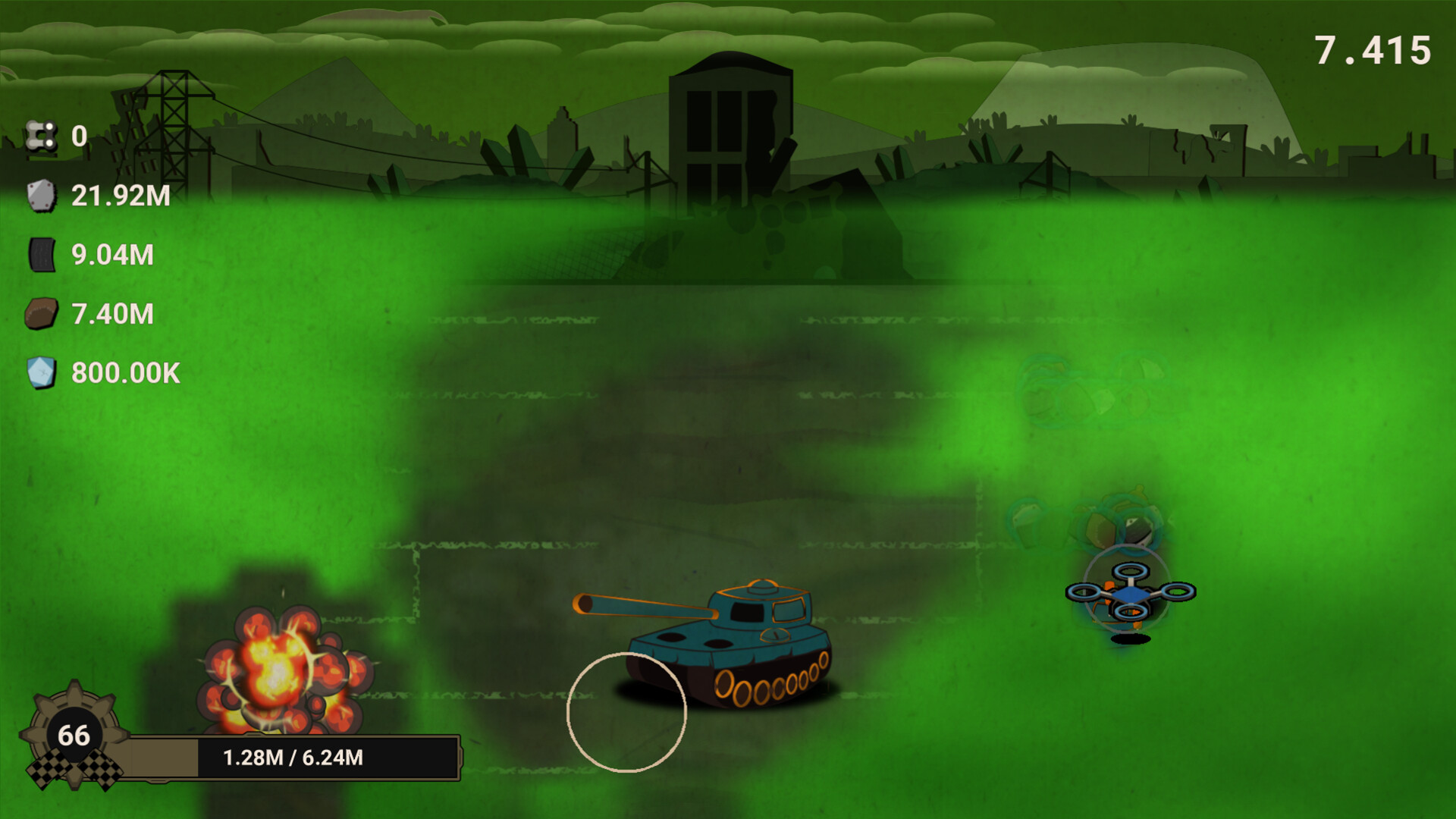
Late-game scavenging brings tanks, drones, and explosions into what starts as a simple scrap huntImage: Tyre Bytes LLC via Steam -
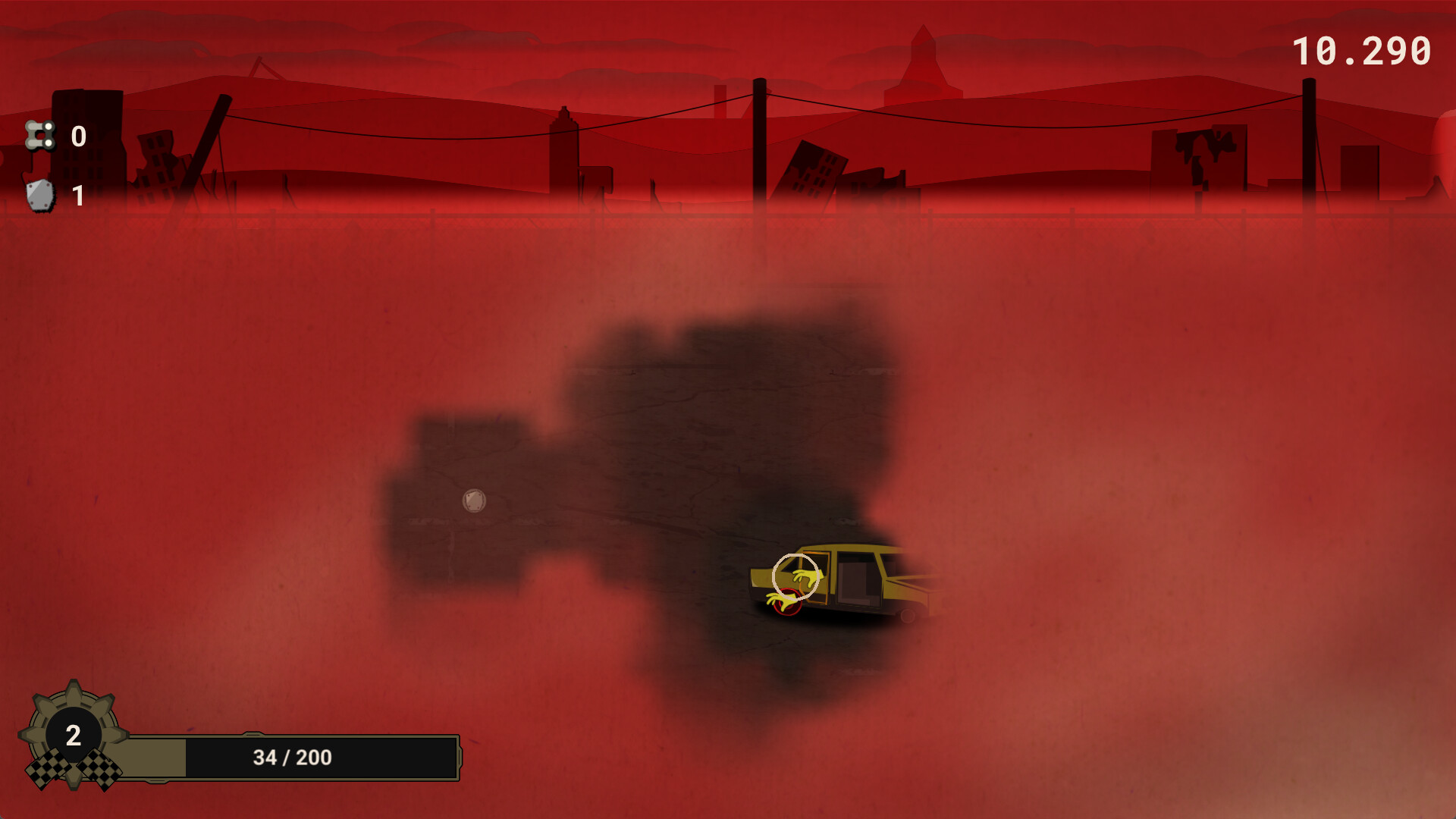
The forgiving drag-racing minigame breaks up the scavenging loop between upgrade runsImage: Tyre Bytes LLC via Steam -
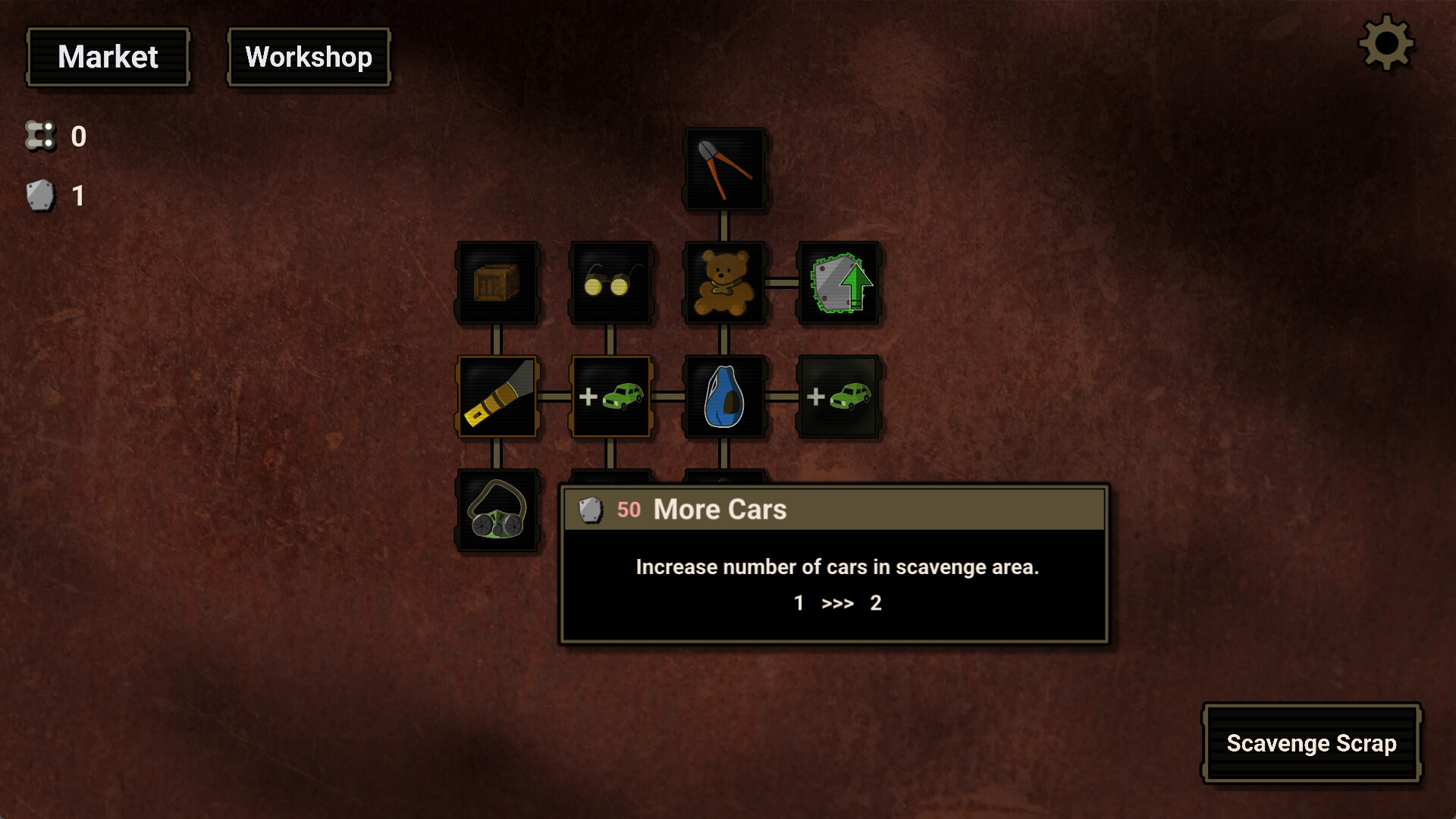
The upgrade skill tree is deep, though several reviewers wished its tooltips were clearerImage: Tyre Bytes LLC via Steam -
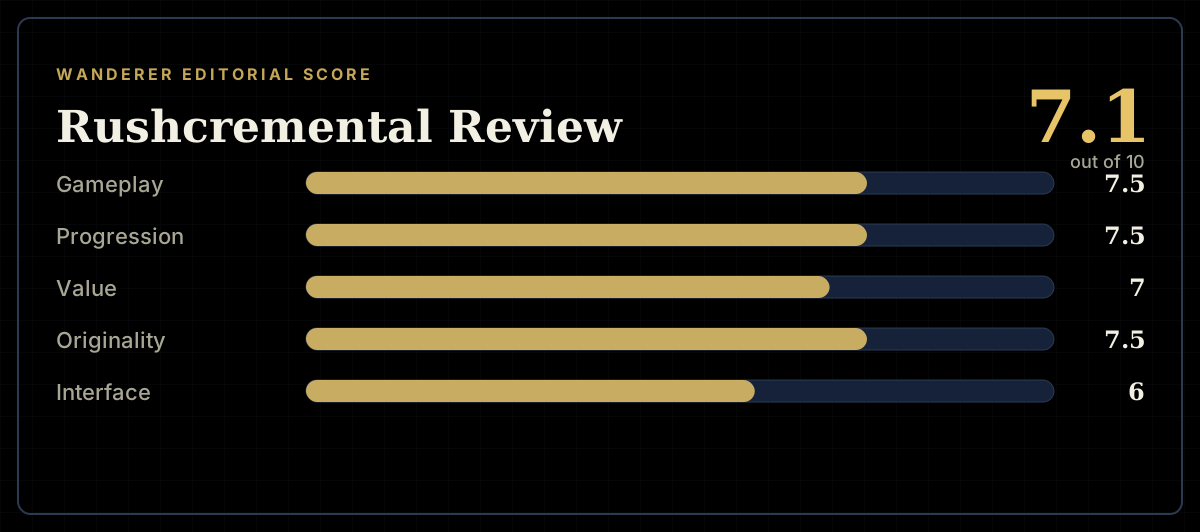
How the review scores each part of the gameWanderer Editorial -
The short versionWanderer Editorial